gamesbriefs
9:12in productionCh. 1 · No mouse. No sequel./ 9:12 · ceiling 15 min
Puzzle · Game design

Escape from Monkey Island

LucasArts killed insult swordfighting — then replaced it with a rock-paper-scissors monkey gibberish quiz.

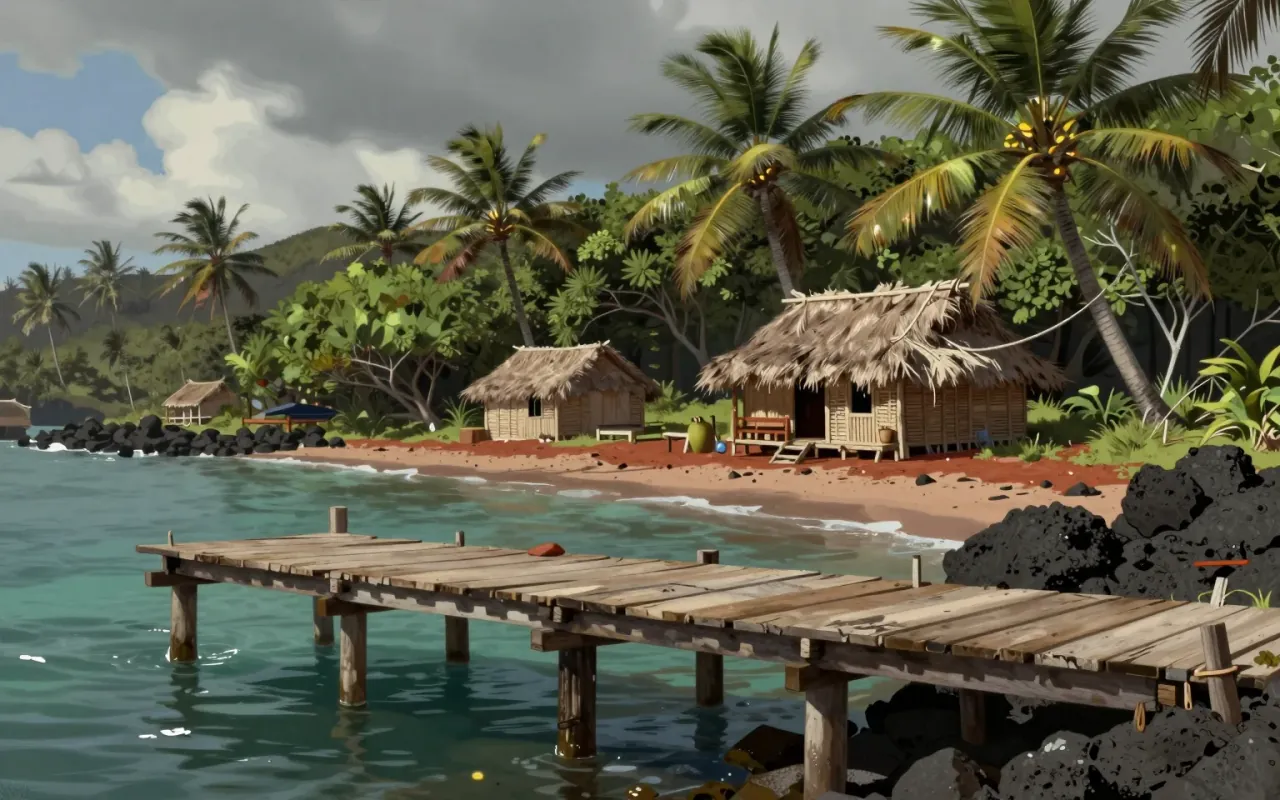
Escape from Monkey Island is the fourth Monkey Island game and LucasArts’ final original adventure title. It is a narrative-driven Caribbean island-hopping game built on dialogue, puzzle-solving, and novel input schemes.

Chapters & takeaways6
  1. 0:56
    No mouse. No sequel.

    It is the only non-point-and-click Monkey Island game — and the last LucasArts adventure ever released.

  2. 1:55
    Look, but don’t point

    Page Up and Page Down cycle through everything Guybrush can look at — no cursor, no context, no visual targeting.

  3. 2:54
    The duel that ends nothing

    Insult armwrestling appears once — unwinnable — and abandons the series’ core verbal sparring loop.

  4. 3:38
    Oop, chee, ack, eek

    Monkey Kombat isn’t satire — it’s a mandatory memory test using randomised nonsense words.

  5. 4:49
    The last island

    It is the fourth Monkey Island game — and LucasArts’ final original adventure release.

  6. 5:59
    Well received, not well resolved

    It was generally well received — but reception does not equal coherence.

Worth your time?

Yes. Play the whole thing.

3.5/ 5
What works
  • voice acting for previously silent characters
  • GrimE engine support for expressive environments
  • iMUSE music with MP3 compression
  • narrative-driven island exploration
What does not
  • insult swordfighting
  • point-and-click navigation
  • consistent puzzle logic
  • player agency in combat
Play it if
  • players curious about LucasArts’ late-era design pivots
  • fans who value voice performance and worldbuilding
Skip it if
  • players who rely on visual feedback
  • players who expect intuitive navigation
  • players invested in insult swordfighting’s call-and-response rhythm
The written brief1 min read

What the game is

Escape from Monkey Island is the fourth Monkey Island game and LucasArts’ final original adventure title. It is a narrative-driven Caribbean island-hopping game built on dialogue, puzzle-solving, and novel input schemes.

How it actually plays

You navigate islands with keyboard or joystick only. Page Up and Page Down cycle through interactive objects. Dialogue drives every puzzle. Insult armwrestling appears once — unwinnable. Monkey Kombat replaces insult games in the second half: a rock-paper-scissors sub-game where you memorise randomised monkey-word combinations like ‘oop’, ‘chee’, ‘ack’, ‘eek’.

What works

Voice acting gives silent characters presence. The GrimE engine supports expressive environments and iMUSE music with MP3 compression. The structure sustains mystery across islands. The climactic Monkey Kombat duel inside a giant robot delivers absurd spectacle.

What does not

Monkey Kombat undermines pacing and agency. It demands rote memorisation without feedback or progression. The unwinnable insult armwrestling duel breaks series tradition without replacement. Keyboard/joystick controls slow exploration and obscure environmental cues.

Who it is for, and who it is not

It is for players curious about LucasArts’ late-era design pivots and fans who value voice performance and worldbuilding over tight puzzle integration. It is not for players who rely on visual feedback, intuitive navigation, or insult swordfighting’s call-and-response rhythm.

Is it worth your time

Yes — if you want to see how LucasArts restructured its signature humour and interactivity at the end of its adventure era. No — if you expect fluid puzzle logic, consistent tone, or meaningful player agency in combat.
Same strand · Puzzle4 of 27
11:08
Grim FandangoLucasArts · 1998Grim Fandango (1998) is LucasArts’ first 3D adventure game. It replaces UI cues with Manny Calavera’s head-turning and inventory management with coat-jacket animations. Players solve puzzles by collecting and combining objects, talking through dialogue trees, and navigating pre-rendered environments — all without death or unwinnable states. Its strengths are its writing, voice acting, soundtrack, and stylised world. Its weaknesses are stiff movement, fixed-camera disorientation, and repetitive environmental feedback. It rewards patience and attention. It resists speed and muscle memory.
12:48
The Secret of Monkey IslandLucasArts · 1990A foundational point-and-click adventure that prioritised interface clarity and consequence-free exploration over challenge or realism.
9:28
Day of the TentacleLucasArts · 1993Day of the Tentacle is a 1993 LucasArts point-and-click adventure built on the SCUMM engine. It uses time travel as a structural puzzle mechanic, splitting three protagonists across past, present, and future. Players switch between them and move items across eras using Chron-o-Johns or temporal placement. It features voice acting — a LucasArts first — and relies on cause-and-effect logic over reflexes or narrative choice.
8:47
Tetris EffectMonstars · 2018Tetris Effect is a rhythm-driven, single-player reinterpretation of Tetris built for immersion, not competition. It adds music-synchronised stages, a time-stopping Zone mechanic, and a meta-game progression layer—but strips away multiplayer, scoring depth, and rule flexibility.
Up next in Games

Factorio

Wube Software · 2016 · 8:39

Factorio doesn’t simulate industry — it makes you feel the weight of every conveyor belt.

8:39