
gamesbriefsBrowse 467 games briefs

Every game worth playing, before you commit forty hours.

467
briefs
9:55
average
13
people
9:16
Featured · RPG

Ultima Online

Origin Systems · 1997

Ultima Online is a fantasy massively multiplayer online role-playing game released by Origin Systems on 24 September 1997. It was Origin’s first persistent online game. It was partially designed as a social and economic experiment. Its initial features included persistent player housing, skill-based character progression without levels or classes, a craft-based and player-driven economy, and unrestricted player-versus-player combat. Servers enforced either consensual or non-consensual PVP depending on type — Trammel, Felucca, or Siege — each with distinct rules for combat, travel, and item loss. The release of Trammel led developers to rename the original world Felucca and make its environment more grim. Siege servers restrict players to one character slot and limit travel options. Ultima Online is one of the earliest graphical MMORPGs. Its success was pivotal in EA’s decision to make Origin an online-only company after the completion of Ultima IX: Ascension in 1999.

11:06

1080° Snowboarding

Nintendo · 1998

1080° Snowboarding is a Nintendo 64 snowboarding game released in 1998. Players control one of five snowboarders in third-person across eight levels. Core gameplay splits between racing (Race, Time Attack, 2 Players, Match Race) and trick-based scoring (Trick Attack, Contest). Tricks — 24 standard and 5 secret — fall into grab or spin categories and require circular stick motions plus R, Z, and B inputs. Scoring rewards complexity, combos, and timing. Characters and boards have distinct stats affecting technique, speed, weight, balance, and edge control. The game emphasises realistic physics and responsive controls.

9:13

Advance Wars 2: Black Hole Rising

Intelligent Systems · 2003

Advance Wars 2: Black Hole Rising is a Game Boy Advance turn-based strategy game released in 2001 by Intelligent Systems. It refines the Wars series’ core loop with non-linear campaign progression, Super CO Powers, and terrain-specific objectives like capturing Black Cannons. It asks players to sequence actions across turns with precision, not flair. Its rigour is its strength—and its limit.

8:39

Alone in the Dark (1992 video game)

Infogrames · 1994

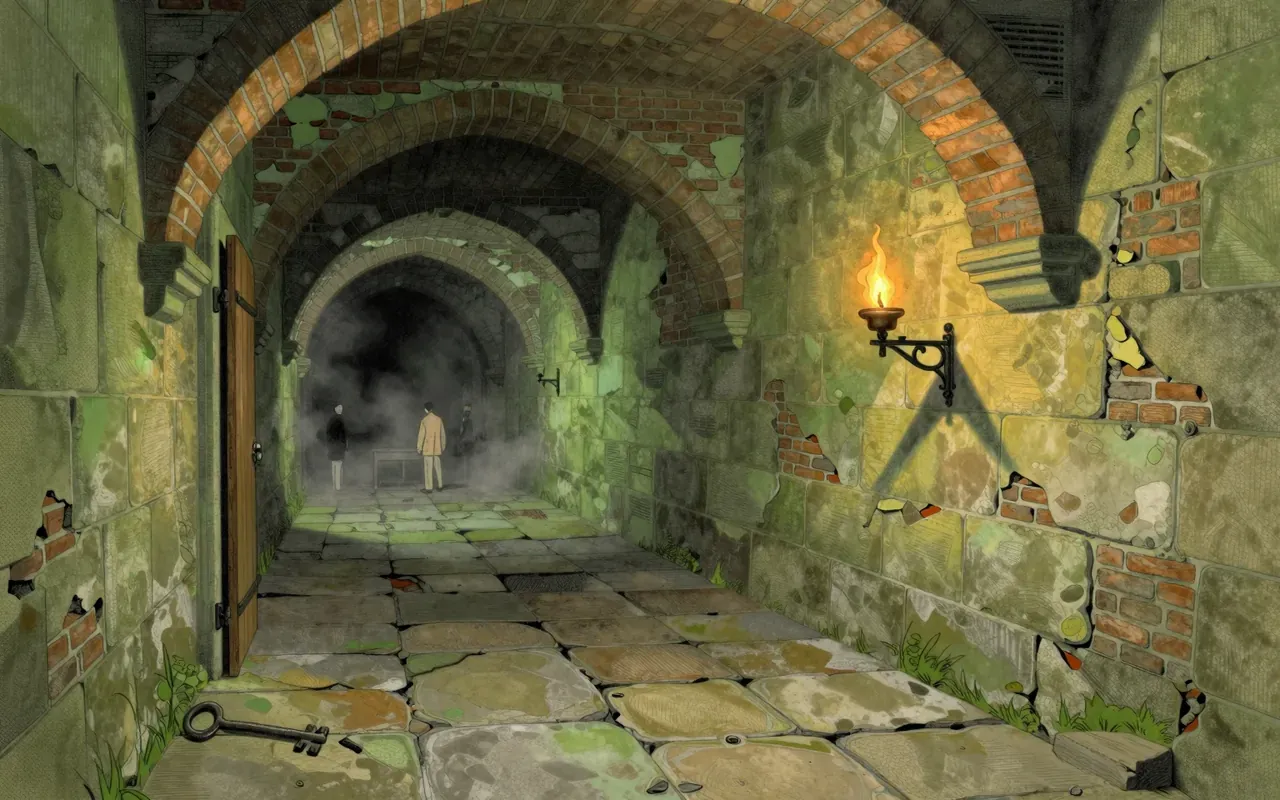
Alone in the Dark (1992) is a 3D horror adventure game set in 1920s Louisiana. The player selects Edward Carnby or Emily Hartwood and begins trapped in the attic of the haunted Derceto mansion. Escape requires exploration, weight-managed inventory use, and puzzle-solving—some enemies demand ritual solutions; others must be avoided entirely. Fixed camera angles and mixed 2D/3D visuals create deliberate tension. It received international attention upon release.

10:46

Apollo Justice: Ace Attorney

Capcom · 2007

Apollo Justice: Ace Attorney is a DS courtroom game built on three fixed actions — Press, Present, Perceive — and one hard constraint: you cannot move forward until you trigger the correct response. It works because every phase feeds the next. It falters because it offers no deviation from that feed.

9:22

Arma 3

Bohemia Interactive · 2013

Arma 3 is a military simulation released for PC in September 2013 by Bohemia Interactive. It runs on expansive, photorealistic terrains spanning hundreds of square kilometres. Its realism is systemic: weapons obey ballistics, diving requires dedicated equipment, and electronic warfare or disguise can replace combat entirely. Nearly all gameplay systems—including AI, HUD, and assists—are adjustable via custom difficulty settings. Players pursue fixed mission objectives through self-directed tactics, from solo stealth to squad coordination. It supports extensive modding and user-generated content via the Eden Editor. It is not a narrative-driven shooter. It is a toolset for tactical problem-solving under self-imposed constraints.

12:21

The Bard's Tale II: The Destiny Knight

Interplay · 1986

The Bard's Tale II: The Destiny Knight is a 1986 Interplay dungeon crawl that expands the first game’s scope with six cities, an explorable wilderness, banks, casinos, and the Archmage class — but retains its opaque interface and unrefined pacing.

9:13

Black Desert Online

Pearl Abyss · 2014

Black Desert Online replaces tab-targeting with twitch reflexes — and forces you to feed your horse before it dies in battle.

10:29

Broken Sword: The Shadow of the Templars

Revolution Software · 1996

Broken Sword: The Shadow of the Templars is a 1996 point-and-click adventure game developed by Revolution Software. It stars George Stobbart and Nicole Collard in a globe-trotting investigation sparked by a bombing in Paris. Players solve puzzles using a point-and-click interface, hand-drawn environments, and dialogue-driven exposition. Death is possible — a rarity for its time — and saves are manual. It launched on PC and PlayStation in 1996, with a Game Boy Advance port in 2002.

9:35

Broken Sword II: The Smoking Mirror

Revolution Software · 1997

Broken Sword II: The Smoking Mirror is a 1997 point-and-click adventure by Revolution Software. It runs on PC and PlayStation. Players guide George Stobbart—and briefly Nicole Collard—through hand-drawn 2D environments using a mouse or gamepad. Interaction relies on right-clicking for clues, branching dialogue for exposition, and collecting/combining objects to solve puzzles. A dynamic map unlocks new locations as the story progresses. It sold one million copies in the mid-1990s and was well received.

8:44

Bubble Shooter

Ilyon Dynamics · 2002

Bubble Shooter is a 2002 puzzle game by Absolutist, later expanded by Ilyon Dynamics. It asks players to clear marbles by matching three or more of the same colour before they reach the bottom line. It has four difficulty levels and two scoring modes: Classic (no limits) and Sniper (fewest shots wins).

10:30

Carmageddon II: Carpocalypse Now

Stainless Games · 1998

Carmageddon II: Carpocalypse Now is a 1998 Windows vehicular combat sequel developed by Stainless Games. It uses hardware acceleration to power a world-first fully featured physics engine, enabling detailed vehicle deformation — including fenders, spoilers, and catastrophic splitting — and replaces the original’s ‘stealworthy cars’ mechanic with universal purchase of wrecked vehicles.

9:14

Clock Tower (1996 video game)

Human Entertainment · 1996

Clock Tower (1996) is a point-and-click survival horror game with 3D graphics, released by Human Entertainment on Super NES in 1995 and on PlayStation as Clock Tower 2 in 1996. Players navigate using cursor clicks, manage inventory via screen-top access, and survive Scissorman under a dynamic strength system shown by cursor colour. Narrative branches from early choices lead to ten possible endings.

10:22

Colin McRae Rally (1998 video game)

Codemasters · 1998

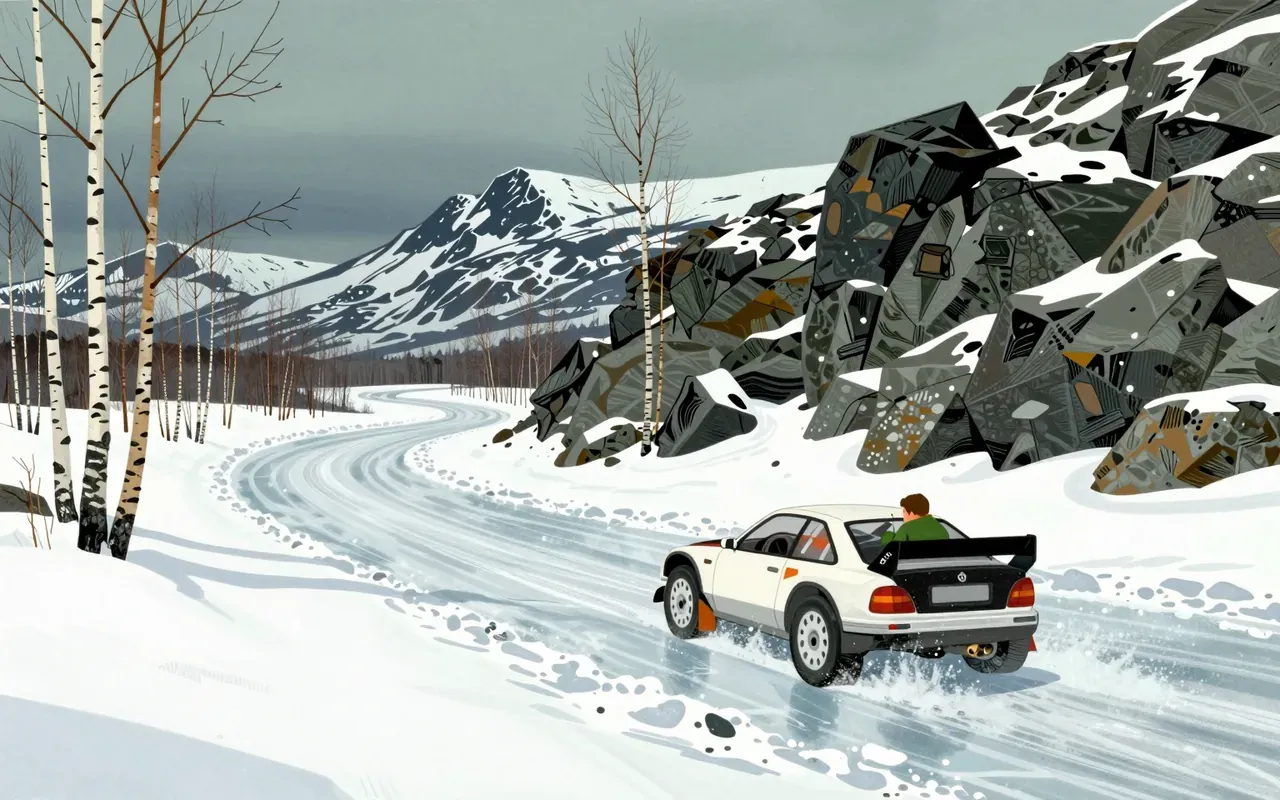
Colin McRae Rally (1998) is a Codemasters rally simulation built around the 1998 World Rally Championship. It structures progression across three difficulty tiers — Novice (F2 front-wheel-drive), Intermediate (WRC four-wheel-drive), and Expert (Group B classics) — each with distinct cars and increasing challenge. Colin McRae and Nicky Grist provide authentic voice work, with McRae serving as the tutorial instructor. The game supports LAN multiplayer for up to eight players and two-player split-screen. A cheat-enabled Easter egg parodies the Barney and Betty Hill alien abduction incident. It was distributed in North America by Warner Bros. Interactive Entertainment.

9:56

Command & Conquer (1995 video game)

Westwood Studios · 1995

Command & Conquer (1995) is a real-time strategy game developed by Westwood Studios. It builds on Dune II’s interface and adds pre-rendered 3D sprites, FMV briefings, and a streamed pop/rock/techno soundtrack. Players command GDI or Nod in a Tiberium-fuelled war. They deploy an MCV on flat land, gather Tiberium via harvesters, convert it to credits at refineries, store excess in silos, maintain power with plants, build units in faction-specific production structures, and advance along a tech tree. GDI prioritises firepower and armour at higher cost and slower speed; Nod prioritises speed, numbers, and unconventional tactics at lower durability and weaker weapons. Campaigns feature branching mission selection, FMV briefings, and objectives to destroy or capture enemy forces and bases. The DOS release supported up to four-player multiplayer; the Gold edition expanded this.

9:46

Dance Dance Revolution (1998 video game)

Konami · 1998

Dance Dance Revolution (1998) is a Konami arcade rhythm game that turns footwork into score. Players match scrolling arrows with steps on a dance pad. Timing judgments affect a life meter — the Dance Gauge — whose depletion ends the song. Combo tracking, step counts, and letter grades follow each performance. It runs under Konami’s Bemani brand. It has no narrative, no progression beyond song selection, and no solo longevity without hardware or social context.

9:28

Danganronpa 2: Goodbye Despair

Spike Chunsoft · 2012

Danganronpa 2: Goodbye Despair is a visual novel, adventure game, and role-playing video game developed by Spike before its 2012 merger with Chunsoft. Its structure divides time between Daily Life (dialogue-driven relationship building), Deadly Life (linear evidence collection after murder), and Class Trial (logic combat using Truth Bullets in a first-person shooter framework). Players earn Hope Fragments through Free Time conversations, exchange them for debate skills, and fund that loop with Monocoins earned from trial success and hidden Monokuma Figures. The game demands attention to verbal contradiction, rewards repetition as narrative escalation, and offers no mechanical evolution beyond its fixed, self-reinforcing systems.

11:11

Shin Megami Tensei: Digital Devil Saga

Atlus · 2004

Digital Devil Saga is a system-first RPG duology that treats combat as arithmetic and progression as inventory management. It runs on the PlayStation 2. It was made by Atlus’s Creative Department 1st Production (Team Maniax). It is a spin-off of the Megami Tensei series. It asks players to master a tight, punishing loop—not to lose themselves in a world.

8:20

Donkey Kong (1981 video game)

Nintendo · 1981

Donkey Kong (1981) is Nintendo’s first major arcade success and one of the first platform games. Developed by Shigeru Miyamoto after Radar Scope’s failure, it casts the player as Jumpman ascending a New York construction site across four single-screen stages—25, 50, 75, and 100 meters—to rescue Pauline from Donkey Kong. Gameplay revolves around running, jumping over gaps and obstacles, climbing ladders, and avoiding barrels, oil drums, cement pans, springs, and falling hazards—all under a shrinking bonus timer. Points reward precise actions: leaping, hammering, collecting items, and removing rivets. Lives end on contact, fatal falls, or timer expiry. Jumpman later became Mario.

7:58

Doom (1993 video game)

id Software · 1993

Doom (1993) is a first-person shooter for MS-DOS and Windows developed by id Software. It uses a 2.5D engine: environments render in 3D perspective but movement is confined to a 2D plane, and enemies are 2D sprites using billboarding. Players assume the role of a space marine fighting demons and possessed undead humans across labyrinthine levels grouped into episodes, each ending in a boss fight. Completion requires reaching a marked exit room while managing limited ammo, health, and armor—and avoiding hazards like toxic waste and crushing ceilings. Five difficulty levels scale enemy count, damage, speed, and aggression. The game supports cooperative and deathmatch multiplayer over local networks and modding via WAD files. Its design prioritises fast-paced action over narrative, with minimal plot conveyed through inter-episode text.

10:18

Dragon's Lair (1983 video game)

Cinematronics · 1983

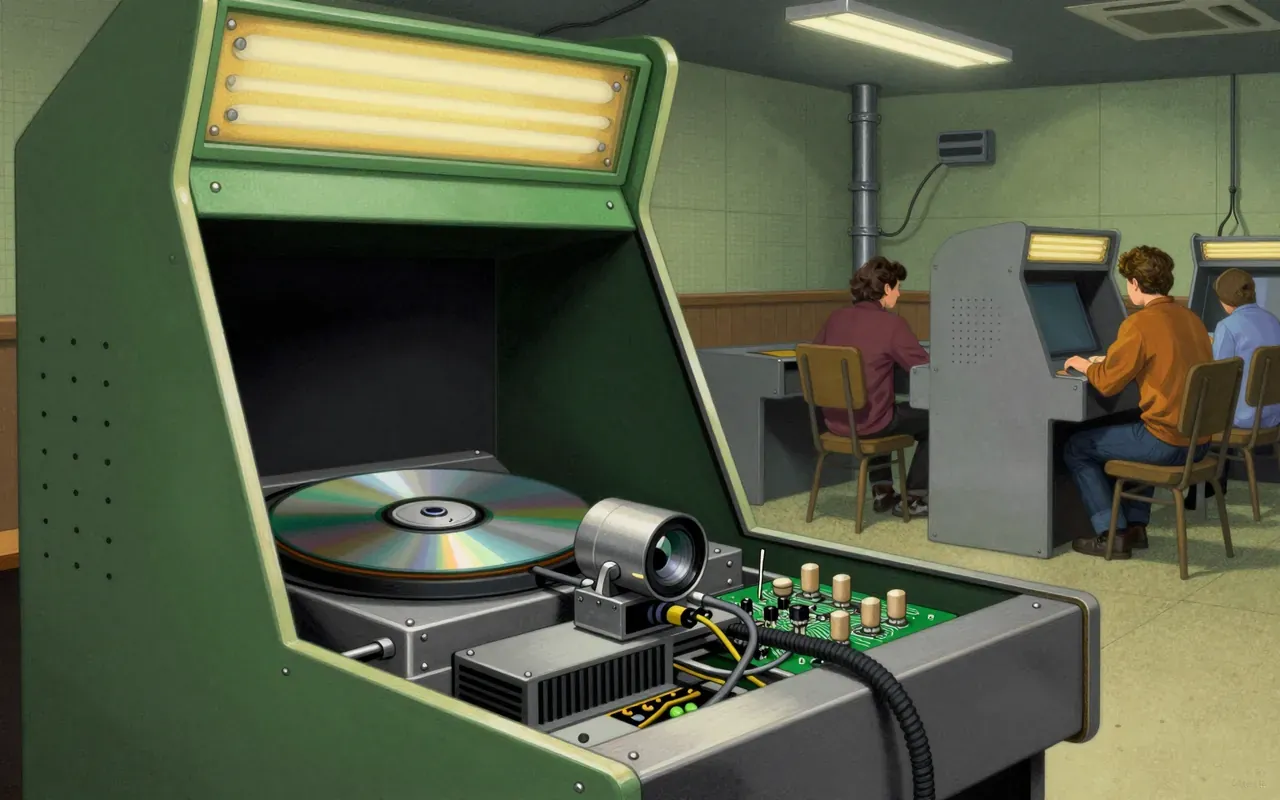
Dragon's Lair (1983) is an arcade-exclusive interactive film where players respond to quick time events during hand-animated cutscenes. It runs on LaserDisc hardware. Players control Dirk the Daring’s reflexes — not his movement or decisions. Narrative progression is predetermined. Levels are grouped into three cycles, selected dynamically. Dying moves the player forward. Failed levels must be repeated before reaching the Dragon's Lair. Some scenes repeat; some are mirrored, reversing required inputs. Operators could configure the cabinet to demand more coins mid-session. Cinematronics organised production in partnership with Advanced Microcomputer Systems and Don Bluth Productions. Starcom was formed to control rights. It was the first major LaserDisc video game.

11:36

Fatal Frame II: Crimson Butterfly

Tecmo · 2003

Fatal Frame II: Crimson Butterfly is a survival horror game developed and published by Tecmo in 2003. Players control Mio Amakura exploring the haunted Minakami Village, often alongside or searching for her sister Mayu. Exploration uses a fixed third-person camera, shifting to first-person when using the Camera Obscura—the primary tool for solving puzzles (via photographing objects and solving riddles) and fighting ghosts. Ghosts are signaled by coloured filaments (blue for friendly, red for hostile), and combat requires precise framing and timing, including mid-attack shots and the 'Shutter Chance' mechanic. Mayu’s presence aids puzzle-solving but also exposes her to ghost attacks, and both sisters’ health is critical—excessive damage ends the game. The narrative centres on a cursed twin ritual tied to the village’s history, with multiple endings determined by player choices, especially regarding Mayu’s fate.

10:22

F.E.A.R. (video game)

Monolith Productions · 2005

F.E.A.R. is a first-person shooter psychological horror game developed by Monolith Productions in Kirkland, Washington. It uses the studio’s LithTech engine and centres on reflex time, adaptive AI, and melee as a core combat pillar.

9:24

Final Fantasy XIV

Square Enix · 2013

Final Fantasy XIV (2013) is a subscription MMORPG rebuilt after failure. It runs on PlayStation 3 and Windows. Players choose a geolocated server and begin only as Disciples of War or Magic. Its UI unifies PC and console inputs. Translation enables basic cross-language communication. Crafting and gathering are locked at launch. The economy runs through market boards, not direct trade. It follows Final Fantasy XI (2002). It was developed by the Final Fantasy XI team using Crystal Tools.

9:20

Flashback (1992 video game)

Delphine Software · 1992

Flashback is a cinematic platformer whose gameplay resembles Prince of Persia and Another World. Each level spans many non-scrolling screens, nearly all of which feature multiple levels of altitude. Conrad exhibits realistic human running speed and jumping ability, and realistic weakness. He dies if he falls from a great height. Conrad carries a pistol with unlimited ammunition; a force shield, which absorbs a certain number of shots before needing recharging, acting as Conrad's health; and a portable force field with unlimited use, which can act as a temporary barrier to block enemies' shots. As Conrad progresses through the game's seven levels, he is increasingly presented with spatial puzzles, requiring the player to discover how to guide him toward his destination. Late in the game, Conrad receives a teleportation device, and is able to progress by throwing the device and teleporting into otherwise unreachable areas.

8:58

Fortnite Creative

Epic Games · 2018

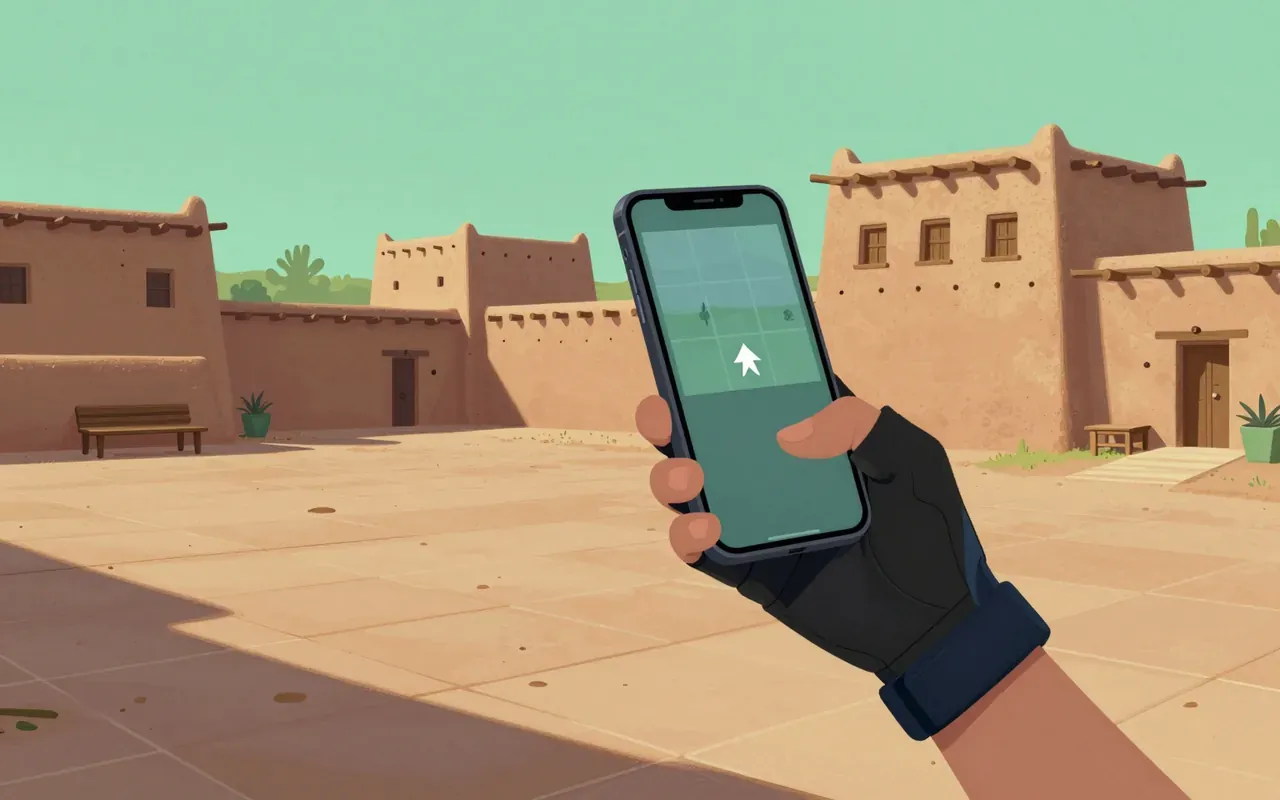
Fortnite Creative is a sandbox game mode developed by Epic Games. Players build custom worlds using Fortnite assets and publish them into the Fortnite Metaverse. Editing happens in real time via a handheld mobile phone tool. Players collaborate in Hubs capped at four people and teleport between islands using the Rift portal. Sessions support up to 100 players under custom rules. Each player may own up to 50 private islands. It is free-to-play across computer, console, and mobile platforms. Revenue comes from microtransactions, including the battle pass system.

10:18

Forza Motorsport (2005 video game)

Turn 10 Studios · 2005

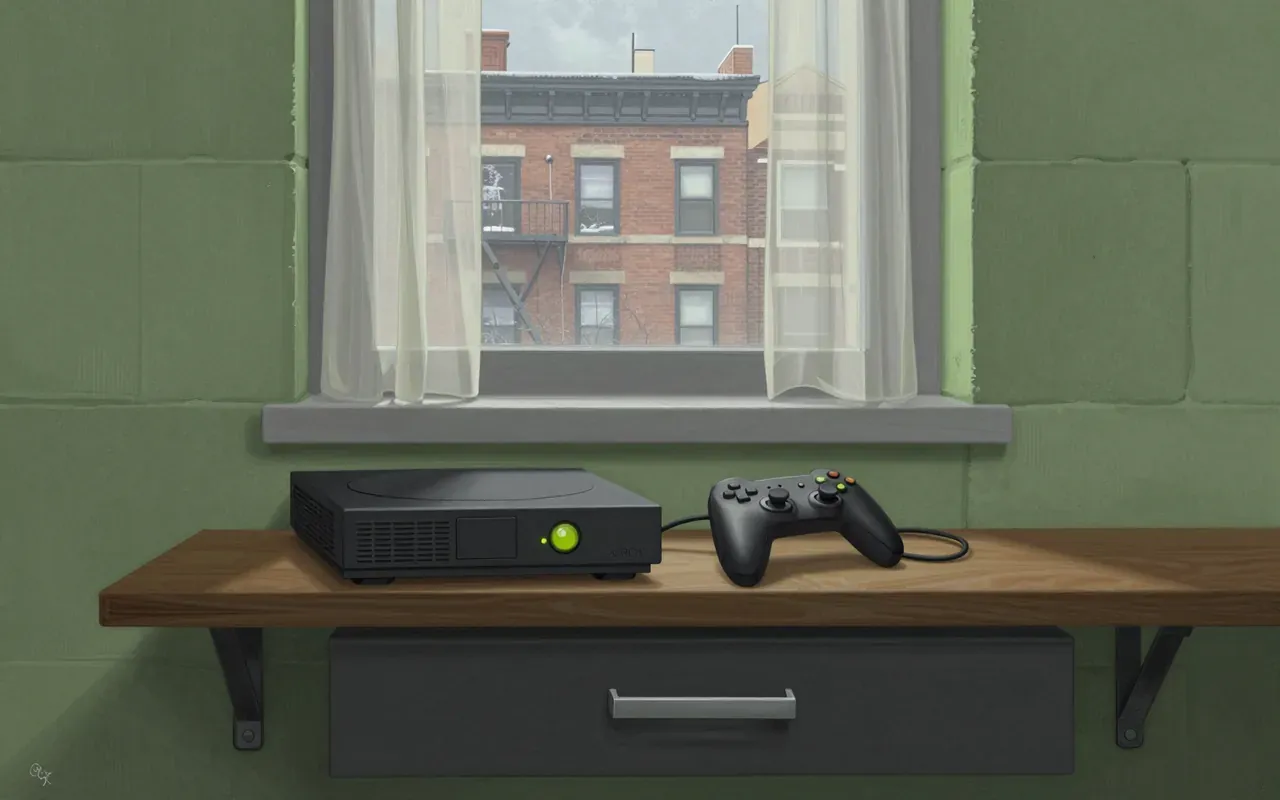
Forza Motorsport (2005) is a simulation racing video game developed by Turn 10 Studios for Xbox. It was the inaugural title in a Microsoft Game Studios-commissioned series. It features licensed real-world cars, real and fictional tracks, arcade and career modes, driving assists, realistic vehicle damage, and deep car tuning.

9:47

Full Throttle (1995 video game)

LucasArts · 1995

Full Throttle is a 1995 LucasArts graphic adventure game built on SCUMM with INSANE for FMV, played from a third-person perspective using point-and-click navigation.

10:51

Gran Turismo (1997 video game)

Polyphony Digital · 1997

Gran Turismo (1997) is a PlayStation sim racing game developed by Polyphony Digital. It emphasises realism through physics-driven handling, two distinct modes—Arcade and Simulation—and a curated roster of 140 cars from Japanese manufacturers. It was the first game to fully support the DualShock controller. It does not feature car damage. Its design prioritises mechanical fidelity over spectacle, progression over immediacy, and menu clarity over visual density.

9:26

Gran Turismo 3: A-Spec

Polyphony Digital · 2001

Gran Turismo 3: A-Spec is a PlayStation 2 racing simulator built around linear, tiered progression, realistic driving physics, and graphical fidelity over breadth.

10:22

Hexen: Beyond Heretic

Raven Software · 1995

Hexen: Beyond Heretic is a 1995 first-person shooter with action-adventure and action role-playing elements. It is the second entry in the 'Serpent Riders' trilogy. It is set in the dark fantasy world of Silverspring. It runs on a modified Doom engine.

12:35

Hitman: Codename 47

IO Interactive · 2000

Hitman: Codename 47 is a foundational stealth-action hybrid built on compromise: a forced pivot from MMO to shooter, then reshaped by executive vision into something slower, tenser, and more systemic. It rewards silence with money, punishes civilian deaths with deductions, and forces players to drag bodies to avoid alerts — all while running on a bespoke engine that pioneered ragdoll physics. Its brilliance lies in how it stitches together ideas from Deus Ex and Thief, then bends them around corpse logistics. Its flaw is that it never fully sheds its run-and-gun roots — some levels abandon stealth outright, and movement remains stubbornly unrefined. It is not a polished experience. It is a working blueprint.

9:37

Indy 500 (1977 video game)

Atari · 1977

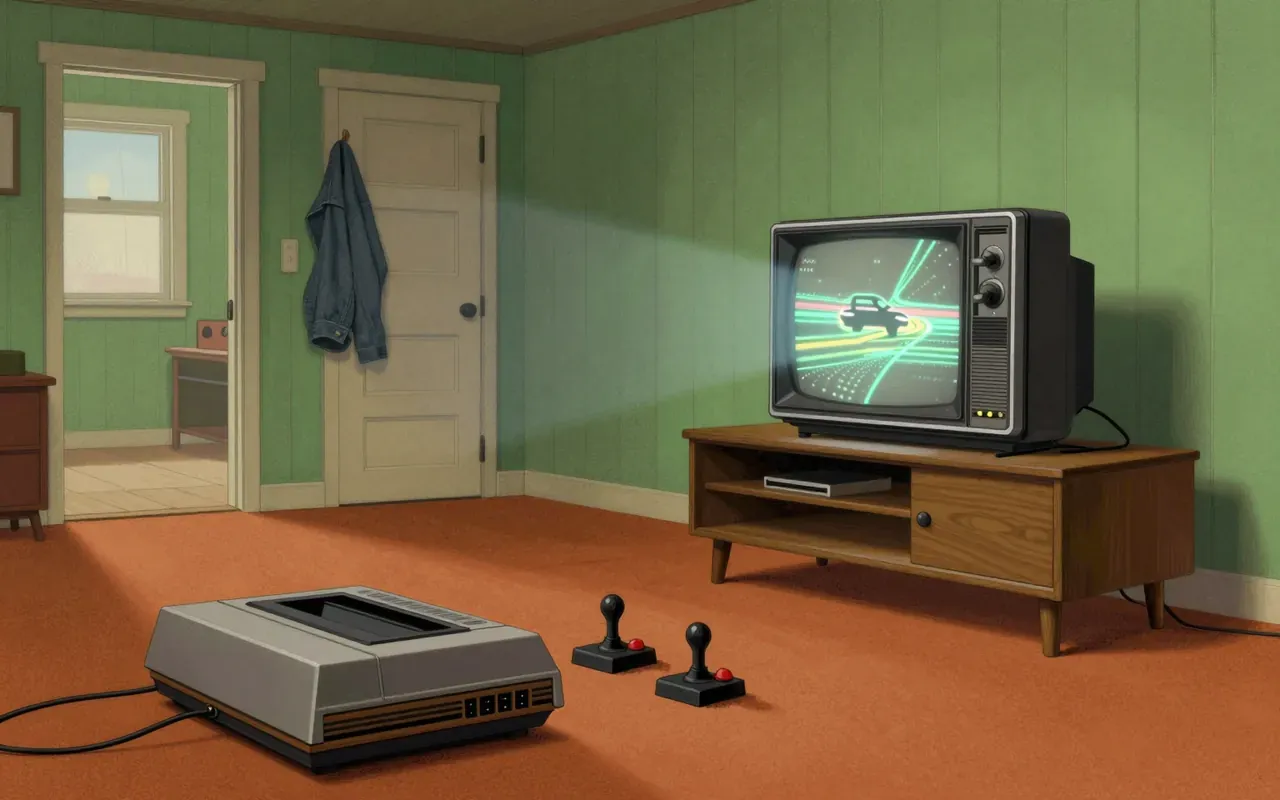
Indy 500 (1977) is a cartridge for the Atari 2600 offering fourteen variations across four gameplay modes — Race Car, Crash n' Score, Tag, and Ice Race — each defined by distinct win conditions, player configurations, and physics constraints.

8:25

Journey (2012 video game)

Thatgamecompany · 2012

Journey is a PlayStation 3 game where a cloaked figure walks across a desert toward a distant mountain. Flight is enabled by a magical scarf whose charge depletes and recharges near red cloth or glowing symbols. Players may meet one anonymous co-player per session, cooperating silently through chimes that transform cloth to alter the world — opening paths or levitating players — with no speech, text, or visible names until the credits.

9:44

The King of Fighters '94

SNK · 1994

The King of Fighters '94 is SNK’s inaugural team-based fighter, released in 1994 on the Neo Geo arcade system. It abandons round-based combat for sequential 3-on-3 matches using eight fixed teams. Players choose entry order, gain life restoration after each KO, and may call sidelined teammates for support attacks. A power gauge charges via blocking or damage — or manually, at high risk — and briefly strengthens basic attacks. It builds directly on SNK’s prior 2D fighting work in Fatal Fury and Art of Fighting, but shifts focus from individual mastery to team curation and structural rhythm.

8:53

King's Field (1994 video game)

FromSoftware · 1994

King's Field (1994) is FromSoftware’s debut PlayStation action role-playing game. It is a first-person dungeon crawler set in a vast underground labyrinth. The player explores five real-time 3D dungeon environments to uncover the source of a monster invasion.

10:04

King's Field (1995 video game)

FromSoftware · 1995

King's Field (1995) is FromSoftware’s second game and the first King's Field released outside Japan. It is Prince Aleph’s slow, solitary trek across the island of Melanat to recover the Moonlight Sword. Its design is defined by hardware-imposed slowness: movement, combat, and exploration all resist immediacy. It asks for patience, repetition, and tolerance of ambiguity — not engagement through clarity or reward.

10:48

King's Quest I

Sierra On-Line · 1984

King's Quest I is a foundational graphic adventure that trades player freedom for architectural control — every screen is a stage, every command a test of precise positioning, and every death a reminder that the machine holds all the cards.

9:20

Kirby 64: The Crystal Shards

Nintendo · 2000

Kirby 64: The Crystal Shards is a 2000 Nintendo 64 platformer developed by HAL Laboratory. It uses 3D rendering but locks movement to a 2D plane. Players collect 98 crystal shards across six worlds using Kirby’s core actions—walk, jump, inhale, fly—and seven copy abilities. Power Combos let players mix two abilities for 28 possible effects. Vehicle-based segments include riding King Dedede’s back, minecarts, and log flumes. Controls use the D-pad exclusively, following usability testing with children. All shards must be collected to reach the final boss and true ending.

9:58

League of Legends

Riot Games · 2009

League of Legends is a five-versus-five MOBA where two teams push lanes, level champions via XP, spend gold on items, and destroy the enemy Nexus. It launched free-to-play on 27 October 2009. It has no single-player mode. It draws from Defense of the Ancients and Asian free-to-play design. It asks for sustained attention, team coordination, and adaptation to constant change.

9:51

Lunar Lander (1979 video game)

Atari · 1979

Lunar Lander (1979) is a vector-based arcade game by Atari, Inc. that reduces piloting to rotation, thrust, and fuel. It offers no story, no characters, no world—only a side-view landscape, a fragile module, and the unblinking arithmetic of descent.

9:26

Marvel vs. Capcom: Clash of Super Heroes

Capcom · 1998

Marvel vs. Capcom: Clash of Super Heroes is a 1998 2D tag-team fighting game developed by Capcom’s Division 2 for the CP System II arcade system. Players select two fighters, swap between them mid-match, and rely on off-screen regeneration and randomly assigned guest characters with limited uses. It introduces the simultaneous 'Variable Cross' attack and grants unlimited use of the Hyper Combo Gauge. Its 2D animated cartoon-style graphics follow Capcom’s post-Darkstalkers aesthetic.

9:28

Metal Gear Solid 2: Sons of Liberty

Hideo Kojima / Konami · 2001

Metal Gear Solid 2: Sons of Liberty is a PlayStation 2 stealth-action game released in 2001 by Konami. It features two narrative chapters—the 'Tanker' prologue with Solid Snake and the 'Plant' main section with Raiden—set near New York City in an alternate-history timeline. Its stealth loop relies on observation, environmental interaction, and squad-based enemy AI. It explores memetics, information control, and freedom of thought through a postmodern, fourth-wall-breaking structure.

9:34

Metal Gear Solid 3: Snake Eater

Hideo Kojima / Konami · 2004

Metal Gear Solid 3: Snake Eater is a PlayStation 2 stealth game set in a Soviet tropical forest in 1964. It replaces abstract health with bodily injury tracking, swaps binary detection for a dynamic camouflage index, and ties stamina to foraging and rest. Its loop is observational, adaptive, and physically grounded—not cinematic, not reflexive, not narrative-first.

9:06

Monkey Island 2: LeChuck's Revenge

LucasArts · 1991

Monkey Island 2: LeChuck's Revenge is a 1991 LucasArts SCUMM-based point-and-click adventure game that introduced iMUSE, used Puzzle Dependency Charts, and offered dual puzzle-difficulty modes.

9:36

NBA Jam (1993 video game)

Midway · 1994

NBA Jam (1993) is a two-on-two arcade basketball game developed and published by Midway, featuring NBA-licensed teams and digitized likenesses of real players.

9:56

Need for Speed: Most Wanted (2005 video game)

Black Box · 2005

Need for Speed: Most Wanted (2005) is a street-racing game set in the fictional city of Rockport. Players use licensed real-world cars to defeat 15 Blacklist racers, complete varied race types—including Tollbooth and Speedtrap—and evade increasingly aggressive police pursuits governed by a heat-based escalation system. Cars can be upgraded and customised in Career mode. The game features Career, Quick Race, Challenge Series, and multiplayer modes on certain console editions.

8:21

Osu!

peppy · 2007

osu! is a rhythm game built on precision, community curation, and mouse-driven timing. It asks for sustained attention, fine motor control, and tolerance for repetition. It gives back measurable progress, granular difficulty tuning, and a vast library of player-made challenges. It withholds narrative, accessibility for non-mouse users, and any abstraction between intent and execution.

9:36

Overwatch (2016 video game)

Blizzard Entertainment · 2016

Overwatch is a team-based, online multiplayer first-person shooter released by Blizzard Entertainment in May 2016. It reuses assets from the cancelled Titan project but builds a new near-future world around the Omnic Crisis and the Overwatch peacekeeping force. Two teams of six select from over two dozen heroes—categorised as Damage, Tank, or Support—each with unique kits and an ultimate ability charged by combat actions. Players switch heroes mid-match to adapt to objectives like capturing control points or escorting payloads, all within time limits and asymmetric attacker-defender framing. Custom game modes are possible via limited scripting tools. Progression yields only cosmetic loot boxes. The setting is bright, cartoonish, and optimistic.

9:44

Overwatch (2023 video game)

Blizzard Entertainment · 2022

Overwatch (2023) is a live-service hero shooter built on enforced role discipline, rapid iteration, and seasonal storytelling. It discards the original’s six-player format and promised PvE to double down on PvP refinement—and on sustaining engagement through constant design recalibration.

9:17

Payday: The Heist

Overkill Software · 2011

Payday: The Heist is a 2011 cooperative FPS by Overkill Software. It establishes the core loop of theft-driven co-op play, hostage-based revival, and civilian protection. Its randomisation adds replayability without altering mechanics. It lacks progression, narrative, or solo support. It runs on PlayStation 3 and Windows.

9:46

Revelations: Persona

Atlus · 1996

Revelations: Persona is Atlus’s 1996 PlayStation RPG that introduces the Persona series. It casts high school students who summon Personas—Jungian self-manifestations—to fight supernatural threats in a town shaped by lunar cycles and branching narrative paths.

9:09

PUBG: Battlegrounds

PUBG Corporation · 2017

PUBG: Battlegrounds is a battle royale shooter where up to 100 players parachute onto an island, scavenge for gear, and fight to be the last survivor. The safe zone shrinks over time, forcing players into tighter spaces and more frequent encounters. Players choose solo, duo, or squad (up to four) modes, begin with no functional gear, and must rapidly adapt to dynamic conditions including shifting flight paths, red-zone bombings, and loot-dropping planes. It launched in early access on Windows in March 2017 and later on Xbox One, and was developed by Krafton's PUBG Studios and published by Krafton.

9:31

Pokémon Red, Blue, and Yellow

Game Freak · 1998

Pokémon Red, Blue, and Yellow are tightly constrained Game Boy RPGs built around three screens, turn-based battles, and enforced social play. They demand cooperation—not for story, but for completion. They reward patience, not improvisation. They are about checking boxes, not breaking rules.

10:48

Prey (2017 video game)

Arkane Studios · 2017

Prey (2017) is a first-person immersive sim set aboard the Talos I space station. You play as Morgan Yu, a scientist surviving a Typhon outbreak. You begin with a wrench and gradually unlock weapons, Neuromod abilities, and environmental tools. Talos I opens in stages—from linear missions to free exploration—and supports multiple solutions via systemic interactions: oil spills, turrets, explosive canisters, and the Gloo Cannon. It draws inspiration from System Shock and Arx Fatalis. It shares only its name with Human Head Studios’ earlier Prey series. It was developed by Arkane Austin under Raphaël Colantonio’s leadership.

10:14

Prince of Persia (1989 video game)

Brøderbund · 1989

Prince of Persia (1989) is a cinematic platformer where time, health, and animation are tightly coupled systems—not flourishes. It originated on the Apple II during Broderbund’s early, hardware-conscious phase. Its design forces rhythm, precision, and memory. It does not adapt. It does not forgive. It runs on clocks, triangles, and rotoscoped frames.

8:12

Prince of Persia 2: The Shadow and the Flame

Brøderbund · 1993

Prince of Persia 2: The Shadow and the Flame is a 1993 Broderbund-published cinematic platformer that escalates tension through larger environments, denser combat, and an unforgiving real-time clock—without altering the foundational verbs established on the Apple II.

9:33

Pro Evolution Soccer (video game)

Konami · 2001

The verified material establishes only that Pro Evolution Soccer (2001) is Konami’s first football sports simulation in the PES series, known in Japan as World Soccer: Winning Eleven 5, with region-specific commentary, and that it sits in a lineage from International Superstar Soccer to eFootball — but says nothing about how it plays, what it asks of a player, or what it delivers in practice.

8:20

Punch-Out!! (1984 video game)

Nintendo · 1984

Punch-Out!! (1984) is a rigid, reactive arcade boxing game built around telegraphed eye cues, fixed timing, and forced replay. It asks players to memorise patterns, not adapt to them. It gives no identity beyond initials and no outcome beyond repetition or defeat.

9:50

Quest for Glory: So You Want to Be a Hero

Sierra On-Line · 1989

Quest for Glory: So You Want to Be a Hero is a 1989 hybrid adventure/RPG by Sierra On-Line. It asks players to type commands, track time, manage hunger and fatigue, and develop skills organically—not through levels, but through action. Class choice (Fighter, Magic User, Thief) determines starting tools, puzzle solutions, and quest access—but cross-class skills are possible. Its systems behave like physical laws: predictable, persistent, and indifferent to player expectation.

9:27

RalliSport Challenge

Rainbow Studios · 2002

RalliSport Challenge is a 2002 offroad racing game developed by Rainbow Studios. It features four race types—Rally, Hillclimb, Ice Racing, and Rallycross—each defined by distinct terrain-based rules and consequences. Players progress through career mode to unlock cars, choose between Beginner (mid-rally restart) and Normal (full-rally restart) modes, and race either sequentially or against AI. It belongs to the same offroad lineage as Motocross Madness and MX vs. ATV.

10:07

Richard Burns Rally

SMS Developers · 2004

Richard Burns Rally is a sim racing game developed by Warthog and published by SCi in 2004. It features eight cars and thirty-six rally stages modelled from real locations including Gateshead forest, Nevada, Canberra, Hokkaido, the French Alps, and the Arctic Circle. Its defining trait is an uncompromising physics engine shaped by on-location scouting, precise measurement of road width, camber and texture, and direct input from rally drivers Richard Burns and Possum Bourne. It simulates both classic and modern rallying, and is defined by high difficulty—not as a flaw, but as a consequence of its fidelity-first design.

9:00

Ridge Racer (1993 video game)

Namco · 1994

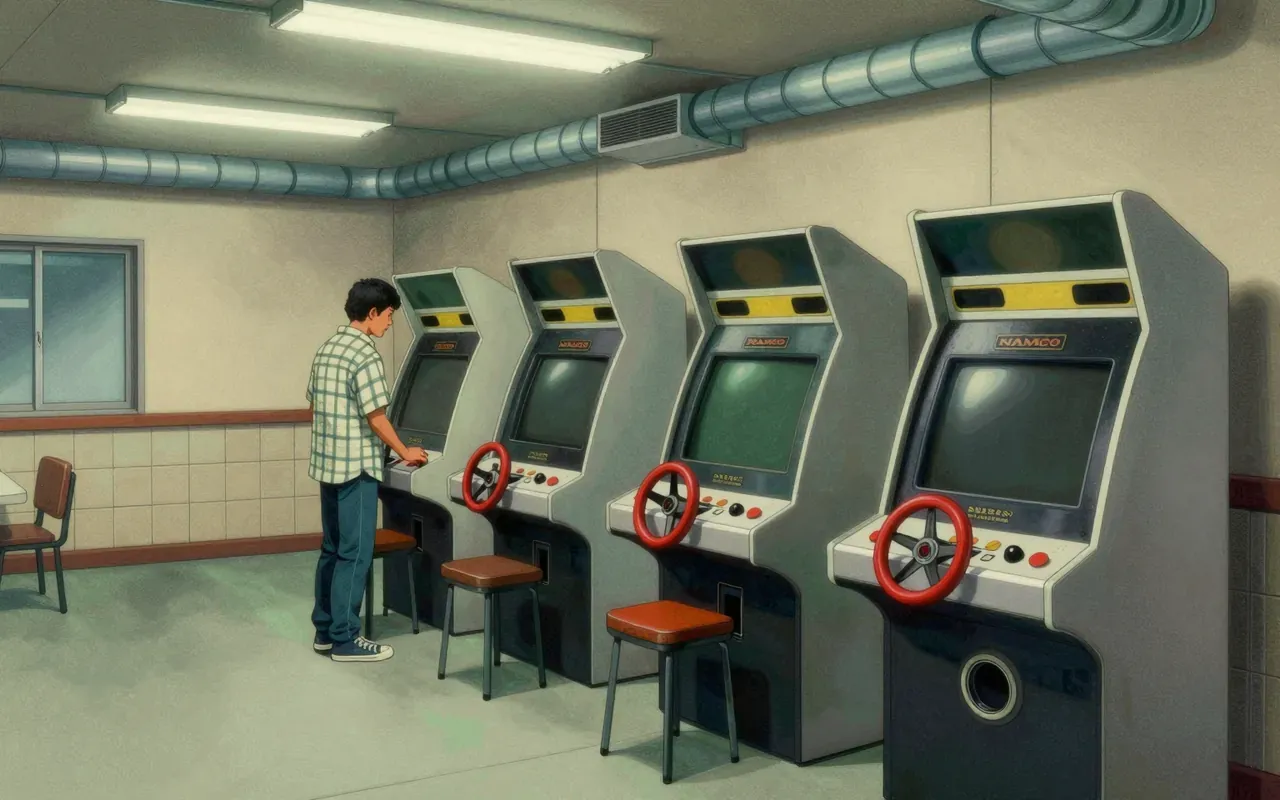
Ridge Racer (1993) is a Namco arcade racing game built on System 22 hardware, defined by drifting, texture-mapped 3D graphics, and a lap-based race loop across one track in four difficulty tiers.

9:32

R4: Ridge Racer Type 4

Namco · 1998

R4: Ridge Racer Type 4 is a PlayStation racing game centred on powersliding — using either Drift (single brake tap) or Grip (brake/gas alternation) depending on car make — within a structured Grand Prix progression where qualifying positions determine vehicle unlocks and upgrades. It introduces team- and manufacturer-based story modes, Time Attack, two-player split-screen VS. Battle (a series first), four-player Link Cable support, car decoration, Extra Trials versus prototypes, and PocketStation integration for car trading in Japan.

10:19

Roblox

Roblox Corporation · 2006

Roblox is a platform for making and playing games. Released in 2006 by Roblox Corporation, it lets any user build and share games using Roblox Studio and Luau. It is free-to-play but relies on Robux for purchases and real-world payouts via Developer Exchange. Communication is limited to chat and direct messaging. There is no unified rule set, loop, or aesthetic — only the infrastructure that enables creation and exchange.

10:48

Samurai Shodown (1993 video game)

SNK · 1993

Samurai Shodown (1993) is a weapon-based 2D fighting game released by SNK for the Neo Geo arcade system. Set in late-1780s feudal Japan, it replaces hand-to-hand combos with deliberate, high-risk strikes. Slow motion highlights impact. A referee lifts white or red flags to confirm hits. Blood appears on contact. It is SNK’s first arcade fighter built around weapons.

9:03

Session: Skate Sim

crea-ture Studios · 2019

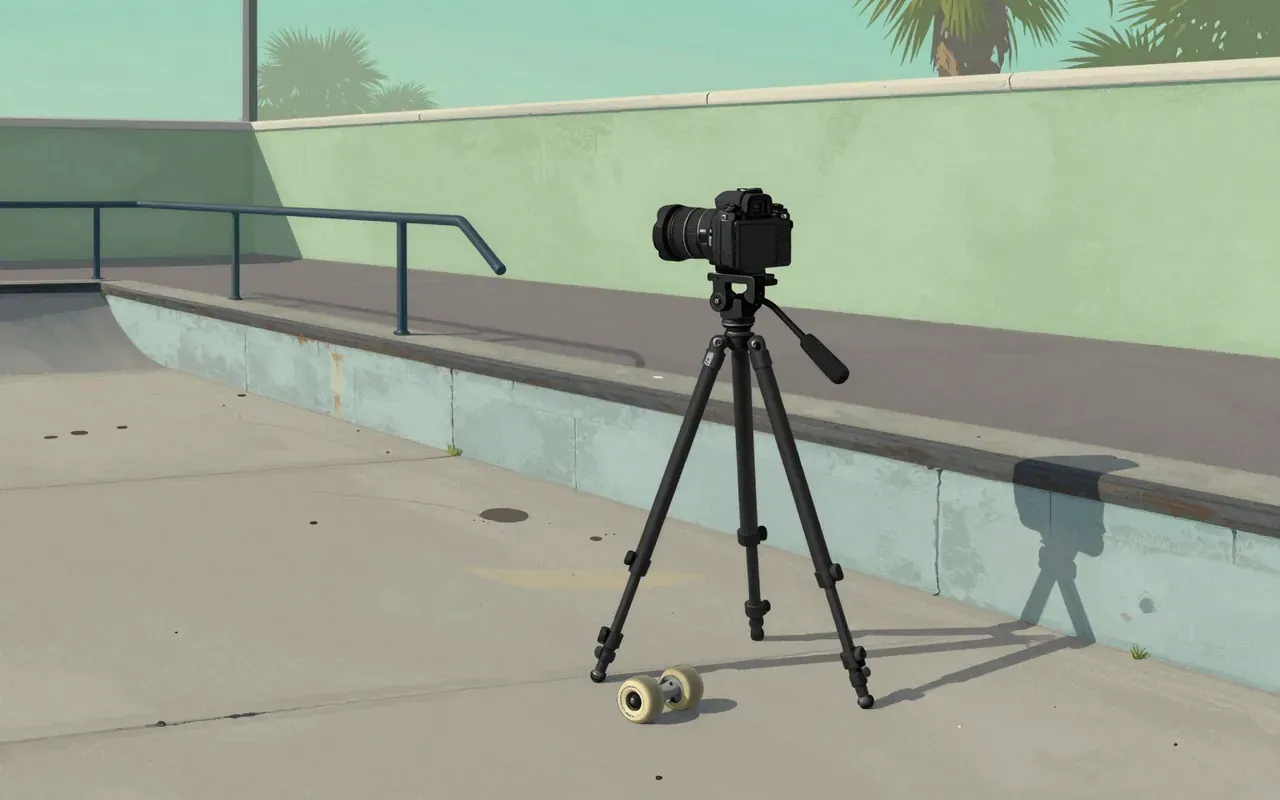
Session: Skate Sim is an open-ended sports video game that simulates skateboarding with strict adherence to physics, presented through a fish-eye lens mimicking mini DV format.

9:14

Shinobi (1987 video game)

Sega · 1987

Shinobi (1987) is a Sega arcade game where Joe Musashi fights Zeed across timed stages using shurikens, melee, and one-per-stage ninjutsu techniques. Movement is precise. Death is absolute. Progression is hostage-driven. It is not about lore, scale, or stamina — it is about reading space, committing to motion, and choosing when to spend your one irreplaceable power.

9:50

Shivers (video game)

Sierra Online · 1995

Shivers is Sierra On-Line’s first first-person, point-and-click PC adventure game, released on CD-ROM in November 1995. It places a nameless, unseen, silent teenage protagonist inside a haunted museum to trap ten Ixupi spirits by solving puzzles, collecting vessel fragments, and matching talismans — all while managing a life-essence health bar and navigating a non-linear, open-ended environment with strict one-item inventory.

9:48

Skate (2007 video game)

EA Black Box · 2007

Skate (2007) replaces animation with physics, and menus with motion. Its 120 Hz input loop forces players to internalise flick timing. It gives full control of trick execution — then withholds walking, dismounting, and female skaters. It asks for wrist discipline, not button memorisation. It rewards patience with authenticity, not spectacle.

10:14

Space Quest I

Sierra On-Line · 1986

Space Quest I is a 1986 graphic adventure built on Sierra’s AGI engine. It asks players to type commands, navigate layered 2D spaces, consult the manual constantly for copy protection, and tolerate platform-specific interface splits—including no menus on Apple II. Its humour relies on parser friction, hardware constraints, and satirical worldbuilding. It works as a design document for early Sierra adventure grammar—not as a frictionless play experience.

9:45

Tom Clancy's Splinter Cell (video game)

Ubisoft Montreal · 2002

Tom Clancy's Splinter Cell (2002) is a stealth action-adventure developed by Ubisoft Montreal, built from assets of the cancelled third-person shooter The Drift. It establishes light as a core gameplay stat via a persistent light meter, forces players into shadows, limits ammunition, and ties all vision modes—including night and thermal—to that same visibility logic. It was Ubisoft Montreal’s breakout title and a direct competitive response to Metal Gear Solid.

9:59

Tom Clancy's Splinter Cell: Blacklist

Ubisoft Toronto · 2013

Tom Clancy's Splinter Cell: Blacklist is a 2013 action-adventure stealth game developed by Ubisoft Toronto — its debut project. It gives players three clear paths: silent infiltration, aggressive stealth, or direct combat — each supported by tools like the Tri-Rotor drone, light destruction, corpse hiding, and sensor goggles. It runs in third-person. Players rotate the camera, crouch, run, and scale ledges. Killing alerts enemies who see corpses — so hiding bodies is essential. The game’s strength is its tight, readable cause-and-effect loop. Its weakness is the separation of its systems: stealth, action, and progression never fully converge.

8:40

Tom Clancy's Splinter Cell: Chaos Theory

Ubisoft Montreal · 2005

Tom Clancy's Splinter Cell: Chaos Theory is a 2005 stealth action game developed by Ubisoft Montreal. It refines the series' core stealth loop around two interdependent detection systems: light exposure and relative noise. Guards react intelligently to environmental changes and coordinate tactically. Alarms trigger only on discovery—not on being seen—and no longer cause automatic failure. It expands close-quarters options and introduces equipment loadouts tied to lethality constraints.

11:14

Spore (2008 video game)

Maxis · 2008

Spore is a Maxis-developed simulation game released in 2008 where players guide a species from single-cell origins through five evolutionary phases toward spacefaring capability, with defined goals including spaceship construction and reaching the galactic core.

9:44

StepMania

Chris Danford · 2001

StepMania is a cross-platform rhythm video game and engine originally developed as a clone of Dance Dance Revolution, evolving into an extensible rhythm game engine supporting various rhythm-based game types. Its core gameplay involves scrolling arrows meeting stationary targets in time with the song's beat, scored by timing accuracy, letter grade, and numeric score. Highest performance yields AAA+, requiring flawless timing, mine avoidance, and full hold arrow completion; failure results in an E grade when the life gauge fully depletes. It runs on Windows, Linux, FreeBSD, macOS, and Xbox.

8:40

Street Fighter: The Movie (console video game)

Capcom · 1995

Street Fighter: The Movie (console video game) is a 1995 Capcom release for PlayStation and Sega Saturn. It adapts the 1994 film using digitised actor footage and bases its combat on Super Street Fighter II Turbo. Four modes exist: Movie Battle (Guile infiltrating Shadaloo City), Street Battle (twelve-fighter ladder), Vs. Mode, and Trial Mode. Super Special Moves require a half-full Super Combo gauge and two-button inputs. Regional versions differ in naming and voice samples. The Japanese release is titled Street Fighter: Real Battle on Film.

9:50

TERA (video game)

Blue Hole · 2011

TERA replaces tab-targeting with muscle memory — and demands you learn the difference between aiming and reacting.

9:32

The Witcher 3: Wild Hunt

CD Projekt Red · 2015

The Witcher 3: Wild Hunt is an open-world RPG built around authored consequence, not systemic simulation. Its combat demands precision, stamina, and resource management. Its world feels lived-in because of writing—not physics. It was made at great cost, with no DRM, and shipped with free DLC. It remains worth playing if you want narrative weight over procedural noise.

9:39

The Witness (2016 video game)

Jonathan Blow · 2016

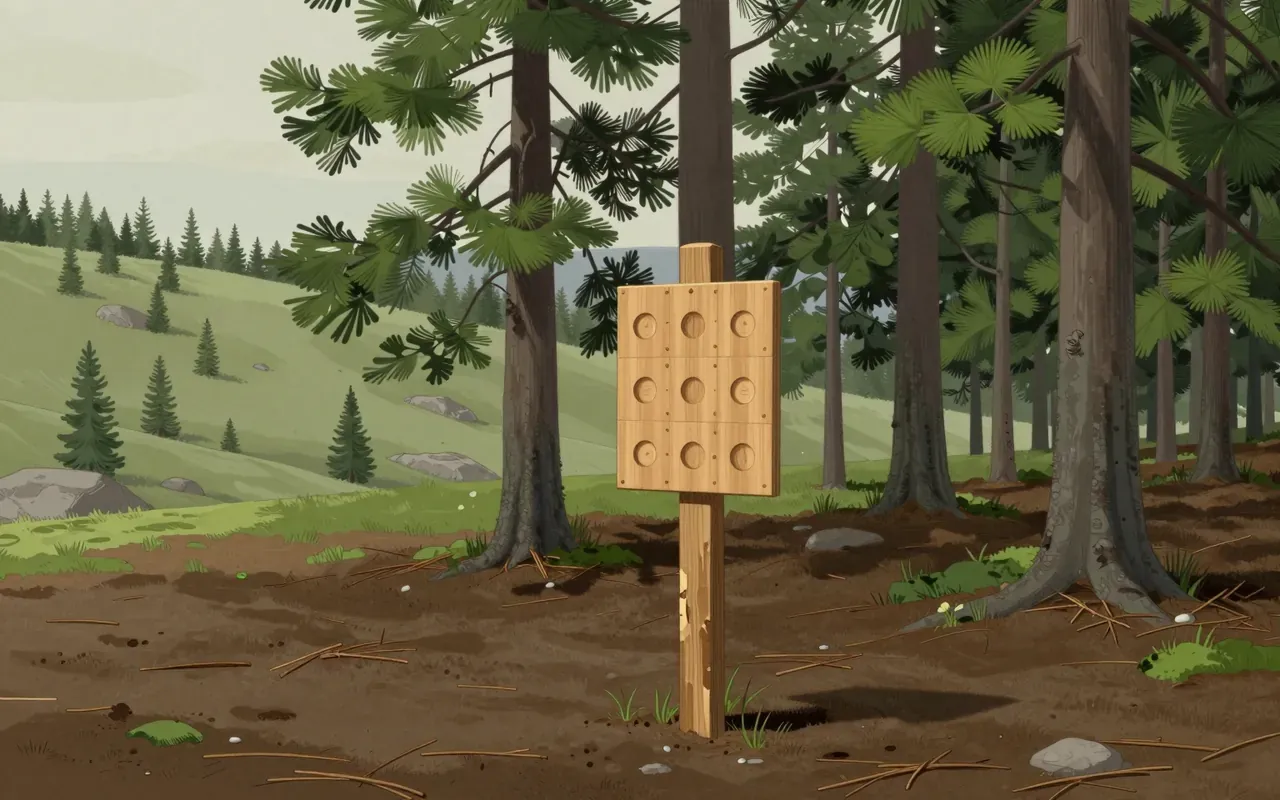
The Witness is a first-person puzzle game developed and published by Thekla, Inc., released in 2016 on Windows and PlayStation 4. It is an open-world island filled with natural and human-made structures, where players solve over 650 puzzles by drawing paths on grids or across environments.

10:58

Thief: The Dark Project

Looking Glass Studios · 1998

Thief: The Dark Project is a 1998 stealth game by Looking Glass Studios. It uses light and sound as core mechanics. Players assume the role of Garrett in a first-person, unscripted 3D world. Objectives are discrete—like stealing a specific object—and must be completed to advance. A visibility gem on the HUD indicates detectability. NPCs react to environmental cues. Eidos Interactive published it.

12:14

Thief II

Looking Glass Studios · 2000

Thief II is a foundational immersive sim built on light, sound, and consequence. It asks players to move like a thought — unseen, unheard, deliberate. Its design remains coherent decades later. Its pacing and opacity do not.

10:48

TrackMania Turbo (2016 video game)

Nadeo · 2016

TrackMania Turbo is a 2016 arcade racing game by Nadeo. It delivers stunt-focused, high-speed racing across four themed locations—Canyon Grand Drift, Valley Down and Dirty, Rollercoaster Lagoon and International Stadium—with over 200 tracks. It includes a single-player campaign, cooperative Double Driver mode, local split-screen for up to four players on PlayStation 4, Xbox One and PC, and a track editor with random generation.

9:00

Ultima I: The First Age of Darkness

Origin Systems · 1981

Ultima I: The First Age of Darkness is a foundational computer RPG where 'The Stranger'—summoned from another world—must destroy the Gem of Immortality to end Mondain's rule in Sosaria.

12:27

Uncharted 2: Among Thieves

Naughty Dog · 2009

Uncharted 2: Among Thieves is a third-person action-adventure platformer for PlayStation 3. It is developed by Naughty Dog. It continues the studio’s first approach to realistic worlds and characters. It constrains player action through fixed weapon loadouts, scarce grenades, and environment-locked traversal. It ties puzzle-solving to journal entries. It runs on a proprietary engine built for the PlayStation 3’s Cell architecture.

8:50

Unreal (1998 video game)

Epic Games · 1998

Unreal (1998) is a 3D first-person shooter co-developed by Epic MegaGames and Digital Extremes. You play Prisoner 849, a survivor of the crashed prison ship Vortex Rikers on the alien planet Na Pali. You fight through Skaarj-controlled mines, ruined Nali temples, a water temple, a Titan arena, alien installations, and the Skaarj Mothership — uncovering narrative via journals and environmental decay. Its strength lies in atmosphere, scale, and scripted set-pieces. Its limits are linearity, shallow combat, and fragmented storytelling.

9:41

Unreal Tournament 2004

Epic Games · 2004

Unreal Tournament 2004 is a multiplayer-first first-person shooter built around movement systems, weapon dual-fires, and vehicle-integrated game types. It establishes clear win conditions per mode—objective sequencing in Assault, node capture and core destruction in Onslaught, hoop scoring in Bombing Run, flag retrieval in Capture the Flag. It falls short as a solo experience and offers no scaffolding for players unfamiliar with its movement grammar or objective logic.

7:56

Unreal Tournament 3

Epic Games · 2007

Unreal Tournament 3 is a 2007 PC arena shooter built for online multiplayer. It delivers eight distinct modes, each with explicit rules: Duel’s winner-stays queue, Warfare’s orb-driven node capture, and Vehicle Capture the Flag’s hover board–only traversal. The hover board disables weapons and leaves players vulnerable when hit — a hard constraint, not a flourish. Single-player is AI-driven re-skins of multiplayer maps. It asks for rhythm, precision, and tolerance of enforced limitations — nothing more.

9:42

Warcraft III: Reign of Chaos

Blizzard · 2002

Warcraft III: Reign of Chaos is a 2002 real-time strategy game by Blizzard. It uses fog-of-war, upkeep penalties, fixed top-down perspective, and hero progression to enforce tight, consequential decision-making.

8:54

Warsow (video game)

Amanieu d'Ohsson · 2005

Warsow is a movement-first FPS built on Quake II. Its design forces mastery of physics-based tricks—dash, dodge, wall jump, rocket jump—as the sole path to advantage. It trades narrative, progression and accessibility for purity of motion and competitive clarity.

10:45

Call of Duty: Warzone (2020 video game)

Infinity Ward · 2020

Call of Duty: Warzone (2020) is a free-to-play battle royale built on the IW 8.0 engine, supporting up to 150 players per match. It uses an in-game Cash system to gate access to weapons, perks, and respawns via Buy Stations and Loadout Drops. Players begin each match with a basic pistol and two armor plates, then scavenge weapons, equipment, and killstreaks across large photogrammetry-rich maps including Verdansk, Rebirth Island, Caldera, and Fortune's Keep. Battle Royale features shrinking zones and the Gulag respawn mechanic; Plunder and Resurgence offer alternative loops. The game integrated progression with Modern Warfare, Black Ops Cold War, and Vanguard before server shutdown on September 21, 2023.

10:00

Wizardry: Proving Grounds of the Mad Overlord

Sir-Tech · 1981

Wizardry: Proving Grounds of the Mad Overlord is a 1981 dungeon-crawl RPG by Sirotech Software. It demands manual mapping, enforces strict party alignment rules, and offers no in-dungeon saving. Its ten-level dungeon beneath Trebor's castle exists solely to be descended — one floor at a time — until the party reaches Werdna and retrieves the amulet.

9:41

Wolfenstein (2009 video game)

Raven Software · 2009

Wolfenstein (2009) is a first-person shooter that adds a supernatural layer — the Veil — to id Tech 4. It lets players slow time, bypass obstacles, and kill shielded enemies. Raven Software built it using id’s engine technology. Development problems led to layoffs. The Veil is mechanically functional but narratively detached. It is a technical demonstration, not a unified experience.

11:08

UFO: Enemy Unknown

Julian Gollop · 2013

UFO: Enemy Unknown is a 1994 strategy game developed by Julian and Nick Gollop under Mythos Games. It divides play between the Geoscape—a global strategic layer beginning 1 January 1999—and the Battlescape—a voxel-based, turn-based tactical layer triggered by alien contact. It establishes the X-COM franchise. It asks players to manage finite resources, absorb permanent loss, and reconcile two deeply asymmetrical systems. It falls short in explanation, feedback, and accessibility—but not in consequence.

12:05

BeamNG.drive

BeamNG · 2015

BeamNG.drive is a sandbox vehicle simulation game built around soft-body physics. It features career mode, campaigns, time trials, and free roam. Campaigns consist of small scenarios themed around races, chases, and stunts. In time trials, players compete against their own best time using selected vehicles, maps, and routes. In free roam, players can operate, place, and manipulate objects and vehicles within maps. They can also change environmental properties such as time, gravity and wind. Players can utilize various objects ranging from road barriers to weapons such as cannons in order to inflict damage on other vehicles.

8:49

Bejeweled (video game)

PopCap Games · 2001

Bejeweled is a browser-based match-three puzzle game developed by PopCap Games and first released in 2000. Players swap adjacent gems to form lines of three or more identical gems, clearing them and triggering cascading falls. Swaps that fail to produce a match revert automatically. It features untimed and timed modes — the former ending when no moves remain, the latter requiring point accumulation to stall a depleting timer — and later introduced competitive multiplayer with special gems.

11:39

Borderlands (video game)

Gearbox Software · 2009

Borderlands (2009) is a role-playing shooter developed by Gearbox Software. It combines first-person shooter action with RPG systems—including four distinct Vault Hunters, branching skill trees, mission-driven progression, and a procedural loot engine generating over 15 million weapon and gear variations. Its cell-shaded-like art style gives Pandora a comic-book appearance. Players fight hostile wildlife and human forces on the fictional planet while seeking a fabled Vault.

10:15

Braid (video game)

Jonathan Blow · 2008

Braid is a 2D puzzle-platform game developed by Thekla Inc., published by Microsoft, released on XBLA in 2008. Its art was created by David Hellman. It uses time manipulation as its central design pillar, delivered through six sequentially unlocked worlds, each governed by a distinct temporal rule. Narrative is conveyed through text between worlds, environmental art, and gameplay itself.

9:32

Candy Crush Saga

King · 2012

Candy Crush Saga is a match-three puzzle game where players swap adjacent candies to make lines or columns of three or more identical colours. Matches remove candies, trigger cascading falls, and generate points — with bigger matches producing special candies that clear larger board sections. Each level imposes a specific goal — like collecting a number of candies or clearing jelly-covered tiles — within a fixed move limit. Lives are lost on failure and regenerate over time or via purchase. The game introduced saga-based progression and cross-platform sync, with mobile versions built for touch and offline play.

8:44

Cooking Mama (video game)

Office Create · 2006

Cooking Mama is a sequence of brief, touch-driven minigames representing kitchen tasks. Each lasts under 10 seconds. Players follow instructions on the top screen and act on the bottom screen using the stylus. Failure occurs on serious error or time expiry. It offers crisp, immediate feedback but no cumulative learning or systemic logic. Office Create developed it and enforced strict quality standards over feel and content — but not over depth or coherence.

11:13

Crysis (video game)

Crytek · 2007

Crysis is a first-person shooter developed by Crytek and published by Electronic Arts. It was released on PC in November 2007. It casts the player as Delta Force soldier Nomad on a hostile tropical island. Its core design premise is 'adaptive tactics'—requiring players to shift between stealth, aggression, lethality and mobility based on terrain, enemy placement and Nanosuit energy state.

9:23

DayZ (video game)

Bohemia Interactive · 2013

DayZ is a multiplayer online survival game set in fictional plague-ravaged countries where players scavenge, manage health, evade infected, and negotiate threat from other players in a persistent world.

8:27

Destiny (video game)

Bungie · 2014

Destiny is a server-dependent first-person shooter that structures player time around repeated group activities — strikes, raids, patrols, and PvP matches — all governed by Light-level gating and tied to Bungie.net infrastructure. Its strength lies in rhythmic, communal combat execution. Its weakness is systemic opacity and narrative detachment. It asks for consistency, not curiosity.

9:36

Diablo (video game)

Blizzard · 1996

Diablo (1996) is an action role-playing dungeon crawler developed by Blizzard North and published by Blizzard Entertainment for Windows. Players navigate procedurally generated levels using mouse-driven movement and keyboard-based spellcasting. Dungeon themes shape layout—catacombs feature long corridors, caves are non-linear. Quests are randomly assigned from tiers; only the final two are mandatory. Items degrade with use and are destroyed at zero durability. Griswold the Blacksmith repairs them for a fee; Warriors may self-repair at durability cost. Staves enable spellcasting without spell knowledge or mana. The game establishes a tight, friction-driven loop: explore, degrade, return, repeat—until the final two quests gate the end.

9:16

EarthBound

Nintendo · 1994

EarthBound is a 1994 Nintendo RPG that rejects the genre’s conventions: no overworld map, no random encounters, no top-down grid. Instead, it builds a seamless, oblique-projection world where enemies are visible NPCs, combat begins with spatial positioning, and progression is deliberately unstable. It asks players to read the environment, not the menu.

9:50

Famicom Wars

Nintendo · 1988

Famicom Wars is Nintendo’s 1988 turn-based strategy game for the Famicom. Players command Red Star or Blue Moon across 15 initial maps, aiming to capture the enemy headquarters or eliminate all enemy units in one turn. Each turn provides funds to build units at owned factories, seaports, and airports; conquering cities near headquarters yields extra funds. Only foot soldiers can conquer cities, enabling repair/refuelling. Unit roles differ in firepower and support. Two secret ending maps unlock depending on the nation chosen against the CPU.

10:12

Far Cry (video game)

Crytek · 2004

Far Cry (2004) is a first-person shooter set in a dynamic tropical archipelago. It uses environmental cover, sound, and optical tools to create a sensor-driven combat loop. Enemies react, coordinate, and communicate. Its open maps contrast with linear missions. It is Crytek’s debut AAA title, built on CryEngine, and the first Far Cry game.

9:02

Guitar Hero (video game)

Harmonix · 2005

Guitar Hero (2005) is a rhythm game where players press coloured fret buttons and strum in time with scrolling notes on screen. Developed by Harmonix and published by RedOctane for the PlayStation 2, it uses a custom guitar-shaped controller with five colour-coded frets and a strum bar. Gameplay draws from Frequency and Amplitude, and supports both left- and right-handed configurations. A Rock Meter fails the song if depleted, and Star Power can be activated via whammy bar or tilt. Players earn points for hitting notes, chords and sustains, and increase a score multiplier through consecutive successful hits. Hammer-on and pull-off techniques allow faster note series without strumming each note. Standard controllers map notes to face buttons.

11:58

Gunpoint (video game)

Tom Francis · 2013

Gunpoint is a stealth-based puzzle-platform game where players control freelance spy Richard Conway to infiltrate buildings, avoid guards, and bypass security using gadgets like the Crosslink tool.

10:09

Half-Life (video game)

Valve · 1998

Half-Life replaces cutscenes with continuous control, levels with chapters, and abstract challenges with environmental logic. It asks players to observe, adapt, and inhabit a world—not just shoot through it.

11:22

Heretic (video game)

Raven Software · 1994

Heretic (1994) is a first-person shooter developed by Raven Software. It is the first entry in the Serpent Riders trilogy and is set in the dark fantasy world of Silverspring. The game uses a modified Doom engine to deliver level-based combat, key-driven progression, and fantasy-themed interactivity.

9:36

The House of the Dead

Sega · 1996

The House of the Dead is a 1996 Sega arcade rail shooter defined by strict shooting discipline, enemy-clearance gating, and boss-pattern literacy. Its design rewards fast, accurate head shots and punishes hesitation or misaim. It offers no narrative, no progression beyond path selection, and no mechanical expansion — only escalation within its narrow loop.

8:32

Insurgency (video game)

New World Interactive · 2014

Insurgency (2014) is a tactical shooter defined by omission: no crosshair, no health bar, no minimap, no instant respawn. Players join Security or Insurgents in a fictional Middle Eastern conflict. At round start, they spend supply points on class-specific weapons. Guns kill fast. Death means spectating until their team completes an objective. Every design choice removes feedback to force presence, patience, and trust.

12:10

Just Dance (video game)

Ubisoft · 2009

Just Dance (2009) is a Wii-exclusive rhythm game published by Ubisoft. Players use only the Wii Remote in their right hand to mirror on-screen dancers’ choreography. Moves are scored X, OK, or Great. Shake moves trigger a shake meter for bonus points. Each song has two scoring targets: 10,000 (Standard) and 15,000 (Master). Four modes include Standard, Warm Up, Strike a Pose, and Last One Standing. It is one of Ubisoft’s core, long-running franchises.

10:54

Killing Floor (video game)

Tripwire Interactive · 2009

Killing Floor is a co-op first-person shooter where players survive escalating waves of ZEDs using perks, door welding, and a between-wave trader. It launched on Steam on May 14, 2009. It began as a mod for Unreal Tournament 2004. It is Tripwire Interactive’s second game.

9:09

Mass Effect (video game)

BioWare · 2007

Mass Effect (2007) is a single-player, third-person science fiction RPG developed by BioWare using Unreal Engine 3. Players customise Commander Shepard, choose one of six classes with distinct talents and weapon proficiencies, explore a galaxy map to pursue story and optional quests, and recruit and develop six squad members. Combat is real-time and squad-based, pausable for tactical ability selection, with shield/health mechanics, overheating weapons, and cover. Dialogue uses a radial wheel tied to morality (Paragon/Renegade) that shapes relationships and unlocks narrative options. The game features vehicle-based planetary exploration via the M35 Mako, resource surveying, and talent progression through experience and leveling.

10:04

NBA 2K (video game)

2K Sports · 1999

NBA 2K (1999) is the inaugural title of the NBA 2K series, released for the Sega Dreamcast. Developed by Visual Concepts and published by Sega, it features real NBA players and teams from the 1999–2000 season, custom player and team creation, and fictional commentary by Bob Steele and Rod West.

8:53

Plants vs. Zombies (video game)

PopCap Games · 2009

Plants vs. Zombies is a tower defence and strategy video game developed and originally published by PopCap Games for Windows and OS X in May 2009.

10:07

Portal (video game)

Valve · 2007

Portal is a first-person puzzle game where players solve spatial challenges using a portal gun that creates bidirectional, color-coded connections between surfaces. Physics-based movement—especially momentum conservation and orientation realignment across portals—forms the core mechanical loop, enabling techniques like 'flinging'. Constraints include inability to place portals through existing portals, on moving or unsuitable surfaces, or past Emancipation Grills, which erase portals and destroy carried objects. Puzzles are structured across test chambers, with optional challenge modes emphasizing efficiency or added hazards. The player controls Chell, a silent protagonist guided and antagonized by GLaDOS, within a clinical, minimalist facility designed to foreground functional geometry over decoration.

10:18

Project Gotham Racing (video game)

Bizarre Creations · 2001

Project Gotham Racing is a 2001 Xbox racing game developed by Bizarre Creations. It uses the Kudos system to reward stylish driving—power sliding, two-wheeling, and overtaking—with points that decay on collision. Players advance by meeting both speed and Kudos thresholds across three modes: Kudos Challenge (medal-based style events), Quick Race (five-car races), and Arcade Race (additional style challenges). It runs at 60 FPS and supports split-screen multiplayer.

10:25

Rage (video game)

id Software · 2011

Rage is a first-person shooter with integrated vehicular traversal and combat, featuring customizable weapons and ammo, dual enemy archetypes, and structured racing events with variable opposition and armament. Players upgrade vehicles via event rewards and engage in both open-world exploration and mission-based progression.

10:59

Rock Band (video game)

Harmonix · 2007

Rock Band (2007) is a four-player rhythm game developed by Harmonix. It simulates rock performance using instrument-shaped controllers for lead guitar, bass guitar, drums, and vocals. Scoring depends on timing accuracy for instruments or pitch-matching for vocals. It launched across Xbox 360, PlayStation 3, PlayStation 2, and Wii—with feature parity highest on Xbox 360 and PlayStation 3. Post-launch, Harmonix supported PlayStation 3 and Xbox 360 with weekly downloadable songs.

8:37

Rust (video game)

Facepunch Studios · 2018

Rust is a multiplayer survival game developed and published by Facepunch Studios. It launched in 2018. Players must gather or steal materials to survive in a harsh open world. They manage hunger, thirst, and health. Other players are the primary threat. Combat uses firearms and bows. NPC vehicles occasionally roam and attack armed players. Crafting is initially limited until specific items are discovered. Players build bases or join clans for protection. Raiding is central. The game operates on 'Wipes' that reset progress regularly.

10:13

Shining Force

Sega · 1992

Shining Force is a turn-based tactical role-playing game published by Sega during its console era (1983–2001), grouped with franchises like Phantasy Star and Megami Tensei. Battles occur on square grids: units move by Move stat, act once per turn (attack, cast, use item, or search), and turn order combines agility and randomness. Units gain EXP from combat and supportive actions like healing, enabling level progression. Allied units are individually characterized—each with background and personality—similar to Fire Emblem. Exploration mode functions as a traditional Japanese-style RPG, with Max representing the army outside battle. No claims support narrative branching, real-time elements, or modern UX features.

10:48

Squad (video game)

Offworld Industries · 2015

Squad is a realism-based military tactical first-person shooter developed and published by Offworld Industries in 2015. It is exclusively distributed via Steam.

9:20

Steep (video game)

Ubisoft · 2016

Steep is a sports video game developed by Ubisoft Annecy and published by Ubisoft. It was released worldwide on 2 December 2016 for PlayStation 4, Windows, and Xbox One. It is an online multiplayer extreme sports game set in a vast open world based on real mountain ranges including the Alps, Alaska Range, and mountains in Japan and Korea. Players explore a freely navigable open world set in the Alps, centered on Mont Blanc. The game can be played from either a first-person or third-person perspective. The game uses GoPro-style camera angles during races. The four main activities are skiing, wingsuit flying, snowboarding, and paragliding. Later DLC added rocket-powered wingsuit flying, sledding, BASE jumping, and speed riding. Players switch between activities using the game's menu wheel.

9:58

Super Smash Bros. Brawl

Nintendo · 2008

Super Smash Bros. Brawl is a Nintendo-published platform fighter released in 2008. It uses percentage-based damage, ring-out objectives, simplified controls, and Smash Ball-triggered Final Smashes. It supports local multiplayer with multiple controllers, custom profiles, and single-player modes including The Subspace Emissary.

8:40

Tempest (video game)

Atari · 1981

Tempest is a 1981 arcade tube shooter developed and published by Atari, Inc. It places a claw-shaped blaster on the near edge of a 3D, lane-based surface — often a closed tube — viewed from one end.

9:32

The Forest (video game)

Endnight Games · 2018

The Forest is a survival horror game developed by Endnight Games and released in 2018. It features a non-linear open-world loop centred on resource gathering, crafting, fortification, and dynamic threat management against intelligent, behaviourally complex cannibal and mutant enemies. It includes a day-night cycle, sanity-based mechanics, environmental storytelling, optional narrative progression, and no autosave—relying instead on player-placed shelters for saving. Its systems emphasise player agency in survival choices, enemy interaction, and moral ambiguity in conflict.

10:02

Wipeout (video game)

Psygnosis · 1995

Wipeout is a 1995 PlayStation anti-gravity racing game set in the F3600 league of 2052. Players select from eight craft—two per team—each defined by acceleration, top speed, mass, and turning radius. Six tracks depict futuristic Canada, the United States, and Japan. A seventh, Firestar, is set on Mars and unlocked only after completing the Rapier Championship.

9:00

Aion (video game)

NCSoft · 2008

Aion (2008) is an MMORPG by NCSoft that merges PvP and PvE into a single territorial combat system—confined to the Abyss and Balaurea—where Legions battle players and NPCs alike for fortress control using siege weapons from PvE raids. Skills unlock in fixed chains, with later abilities more powerful and strictly dependent on earlier ones. Faction-based PvP is limited to opposing races, with no exceptions outside duels, the Arena, or Panesterra. Controlling a fortress funds the Legion and grants faction-wide vendor discounts and travel perks. The design demands coordination, sequencing discipline, and commitment to a rigid zone-and-race framework.

8:42

Armored Core (video game)

FromSoftware · 1997

Armored Core (1997) is FromSoftware’s first mecha combat game. Players pilot highly modular Armored Cores across open desert bases and space stations, engaging enemies that appear from all directions. Customisation is functional: swapping leg units changes mobility; weapon choices define combat range. Credits earned from missions fund upgrades, but ammunition and repair costs are deducted even on failure. There is no hand-holding — no map, no waypoints, no enemy indicators. The loop is austere, spatial, and penalised.

8:50

Asteroids (video game)

Atari · 1979

Asteroids (1979) is a multidirectional shooter developed by Atari, Inc. It uses custom vector-display hardware derived from Lunar Lander. The player controls a triangular spaceship with rotation, forward thrust, and forward fire. Movement obeys inertia: the ship continues drifting until thrust alters direction or friction halts it. Asteroids break into smaller, faster fragments when shot. Two types of flying saucers traverse the field and fire back. Screen edges wrap both horizontally and vertically. Hyperspace teleports the ship to a random location at risk of self-destruction or collision. The game features a high-score table with player initials. It was designed for arcade play and includes exploitable behaviours like edge-lurking to evade saucer aim.

8:58

Boulder Dash (video game)

First Star Software · 1984

Boulder Dash is a deterministic puzzle game built on gravity, grids, and consequence. It gives you Rockford, dirt, boulders, time, and diamonds—and nothing else. Its rigour is its reward.

10:11

Capcom vs. SNK: Millennium Fight 2000

Capcom · 2000

Capcom vs. SNK: Millennium Fight 2000 is a 2000 arcade fighting game that merges Capcom and SNK rosters under a custom team-building framework and dual-rule-set grooves.

9:53

Celeste (video game)

Maddy Makes Games · 2018

A tightly wound platformer where every mechanic serves both challenge and character. Its movement grammar is sparse but deeply interwoven. Its narrative is explicit, not allegorical—and its design never compromises difficulty to accommodate theme.

10:40

Centipede (video game)

Atari · 1981

Centipede is a fixed shooter arcade game developed and published by Atari, Inc. in 1981. The player controls the Bug Blaster at the bottom of the screen with a trackball and shoots upward at a segmented centipede descending through a field of mushrooms. Shooting a segment turns it into a mushroom and splits the centipede; the rear piece grows a new head. The centipede moves horizontally until hitting a mushroom or screen edge, then drops one level and reverses. Mushrooms take four shots to destroy and award one point each. Their accumulation speeds the centipede’s descent. A 1998 Windows PC remake was released by Hasbro Interactive.

9:54

Clannad (video game)

Key · 2004

Clannad (2004) is a visual novel by Key that uses dialogue choices to navigate a branching narrative across two arcs—School Life and After Story—gated by a light-collection mechanic requiring full scenario completion for the true ending.

12:42

Dark Souls (video game)

FromSoftware · 2011

Dark Souls (2011) is a third-person action role-playing game and the first entry in a trilogy. It defines the Soulslike subgenre through high difficulty, environmental storytelling, and an interconnected world governed by deliberate, iterative gameplay.

8:28

Defender (video game)

Williams Electronics · 1981

Defender is a 1981 coin-operated arcade shooter by Williams Electronics. It demands constant attention across multiple threats on a scrolling, featureless planetary surface. Its control scheme fractures movement and action. Its scoring system rewards endurance, not mastery. Its influence is real — but its play is uncompromising.

9:52

Deus Ex (video game)

Warren Spector / Ion Storm · 2000

Deus Ex (2000) is an action role-playing game developed by Ion Storm and directed by Warren Spector. It combines first-person shooter, stealth, and RPG elements in a hub-based city structure. Players control JC Denton, a nanotech-augmented agent, and navigate environments using climbing, swimming, crouching, and object interaction. Missions are optional and objectives permit multiple solutions—stealth, hacking, or armed assault. Dialogue choices affect some events. Augmentations are permanent and energy-costed. Inventory space is limited. The game was built on the Unreal Engine, requiring added RPG systems. A post-release patch added deathmatch-style multiplayer.

9:35

Dragon Quest (video game)

Chunsoft · 1986

Dragon Quest (1986) is a single-player RPG developed by Chunsoft. It simplifies Western RPG conventions for console audiences. The player controls a young hero who must defeat the Dragonlord and retrieve the stolen Balls of Light. Progression relies on open exploration gated by enemy strength, turn-based combat with four commands, and stat growth tied to experience and name input. Save systems differ: passwords in Japan, battery-backed RAM in North America. Its design prioritises narrative clarity and incremental empowerment over mechanical complexity.

9:26

Ecco the Dolphin (video game)

Sega · 1992

Ecco the Dolphin is an action-adventure game where the player controls a bottlenose dolphin navigating time-traveling plot-driven levels. Core mechanics include speed-based swimming, singing-based interaction and mapping, glyph-based puzzles, and survival constraints like air depletion and health management.

9:35

F-Zero (video game)

Nintendo · 1990

F-Zero is a 1990 SNES launch title. It is a futuristic racing tournament set in 2560. Players select one of four characters, each piloting a unique hovercar. Races are five laps long. Players must avoid hazards like slip zones and magnets. Collisions drain a power meter. Energy is restored via pit areas. Lap placement must improve each time to avoid disqualification. Each lap grants a ~4-second 'Super Jet' boost and points based on finish position. The game uses Mode 7 graphics to simulate pseudo-3D motion.

9:34

Fallout (video game)

Interplay · 1997

Fallout (1997) is a foundational CRPG built on rigid arithmetic and player-driven consequence. Its design refuses abstraction: if your Luck is six, you fail 40% of critical rolls. If your Speech is 65%, you unlock one branch—not all. It does not ask you to believe. It asks you to calculate.

9:24

Fatal Frame (video game)

Tecmo · 2001

Fatal Frame (2001) is a survival horror game developed by Tecmo. It places the player as Miku Hinasaki inside a real-time-rendered Japanese mansion. Navigation uses a semi-fixed camera and flashlight in total darkness. Hostile ghosts are sensed via a 'sixth sense', drain health on contact, and can only be defeated using the Camera Obscura—an antique camera operated in first-person view with dual-stick controls. Damage depends on framing duration and proximity, though ghosts intermittently fade. Film serves as limited, graded ammunition. Progress is gated by puzzles and saved at designated points and chapter ends.
9:09

Front Mission (video game)

Square · 1995

Front Mission is a linear, story-driven tactical RPG where players command modular mecha called wanzers across a point-and-click world map, customising them under strict weight-to-power limits and managing part-specific damage states in mission-based combat.

10:02

Golden Axe (video game)

Sega · 1989

Golden Axe is a 1989 arcade beat 'em up where players choose one of three warriors to fight through fixed screens of enemies in Yuria, using melee attacks and elemental spells that consume a finite magic resource — refilled only by kicking a blue thief — while health is restored by food dropped by a green thief. Sega announced plans to revive the dormant franchise in 2023.

9:51

Grandia (video game)

Game Arts · 1997

Grandia is a role-playing video game developed by Game Arts and published by Entertainment Software Publishing for the Sega Saturn in 1997. It uses 3D environments with 2D animated bitmap sprites for characters. The camera rotates freely in third-person and must be rotated to reveal hidden items or passageways. The game features a rotational party roster. Party members' statistics increase upon leveling up through experience points earned from defeating enemies. Characters learn new abilities by repeatedly using weapons or spells until their Skill Level increases. Weapons are divided into classes: swords, maces, axes, whips, and knives. A Skill screen in the main menu lists each party member's potential abilities and their learning requirements. The game encourages periodic switching between weapons.

10:30

Guild Wars (video game)

ArenaNet · 2005

Guild Wars (2005) is a competitive online role-playing game developed by ArenaNet and published by NCSoft. It features instanced PvE and PvP, a level cap of 20 (extendable to 200 attribute points via quests), and a strict eight-skill loadout drawn from a library of over a thousand. It replaces gear dependency and grinding with skill-based combat, profession-locked builds, and modular progression across missions and arenas. Revenue came from standalone expansions and microtransactions—not subscriptions.

7:53

Guilty Gear (video game)

Arc System Works · 1998

Guilty Gear (1998) is a rigid, high-stakes 2D fighter defined by its unyielding structure and aggressive resource economy. Its design assumes arcade discipline — precise inputs, pattern recognition, and tolerance for punitive feedback. It offers no scaffolding, no compromise, and no illusion of accessibility.

11:34

Hades (video game)

Supergiant Games · 2018

Hades is a tightly wound action roguelike where Zagreus fights through randomized rooms in the Underworld to reach Mount Olympus. Combat relies on five precise inputs — attack, special, dash, magic, summon — with Boons from Olympians reshaping their effects each run. Death is frequent but productive: treasure funds permanent upgrades and narrative advances in the House of Hades between attempts. Rooms draw from pre-set layouts rather than generating freely, so variety emerges from enemy placement and Boon synergies — not spatial novelty. The game demands repetition, rewards pattern mastery, and ties every failure to forward motion. It is not about discovering new spaces, but mastering how known tools behave under shifting divine influence.

9:25

Joust (video game)

Williams Electronics · 1982

Joust is a Williams Electronics coin-operated arcade game from 1982. It features two-player cooperative or competitive play on a single screen with floating rock platforms above lava. Players control knights on birds — ostrich for Player 1, stork for Player 2 — using horizontal joystick movement and vertical wing-flap timing. Combat resolves via mid-air lance collision based on relative height. Defeated enemies become falling eggs that can be collected for points or left to hatch into new enemies. Three enemy types — Bounder, Hunter, Shadow Lord — differ in colour, AI behaviour, and point value. A pterodactyl appears periodically and must be defeated during a precise animation frame. An indestructible Lava Troll grabs low-flying characters. Lives are lost on collision or lava contact. The game was widely ported to home systems by external developers and publishers.

9:04

Kangaroo (video game)

Sun Electronics · 1982

Kangaroo is a tightly wound 1982 arcade platformer where vertical movement, joystick-based jumping, and face-to-face punching define every second of play. It delivers immediacy and clarity at the cost of variety and longevity.

10:43

Lineage (video game)

NCSoft · 1998

Lineage is a medieval fantasy MMORPG developed and published by NCSoft. It launched in September 1998 as the company’s first game. It is built on NetHack’s stat, monster, and item systems with MMO mechanics added.

9:24

Lost Ark (video game)

Smilegate · 2018

Lost Ark is a technically competent, gear-obsessed PvE MMO that delivers satisfying combo combat and vast content—but only if you accept its rigid, repetition-first design as a feature, not a flaw.

10:14

Mario Party (video game)

Hudson Soft · 1998

Mario Party (1998) is a Hudson Soft-developed, Nintendo-published multiplayer party game for the Nintendo 64. It uses a board-game structure with dice-based movement, star-collecting goals, coin-earning mini-games, and eight themed boards. Six characters are playable. Up to four players may join, with at least one human and adjustable AI difficulty. Game length is chosen before play: Lite (20 turns), Standard (35), or Full (50). Stars are purchased from Toad using coins earned exclusively through mini-games played once per turn.

9:59

Metal Gear Solid (video game)

Hideo Kojima / Konami · 1998

A top-down stealth action-adventure set inside a nuclear weapons facility, where players control Solid Snake to infiltrate, evade, and acquire key cards from bosses while managing shifting threat states: infiltration, alert, and evasion.

9:23

Metroid (video game)

Nintendo · 1986

Metroid (1986) is a foundational action-adventure game where Samus Aran explores the planet Zebes, acquiring abilities like the Morph Ball and Screw Attack to unlock new areas. It uses nonlinear progression, mandatory boss fights (Kraid and Ridley), and a password save system. It is one of Nintendo’s major franchises and features Samus Aran, a Nintendo character with international recognition.

9:00

Millipede (video game)

Atari · 1982

Millipede is a fixed shooter arcade game developed and published by Atari, Inc. in 1982. The player controls Archer, an elf, using a trackball and fire button to destroy a descending millipede and other insect enemies while avoiding collisions. The millipede moves horizontally, drops one row upon hitting obstacles or edges, and splits when shot — its rear segment growing a new head. Gameplay includes varied enemy behaviours, special items like DDT bombs, bonus swarm levels, and dynamic mushroom field changes inspired by Conway's Game of Life.

8:58

Monster Rancher (video game)

Tecmo · 1997

Monster Rancher is a PlayStation life simulation RPG by Tecmo (1997) where players acquire, raise, combine, and battle monsters — with CD-based generation as its defining input method.

10:18

Pengo (video game)

Sega · 1982

Pengo is a 1982 arcade maze game developed by Coreland and published by Sega Enterprises, Inc. The player controls Pengo — a red penguin in the Antarctic — using a four-position joystick and one button to slide or crush ice blocks in an overhead maze. The goal is to eliminate all Sno-Bees and Sno-Bee eggs each round, optionally aligning three diamond blocks for bonus points. Rounds end when all enemies and eggs are destroyed; doing so in under 60 seconds awards time-based bonus points. The game features 16 rounds with intermissions.

8:38

Phantasy Star (video game)

Sega · 1987

Phantasy Star (1987) is a traditional Japanese RPG developed and published by Sega for the Master System. It alternates between top-down overworld exploration and first-person dungeon/battle navigation. Players control Alis, recruit Noah, Odin, and Myau, share one inventory, visit towns to buy gear, face random monster encounters outside towns, and manually map complex dungeons.

9:22

Quake (video game)

id Software · 1996

Quake is id Software’s first true 3D first-person shooter. It launched in 1996. It uses a fully 3D engine. It introduced Internet deathmatch via QuakeWorld. Its single-player campaign has four episodes. Each episode contains seven to eight levels, including one secret level. Episode one’s secret level features very low gravity. Players explore levels, face monsters, and find secret areas before reaching an exit. Switches or keys open doors. Reaching the exit advances the player to the next level. There is no dedicated "use" key — players activate objects by physically pushing against them. The player can wield up to eight weapons but always carries at least an axe and a shotgun. Four separate ammo pools — shells, nails, rockets, and cells — feed specific weapons. Power-ups include Ring of Shadows (invisibility), Pentagram of Protection (invulnerability), and Quad Damage (quadruples weapon damage). Armor has three tiers, each blocking a fixed percentage of damage regardless of durability.

9:53

RollerCoaster Tycoon (video game)

Chris Sawyer · 1999

RollerCoaster Tycoon is a solo-built, tile-based construction and management simulation released in 1999 for Windows. Developed entirely by Chris Sawyer in x86 assembly language, it reflects his Lego-like design philosophy and interest in roller coaster engineering rather than personal riding experience. Players complete 21 preset scenarios (81 total with expansions) by building amusement parks, designing custom roller coasters piece-by-piece, hiring staff with defined roles, modifying terrain, and balancing visitor needs through strategic placement of amenities.

9:40

School Days (video game)

0verflow · 2005

School Days is a 2005 eroge visual novel by Stack Ltd. under its 0verflow brand. It uses branching narrative paths shaped by player decisions that track relationship states to produce romantic outcomes and endings — notably extreme 'bad endings' involving death or violence, especially those centred on Kotonoha Katsura. Its pornographic content varies by release: pixelated in original Japanese versions, uncensored in Western HQ, and omitted entirely in PS2 and PSP ports. It was adapted into a 12-episode anime series in 2007 and received manga adaptations.

9:28

Scramble (video game)

Konami · 1981

Scramble (1981) is Konami’s first major arcade hit — a horizontally scrolling shooter where the player pilots a jet across six seamless terrain sections, using separate buttons for forward fire and bombs while managing a depleting fuel supply replenished only by destroying fuel tanks. Success requires surviving, defeating enemies, and destroying a base in the final section to trigger a mission-complete flag — then repeating the cycle at increased difficulty.

10:08

Shin Megami Tensei (video game)

Atlus · 1992

Shin Megami Tensei is a 1992 first-person, turn-based RPG developed by Atlus’s Creative Department 1st Production (Team Maniax). It is a mainline title in the Megami Tensei series. Players navigate dungeons, negotiate with demons, fuse allied demons at Cathedrals of Shadows, manage magnetite, and make moral choices that shape alignment and narrative outcomes.

11:18

Soulcalibur (video game)

Namco · 1998

Soulcalibur (1999, Dreamcast) is Namco’s weapon-based fighting sequel to Soul Edge. It introduces eight-way sustained movement, forgiving input buffering, and expanded Guard Impact mechanics. Its design centres on weapon-driven character styles, tactical movement interacting with ring-out, and diversity in weapon behaviour and clash reactions.

10:04

Splatoon (video game)

Nintendo · 2015

Splatoon is a Nintendo-developed and published team-based third-person shooter released in 2015 for the Wii U. It features online four-versus-four matches, local one-versus-one, and a single-player campaign. Players control Inklings who transform between humanoid and squid forms. In humanoid form, they shoot ink to cover terrain or splat opponents. In squid form, they swim through their own ink—including up walls and through grates—to hide and replenish ink. Enemy ink impedes movement, blocks swimming, and deals damage. Matches use the Wii U GamePad for map viewing and teammate launching, and players enter with a primary weapon, secondary weapon, and a special attack charged by inking terrain. Four competitive multiplayer modes define the experience: Turf War, Splat Zones, Tower Control, and Rainmaker.

9:16

StarCraft (video game)

Blizzard · 1998

StarCraft is a foundational RTS defined by enforced asymmetry across three races—Protoss, Zerg, and Terrans—each with unique units, economies, and strategic identities. Its campaign delivers thirty fixed missions, ten per race, with AI difficulty escalating automatically. It offers no difficulty adjustment, no mission retries, and no explicit pedagogy—only systemic divergence and player-driven translation.

9:38

Suikoden (video game)

Konami · 1995

Suikoden (1995) is a Konami-published RPG that uses weapon range, speed-based turn order, and Rock-Paper-Scissors–driven duel and war systems to shape its combat and narrative. It demands strategic party formation, rewards systematic recruitment, and allows consequential failure in optional battles. It is structurally rigorous but opaque in execution details.

9:14

Super Smash Bros. (video game)

Nintendo · 1999

Super Smash Bros. (1999) is a Nintendo-published crossover fighting game that discards life bars for percentage-based knockback physics. Players move freely in two dimensions across large, dynamic stages. Damage increases as a percentage, making characters fly farther with each hit. KOs occur when a character is launched off open stage boundaries. Recovery is possible mid-air using jumps. All characters share identical control schemes. The game prioritises aerial mobility and stage awareness over traditional fighting game conventions like blocking or complex inputs.

11:09

Sweet Home (video game)

Capcom · 1989

A 1989 Famicom RPG that uses mansion architecture, fixed-character utility, and irreversible consequences to build tension—not through jump scares, but through scarcity and spatial logic.

10:09

The Dig (video game)

LucasArts · 1995

The Dig is a 1995 LucasArts point-and-click adventure game for PC and Macintosh. It casts the player as Commander Boston Low, stranded on an alien world after a failed lunar mission, investigating ancient ruins to understand a vanished civilisation and find a way home.

10:40

The Last of Us (video game)

Naughty Dog · 2013

The Last of Us (2013) is a post-apocalyptic third-person action-adventure game developed by Naughty Dog for PlayStation 3. It follows Ellie and Joel across a United States overrun by humans infected with a Cordyceps-like fungus. Players traverse ruined environments, engage in vulnerable, resource-constrained combat using firearms, improvised weapons, and stealth, and craft or upgrade gear at workbenches. The design prioritises tension, scarcity, and character-driven stakes over systemic openness or player authorship.

10:48

The Longest Journey (video game)

Funcom · 1999

The Longest Journey is a third-person point-and-click adventure game developed and published by Funcom in 1999. It is structured in chapters where players advance the story by completing tasks like talking to characters and solving puzzles. Dialogue is expansive and mostly non-essential to progression, serving instead to build character, location, and lore. Input differs by platform: PC uses a context-sensitive mouse cursor, iOS uses touch-screen interaction. Interaction is guided by icons: Eye for examine, Mouth for talk/consume, Hand for use/pick up. On PC, the cursor changes colour to signal interactivity: red for exits, light blue for multi-action objects. A map screen enables travel between major locations, with new destinations unlocking as the story progresses. Puzzles rely on subtle environmental and conversational clues. Items are stored in an inventory and flash when usable on a compatible object. The game was very well-received both by critics and users. The game was published in 9 languages: English, Norwegian, French, Dutch, Swedish, Italian, Polish, Russian and Spanish.

9:52

The Sims (video game)

Will Wright / Maxis · 2000

The Sims is a social simulation video game developed by Maxis and published by Electronic Arts in 2000. Designed by Will Wright, it allows players to create and control virtual people called Sims, build and furnish homes, and manage Sims' needs, relationships, careers, and household finances. Its open-ended gameplay has no fixed win condition. The Sims is an artificial life game built around simulated characters who respond to needs, objects, and other Sims. Although Sims can act autonomously when free will is enabled, the player usually directs their actions, manages their household, and decides how they develop relationships, skills, careers, and homes. Because the game has no fixed win condition, it can be played indefinitely and has been described as more like a toy than a traditional game. Sims are influenced by the player to interact with objects or other Sims. If enabled in the game's options, Sims have a certain amount of free will, allowing them to autonomously interact with their world; however, the player can override most of these autonomous actions by canceling them in the action queue at the top of the screen.

9:28

Time Crisis (video game)

Namco · 1997

Time Crisis is a 1995 Namco arcade light-gun shooter defined by its foot pedal mechanic, three-stage structure, and strict one-minute countdown per area. It asks players to balance rapid shooting with minimal ducking to conserve time. It helped set the standard for the lightgun shooter genre. Its design offers no narrative, no flexibility, and no recovery—only repetition, rhythm, and risk.

11:24

Virtua Fighter (video game)

Sega · 1994

Virtua Fighter (1994) is the first 3D fighting game. It uses wireframe and flat-shaded quad polygons. Movement is restricted to two dimensions within a 3D space. It has eight playable characters, each with distinctive moves. Single-player mode requires fighting all eight in fixed order, then facing boss Dural. Matches are best-of-three, won by knockout, ring-out, or higher health at round end. Controls are limited to a stick and three buttons: punch, kick, guard. A port was bundled with the Sega Saturn at Japanese launch and sold at nearly one-to-one ratio with the console. Virtua Fighter and Virtua Fighter 2 together became Sega's best-selling arcade games of all time.

10:56

Carmageddon

Stainless Games · 1997

Carmageddon is a 1997 vehicular combat game developed by Stainless Games. It subverts racing conventions by making wrong-way driving, crashing, and pedestrian killing explicit objectives. The player races a vehicle against computer-controlled competitors in city, mine and industrial areas. Time is limited but extendable by collecting bonuses, damaging opponents’ cars or running over pedestrians. A race ends when the player finishes the course, wrecks all opponent vehicles, or kills all pedestrians on the level. The game features thirty-six racetracks across eleven locations. Its fully featured physics engine — a world-first for video games — makes collisions unpredictable and tactile. Crashing feels consequential because the engine simulates damage, momentum and environmental interaction in real time. Wrong-way driving wasn’t a bug — it was the core design mandate. Pedestrian killing was added to distinguish it from Destruction Derby — and to provoke. It is worth your time if you want to experience how physics-driven chaos reshaped vehicular combat in 1997 — not as nostalgia, but as a working prototype of rule-breaking design.

9:30

Civilization VI

Firaxis · 2016

Civilization VI is a turn-based 4X strategy game where players grow a single civilization from antiquity to the near future by exploring, expanding, exploiting, and exterminating.

10:21

Crash Team Racing

Naughty Dog · 1999

Crash Team Racing is a precise, class-driven kart racer built around a strict, multi-stage power slide mechanic. It demands rhythmic timing, not reflexes. Its hardware constraints — split-screen performance, memory limits — are visible in its design choices, not hidden behind abstraction. It is the last Crash game Naughty Dog made, and it plays like a farewell: focused, complete, and uncompromising.

10:21

Crypt of the NecroDancer

Brace Yourself Games · 2015

Crypt of the NecroDancer is a rhythm-gated roguelike released in April 2015 by Brace Yourself Games. All movement and attacks must occur on the musical beat. Enemies follow fixed rhythmic patterns — some on every beat, others on subdivisions. Missing the beat resets scoring and risks damage. The dungeon has four zones, each with four levels. Input supports dance pad, keyboard, or gamepad.

10:00

Diddy Kong Racing

Rare · 1997

Diddy Kong Racing is a 1997 Nintendo 64 kart racer developed and published by Rare. Players select from ten characters and race across five worlds—each containing four tracks—using cars, hovercraft, or aeroplanes. Victory over antagonist Wizpig comes solely through winning races. Vehicle types impose clear trade-offs: the car is all-round but slowest on sand and water; the hovercraft handles those surfaces but suffers poor acceleration and manoeuvrability; the aeroplane accesses aerial zones and turns sharply but has the lowest speed. All characters can use all vehicles. The design asks players to match vehicle to terrain—and learn why the match fails as often as it succeeds.

8:46

Dota 2

Valve · 2013

Dota 2 is a rigid, team-bound MOBA that demands mastery of role, map, and timing — with zero concessions to newcomers or casual investment.

10:18

2022 Formula One World Championship

Codemasters · 2022

The 2022 Formula One World Championship game is Codemasters’ annual F1 series entry simulating the 73rd running of the championship. It models the full season — twenty-two Grands Prix, dual titles, ground-effect aerodynamics reintroduced after 1982, Pirelli tyres, two-driver teams, and the sprint format at exactly three events: Emilia Romagna, Austrian, and São Paulo — following team negotiations that cut the sprint schedule from six to three. It makes no claims about driver agency, team politics, or design intent behind regulation changes. It is a licensed procedural replica, not a reimagining.

10:46

Final Fantasy XIV: Stormblood

Square Enix · 2017

Stormblood is a systemic expansion — not a story one. It builds around constraints: fixed-level raids, XP loss on death, mecha-bound PvP, and jobs that start mid-level. It rewards precision, repetition, and group discipline. It withholds flexibility, narrative integration, and trial access to its hardest content.

11:01

Fortnite Battle Royale

Epic Games · 2017

Fortnite Battle Royale is a free-to-play battle royale released by Epic Games in September 2017. It supports up to 100 players per match in solo or squad formats. Players descend from the Battle Bus onto a large island, gather weapons and resources—including wood, stone, and metal—and build temporary structures for movement, defense, or combat. The game is played in third-person perspective, with a continuously shrinking safe zone forcing encounters. It uses microtransactions and a battle pass system for revenue and supports cross-platform play across PC, console, and mobile.

10:38

Forza Horizon 5

Playground Games · 2021

Forza Horizon 5 is a racing game set in an open world modelled on Mexico. It was developed by Playground Games and published by Xbox Game Studios for Windows, Xbox One, and Xbox Series X/S.

9:21

Forza Motorsport 4

Turn 10 Studios · 2011

Forza Motorsport 4 is the fourth Forza Motorsport title, developed by Turn 10 Studios for Xbox 360 and published by Microsoft Studios in 2011. It is a racing simulation emphasising realistic car handling and visual fidelity on closed-circuit tracks. It supports dual-input control: traditional controllers or wheels for driving, and Kinect for head-tracking, voice commands, or full-body steering (with auto-acceleration/braking). Its Autovista mode enables detailed exploration of select cars, and its World Tour career adapts AI difficulty based on player performance.

9:31

Gran Turismo 7

Polyphony Digital · 2022

Gran Turismo 7 is a technically accomplished sim racing title that prioritises curated progression and hardware fidelity over player agency. Its reliance on online infrastructure for core functionality—including saving—defines its limits as much as its strengths. It delivers realism through physics and presentation, but structures engagement around compliance, not compulsion.

8:25

NBA Street

EA Sports · 2001

NBA Street is a deliberate departure from EA Sports’ simulation ethos. It trades authenticity for attitude, structure for swagger, and time limits for point thresholds. Its design insists on expression before execution—and rewards repetition, not mastery.

8:50

Need for Speed: Underground 2

Black Box · 2004

Need for Speed: Underground 2 is a racing game where tuning, driving, and discovery are inseparable. It asks you to treat Bayview as terrain—not backdrop—and rewards persistence over precision. Its constraints are deliberate: no fast travel, no race menus, no hand-holding for hidden events. It works because those constraints shape a specific kind of attention: one tuned to corners, shortcuts, and the hum of a modified engine echoing off concrete.

8:35

Pokémon Gold and Silver

Game Freak · 1999

Pokémon Gold and Silver refine the series’ core loop with a real-time clock and expanded Pokédex, but offer no structural departure from the top-down, random-encounter, EXP-driven RPG formula established earlier.

11:30

Project Gotham Racing 2

Bizarre Creations · 2003

Project Gotham Racing 2 is a tightly wound, mode-structured arcade racer that asks players to master rhythm, timing and spatial awareness — not just acceleration. Its Kudos system creates a distinct performance grammar. Its fidelity is tangible: in polygon count, microphone count, and circuit variety. But it offers no narrative, no online play, and no cross-mode progression. It is a studio-built showcase — not a player-built world.

9:20

Shogun: Total War

Creative Assembly · 2000

Shogun: Total War is a foundational strategy game that fused turn-based empire management with real-time battlefield tactics. Its ambition—to simulate feudal Japanese unification—was matched only by its structural compromises. The campaign map was added late. Systems coexist but rarely converse. Yet its combat loop remains legible, its faction asymmetry functional, and its provincial logic direct. It rewards patience, pattern recognition, and tolerance for abstraction.

9:56

Sonic R

Sonic Team · 1997

Sonic R (1997) is a foot-racing game co-developed by Sonic Team and Traveller's Tales for the Sega Saturn. It emphasises jumping, exploration, and item-based progression across five themed tracks — with reverse racing, ring trading, and unlockable characters tied to hidden token collection. Its design responds directly to Saturn hardware limits: custom engine, 12-layer transparency, and 30 fps target. It is not a kart racer, nor a traditional Sonic platformer — but a constrained experiment in 3D movement under technical duress.

9:20

Splatoon 2

Nintendo · 2017

Splatoon 2 is a Nintendo-published third-person shooter built around ink-based terrain control, morphing between humanoid and cephalopodic forms, with structured competitive and co-op modes.

9:10

Super Smash Bros. Ultimate

Nintendo · 2018

Super Smash Bros. Ultimate is a platform fighter for up to eight players. It belongs to Nintendo’s Super Smash Bros. franchise. It uses a percentage-based knockback system, three victory conditions, toggleable Final Smashes, random items including Poké Balls and Assist Trophies, and stage variants with adjustable hazards. Players can save custom rule presets. It includes Spirits and World of Light as core single-player systems.

9:43

The Outer Worlds

Obsidian Entertainment · 2019

The Outer Worlds is a first-person action RPG where player agency is enforced by rigid, upfront stat choices — not narrative illusion. It runs on Windows, PS4, and Xbox One. Its world is built on corporate terraforming, not starship dogfights. Every dialogue option, inventory slot, and stealth path is earned, not granted.

11:44

Tony Hawk's Pro Skater 3

Neversoft · 2001

Tony Hawk's Pro Skater 3 is the pivot point where the series’ combo grammar expanded and online play entered—raw, hardware-bound, and version-dependent.

7:42

Torchlight

Runic Games · 2009

Torchlight is a single-player action role-playing game released for Windows on October 27, 2009. It was developed by Runic Games and published by Perfect World Entertainment and Encore, Inc. The game is set in the fictional town of Torchlight and the caverns and dungeons nearby. Players control a lone hero who explores randomized dungeons built from hand-designed modular chunks. Combat is point-and-click on PC. The loop is clear: descend, kill monsters in large groups, collect loot, return to the single town hub to sell, buy, and accept quests. Quests drive progression through unique boss battles. Side and random quests offer optional detours. The modular chunk system creates dungeons with intention—not randomness for its own sake. Levers open secret doors. Bridges move. Rooms connect meaningfully. The isometric-like overhead perspective gives spatial clarity. Loot drops frequently and visibly. The town hub is lean: one place to sell, buy, and take quests—no filler. It does not support co-op or multiplayer. It offers no character customisation beyond class choice. There is no endgame beyond completing the main questline and replaying with new classes. The town hub is static and unchanging. No lore depth or worldbuilding beyond functional exposition.

11:16

TrackMania

Nadeo · 2003

TrackMania (2003) by Nadeo is a racing game built around player-authored tracks, checkpoint-driven time trials, and non-interactive concurrent multiplayer. It prioritises iterative lap refinement over narrative, shared space over shared stakes, and file-based exchange (.gbx) over centralised distribution. Its design assumes a player who wants to build, break, and rebuild a single corner until it yields perfection—and who finds satisfaction in that loop alone.

10:07

TrackMania Nations

Nadeo · 2006

TrackMania Nations is a deliberately constrained 2006 arcade racer. It removes collision, car choice, and environmental variety to focus entirely on solo time-attack precision. Its loop is simple: run, fail, restart, refine. It asks for repetition, spatial memory, and fine motor control — nothing more, nothing less.

10:30

Wipeout 2097

Psygnosis · 1996

Wipeout 2097 is a PlayStation-era anti-gravity racing game developed by Psygnosis using the console as primary reference hardware in preparation for its September 1995 Western launch. Players race against AI opponents, aiming to finish in the highest position possible. Vehicles travel at high speeds and require air-brakes for cornering. A weapons system lets players eliminate opponents mid-race. Each vehicle has a shield energy quota; depletion from weapons or impacts destroys the craft. Destroyed ships can be recharged at pit stops at the cost of race time. The Quake Disruptor creates a wave effect that launches opponents into the air. Difficulty escalates across three classes — Vector, Venom, Rapier — each with higher speeds and more complex tracks.

8:30

Yoshi's Story

Nintendo · 1997

Yoshi's Story is a Nintendo platform game released in 1997, built around two modes—Story and Trial—with a pop-up storybook aesthetic and pre-rendered 3D graphics.

10:08

13 Sentinels: Aegis Rim

Vanillaware · 2019

13 Sentinels: Aegis Rim is a science fiction-themed PS4 game set in the 1980s, combining mecha with a shōjo manga aesthetic. It is a genre-mixing narrative engine built around three interlocking modes—Remembrance, Destruction, and Analysis—and structured by persistent keywords, timeline-jumping, and daily rewinds.

10:16

Advance Wars

Intelligent Systems · 2001

Advance Wars is a deterministic, grid-based strategy game where victory is defined by elimination or capture — never story, never spectacle. Its rules are tight, its feedback immediate, its constraints absolute. It runs on the Game Boy Advance. It was made by Intelligent Systems. It came out in 2001.

10:18

Advance Wars: Days of Ruin

Intelligent Systems · 2008

Advance Wars: Days of Ruin is a 2008 turn-based strategy game developed by Intelligent Systems for the Nintendo DS. It departs from earlier entries with a darker tone, toned-down CO powers, no Tag powers, and new units and terrain effects. Players command military forces on grid-based maps to defeat enemies by destroying all units or capturing their headquarters. Fog of war, weather, and terrain shape tactics. The campaign contains 26 story-driven missions. Multiplayer supports local hot-seat and online play via Nintendo Wi-Fi Connection.

10:46

AEW Fight Forever

Yuke's · 2023

AEW Fight Forever is a deliberate step back: a wrestling game that abandons simulation for swing, realism for rhythm, and scale for structure. It works because its constraints are clear and consistent—not despite them.

9:32

Age of Empires II

Ensemble Studios · 1999

Age of Empires II is a real-time strategy game developed by Ensemble Studios in 1999, running on the Genie Game Engine. It is the second title in the original Age of Empires series. Players advance one of 13 civilizations through four historical Ages to build towns, gather resources, create armies, and defeat opponents.

10:21

AI: The Somnium Files

Spike Chunsoft · 2019

AI: The Somnium Files is a branching adventure game developed by Spike Chunsoft in 2019. It alternates between first-person investigation and timed third-person dream exploration ('Somnium'). Players use an AI assistant named Aiba to analyse scenes and augment vision. Progress requires completing multiple routes via a flowchart, with each route withholding key narrative information until all are finished.

9:58

Apex Legends

Respawn Entertainment · 2019

Apex Legends is a squad-first, ping-driven, live-service hero shooter that prioritises coordinated entry, rapid adaptation, and long-term commitment over solo expression or narrative resolution.

10:24

Beat Saber

Beat Games · 2018

Beat Saber is a virtual reality rhythm game developed by Beat Games in 2018.

9:42

Bejeweled Blitz

PopCap Games · 2010

A high-speed, one-minute match-three game that trades contemplation for velocity — and rewards relentless, real-time decision-making.

9:09

Blade & Soul

NCSoft · 2012

Blade & Soul is a Wuxia-themed MMORPG developed and published by NCSoft. Launched in June 2012, it was NCSoft’s first MMORPG since Aion in 2008. It features open-world exploration, real-time combo-based combat, four folklore-inspired races, and extensive character customisation.

10:53

Borderlands 2

Gearbox Software · 2012

Borderlands 2 is a shooter built around loot as feedback, class skills as rhythm, and repetition as reward. Its design commits to systems over spectacle—and it works.

9:08

Bulletstorm

People Can Fly · 2011

Bulletstorm is a first-person shooter built around one idea: make killing absurdly creative, then reward it instantly. Its design forces constant verticality, slow-motion decision-making, and weapon-specific improvisation. It has no narrative weight, no competitive layer, and no ambition beyond its loop. It succeeds precisely where it narrows its focus—and fails where it tries to widen it.

9:57

Burnout 3: Takedown

Criterion Games · 2004

Burnout 3: Takedown is a 2004 arcade racing game developed by Criterion Games and published by Electronic Arts and Acclaim Entertainment. It is the third instalment in the Burnout series, defined by fast-paced arcade racing. Its central innovation is the Takedown mechanic: slamming opponents until they crash, which fills and extends the boost meter. Boost is earned through risky driving—including drifting, near misses with traffic, and driving in oncoming lanes—and used to rapidly increase speed. Standard circuit races take place on carriageways and city streets populated with traffic. Single Race mode pits the player against five AI opponents in a single or multiple lap race. Crash mode involves causing monetary damage in multi-vehicle pileups at junctions, featuring Crashbreakers and power-ups like Heartbreaker. Impact Time—a slow-motion state triggered by crashes—enables Aftertouch, letting players steer wrecked chassis into rivals. The game runs at 60 fps during driving for responsiveness, dropping to 30 fps during crashes to render more particles and debris.

9:51

Burnout Paradise

Criterion Games · 2008

Burnout Paradise is a racing game where the city is the only level, the car is the only tool, and crashing is the only score.

9:09

Counter-Strike 2

Valve · 2023

Counter-Strike 2 refines rather than reimagines. Its strength lies in constraint: fixed teams, no respawns, round-based economy, and mechanical precision. It asks for commitment to a narrow, high-stakes loop — and gives nothing back to players who stray from it.

10:08

Counter-Strike: Global Offensive

Valve · 2012

Counter-Strike: Global Offensive is a team-based, round-driven, economy-focused multiplayer shooter where asymmetry, recoil control, and mode-specific rules define every session.

9:56

Crysis 2

Crytek · 2011

Crysis 2 is a first-person shooter developed by Crytek and released in March 2011. It is a direct sequel to Crysis. It casts you as Force Recon Marine Alcatraz in an evacuated, war-torn New York City—the 'urban jungle'.

10:06

Dark Age of Camelot

Mythic Entertainment · 2001

Dark Age of Camelot is the first MMORPG built explicitly around persistent, three-faction realm versus realm warfare. Its design enforces rigid class roles, prioritises RvR balance over cross-realm equivalence, and delivers action through customisable Quickbars—not adaptive AI or dynamic systems. It runs on Linux servers handling ~4,000 players per world, constrained by a 10 kbit/s per-player data stream. It is Mythic Entertainment's first MMORPG and the game for which the studio is best known.

10:48

Deathloop

Arkane Studios · 2021

Deathloop is a first-person shooter built around a deterministic time-loop puzzle. Players control Colt Vahn, who must kill eight Visionaries before midnight to break the loop. Time advances only when moving between Blackreef’s four districts. NPC routines and environmental access shift with time-of-day. Actions in one district affect others. There is exactly one valid kill order. Every failure resets progress.

10:08

Destiny 2

Bungie · 2017

Destiny 2 is a free-to-play online first-person shooter developed by Bungie, released in 2017. It features a shared-world environment with role-playing elements. Activities are divided between PvE (story missions, three-player strikes, dungeons, six-player raids, free-roam patrol with public events, and exploration-focused activities featuring NPCs outside social spaces) and PvP (objective-based and deathmatch modes). Players embody Guardians wielding Light—and later Darkness—to defend Earth’s last city against alien threats. It runs on the Tiger Engine, uses Bungie.net for player statistics and account management, and supports companion mobile apps for news, inventory, and group finding.

9:47

Diablo II

Blizzard · 2000

Diablo II is a rigid, act-locked RPG where procedural generation serves narrative containment — not freedom. Its power lies in enforced repetition across escalating difficulty tiers, each demanding full completion before unlocking the next. It asks for time, patience, and tolerance for systemic friction. It gives back loot, clarity, and a sense of earned scale — nothing more, nothing less.

10:22

Diablo III

Blizzard · 2012

Diablo III is a 2012 action RPG built around loot-driven progression, real-time isometric combat, and mandatory online connectivity. Its systems prioritise frequency and clarity of reward over narrative or environmental storytelling. The game’s design enforces repetition, not reflection.

8:41

Diablo IV

Blizzard · 2023

Diablo IV is an online-only ARPG where eight classes fight themed enemy families in an open world punctuated by procedurally generated dungeons. Combat effectiveness is determined by attributes and gear. Loot acquisition drives progression. Player versus player combat exists. There is no offline mode.

9:52

Digimon World

Bandai · 1999

Digimon World is a PlayStation RPG where raising a single Digimon — through feeding, training, resting, and bathroom use — determines its evolution, intelligence, and battle effectiveness. Poor care locks players into Numemon, a weak Champion form. Battles restore order to File City by recruiting feral Digimon. When the Digimon ages out, it reverts to an egg — forcing a full restart.

8:50

Diner Dash

PlayFirst · 2003

Diner Dash is a time-management game where players direct Flo to complete restaurant service tasks under increasing time and mood constraints.

9:10

Dirt Rally

Codemasters · 2015

Dirt Rally is a focused, unforgiving rally simulation that replaces spectacle with consequence. It demands repetition, observation, and adaptation—not reflexes or narrative. Its strength is in its specificity: real locations, real cars, real weather, real penalties. Its limit is in what it refuses to offer: accessibility, explanation, or compromise.

9:11

Dishonored 2

Arkane Studios · 2016

Dishonored 2 is a first-person action-adventure with stealth elements, developed by Arkane Lyon and published by Bethesda Softworks in November 2016. It runs on the proprietary Void Engine. Players choose between Emily Kaldwin or Corvo Attano, each with distinct supernatural abilities — all optional.

10:02

Dishonored: Death of the Outsider

Arkane Studios · 2017

Dishonored: Death of the Outsider is a first-person action-adventure game developed by Arkane Studios in Lyon. It is a standalone expansion concluding the Kaldwin-era arc of the Dishonored series. Players assume the role of Billie Lurk and use conventional weapons, gadgets—including a wrist-mounted crossbow, land mines, grenades, and a new hook mine—and fully unlocked supernatural abilities such as Displace and Semblance. Energy for powers regenerates automatically, eliminating consumables. The Chaos system is removed, and optional Contracts serve as side missions.

9:06

Donkey Kong Country

Rare · 1994

Donkey Kong Country is a side-scrolling platform game where players control Donkey and Diddy Kong across 40 levels accessed via a world map. Gameplay involves jumping between platforms, avoiding obstacles, swapping between characters with distinct abilities (Donkey: stronger, terrain-slap; Diddy: faster, more agile), defeating enemies through jumping, rolling, or throwing barrels, and completing boss fights at the end of each area. The game features collectibles, animal buddies with special abilities, bonus stages, and multiplayer modes.

9:39

Donkey Kong Country 2

Rare · 1995

Donkey Kong Country 2 is a tightly wound 2D platformer where asymmetrical character abilities, mandatory boss gates, and zero-tolerance checkpointing define its rhythm. It teaches through repetition, punishes hesitation, and refuses to separate movement from consequence.

11:06

Donkey Kong Country 3

Rare · 1996

Donkey Kong Country 3 is a 1996 platform game by Rare where Dixie Kong and Kiddy Kong navigate 48 levels across 8 worlds using dual-character switching, vehicle-based overworld traversal, and direct animal friend control.

9:59

Doom 64

Midway · 1997

Doom 64 is a first-person shooter for the Nintendo 64 developed and published by Midway Games. Its gameplay follows the established Doom formula: players advance through 28 story levels and 4 secret levels by battling demons, collecting weapons and keys, and activating switches to reach each level's exit while surviving deadly ambushes and traps. The game uses a customized version of the Doom engine enabling new level geometry and dynamic colored lighting, and features unique visual assets including redesigned weapons and monsters. All weapons from Doom II return with new sprites and sound effects, plus a new weapon—the Unmaker—which uses hitscan but appears projectile-based and can be upgraded via three ancient artifacts scattered across levels. Most enemies from Doom and Doom II appear with similar behavior and attributes, though some—including the revenant, arch-vile, spiderdemon, and 'heavy weapon dude'—are omitted, and one new enemy—the nightmare imp—is added. A unique final boss, the Mother Demon, appears. The game’s narrative follows the Doom Marine returning alone to exterminate resurrected demons in quarantined UAC installations, culminating in his permanent self-exile in Hell after defeating the Mother Demon.

9:50

Doom Eternal

id Software · 2020

Doom Eternal is a first-person shooter where players control the Doom Slayer to battle demonic forces of Hell. Combat is fast-paced and requires constant movement. Players must manage health, armor, and ammo — restoring health via Glory Kills after staggering enemies, refilling armor by igniting enemies with a flamethrower, and obtaining ammo by using the chainsaw on enemies (except for BFG and Crucible Blade ammo and charges, which are only available in combat arenas). Glory Kills recharge the Blood Punch melee attack, which destroys enemy armor. The Destructible Demons system causes enemies' bodies to deteriorate progressively as they take damage. The Slayer is highly agile, capable of double-jumping, wall-climbing, and using an omnidirectional dash to evade enemies.

10:06

EA Sports FC 25

EA Sports · 2024

EA Sports FC 25 is a football simulation game released on 27 September 2024. It introduces FC Rush, a fast-paced 5v5 mode on a smaller pitch, and expands Career Mode with deeper managerial systems. It is the second EA Sports FC title and the 32nd in EA’s football simulation lineage. Pre-ordering the Ultimate Edition granted early access from 20 September 2024. It inherits over 300 league and team licensing deals and was developed by EA Vancouver and/or EA Orlando.

10:40

The Elder Scrolls Online

ZeniMax Online · 2014

The Elder Scrolls Online is a persistent-world MMORPG set in Tamriel during the Second Era, developed by ZeniMax Online Studios and released in 2014. It supports solo and group play online only, with non-linear exploration, questing, and random events. Ten races and seven classes are available; vampirism and lycanthropy are accessible without purchase as of Update 49. The Imperial race remains locked behind a Crown Store purchase. Some zones require DLC. First- or third-person perspective is selectable. All zones are accessible regardless of faction or level.

10:31

Elite Dangerous

Frontier Developments · 2014

Elite Dangerous is a persistent-galaxy space sim built on scale, synchronicity, and player-driven consequence. It offers unparalleled scope but minimal scaffolding. Its ambition is structural, not narrative. Its cost is time, not money.

10:24

Enemy Territory: Quake Wars

Splash Damage · 2007

Enemy Territory: Quake Wars is a class-based, objective-focused, team-oriented multiplayer FPS set in the Quake universe. Developed by Splash Damage and released in 2007, it uses a heavily modified id Tech 4 engine and introduces vehicles — a first for the Quake series. Teams are asymmetrical (human GDF and alien Strogg), yet share the same basic weapons and tools. Gameplay focuses on one or two main objectives at a time, not spread across the map. New objectives appear dynamically during play, often tied to class-specific capabilities. Players can form fireteams — user-created or game-generated — to coordinate strategy. An XP-based progression system rewards mission completion, resetting per campaign.

10:47

EverQuest

Verant Interactive · 1999

EverQuest is a foundational 3D MMORPG that demands group reliance, punishes solo risk, and treats servers as persistent social spaces — not content delivery platforms.

9:05

EverQuest II

Sony Online Entertainment · 2004

EverQuest II is a 3D fantasy MMORPG for Windows PCs, released by Sony Online Entertainment on November 9, 2004. It is a sequel set hundreds of years after the original EverQuest, following the same strategy: persistent world, experience-based leveling, guild-driven advancement, and a robust tradeskill system that lets players craft spells, potions, armor, and more. It shifted to free-to-play on December 6, 2011, with optional subscriptions. Its core loop demands sustained group coordination, gear acquisition, and long-term social investment—making it viable only for players who treat MMOs as infrastructure, not entertainment.

9:42

Excitebike

Nintendo · 1984

Excitebike is a tightly wound physics puzzle disguised as a motocross racer. Its loop is simple: accelerate, jump, land, repeat—until your timing is flawless. It asks for patience, precision, and tolerance for abrupt failure. It gives back immediate feedback, clear rules, and rare creative agency via its track editor. It withholds story, scalability, and forgiveness. It is not nostalgic fluff. It is functional design—brutal, specific, and still sharp.

9:27

F-Zero GX

Nintendo · 2003

F-Zero GX is a high-speed futuristic racing game built around track memorisation, reflexes, and precise vehicle control. It retains core mechanics from F-Zero X but expands them with customizable machines, energy-based boosting and damage, dynamic track elements (dash/jump plates, obstacles), and advanced cornering techniques like drifting and snaking. Its structure includes Grand Prix, Story, Time Attack, and multiplayer modes, all governed by energy management, vehicle tuning, and escalating difficulty. The game was developed by Amusement Vision and published by Nintendo for the GameCube.

10:32

Far Cry 2

Ubisoft Montreal · 2008

Far Cry 2 is a systemic shooter where every choice carries weight—and every weight pulls you deeper into the war’s inertia.

12:52

Far Cry 3

Ubisoft Montreal · 2012

Far Cry 3 is a first-person shooter set on a pirate- and mercenary-controlled tropical archipelago. Ubisoft Montreal developed it in 2012 using the Dunia engine, building on its work with Far Cry 2.

10:44

Far Cry 4

Ubisoft Montreal · 2014

Far Cry 4 is a polished, iterative open-world shooter that prioritises environmental spectacle and weapon-led combat over narrative weight or systemic innovation. It works best when treated as a tactical sandbox — not a story world.

9:55

Far Cry 5

Ubisoft Montreal · 2018

Far Cry 5 is a first-person shooter developed by Ubisoft Montreal and released in 2018. It runs on the Dunia engine. Players explore Hope County freely on foot or by vehicle. They customise their silent protagonist, engage in ranged and melee combat, and use a ballistics system with bullet drop. Progression is region-based: most of the world opens after the intro, and Resistance Points earned through actions trigger story events.

8:39

Far Cry 6

Ubisoft Montreal · 2021

Far Cry 6 is a first-person shooter set on the fictional Caribbean island of Yara, where the player assumes the role of Dani Rojas, a guerrilla fighter attempting to topple the dictatorship of Antón Castillo.

10:06

Fate/Stay Night

Type-Moon · 2004

Fate/Stay Night is a foundational Japanese visual novel that prioritises narrative architecture over interactivity. Its design demands rereading, rewards attention to subtext, and refuses to collapse its three routes into a single coherent whole — making it a deliberate, demanding, and historically significant text-based experience.

12:01

Final Fantasy XIV: Endwalker

Square Enix · 2021

Endwalker delivers narrative closure and mechanical polish—but only to those already inside Final Fantasy XIV’s walls.

10:10

Fire Emblem Awakening

Intelligent Systems · 2012

Fire Emblem Awakening is a tactical RPG for Nintendo 3DS where grid-based combat, relationship-building, and permadeath choices define every session. It launched as the series’ make-or-break title — and succeeded by selling 400,000 units in Japan within its first year.

8:10

Fire Emblem: The Blazing Blade

Intelligent Systems · 2003

Fire Emblem: The Blazing Blade is a tactical RPG where permanent death, class-based roles, and square-grid combat define every choice. It asks players to weigh risk against reward, memorise ranges, and accept loss as instruction—not failure.

10:14

Fire Emblem: Three Houses

Intelligent Systems · 2019

Fire Emblem: Three Houses is a tactical RPG released in 2019 by Intelligent Systems in partnership with Koei Tecmo. Intelligent Systems provided the main plot, game system, and mechanics; Koei Tecmo handled the bulk of the programming. Players choose their character's gender and name at the start. Gameplay alternates between story-driven battles and social simulation segments at Garreg Mach Monastery—the central hub for all activities. Selecting a house determines the narrative path from that point forward. The opening half focuses on school life, then the story skips ahead five years and shifts to war, locking the player to their chosen house. Players manage a calendar with limited days to allocate to varied monastery activities—including teaching, field exercises, greenhouse planting, fishing, and free-time interactions. Relationships are built via Support actions influenced by player choices and dialogue.
9:18

Forza Horizon

Playground Games · 2012

Forza Horizon is a festival-driven open-world racer that swaps lap timing for stunt chaining, uses Colorado’s roads as its track, and runs exclusively on Xbox 360. It works because it makes aggression pay. It falters because it never deepens beyond that loop.

10:44

Forza Motorsport 7

Turn 10 Studios · 2017

Forza Motorsport 7 refines the Motorsport formula without redefining it. It delivers technical excellence and scale — but nothing structurally new.

10:14

Gran Turismo 2

Polyphony Digital · 1999

Gran Turismo 2 is a PlayStation racing simulation with two distinct modes—Arcade for instant access, Simulation for licensed progression—and nearly 650 cars across 27 tracks, including rally stages. Its brake dynamics were retuned to reduce lock-ups and oversteer. It expands on its predecessor in volume, not vision.

9:32

Gran Turismo 5

Polyphony Digital · 2010

Gran Turismo 5 is a PlayStation 3 sim racing title by Polyphony Digital that adds mechanical and external damage, real-time deformation, overturning, weather on select circuits, karting, stereoscopic-3D, and a parameter-driven course editor.

8:42

Gran Turismo 6

Polyphony Digital · 2013

Gran Turismo 6 is a PlayStation 3 racing simulation developed by Polyphony Digital. It features 30 tracks (71 layouts), 1,200 cars, variable weather and time-of-day on some tracks, a dynamic celestial sphere, adaptive tessellation rendering, and a simplified UI with faster loading. It is designed as a realistic driving simulator offering realistic driving physics.

11:08

Grim Fandango

LucasArts · 1998

Grim Fandango (1998) is LucasArts’ first 3D adventure game. It replaces UI cues with Manny Calavera’s head-turning and inventory management with coat-jacket animations. Players solve puzzles by collecting and combining objects, talking through dialogue trees, and navigating pre-rendered environments — all without death or unwinnable states. Its strengths are its writing, voice acting, soundtrack, and stylised world. Its weaknesses are stiff movement, fixed-camera disorientation, and repetitive environmental feedback. It rewards patience and attention. It resists speed and muscle memory.

10:12

Guild Wars 2

ArenaNet · 2012

Guild Wars 2 delivers responsive storytelling, dynamic world events, and skill-based combat — all without subscription fees. But its 'living world' relied on scheduled, often temporary content. Its branching narrative lives behind instanced doors. Its ambition outpaced its persistence.

10:44

Guilty Gear Strive

Arc System Works · 2021

Guilty Gear Strive is a 2D fighting game developed by Arc System Works in Yokohama. It reconstructs the franchise, removes Instant Kill, introduces Wall Break, omits mechanical explanations from its tutorial, and launches without ranked mode.

10:21

Guitar Hero II

Harmonix · 2006

Guitar Hero II tightens the original's loop with chords, practice tools, and co-op roles—but remains rigid, unadaptive, and consequence-free. It trains timing, not musicianship.

10:01

Halo 2

Bungie · 2004

Halo 2 is a first-person shooter released on November 9, 2004, by Bungie. It is a sequel to Halo: Combat Evolved. Players alternate between Master Chief and the Arbiter across a campaign structured around distinct factional perspectives and combat systems. Gameplay emphasises tactical weapon management—including dual-wielding, faction-specific ammo mechanics (overheating vs. reloading), and vehicle hijacking—within a regenerating-shield health model. Its multiplayer introduced automated matchmaking via Xbox Live playlists, prioritising accessible, skill-balanced online sessions over manual server selection.

11:28

Halo 3

Bungie · 2007

Halo 3 is a first-person shooter released on September 25, 2007, by Bungie. It is the third mainline Halo title. It features on-foot and vehicular combat, a fixed loadout system, and Forge—a real-time, budget-limited map editor for multiplayer maps.

13:26

Halo: Combat Evolved

Bungie · 2001

Halo: Combat Evolved is a foundational console FPS that redefined player agency through hardware-aware design — not open-ended freedom, but tightly scoped, controller-optimised loops of movement, shielding, and vehicle-based pacing.

7:45

Hatsune Miku: Project Diva

Sega · 2009

Hatsune Miku: Project Diva is a rhythm game where players press buttons in time with Vocaloid songs across five escalating difficulty levels. Modules — Vocaloid characters or costume variants — appear in music videos depending on song type (solo or duet), but are not controlled. Progression is strictly linear: clearing Normal unlocks Hard, and completing songs unlocks new songs. It was successful in Japan for Sega and linked to their 2010 holographic concert work. No narrative, no multiplayer, no customisation beyond module selection. It asks for timing discipline and rewards it with more timing challenges.


9:45

Heroes of Newerth

S2 Games · 2010

Heroes of Newerth is a 2010 MOBA developed by S2 Games, built on the K2 Engine, and based heavily on Defense of the Ancients. It features two factions — Legion and Hellbourne — competing to destroy the opponent’s central structure (World Tree or Sacrificial Shrine). Matches begin with a hero-picking phase designed to enforce role balance. Players progress by earning gold and experience through lane control, jungling, and killing neutral objectives like kongor and golems. Heroes fill strict functional roles (Carry, Support, Ganker, Jungler, Suicide) and are defined by primary attribute and attack type. Released for Windows, Macintosh, and Linux, it shifted to freeware in 2011 and made all heroes free for online play in 2012.

8:39

Hexen II

Raven Software · 1997

Hexen II is a 1997 first-person shooter built on a modified Quake engine. It is the second sequel in the 'Serpent Riders' trilogy. It features action-adventure and action role-playing elements.

10:35

Hitman 3

IO Interactive · 2021

Hitman 3 refines the assassination loop to its sharpest point: observe, disguise, infiltrate, eliminate. It assumes competence. It delivers density. It ends where it began — in the architecture of opportunity.

10:38

Hitman: Blood Money

IO Interactive · 2006

Hitman: Blood Money is a stealth assassination game released in May 2006. It is the fourth title in the Hitman franchise. Developed by IO Interactive and published by Eidos Interactive, it launched on Windows, PlayStation 2, Xbox, and Xbox 360. The player controls Agent 47 in third-person, navigating levels with a map that shows topography, targets, and characters. Armed guards, security checkpoints, and witnesses obstruct progress. The game penalises excessive noise and violence. New mechanics include climbing, body disposal, using NPCs as human shields, improved unarmed combat, and weapon and equipment upgrades — five weapons and some equipment can be upgraded. Missions allow multiple elimination methods, including accidental-looking kills and improvised weaponry, even in the presence of bystanders. Critics praised the game at release, and retrospectives have called it the best in the series.

10:31

Injustice: Gods Among Us

NetherRealm Studios · 2013

Injustice: Gods Among Us is a 2013 DC fighting game by NetherRealm Studios. It uses a 2.5D plane, single-round matches, two life bars, a four-button layout (including a character-specific trait), power-vs-gadget class distinctions, stage transitions triggered by corner heavy attacks, and a super meter filled by action or damage and spent on enhanced moves or counters.

8:39

Kirby Super Star

Nintendo · 1996

Kirby Super Star is a side-scrolling platformer anthology composed of seven distinct game modes and two minigames. It unifies them with Kirby’s core abilities: inhalation, copying, floating flight, guarding, and Helper-based cooperation.

8:58

Kirby's Dream Land

Nintendo · 1992

Kirby's Dream Land is a foundational Game Boy platformer defined by room-based navigation, breath-powered flight, and inhalation combat. Its design choices reflect hardware limits and deliberate pacing — not ambition to transcend them.

10:54

Left 4 Dead

Valve · 2008

Left 4 Dead is a cooperative first-person shooter released in 2008 by Valve. Players control one of four survivors navigating zombie-infested environments to reach safe areas. Its defining feature is the AI Director, which dynamically adjusts enemy spawns and item placements to ensure varied, tension-filled experiences across playthroughs. Cooperation is structurally enforced via mechanics like wall-visible teammate outlines, shared healing, mandatory revival from incapacitation, and lethal consequences for repeated failure to recover. Campaign mode includes safehouse checkpoints, crescendo events, and defensive finales, while multiple modes (Versus, Survival, Single-Player) extend replayability. The game uses the Source engine and emphasizes cinematic, film-inspired presentation and communication systems — including voice callouts and visual cues — to sustain coordinated group action.

10:38

Left 4 Dead 2

Valve · 2009

Left 4 Dead 2 is a tightly wound co-op FPS that uses procedural pacing and rigid inventory to forge intense, fleeting group cohesion — but collapses without live human coordination.

10:21

Madden NFL

EA Sports · 1988

Madden NFL (1988) is the foundational entry in EA Sports’ long-running American football simulation series. Developed by EA Orlando and published by EA Sports, it launched on Apple II and established core tenets: 11-player teams, numerical player ratings, detailed play diagrams with John Madden’s coaching commentary, and broadcast-style voice narration. Later entries expanded into Franchise Mode — a multi-season management layer involving training camp, 16-game seasons, playoffs, and the Super Bowl — though this mode remains consistently criticised. The series operates under an exclusive NFL licensing agreement extending through the 2025–2026 season.

9:21

Madden NFL 24

EA Sports · 2023

Madden NFL 24 improves on-field football with SAPIEN, Fieldsense, and 1,000+ new animations — but fractures its off-field modes across hardware generations and leaves Franchise and Superstar feeling incomplete. It is a technical upgrade with structural debt.

10:55

Mario Kart 64

Nintendo · 1997

Mario Kart 64 is a foundational local multiplayer racing game built around item-driven chaos, weight-class trade-offs, and split-screen immediacy. It asks players to react faster than they think—and to forgive the game when luck overrides skill. Its hardware constraints shaped its clarity: no HUD clutter, no camera tricks, no persistence beyond the next race.

9:18

Mario Kart Wii

Nintendo · 2008

Mario Kart Wii is a 2008 Wii racing game where 24 Mario characters race on 32 themed tracks using items to attack or boost. It supports two- to four-player local split screen and Battle Mode (balloon popping). Motion controls via the bundled Wii Wheel define its feel — intuitive but imprecise. Half the content is locked behind completion objectives. Online play ended in May 2014.

8:31

Marvel vs. Capcom: Infinite

Capcom · 2017

Marvel vs. Capcom: Infinite is a 2D tag-team fighter built around instant switching and temporary stone powers — a deliberate pivot from assist-driven complexity to combo-driven clarity.

8:50

Mortal Kombat 3

Midway · 1995

Mortal Kombat 3 (1995) is Midway's arcade fighting game that shifts focus from tournament narrative to Shao Kahn’s Earthrealm invasion. It introduces the Run button, chain combos, Animalities, and stage-breaking uppercuts — all governed by a shared Run meter and fixed sequences. Its design prioritises spectacle and accessibility over responsiveness or depth.

10:42

Mortal Kombat (2011 video game)

NetherRealm Studios · 2011

Mortal Kombat (2011) is a 2.5D fighting game developed by NetherRealm Studios and published by Warner Bros. Interactive Entertainment for PlayStation 3 and Xbox 360 in April 2011. It is the ninth installment in the Mortal Kombat series. The game runs at 60 fps on a strict two-dimensional plane, with 3D-rendered characters. Four controller buttons map to specific limbs. A three-tiered super meter charges through performing special moves, being blocked, or being hit — enabling enhanced specials (level one), combo interrupts (level two), and X-ray moves (level three), which show internal bone and organ damage. Extra modes include a multi-character story mode, Fatality training, Challenge Tower, tag team fighting, and online play.

9:13

Mortal Kombat II

Midway · 1993

Mortal Kombat II is a 1993 arcade fighting game by Midway. It improves on the original with faster pacing, refined movement options, and expanded finishers. It removes bonus games in favour of a win-counter. Finishing moves are disabled against or by boss or secret characters.

8:15

Mother 3

Nintendo · 2006

Mother 3 is a Nintendo-published multiplayer RPG. It uses top-down party exploration, rhythm-activated turn-based combat, XP-driven permanent stat growth, equipment-based attribute boosts, hot-spring healing, and frog-mediated saving. Dragon Power serves as late-game battle-earned currency. It offers a tightly authored, environmentally embedded RPG loop—but its most distinctive mechanics arrive late and remain narrowly scoped.

10:55

NBA 2K23

2K Sports · 2022

NBA 2K23 is a historically segmented basketball simulation. It divides the NBA into four playable eras — 1983–84, 1991–92, 2002–03, and 2022–23 — each with distinct arenas, logos, jerseys, rosters, draft classes, broadcast packages, and modifiable rules.

9:52

Need for Speed: Carbon

Black Box · 2006

Need for Speed: Carbon (2006, Black Box) is a rhythm-driven street racer built on repetition, territory, and tight mechanical loops — not simulation or story.

7:43

NFL Street

EA Sports · 2004

NFL Street is a rule-simplified, style-driven take on American football that swaps realism for rhythm. It runs on the core loop of perform → earn style → trigger Gamebreaker → dominate drive. Its strength is immediacy and attitude. Its limit is repetition — there is no evolution beyond the next taunt or touchdown.

10:10

No Man's Sky

Hello Games · 2016

No Man's Sky is a lean, deterministic simulation of scale — not story, not society, not persistence. It asks you to verify reality, not inhabit it.

10:28

Outer Wilds

Mobius Digital · 2019

Outer Wilds is a tightly wound clockwork of time, memory, and celestial mechanics. It gives you nothing but questions—and insists you answer them in order.

8:39

Pac-Man

Namco · 1980

Pac-Man is a foundational arcade game released by Namco in Japan in 1980 (test-marketed 22 May, wide release July) and North America in November 1980. Its design centres on eating dots in a fixed maze while evading four ghosts—Blinky, Pinky, Inky, and Clyde—each governed by a distinct AI rule. Power pellets temporarily reverse ghost behaviour and enable Pac-Man to consume them. Completion of each level requires clearing all dots; contact with a ghost costs a life. The game ends when all lives are lost.

11:08

Path of Exile

Grinding Gear Games · 2013

Path of Exile is a systemic ARPG that trades narrative continuity for procedural depth, instanced purity, and build-driven replayability.

9:45

Payday 2

Overkill Software · 2013

Payday 2 is a cooperative heist shooter released in 2013 by Overkill Software, developed with funding from Starbreeze Studios after their 2012 acquisition, and led in design by David Goldfarb.

12:03

Persona 3

Atlus · 2006

Persona 3 is a PlayStation 2 RPG released by Atlus in 2006. It combines traditional RPG mechanics with simulation elements. The game follows the protagonist, who balances their daily life of going to school and building relationships with others with fighting the monstrous Shadows during the Dark Hour. Each day is divided into daytime and evening segments. Except for scripted events, such as plot progression or special events, the player is free to choose how each day is spent, with most activities causing time to pass. The types of activities and characters that can be interacted with vary depending on the day of the week and time of day. Additionally, some activities are limited by the protagonist's three attributes; Academics, Charm, and Courage, which can be built by performing various activities or making certain correct choices. During the evening, players can choose to visit Tartarus, the game's main dungeon, where they can build their party's experience and gain new items. On the day of the full moon, players will participate in a boss battle to progress the story.

11:10

Persona 4

Atlus · 2008

Persona 4 is a PlayStation 2 RPG by Atlus, set in the fictional Japanese countryside town of Inaba in 2011. It divides gameplay between daily life in Inaba and dungeon exploration in the surreal TV World, accessed through televisions. Players manage segmented days—'After School/Daytime' and 'Evening'—with most actions consuming one segment. Evening options vanish after visiting the TV World. Five attributes (Understanding, Diligence, Courage, Knowledge, Expression) gate activities and dialogue, growing through specific real-world actions. Social Links with characters map to the Major Arcana and enhance combat and Persona fusion. Fog appears after consecutive rainy days; failing to rescue a captive before fog triggers a permanent game over requiring reload or rewind. Developed by P-Studio—established in 2006—and directed by Katsura Hashino, it was published and localised for North America by Atlus USA.

9:45

Persona 5

Atlus · 2016

Persona 5 is a Japanese role-playing game developed by P-Studio and published by Atlus in 2016. It simulates one academic year in Tokyo through a rigid day-night cycle, blending social relationship-building (Confidants) with dungeon-crawling in two distinct Metaverse realms: narrative Palaces and procedural Mementos.

9:07

Plants vs. Zombies 2

PopCap Games · 2013

Plants vs. Zombies 2 tightens the original’s loop into a five-row, sun-gated, one-mistake-per-lane test—but adds time travel without mechanical consequence, and free-to-play friction without structural reinvention.

10:59

Pong

Atari · 1972

Pong is not simple — it is surgically constrained.

10:27

Prince of Persia: The Sands of Time

Ubisoft Montreal · 2003

Prince of Persia: The Sands of Time (2003) is a foundational third-person action-adventure by Ubisoft Montreal that reimagined the franchise’s 2D roots as a 3D parkour-and-time-rewind system. Built around acrobatic traversal, trap navigation, and sand-infected enemy combat, it uses the Dagger of Time to rewind mistakes and freeze or kill foes — turning time into a limited, tactical resource. Farah provides AI archery assistance that doubles as environmental hazard. Health is restored at water sources; magic fountains expand maximum health. The dynamic third-person camera shifts contextually, denying manual control. Released in 2003, it was a critical and financial success — over 14 million copies sold by 2014 — and launched a trilogy.

10:44

Puyo Puyo Tetris

Sonic Team · 2014

Puyo Puyo Tetris is a deliberate, unapologetic juxtaposition—not an integration—of two established puzzle systems. Its strength lies in clarity, consistency, and competitive rigour. Its limitation is structural separation: no rule, constraint, or feedback bridges Puyo and Tetris beyond shared menus and scoring.

11:25

Quake 4

Raven Software · 2005

Quake 4 is a movement-first FPS built on Quake’s legacy, not its future.

9:05

Quake Champions

id Software · 2018

Quake Champions is a fast-paced arena-based shooter built on a hybrid id Tech and Saber3D Engine. It launched free-to-play with Ranger only, added purchasable characters, and replaced loot boxes with a battle pass model. It omits VR, Vulkan, SnapMaps, and mod support. Hardware limitations prevented console release. Each character has one passive and one active ability. It departs from Quake’s legacy of Internet deathmatch and fully 3D engine innovation.

10:06

Quake II

id Software · 1997

Quake II is a mission-driven, first-person shooter released in 1997 by id Software for Windows 95. It shifts the Quake series to a retaliatory human assault on the alien planet Stroggos against the Strogg. Movement is slower than Quake’s, with added crouching. Six new weapons join four redesigned Quake weapons; four Quake weapons are omitted. Power-ups include Quad Damage plus six new ones. Single-player uses repeated CGI cutscenes to mark progress through objectives like stealing a Tank Commander’s head or calling in an airstrike. Multiplayer supports deathmatch, co-op, and Capture the Flag via client/server and OpenGL. It establishes the human–Strogg war narrative that most later Quake entries follow — unlike Quake III Arena, which abandons continuity for arena combat.

9:49

Quake III Arena

id Software · 1999

Quake III Arena (1999) is a multiplayer-first FPS built atop OpenGL hardware acceleration. It replaces narrative with tiered bot combat in the Arena Eternal — a gladiatorial setting created by the alien Vadrigar. Players advance through eight fixed tiers, mastering role-specialised weapons that spawn at fixed map locations on timed intervals. Tournament maps serve as two-player duels and function as 'boss battles' in single-player. No story campaign exists. Combatants include figures drawn from Doom, Quake, and Quake II.

9:27

Radiant Historia

Atlus · 2010

Radiant Historia is a tightly authored, system-led RPG where timeline navigation and grid combat are interlocked — not decorative. Its constraints (DS hardware, reset enemy positions, fixed branches) are visible, consistent, and consequential. It asks for attention to sequence, spatial relationships, and cause-and-effect — not endurance or memorisation.

9:23

Rage 2

Avalanche Studios · 2019

Rage 2 is a first-person shooter co-developed by Avalanche Studios and id Software. Players control Walker — a customisable Ranger — in an apocalyptic open world. Combat blends firearms, the wingstick, Nanotrite powers, and Overdrive, a mode that increases gun damage, heals Walker continuously, and boosts enemy energy drops. Vehicular combat includes trucks, buggies, and gyrocopters — and players may drive any vehicle in the world. The game offers no verified details about platforms, release date beyond 2019, sales, length, frame rate, resolution, player count, or critical reception.

9:18

Return to Castle Wolfenstein

Gray Matter Interactive · 2001

Return to Castle Wolfenstein is a first-person shooter built on id Tech 3, where the player navigates levels and fights enemies including Nazi soldiers, undead, and experimental mutants. In the game's single-player mode, players use combat and stealth to complete objectives across 27 levels in 7 missions. Missions begin with a mission briefing, providing information about objectives, and may include activities such as reaching the end of an area, defeating all the enemies, collecting certain items, eliminating specific enemies, or stealth missions. The player acquires weapons and ammo throughout levels, including for pistols, submachine guns, rifles, grenades, rockets, flamethrowers, and experimental weapons including the Venom, a minigun, and the Tesla Gun, which shoots electricity at enemies. Some weapons have alternate fire modes, such as rifles that have a scope, or shoot projectiles. The player can also engage in melee combat by either kicking or using a knife. Damage is location-specific, with headshots damaging enemies more than other areas. Special items can be collected that increase the player's health, ammo, armor, or stamina.

9:52

Ring Fit Adventure

Nintendo · 2019

Ring Fit Adventure is an exercising role-playing video game developed and published by Nintendo for the Nintendo Switch. It requires two physical components—the Ring-Con and the Leg Strap—to translate real-world movement and strain into in-game actions. Its main mode is a turn-based RPG where overworld navigation (running in place, jumping via Ring-Con squeeze-and-release) and combat (exercise-based attacks, abdominal press defence) are fully dependent on those accessories. Exercises are colour-coded by target muscle group: red for arms, blue for legs, yellow for core, green for yoga. The design prioritises embodied routine over mechanical depth or narrative ambition.

10:37

Rock Band 2

Harmonix · 2008

Rock Band 2 is a four-player rhythm protocol that turns living rooms into rehearsal spaces. It works only when all inputs are present and all players are physically engaged. Its design is procedural, not expressive. Its longevity came from weekly DLC, not depth.

9:37

Shin Megami Tensei II

Atlus · 1994

Shin Megami Tensei II is a first-person, post-apocalyptic RPG for the Super Famicom, developed by Atlus’s Creative Department 1st Production (Team Maniax). It uses lunar phase to gate demon negotiation, law/chaos/neutrality alignment to shape story and recruitment, and fusion with inheritance and accident mechanics to build party composition. It demands system literacy, tolerates opacity, and rewards consistent alignment play.

9:18

Shin Megami Tensei III: Nocturne

Atlus · 2003

Shin Megami Tensei III: Nocturne is a PlayStation 2 RPG developed by Atlus and directed by Katsura Hashino. Released in 2003, it was the first main-series Megami Tensei game released in the United States (2004). Its design centres on a weakness-driven 'Press Turn' battle system, demon negotiation and fusion, and navigation across a symbolic 2D world map and grid-based 3D dungeons with automatic mapping and first-person 'Look' functionality. It sets difficulty at the start (Normal or Hard) and features a silent protagonist named during the opening.

9:02

Skate 2

EA Black Box · 2009

Skate 2 is a 2009 skateboarding game developed by EA Black Box and published by Electronic Arts. Set in the fictional city of New San Vanelona, the single-player career mode follows a skateboarder released from jail five years after being arrested in the first game, Skate, who is tasked with popularising skateboarding in the city again after devastating earthquakes, avoiding security guards hired by the company 'Mongocorp' who have bought most of the city's property.

10:40

Skate 3

EA Black Box · 2010

Skate 3 is a third-person open-world skateboarding game developed by EA Black Box in 2010. It tasks players with selling one million skateboards by completing challenges, after failing Jump The Shark. It introduces Easy and Hardcore difficulty modes, an optional tutorial (Skate School), and a park builder (Skate.Park). Online-only multiplayer at launch required DLC for offline party play.

10:52

Soulcalibur III

Namco · 2005

Soulcalibur III is a tightly wound, offline-only PlayStation 2 fighting game that binds narrative, strategy, and character systems into one progression loop. It demands interplay across modes, rewards precision in timed inputs, and refuses to separate personality from equipment. Its absence of online play is a structural choice—not an omission. It is dense, deliberate, and uninterested in hand-holding.

9:06

Splatoon 3

Nintendo · 2022

Splatoon 3 refines Nintendo's ink-based shooter without altering its foundational logic. It delivers tight, readable combat where weapon choice directly shapes movement, coverage, and team function. Its strength lies in consistency—not expansion.

8:49

SSX

EA Canada · 2000

SSX (2000) is a PlayStation 2 arcade snowboard racer where tricks directly fuel speed via a boost meter. Developed by EA Vancouver (then EA Canada) under the EA Sports BIG banner, it replaces simulation with rhythm, timing, and terrain-as-launchpad. Uber Tricks, rivalries, and open-world structure belong to sequels — the original delivers tight, repeatable races across discrete global courses. It works because tricks are mandatory, not decorative. It wears thin because it offers no stakes beyond the next jump.

10:57

SSX Tricky

EA Canada · 2001

SSX Tricky is a 2001 arcade snowboarding game developed by EA Canada for PlayStation 2, GameCube, and Xbox. It builds on SSX with twelve characters, Uber Tricks triggered by adrenaline, a rivalry system activated by knocking down opponents, and progression tied to medals and trick books. Tracks include remixes of Merqury City and Tokyo Megaplex, plus Garibaldi and Alaska.

10:10

Star Wars: The Old Republic

BioWare · 2011

Star Wars: The Old Republic is BioWare’s first MMORPG. It launched in 2011. It is built around eight faction-locked classes, each with a three-act, level-gated storyline. Players choose Republic or Sith Empire but can align morally anywhere on the light/dark spectrum. Advancement comes through missions, exploration, and combat. Skills unlock automatically. Heroic missions require multi-player cooperation and reset daily. Player choices permanently alter storylines and affect NPC companions. All dialogue is fully voiced and uses a Mass Effect–style system. BioWare Austin was founded in March 2006 specifically for this project, with assistance from BioWare Edmonton. In 2023, BioWare Austin handed the game to Broadsword Online Games.

10:01

Starsiege: Tribes

Dynamix · 1998

Starsiege: Tribes is a squad-based, multiplayer, first-person shooter developed by Dynamix as a side project alongside Starsiege. It features 40 outdoor maps, jetpack-assisted movement, physics-based skiing, and armour-class-dependent loadouts. Its dominant mode is Capture the Flag, where flags must be at base to score. It was one of Dynamix's best-known titles.

10:15

Steins;Gate

5pb. · 2009

Steins;Gate is a visual novel built around two precise, low-friction inputs — answering calls and selecting words in texts — that drive tightly wound branching narratives about causality and consequence. It demands sustained reading and rewards attention to detail, not dexterity or speed. Its design reflects its themes: small actions ripple across time, but only if you’re paying close enough attention to notice the trigger.

10:04

Street Fighter 6

Capcom · 2023

Street Fighter 6 is a 2D fighting game released in 2023 by Capcom. It is part of the Street Fighter franchise, which began in 1987 and has sold over 50 million copies. It features Fighting Ground (versus/training/arcade), World Tour (3D story mode with avatar progression), and Battle Hub (online lobby with emulated arcade titles).

10:20

Street Fighter Alpha 2

Capcom · 1996

Street Fighter Alpha 2 is a 1996 arcade fighting game developed and published by Capcom. It retains core mechanics from its predecessor—three-level Super Combo gauge, Alpha Counters, Air-Blocking, and Fall Breaking—and introduces the Custom Combo system, which replaces Chain Combos and allows players to chain basic and special moves freely while the Timer Gauge lasts. Guy and Gen retain limited Chain Combo ability. Each character gains two Alpha Counters (punch- and kick-initiated). Single-player mode features eight matches culminating in a character-specific final opponent and includes a secret rival encounter triggered by meeting certain conditions. The game was ported to PlayStation, Sega Saturn, Super Nintendo, and Windows.

8:22

Street Fighter III

Capcom · 1999

Street Fighter III discards familiarity to enforce precision. Its parry system removes all passive defence. Every dash, leap, or super jump exists only as long as your timing holds. It is not generous. It is not nostalgic. It is calibrated.

10:20

Street Fighter V

Capcom · 2016

Street Fighter V is a 2D fighting game released in 2016. It uses two resource gauges — EX (built by landing attacks) and V-Gauge (built by receiving attacks) — to power special moves, counters, dodges, and transformative abilities. The visible Stun Meter incentivises aggressive, consecutive offence. It launched with minimal single-player content and poor online features. It failed to meet its sales target of 2 million units in March 2016.

10:06

Subnautica

Unknown Worlds Entertainment · 2014

Subnautica is a first-person, open-world survival action-adventure game set mostly underwater on the alien ocean planet 4546B. You play as Ryley Robinson, sole survivor of the Aurora crash. Your objectives are to gather resources, survive local flora and fauna, and escape.

9:01

Superliminal

Pine Studio · 2019

Superliminal is a first-person puzzle game built entirely around forced perspective. Players manipulate objects by moving them while holding them, then dropping them at new apparent distances to scale them up or down. This enables climbing, bridging, and unlocking. Trompe-l'œil elements require precise alignment to become interactive. Puzzles involve navigating rooms to reach exits that are closed, elevated, or hidden. The game establishes a single, elegant perceptual rule—and sticks to it rigidly.

10:26

Tactics Ogre

Quest · 1995

Tactics Ogre is a tightly wound tactical RPG where turn order is dynamic, consequence is immediate, and narrative choice reshapes the world physically and morally.

9:38

Team Fortress 2

Valve · 2007

Team Fortress 2 is a 2007 multiplayer first-person shooter by Valve Corporation for Windows, Xbox 360, and PlayStation 3. Players join RED or BLU teams and select from nine classes, each with fixed primary, secondary, and melee weapons. Victory depends on class synergy and objective execution. Critical hits randomly triple damage for some weapons. Objectives are introduced via video and announced mid-match by the Administrator.

8:34

Tekken 2

Namco · 1995

Tekken 2 refines the original's 3D fighting mechanics with new defensive and movement options—attack reversals, back throws, chain-throws, and character-specific sidesteps—while retaining the infinite plane and four-button layout. Its home console version adds structured training and endurance modes (Survival, Team Battle, Time Attack, Practice) with health carryover systems that shape long-session play. Unlock progression ties directly to Arcade Mode completion, and hardware constraints shaped the PlayStation port's development focus.

10:06

Tekken 5

Namco · 2005

Tekken 5 is a deliberate course correction. It strips away Tekken 4’s experimental terrain and positional mechanics to restore spatial fairness and rhythmic flow. It introduces the hot system — a narrow but impactful defensive tool — and cosmetic character customisation via in-game currency. Stages are either symmetrical boxes or barrier-free and infinitely scrolling. Floor cracking is present but singular and non-disruptive. Devil Within adds a beat ‘em up minigame. The game delivers on its core promise: consistent, readable 3D fighting with no hidden variables.

8:47

Tetris Effect

Monstars · 2018

Tetris Effect is a rhythm-driven, single-player reinterpretation of Tetris built for immersion, not competition. It adds music-synchronised stages, a time-stopping Zone mechanic, and a meta-game progression layer—but strips away multiplayer, scoring depth, and rule flexibility.

11:38

The King of Fighters XIV

SNK · 2017

The King of Fighters XIV is a 2016 2D fighting game developed by KOF Studio and published by SNK. It is the fourteenth main installment in The King of Fighters series. It is the first game in the series to be rendered entirely in 3D, although gameplay is restricted to a 2D plane. The game was released worldwide for the PlayStation 4 in August 2016 and ported to Windows and Japanese arcade cabinets in June 2017.

9:22

The Legend of Zelda: Tears of the Kingdom

Nintendo · 2023

Tears of the Kingdom is an expansion of Breath of the Wild’s open-world action-adventure framework, adding verticality through sky islands and the Depths, new traversal and construction mechanics, and four mandatory story dungeons.

10:17

The Stanley Parable

Davey Wreden · 2013

The Stanley Parable is a narrative-first game about obedience, authorship, and the fiction of player agency. It offers no combat, no progression, and no persistent world — only walking, pressing, opening, and listening. Its design is a provocation: every choice you make is anticipated, narrated, and contained.

9:02

The World Ends with You

Square Enix · 2007

A DS-native action RPG where combat, exploration and narrative all hinge on using both screens at once — scanning crowds, syncing attacks, and satisfying Reaper-imposed gates in Shibuya.

9:35

ToeJam & Earl

Sega · 1992

ToeJam & Earl is a 1992 Sega game that turns Earth into a stack of floating islands. Players control alien rappers searching for 10 spacecraft wreckage pieces. Movement is in 3/4 perspective. Islands are randomly generated and linked by elevators. Falling off an island drops the player to the layer below, requiring elevator relocation. The game supports single-player and cooperative two-player modes. In two-player mode, proximity unifies the screen and unlocks exclusive dialogue; separation splits the screen. Presents deliver temporary power-ups, but their contents are unknown until opened — and the 'Randomizer' power-up scrambles effects. Earthlings act as unpredictable NPCs, some hostile, some helpful.

8:56

Tony Hawk's Pro Skater

Neversoft · 1999

Tony Hawk's Pro Skater is a tightly wound trick-chaining machine. It asks for precision, repetition and split-second decisions — then rewards them with escalating points, visual flash and palpable momentum. Its constraints — fixed camera, two-minute windows, diminishing trick scores — are not limitations. They are the architecture of its appeal.

11:52

Tony Hawk's Underground

Neversoft · 2003

Tony Hawk's Underground (2003, Neversoft) shifts the franchise from abstract high-score chasing to a story-anchored, exploration-led skate experience. Its trick system remains tightly tuned — ollies initiate combos, grinds demand stick precision, and the balance meter enforces constant correction. Narrative goals provide structure but little weight. Customisation and level editing add longevity. It rewards spatial fluency and repetition, not cinematic immersion.

9:08

Torchlight II

Runic Games · 2012

Torchlight II refines the ARPG loop with class-driven builds, overland pacing, and co-op—but ships with brittle networking and zero narrative weight. It works because it knows its limits.

10:40

Tribes 2

Dynamix · 2001

Tribes 2 is a multiplayer-only shooter built for large-scale, movement-driven team tactics — not solo heroics.

11:09

Tsukihime

Type-Moon · 2000

Tsukihime is a foundational Japanese visual novel that establishes narrative consequence as core gameplay — through death-triggered tutorials, rigid route architecture, and a completionist epilogue. Its 2000 release at Comiket 59 and immediate patching reflect its origins as an iterative, community-facing object — not a polished product. It asks for patience with prose, tolerance for adult content, and acceptance of its narrow interactivity. It gives back tightly controlled emotional arcs and structural clarity — nothing more.

10:13

Ultimate Marvel vs. Capcom 3

Capcom · 2011

Ultimate Marvel vs. Capcom 3 is a 2011 tag-team fighting game developed by Capcom’s Division 2 and Eighting. It uses a simplified three-button control scheme and emphasises rapid character swapping, aerial exchanges with meter manipulation, and the X-Factor mechanic for temporary damage, speed, and health regeneration boosts. Victory goes to the team that defeats all three opponents or holds more cumulative health at round end.

11:06

Universe Sandbox

Giant Army · 2008

Universe Sandbox (2008) is a physics simulation tool masquerading as a game. It lets players load real solar system data or invent new stars, planets, and black holes — then adjust mass, density, velocity, and time to watch gravity do its work. There is no score, no story, no failure state — only observation, iteration, and consequence. Its strength is fidelity to astrophysical cause-and-effect; its limit is the absence of any design layer between the user and the equations.

9:35

Unreal II: The Awakening

Legend Entertainment · 2003

Unreal II: The Awakening is a 2003 first-person shooter developed by Legend Entertainment using the Unreal Engine. Its single-player campaign alternates between planetary/base combat missions and interlude levels aboard an orbiting spaceship, where players upgrade equipment and receive instructions. Its multiplayer expansion, XMP, is team-based (red vs. blue), built around artifact capture and generator control. Development was fraught. The game commercially failed and received an underwhelming reception. It was Legend’s final release.

10:47

Unreal Tournament

Epic Games · 1999

Unreal Tournament (1999) is a tightly constrained arena shooter built for repeatable, high-skill duels. Its design rejects sprawl, narrative, and persistence in favour of immediate spatial logic, weapon-based physics, and player-defined rulesets. It remains potent not because it aged well—but because it never tried to age at all.

10:32

Unreal Tournament 2003

Epic Games · 2002

Unreal Tournament 2003 is a rule-bound multiplayer arena shooter with six distinct modes—each defined by unambiguous objectives, scoring, and role constraints. It offers no single-player campaign, no persistent progression, and no abstraction between action and consequence. Its design demands precision, awareness, and adherence to mode-specific logic—not improvisation or narrative immersion.

10:38

Valorant

Riot Games · 2020

Valorant is a first-person tactical hero shooter developed and published by Riot Games. It launched on June 2, 2020. Players assume culturally grounded Agents in 5v5 attack/defend matches focused on Spike planting and defusal. Every round begins with a classic pistol and at least one signature ability charge. Weapons and ability charges are purchased using money earned from round outcomes, kills, and objectives. Agents have unique abilities requiring charges and ultimates charged via kills or orbs. Automatic and semi-automatic weapons feature unique spray patterns requiring player control for accuracy. Riot Games operates the Valorant Champions Tour.

11:11

Virtua Fighter 2

Sega · 1995

Virtua Fighter 2 is a 3D one-on-one fighting game developed by Sega AM2 for the Sega Model 2 arcade system board. It introduced adjustable arena size and infinite health, enabling sumo-style ring-out play. All characters share core mechanics like universal throws, while differing in style and expanded move sets including counters and throw prevention. It features motion-captured, texture-mapped 3D characters running at 60 FPS. It became Sega's best-selling arcade title of all time.

11:47

Virtua Fighter 5

Sega · 2006

Virtua Fighter 5 is a rigorously tuned, system-first 3D fighter built for deep spatial and temporal literacy. Its design assumes player investment in frame data, ring geometry, and layered defensive logic—not spectacle or hand-holding.

8:36

Wave Race 64

Nintendo · 1996

Wave Race 64 is a buoy-locked racing game for the Nintendo 64. It demands strict adherence to directional rules across escalating difficulty tiers. No story. No AI nuance. Just precision, points, and progression earned one lap at a time.

10:24

Wii Fit

Nintendo · 2007

Wii Fit is a simulation of physical discipline built around a single hardware input: the Wii Balance Board. It measures weight and centre of balance in real time. It offers over 40 activities — yoga, strength training, aerobics, balance games — all calibrated to that input. It supports up to eight user profiles, each tied to date of birth, height, and a Mii. It logs external activity manually. It uses an on-screen trainer in yoga and strength modes. It does not simulate athletic development. It simulates accountability.

10:29

Wolfenstein 3D

id Software · 1992

A foundational first-person shooter that uses rigid grid-based level design, fixed-height walls, and Nazi iconography as structural constraints—not just theme—to create a fast, lethal, and relentlessly focused combat loop.

10:28

World of Warcraft

Blizzard Entertainment · 2004

World of Warcraft is a persistent, factioned, realm-based MMORPG where progression is linear, social coordination is structural, and player agency is bounded by scheduled content and systemic repetition. It launched in North America on November 23, 2004, and is managed by Blizzard’s Team 2.

10:11

World of Warcraft: The Burning Crusade

Blizzard Entertainment · 2007

World of Warcraft: The Burning Crusade is a functional, tightly gated expansion — not a reinvention. It delivers new content strictly within the base game’s architecture, adding constraints as often as capabilities. Its value is proportional to your existing investment in World of Warcraft.

9:37

World of Warcraft: Wrath of the Lich King

Blizzard Entertainment · 2008

World of Warcraft: Wrath of the Lich King is the second expansion for Blizzard’s MMORPG World of Warcraft, set in the frozen continent of Northrend and centred on confronting the Lich King.

9:22

Wreckfest

Bugbear Entertainment · 2018

Wreckfest is a car simulator released on June 14, 2018 by Bugbear Entertainment using their ROMU engine. It features banger racing and demolition derby, with physics-driven soft-body damage that alters vehicle dynamics based on impact location. Players configure assists, buy and upgrade vehicles, and compete in career, multiplayer, and custom events. Its slower, more strategic pacing distinguishes it from faster destruction racers like Burnout.

9:01

Yoshi's Island

Nintendo · 1995

Yoshi's Island is a 2D side-scrolling platform game developed and published by Nintendo for the SNES. Players control Yoshis through 48 levels across six worlds to rescue Baby Luigi and reunite the brothers. It emphasises puzzle-solving and item-collecting — including hidden flowers and red coins — over pure platforming. Players use run-and-jump mechanics, a flutter jump, tongue-based enemy capture, egg-throwing, and transformation abilities. Every fourth level features a boss fight against an enlarged prior enemy. Yoshi collects coins for extra lives and retains his long tongue from Super Mario World.

8:24

Arkanoid

Taito · 1986

Arkanoid is a 1986 Taito arcade game. It is a block breaker where the player controls the Vaus paddle to bounce a ball and destroy bricks across 33 (or 36) levels.

7:54

BioShock

Ken Levine / Irrational Games · 2007

BioShock is a first-person shooter with role-playing customisation and stealth elements. You play as silent protagonist Jack, guided through Rapture toward objectives. You battle enemies using traditional weapons and plasmids—magic-like superpowers that consume EVE and can unlock new areas. Weapons are upgraded at scattered stations and fitted with varied ammo. Health is tracked and restored with consumables. Plasmids grant superpowers like fire or electricity, and can unlock new areas by melting ice or tripping locks. Using plasmids requires EVE, replenished via hypos or consumable food and drink. The player has a health meter that decreases when they take damage and can restore it with food or medical packs found throughout Rapture.

9:51

Bloodborne

FromSoftware · 2015

Bloodborne is a third-person action role-playing game developed by FromSoftware and directed by Hidetaka Miyazaki. Released in 2015, it belongs to the Soulsborne subgenre. Players control a customizable Hunter exploring the interconnected Gothic city of Yharnam, engaging in aggressive, strategic combat with trick weapons and firearms. Progression hinges on lamp checkpoints, resource management (Blood Echoes, Insight), and environmental storytelling. Combat emphasises dodging, counterattacking, and close-range aggression. The game’s structure rewards repeated exploration and spatial memory. It offers no narrative hand-holding — story emerges through item descriptions, NPC interactions, and architectural cues.

10:02

BurgerTime

Data East · 1982

BurgerTime is a 1982 Data East arcade game where chef Peter Pepper walks across oversized burger ingredients on platforms and ladders to make them fall and stack into complete hamburgers while avoiding anthropomorphic hot dogs, fried eggs, and pickles. A limited supply of pepper can be thrown forward to briefly stun enemies. It was Data East's first major hit after abandoning the DECO Cassette System for dedicated arcade cabinets.

11:50

Castlevania: Symphony of the Night

Konami · 1997

Castlevania: Symphony of the Night restructures the action genre around exploration, transformation, and consequence. It replaces linearity with layered access. It replaces exposition with environmental logic. It replaces certainty with discovery — and demands the player pay attention.

8:53

Chrono Trigger

Square · 1995

Chrono Trigger is a 1995 turn-based RPG by Square that integrates combat into its field maps, replaces random encounters with visible or ambush enemies, and maintains clear, direct cause-and-effect in hit point management.

10:09

Cities: Skylines

Colossal Order · 2015

Cities: Skylines is a systems-first city-builder where players manage zoning, infrastructure, taxation, and district-level regulations to grow a functional urban area. It rewards methodical planning and iterative adjustment—not storytelling, speed, or spectacle.

9:05

Civilization II

Sid Meier · 1996

Civilization II is a foundational turn-based strategy game where players build a civilization from a primitive tribe while competing with computer-controlled rivals on a tile-based map. It offers three victory paths—conquest, space colonisation, or survival to 2020 AD—and lets players choose from 21 historical civilizations or create a custom one. Brian Reynolds was the primary designer; the 'Sid Meier's' prefix functioned as a quality signal. The base game supports only single-player mode. It models historical development through abstraction, not simulation.

10:21

Civilization IV

Firaxis · 2005

Civilization IV is a 4X turn-based strategy game built on the Gamebryo engine. It uses the empire-building model: players construct, expand, exploit, and exterminate across a procedurally generated square grid map.

9:01

Dark Souls III

FromSoftware · 2016

A precise, unforgiving action-RPG where every decision carries weight, every death has consequence, and every bonfire is both sanctuary and checkpoint.

9:28

Day of the Tentacle

LucasArts · 1993

Day of the Tentacle is a 1993 LucasArts point-and-click adventure built on the SCUMM engine. It uses time travel as a structural puzzle mechanic, splitting three protagonists across past, present, and future. Players switch between them and move items across eras using Chron-o-Johns or temporal placement. It features voice acting — a LucasArts first — and relies on cause-and-effect logic over reflexes or narrative choice.

9:44

Demon's Souls

FromSoftware · 2009

A punishing, systemic RPG where stamina, souls, and silence do all the talking.

10:20

Dig Dug

Namco · 1982

Dig Dug (Namco, 1982) is a maze chaser where the player carves tunnels to manipulate enemy movement and trigger rock falls. Its core loop — stop, latch, inflate, dodge — demands split-second timing and spatial foresight. It works because every action has immediate, visible, physical consequences. It does not work as a long-form experience: no story, no scaling challenge beyond repetition, no system depth beyond its two mechanics. It is for players who value clarity, consequence, and compact design over expansion or expression.

8:46

Disco Elysium

ZA/UM · 2019

Disco Elysium is a narrative RPG where dialogue and skill checks replace combat. Its 24 skills — grouped under Intellect, Psyche, Physique, and Motorics — speak autonomously during interactions. Checks use two six-sided dice and can trigger negative effects or quirks. Clothing modifies skills. The Thought Cabinet lets players internalise thoughts over in-game hours, granting benefits but occasionally drawbacks.

10:06

Doom II

id Software · 1994

Doom II is a deliberate, unapologetic escalation—not reinvention—of the original's formula. It loads the same engine with more demons, bigger maps, and sharper stakes, asking players to navigate chaos with muscle memory and opportunism. Its value lies entirely in how it plays now: tight, hostile, and unrelenting.

8:54

Dragon Quest III

Chunsoft · 1988

Dragon Quest III establishes foundational RPG structure — open-world traversal, class-based party building, day/night gating, turn-based combat, and experience-driven progression — all built on hardware constraints that shaped its rhythms and rules.

11:43

Dwarf Fortress

Bay 12 Games · 2006

Dwarf Fortress is a procedural simulation that demands reading over reacting, patience over progress, and interpretation over instruction. Its strength is systemic coherence—not accessibility.

10:58

Elden Ring

FromSoftware · 2022

Elden Ring is a third-person open-world action RPG developed by FromSoftware and released in 2022. Players explore six main areas on horseback, engage in melee or ranged combat, use stealth, upgrade attributes at sites of grace using runes, and participate in online co-op or PvP.

9:12

Escape from Monkey Island

LucasArts · 2000

Escape from Monkey Island is the fourth Monkey Island game and LucasArts’ final original adventure title. It is a narrative-driven Caribbean island-hopping game built on dialogue, puzzle-solving, and novel input schemes.

8:39

Factorio

Wube Software · 2016

Factorio is a factory simulation game developed and published by Czech studio Wube Software.

10:53

Fallout 2

Black Isle Studios · 1998

Fallout 2 is a role-playing video game developed by Black Isle Studios in 1998. It is a direct sequel built on the same engine and design philosophy as its predecessor. It is not the origin of the Fallout series — Black Isle did not create the original Fallout, though many of its founding members came from that team.

9:26

Fallout: New Vegas

Obsidian Entertainment · 2010

Fallout: New Vegas is a licensed action role-playing game released in October 2010 by Obsidian Entertainment and published by Bethesda Softworks. It features dual-perspective gameplay, an open-world structure, VATS-based combat, branching dialogue trees, companion recruitment, and deep character customization via SPECIAL attributes and skill allocation—all set in a post-apocalyptic Mojave Desert.

8:42

Final Fantasy VI

Square · 1994

Final Fantasy VI is a role-playing game for the Super Nintendo Entertainment System developed and published by Square. Its gameplay is structured around four basic modes: overworld map, town and dungeon field maps, battle screen, and menu screen. The overworld map is a scaled-down representation of the game world used for directing characters to locations, with travel primarily by foot, chocobo, or airship. Enemies are randomly encountered on field maps and the overworld when traveling by foot, except in plot-driven cases. The menu screen is used to configure the traveling party, equipment, learned magic, and gameplay settings, and also tracks experience points and character levels. Plot progression occurs as the player moves through towns and dungeons, where town citizens provide helpful information and some operate item or equipment shops.

9:20

Final Fantasy VII

Square · 1997

Final Fantasy VII is a foundational 3D JRPG that replaces free movement with narrative-gated spatial modes. Its innovation lies in structural clarity—not immersion.

9:11

Final Fantasy X

Square · 2001

Final Fantasy X (2001) is a PlayStation 2 RPG by Square that replaces the Active Time Battle system with the Conditional Turn-Based Battle system, abandons traditional leveling for the Sphere Grid, redefines summoning via persistent Aeons, and implements interactive Overdrives. It runs on a continuous 3D world map.

8:26

Frogger

Konami · 1981

Frogger is a 1981 Konami arcade action game where the player guides frogs across a road and river to reach homes at the top of the screen.

9:57

Galaga

Namco · 1981

Galaga is a fixed shooter arcade game developed and published by Namco in 1981.

9:18

Galaga '88

Namco · 1988

A fixed shooter where formation, capture, and rescue define every session.

11:09

Gran Turismo 4

Polyphony Digital · 2004

Gran Turismo 4 is a PlayStation 2 sim racing title by Polyphony Digital. It features A-Spec (first-person racing with experience-based progression), B-Spec (AI-directed crew-chief mode), Driving Missions, Photo Mode, and Nissan collaborations including the Fairlady Z NISMO S-Tune Concept and Z-Tune 350Z. It lacks online play at launch and uses reactive-only damage.

9:56

Grand Theft Auto III

Rockstar Games · 2001

Grand Theft Auto III is a foundational open-world action-adventure game that redefined spatial possibility in games—but its systems remain rigid, its controls unrefined, and its world more atmospheric than alive.

11:11

Grand Theft Auto: San Andreas

Rockstar Games · 2004

Grand Theft Auto: San Andreas is an action-adventure game published by Rockstar Games in 2004. Players control Carl 'CJ' Johnson in a third-person open world representing a fictionalised California and Nevada. The world comprises three cities—Los Santos, San Fierro, and Las Venturas—connected by rural and desert areas. Cities unlock progressively through the story; airports allow fast travel between them. Players complete linear story missions with fixed objectives, and may freely explore and undertake optional side missions. Navigation includes running, swimming, and vehicle use; combat includes melee, firearms, explosives, dual-wielding, and drive-by shootings. Weapons are acquired via purchase, looting corpses, or finding them scattered across the world. Safehouses—purchasable locations—are used to save progress and store vehicles. The game introduces role-playing elements such as character customisation, skill progression, gang territory control, and relationship management.

10:26

Grand Theft Auto V

Rockstar Games · 2013

Grand Theft Auto V is an action-adventure game released in 2013 by Rockstar Games. It features an open-world setting modelled on Southern California and Los Angeles, navigable on foot or by vehicle from third- or first-person perspectives. Players control three protagonists—Michael, Franklin, and Trevor—and switch between them during and outside linear story missions centred on heists. Gameplay includes shooting, driving, melee combat, explosives, and a 'wanted' system that escalates law enforcement response to crimes. The world is fully explorable after the prologue and supports context-specific activities, property purchases, stock trading, and character-specific skills. Combat uses auto-aim and cover systems; health regenerates to halfway, with respawns at hospitals upon death. Heists involve AI accomplices with unique skills and support multiple strategies. The game runs on the Rockstar Advanced Game Engine (RAGE) and is part of the Grand Theft Auto franchise, originally published by BMG Interactive.

8:33

Gyruss

Konami · 1988

Gyruss is a Konami shoot 'em up arcade game from 1988. It uses one-point perspective with a central vanishing point. The player’s ship orbits the screen’s perimeter. Enemies are spaceships that must be destroyed to complete levels.

10:05

Half-Life 2

Valve · 2004

Half-Life 2 is a 2004 first-person shooter by Valve. It is played from Gordon Freeman’s perspective in a linear campaign combining combat, exploration, puzzle-solving, platforming, and scripted sequences. Its core innovation is the gravity gun, which lets the player pull and throw objects to solve puzzles and fight. The game maintains seamless transitions between modes and integrates physics-based interaction throughout.

9:21

Hollow Knight

Team Cherry · 2017

Hollow Knight is a 2D side-scrolling Metroidvania. The player controls a silent insectoid warrior exploring the underground fallen kingdom of Hallownest. Core gameplay involves attacking enemies with a sword-like Nail, gaining Soul from combat to fuel abilities like Focus (mask regeneration) and offensive spells, and using Soul for charm-based boosts. Hit points are represented by masks; losing all masks results in death and spawns a Shade at the death location, marked on the map. The game features nonlinear exploration, ability-gated progression, fast travel via Stag Stations, and a charm system that consumes limited charm notches. It was developed and published by Team Cherry, released first on Linux, macOS, and Windows.

8:50

Ico

Fumito Ueda · 2001

Ico is a third-person action-adventure built around protecting and guiding Yorda through an abandoned castle. Its minimalist design removes UI, dialogue, and combat options for Yorda — making her presence a structural necessity, not a narrative flourish. The player jumps, climbs, pushes, pulls, and lifts — always in service of moving her forward. The fixed camera follows both characters, panning slightly to reveal environment. Light is overexposed and desaturated. Story is minimal and told in fictional languages. Mechanics were conceived before story.

10:38

Jet Set Willy

Software Projects · 1984

Jet Set Willy is a flip-screen platformer where Miner Willy cleans his mansion after a party, navigating 60 rooms to collect glowing items. It abandons linear progression for open exploration, uses only left/right/jump controls, and punishes errors with room-reset deaths that cascade. Its design prioritises memory and timing over fairness or recovery.

10:39

King's Field III

FromSoftware · 1996

King’s Field III is a foundational FromSoftware RPG from 1996 that prioritises scale and slow-paced first-person exploration over responsiveness. Its overground world is vast. Its combat is lethargic — a melee round against a low-level creature can last up to five minutes. Players teleport between cities via a map screen. It follows King’s Field II (1996) and precedes Echo Night and Shadow Tower (1998). It was developed and published by FromSoftware for PlayStation.

10:54

Lode Runner

Brøderbund · 1983

Lode Runner is a tightly wound logic puzzle game built around a single, elegant mechanic: digging temporary holes to trap guards, then walking over them before they fill. It demands precision, foresight, and tolerance for opaque enemy behaviour. Its 150 levels escalate cleanly, and its shipped level editor made player authorship part of the core experience. It belongs to the Apple II era—not just chronologically, but architecturally.

8:47

Manic Miner

Bug-Byte · 1983

Manic Miner is a foundational platformer defined by constraint: fixed screens, fixed enemies, fixed timing, fixed reset. Its influence is historical. Its play is mechanical. Its value lies in how cleanly it exposes the grammar of the genre—before power-ups, before scrolling, before mercy.

9:31

Mario Kart 8

Nintendo · 2014

Mario Kart 8 is a polished, accessible, and relentlessly social racing game built for short bursts and local chaos. Its anti-gravity gimmick adds spectacle but not substance. Its strength is in consistent, responsive feedback — not innovation.

8:56

Mass Effect 2

BioWare · 2010

Mass Effect 2 is a tightly authored, choice-driven action RPG that prioritises narrative consequence and squad loyalty over systemic freedom. Its strength lies in how imported choices reshape the story, how class design shapes combat, and how the galaxy map serves plot—not exploration. It asks players to commit to a single, high-stakes arc. It withholds open-ended world interaction, real-time loadout flexibility, and non-linear quest resolution.

11:14

Metroid Prime

Retro Studios · 2003

Metroid Prime redefined what a 3D adventure could be — not through spectacle, but structure.

9:45

Minecraft

Mojang · 2009

Minecraft is a sandbox and survival game developed by Mojang Studios. Its first alpha version was released on 17 May 2009. It began as a clone of Infiniminer.

10:20

Nights into Dreams

Sega · 1996

Nights into Dreams is a Saturn-exclusive action game where players alternate between timed ground navigation and fixed-path 3D flying to recover stolen Ideyas and defeat Wizeman.

11:02

Phantasy Star IV

Sega · 1993

Phantasy Star IV is a linear, story-driven RPG on the Sega Genesis. It uses turn-based combat, level-based progression, Technique-based magic, and combination attacks. Its manga-style panels and expanded script distinguish it within the series. Only 14 of 15 combination attacks function. Developed internally by Sega’s Consumer Development division, it belongs to Sega’s multi-million-selling Phantasy Star franchise.

10:52

Portal 2

Valve · 2011

Portal 2 is a first-person puzzle-platform game developed by Valve and released in 2011. It builds on the original Portal's portal-gun mechanic with new tools—gels, lasers, tractor beams, and launch plates—and introduces cooperative play with two robot characters. All gameplay occurs in discrete test chambers inside the decaying Aperture Science facility.

8:47

Q*bert

Gottlieb · 1982

Q*bert is a 1982 Gottlieb arcade action-puzzle game where players use a diagonally mounted four-way joystick to hop Q*bert across a 28-cube pyramid, changing each cube’s colour by landing on it — with escalating rules per level — while avoiding deadly purple enemies, neutralising green enemies on contact, and surviving falls off the pyramid.

11:23

Red Dead Redemption

Rockstar Games · 2010

Red Dead Redemption is a third-person, open-world action-adventure game developed by Rockstar Games using the Rockstar Advanced Game Engine (RAGE). It is set in fictionalised versions of the Western United States and Northern Mexico—specifically the regions of New Austin, West Elizabeth, and Nuevo Paraíso. Players control John Marston through linear story missions, then his son Jack in the epilogue. Core gameplay revolves around horse travel, Dead Eye–enhanced gunfights, a morality-based Honor/Fame system, dynamic random events, and a bounty mechanic triggered by crimes. An online multiplayer mode supports up to 16 players in cooperative and competitive modes set in a recreation of the single-player world.

11:26

Red Dead Redemption 2

Rockstar Games · 2018

Red Dead Redemption 2 is a meticulously simulated Western world built on procedural consequence — not player authorship.

9:53

Resident Evil 2

Capcom · 1998

Resident Evil 2 is a third-person survival horror game released by Capcom in 1998. It is the second entry in the Resident Evil series, which launched in 1996. Players control either Leon S. Kennedy or Claire Redfield as they attempt to escape Raccoon City during a zombie outbreak caused by a biological weapon. Gameplay revolves around exploration, puzzle-solving, and combat under strict resource constraints—including limited ammunition and tight inventory space. Tank controls govern movement independently of camera angle. Health is communicated visually through character posture and gait rather than numerical indicators. The Zapping System links the two protagonists’ scenarios, creating four distinct playthroughs. Safe rooms serve as the only locations for saving and item storage.

10:42

Resident Evil 4

Capcom · 2005

Resident Evil 4 (Capcom, 2005) is a GameCube action-horror title in which Leon S. Kennedy rescues Ashley Graham from a cult in rural Spain. It replaces fixed camera angles and slower pacing with dynamic over-the-shoulder shooting, laser-sighted aiming, limb-targeted combat, context-sensitive environmental interaction, and quick time events. It received universal acclaim and was a financial success for Capcom, leading to ports across multiple systems.

10:05

RimWorld

Ludeon Studios · 2016

RimWorld is a construction and management simulation game developed and published by Ludeon Studios for Windows, macOS, and Linux. It functions as a story generator driven by procedural 'storyteller' algorithms that select events to shape narrative experiences. Players oversee stranded colonists on a procedurally generated planet, forming and sustaining a colony while managing survival needs, mental stability, and external threats. Colonists are task-driven rather than directly controlled, and the game ends via spaceship construction, AI-assisted ship recovery, or DLC-specific endings. Events scale in difficulty and are influenced by configurable storyteller modes and difficulty presets.

9:00

Robotron: 2084

Williams Electronics · 1982

A foundational twin-stick shooter that replaces rhythm with reflex, structure with surge, and progression with persistence.

10:30

Sekiro: Shadows Die Twice

FromSoftware · 2019

Sekiro: Shadows Die Twice is a 2019 action-adventure game developed by FromSoftware. Players control Wolf, a shinobi on a quest to rescue his lord Kuro. Gameplay focuses on stealth, exploration, and combat—with particular emphasis on boss battles. It is played from a third-person perspective. Compared to FromSoftware's Dark Souls series, Sekiro features fewer role-playing elements, lacks character creation and the ability to level up a variety of stats, and has no real-time multiplayer elements. It does include gear upgrading, special abilities with a prosthetic arm, a skill tree, and limited ability customization. Combat revolves around using a katana to attack enemy posture and balance, deflecting incoming attacks to create openings for a single killing blow. Stealth allows players to instantly eliminate or severely damage most enemies if they can get in range undetected. Sekiro is part of the Soulslike subgenre defined by high difficulty and environmental storytelling. Hidetaka Miyazaki directed the game.

10:09

Shadow of the Colossus

Fumito Ueda · 2005

Shadow of the Colossus is a third-person action-adventure built around sixteen large-scale boss encounters in a seamless open world. It was directed and lead-designed by Fumito Ueda at Sony Computer Entertainment’s Japan Studio. Its structure is cyclical, minimal, and mechanic-first—designed under PlayStation 2 hardware constraints that forced reduction: from 48 planned colossi to 16, and no day/night cycle.

10:52

Silent Hill 2

Team Silent · 2001

Silent Hill 2 is a 2001 survival horror game developed by Team Silent within Konami Computer Entertainment Tokyo. It uses third-person perspective, no HUD, light-dependent maps, manual annotation, and environmental progression to frame James Sunderland’s search for his deceased wife as an act of psychological excavation.

9:35

SimCity 2000

Maxis / Will Wright · 1993

SimCity 2000 replaces top-down abstraction with isometric spatial logic, adds elevation and underground layers, and expands infrastructure choice—but offers no deeper explanation of how its systems connect. It rewards experimentation, not mastery.

9:18

SimCity 3000

Maxis · 1999

SimCity 3000 refines the city simulation loop with decay, density, and deal-making — but never asks why the city exists, only how to keep its accounts balanced.

9:38

Sinistar

Williams Electronics · 1982

Sinistar is a 1982 Williams Electronics arcade shooter where the player collects crystals from planetoids to build Sinibombs, using them to destroy Sinistar — a demonic skull-faced spacecraft constructed by red worker ships and guarded by warrior ships. It was not widely ported to home systems. It followed Defender (1981) and Stargate (1981), and sits alongside Joust and Robotron: 2084 as one of Williams’ popular and influential titles.

9:56

Sonic the Hedgehog 2

Sega · 1992

Sonic the Hedgehog 2 is a side-scrolling platformer released on the Sega Genesis. It tasks the player with stopping Doctor Robotnik from stealing the Chaos Emeralds to power the Death Egg. It introduces Tails as a controllable sidekick and the spin dash as a core mobility tool.

10:30

Sonic the Hedgehog 3

Sega · 1994

Sonic the Hedgehog 3 is a 1994 Genesis/Mega Drive 2D side-scrolling platformer. It features Sonic and Tails across six zones (each with two acts), introduces Knuckles as an antagonist, and expands narrative through visual cutscenes. Players control Sonic while Tails runs alongside; a second player may join at any time to control Tails separately. Players may also play as Sonic or Tails alone. Tails can fly briefly by spinning his tails like a helicopter rotor. Unlike Sonic, Tails can also swim underwater. Levels are populated with 'Badniks', robots created by the villain, Dr. Robotnik; Sonic and Tails can defeat them by jumping on them or using the 'spin dash' attack, which also gives the character a speed boost. The levels include obstacles and other features such as vertical loops, corkscrews, breakable walls, spikes, water that the player can drown in, and bottomless pits.

9:06

Sonic Adventure

Sega · 1998

Sonic Adventure is the first main Sonic game built for 3D — and the Dreamcast’s launch title.

10:24

Sonic & Knuckles

Sega · 1994

Sonic & Knuckles is a 1994 Sega Genesis platformer developed by Sega Technical Institute. Players choose Sonic or Knuckles to traverse six side-scrolling levels on Angel Island, each with two acts ending in miniboss and boss fights. Sonic jumps higher and uses shields; Knuckles glides and climbs walls. Cutscenes differ by character, reflecting their adversarial relationship. Bonus stages activate at checkpoints with 20+ rings — one involves orbiting glowing spheres while avoiding a rising light fence; the other is a bouncing slot-machine room.

8:40

Sonic the Hedgehog

Sega · 1991

Sonic the Hedgehog (1991) is a speed-first 2D platformer built to define Sega’s identity against Nintendo. Its loop is acceleration → memorised path → consequence of misstep → rapid recovery. It asks for repetition, not explanation. It rewards anticipation, not reaction. It is not generous. It is specific.

8:29

Space Hawk

Orca · 1982

Space Hawk is a 1982 Intellivision multidirectional shooter where survival in drifting outer space is the sole objective.

8:31

Space Invaders

Taito · 1978

Space Invaders is a fixed shooter arcade game developed by Taito in 1978. The player controls a horizontally moving Laser Base at the bottom of the screen and fires upward at descending alien invaders arranged in five rows of eleven. Aliens move as a group, descending one step when hitting screen edges. The game ends immediately if any alien reaches the bottom — regardless of remaining lives. Aliens fire back; hits cost lives. Stationary bunkers provide partial cover but degrade from both alien and player fire. Movement and music accelerate as invaders are eliminated. Clearing all triggers a new wave starting lower. A mystery ship occasionally crosses the top for bonus points. It was Taito's most popular title and the most popular arcade game in history, beginning the golden age of arcade video games and contributing significantly to the growth of video games in the late 1970s.

9:08

Spy Hunter

Midway · 1983

Spy Hunter is a 1983 Midway arcade game. It is a vertical scrolling, top-down vehicular combat game where the player drives the G-6155 Interceptor sports car as a spy. The player uses a yoke, pedal, and gearshift to steer and control speed. The car has a machine gun with unlimited ammunition fired by pressing and holding a yoke button. Enemy vehicles—including a bomb-dropping helicopter—try to destroy the player's car or force it off the road. A score counter increments while the car is moving and on the road. Additional points are earned by destroying enemy vehicles using weapons or forcing them off the road.

10:36

StarCraft II

Blizzard · 2010

StarCraft II is a real-time strategy game developed and published by Blizzard Entertainment for Windows and Mac OS X. Players act as military commanders for one of three species across single-player campaigns and multiplayer modes. Versus mode supports team sizes from 1v1 up to 4v4. Player skill is ranked in regional ladders divided into bronze through grandmaster leagues. Archon mode allows multiple humans to jointly control one player's forces in a 1v1 match. Co-op mode pairs two players against AI-controlled opponents, each commanding a unique hero commander. Commanders level up across co-op matches, unlocking upgrades and abilities that alter future gameplay. Mutations are optional modifiers that alter co-op missions with increased difficulty and chaotic effects.

10:29

Stardew Valley

Eric Barone · 2016

Stardew Valley is a top-down, open-ended farm life simulation where players inherit a dilapidated farm from their deceased grandfather, leave a corporate job, and rebuild life near Pelican Town in Stardew Valley.

9:40

Street Fighter II

Capcom · 1991

Street Fighter II (Capcom, 1991) is a timed, one-on-one, close-quarters combat fighting game. Players win rounds by depleting an opponent's health bar or having more health when time expires. Matches are best-of-three rounds. The original arcade version allows up to 10 rounds per match. A second player can join mid-single-player to trigger head-to-head play. Every third single-player match includes a bonus stage involving destruction of objects for points. Draws result in computer victory (single-player) or mutual loss (two-player). It is part of the Street Fighter franchise — one of Capcom's flagship franchises and among the most popular fighting game series in the genre.

9:57

Street Fighter IV

Capcom · 2008

Street Fighter IV is a 2008 fighting game by Capcom. It runs on Taito Type X2 arcade hardware. It uses 3D models on a traditional 2D gameplay plane. It belongs to Capcom’s flagship Street Fighter franchise — one of the most popular fighting game series.

10:28

Suikoden II

Konami · 1998

Suikoden II is a PlayStation RPG by Konami (1998) that ties narrative, recruitment, and strategy into a single arithmetic: level gaps dictate XP, rune slots dictate magic, and sidequests dictate who joins your army. It refuses to explain itself — and rewards attention to its systems with structural integrity, not spectacle.

10:52

Suikoden III

Konami · 2002

Suikoden III is a PlayStation 2 RPG by Konami Computer Entertainment Tokyo. It uses the Trinity Sight System to rotate control among Hugo, Chris, and Geddoe — each representing one side of a three-way conflict between the Grassland tribes, Zexen, and Harmonia. Protagonists are fully voiced. Recruitment of the 108 Stars of Destiny has no time limits. Combat features tandem front/back row action and chant-interruptible rune magic. Army battles use a node-based grid.

11:30

Super Mario 64

Nintendo · 1996

Super Mario 64 is a 1996 Nintendo 64 platform game and action-adventure title. It is the first Super Mario game with 3D graphics and a large open world. Bowser invades Princess Peach’s castle, kidnaps her, and hides Power Stars in magical paintings. As Mario, the player traverses levels and collects Power Stars to unlock areas of the castle, reach Bowser and rescue Peach. Mario’s abilities are far more diverse than in previous games. He can walk, run, jump, crouch, crawl, climb, swim, kick, grab objects, and punch using the game controller's analog stick and buttons. He can execute special jumps by combining a regular jump with other actions, including the double and triple jumps, long jump, backflip, and wall jump. The player can adjust the camera—operated by a Lakitu broadcasting Mario—and toggle between first-person and third-person view.

9:51

Super Mario Bros.

Nintendo · 1985

Super Mario Bros. establishes a foundational platforming loop: move right through side-scrolling stages, avoid hazards and enemies, collect coins and power-ups, and reach the flagpole. Core mechanics include dynamic size-changing via Super Mushroom (granting temporary invincibility and brick-breaking), precise jump-based enemy defeat (with varied responses per enemy type), and life management through coin counts, hidden items, and chaining actions. World 1-1 functions as an embedded tutorial, teaching mechanics through repetition and escalation rather than explicit instruction. Hardware constraints shaped design decisions—e.g., Goombas were made with a flipped sprite to save memory, clouds and bushes reuse the same tile, and background tiles are algorithmically generated. The game’s scrolling engine, adapted from Excitebike, enables smooth acceleration from walk to run—a technical departure from constant-speed movement in earlier platformers.

12:00

Super Mario World

Nintendo · 1990

Super Mario World is a 2D side-scrolling platformer for the SNES, built around dual-layer navigation (overworld map + linear side-scrolling levels), expanded movement mechanics (Spin Jump, Cape Feather flight/gliding), and new systems like Yoshi riding, power-up storage, and secret Star Road routes.

11:54

Super Metroid

Nintendo · 1994

Super Metroid is a 2D side-scrolling action-adventure game set on the fictional planet Zebes, where Samus Aran pursues a Metroid stolen by Ridley. Its design revolves around non-linear exploration, directional combat, and progressive ability-gated traversal using power-ups like Morph Ball, Spring Ball, and Speed Booster. Movement mechanics—including wall jumping and Moon Walking—expand spatial agency. Systems like the automap, inventory screen, and save stations structure progression. The game is part of Nintendo's Metroid franchise and was sold as an individual title among more than 5.9 billion Nintendo games sold worldwide.

9:20

Super Smash Bros. Melee

Nintendo · 2001

Super Smash Bros. Melee is a platform fighter where damage is tracked as a percentage that directly governs knockback, not depletion. Players use directional joystick input plus a single button to perform attacks—including special moves mapped to B + direction. Victory comes from knocking opponents off themed stages—not reducing their health to zero. Up to four players compete locally in Stock or Time modes. It is a Nintendo-published title featuring internationally recognised Nintendo characters. It belongs to the Super Smash Bros. franchise, a major Nintendo IP.

9:04

System Shock 2

Looking Glass Studios / Irrational Games · 1999

System Shock 2 is a first-person action role-playing survival horror game set aboard a starship in a cyberpunk 2114. You play as a soldier fighting a genetic infection through combat, exploration, and skill development. Gameplay consists of first-person combat and exploration, with role-playing elements including hacking and psionic abilities. Navigation is first-person with a HUD showing character/weapon info, map, and drag-and-drop inventory. The game fuses FPS immediacy with RPG consequence, demanding patience and attention from the player.

11:05

Tales of Phantasia

Namco Tales Studio · 1995

Tales of Phantasia is the foundational title of the Tales series—a technical pivot from turn-based to real-time party combat on the Super Famicom. Its Linear Motion Battle System defines engagement by splitting control: one character in motion, the rest in menus or AI. It delivers a focused revenge arc set in Aselia, where the destruction of Cress’s village serves a larger scheme to free Dhaos. Development was delayed from 1994 to late 1995 due to Namco-mandated changes—including the title—after Telenet contracted Namco following failed talks with Enix. Yoshiharu Gotanda conceived the game at Wolf Team.

10:14

Tekken 3

Namco · 1997

Tekken 3 is a 3D fighting game developed by Namco, launched in arcades in March 1997. It refines the series’ combat with universal sidestepping, lower jumps, universal reversals, faster knockdown recovery, expanded juggling, and new combo throws. It adds two minigames—Tekken Force (a side-scrolling beat 'em up) and Tekken Ball (a volleyball-style combat mode)—and implements a PlayStation-specific unlock system where only 10 of 24 fighters are initially available.

10:38

Terraria

Re-Logic · 2011

Terraria is a 2D sandbox action-adventure game with no set goals. Players explore procedurally generated worlds, fight bosses to unlock progression, gather resources across biomes, craft equipment, and recruit NPCs by completing goals. Evil biomes like Corruption and Crimson spread and infect other areas. Resources such as ores are found in caves. The game supports single-player, multiplayer, and modding. It was developed by Re-Logic—an American independent studio based in Floyds Knobs, Indiana—using the Microsoft XNA framework. It launched on May 16, 2011, earlier than planned due to a beta leak. Development was paused in February 2012 but resumed in 2013, with major updates continuing thereafter.

9:16

Tetris

Alexey Pajitnov · 1984

Tetris (1985) is a puzzle game where tetrominoes descend one at a time from the top-centre of a rectangular field; players move and rotate them horizontally until they land, aiming to form complete horizontal lines that vanish and cause blocks above to fall. Line clears grant points and increase descent speed; the game ends when pieces stack to the top ('topping out'). The original version ran on the Elektronika 60 and IBM PC, and its core design remains consistent across versions.

10:38

The Elder Scrolls III: Morrowind

Bethesda · 2002

Morrowind is a dense, alien, self-contained world where freedom is structural — not just thematic. It refuses to hold your hand, explain its rules, or reward compliance. Its strength is in its refusal to simplify.

9:14

The Elder Scrolls V: Skyrim

Bethesda · 2011

Skyrim delivers open-world agency through fast travel, skill-based progression, and unconditional quest deferral — but offers no systemic consequences for how those freedoms are used. Its strength is in repetition, not responsiveness.

9:27

The Last Ninja

System 3 · 1987

The Last Ninja is a precise, path-constrained isometric action-adventure that forces players to learn terrain, timing, and ritualised interaction. It works because its systems interlock cleanly—but it refuses flexibility, improvisation, or narrative expansion.

11:24

The Last of Us Part II

Naughty Dog · 2020

A post-apocalyptic third-person action-adventure game set in a United States overrun by humans infected with a Cordyceps-like disease. It follows the plight of Ellie and Joel—and later Abby—as they navigate trauma, vengeance, and survival.

9:45

The Legend of Zelda: A Link to the Past

Nintendo · 1991

A Link to the Past establishes the template for action-adventure structure: item-gated progression, parallel worlds with hard transitions, and dungeons as sequential logic puzzles. It assumes player patience, rewards observation, and refuses to separate exploration from consequence.

9:27

The Legend of Zelda: Breath of the Wild

Nintendo · 2017

Breath of the Wild replaces authored sequence with systemic consequence. Its design asks you to observe, test, and adapt — then discard your answer when the next object breaks, the next storm hits, or the next slope demands a new use for the same shield.

11:03

The Legend of Zelda: Ocarina of Time

Nintendo · 1998

A foundational 3D action-adventure that established targeting, context-sensitivity, and music-as-mechanic—but does so with hardware-imposed friction, not elegance.

12:48

The Secret of Monkey Island

LucasArts · 1990

A foundational point-and-click adventure that prioritised interface clarity and consequence-free exploration over challenge or realism.

8:46

The Sims 2

Maxis · 2004

The Sims 2 is a 2004 Maxis simulation that introduces full 3D, lifespan management, genetics, and 360° camera control to the franchise. It expands domestic agency but offers no narrative cohesion across its pre-built neighborhoods.

10:12

The Sims 4

Maxis · 2014

The Sims 4 is a social simulation game developed by Maxis and released in September 2014. It has no primary objectives or storyline. Players create Sims using Create-a-Sim, build homes in Build mode, and manage six depleting needs—hunger, bladder, hygiene, social, fun, and energy—through interactions with objects. Careers generate income, but advancement depends on developing linked skills. Aspirations and dynamic wants and fears provide optional goal-oriented structure. The game is open-ended and almost endless.

9:24

Tony Hawk's Pro Skater 2

Neversoft · 2000

Tony Hawk's Pro Skater 2 is a tightly wound trick-chaining machine — built for repetition, reward, and escalating absurdity. Its fixed camera and autonomous skater create a distinct physical language. Its loose physics serve the loop, not realism. It offers no story, no stakes beyond your own score — and that’s exactly why it holds up.

12:08

Total War: Shogun 2

Creative Assembly · 2011

Total War: Shogun 2 is a systemic strategy game that demands sustained attention across long sessions. It gives players deep control over settlement, economy, religion, diplomacy, and battlefield tactics—but offers no hand-holding for their interplay. Its strength lies in enforced trade-offs: ashigaru versus samurai, stealth versus siege, faith versus expansion. It assumes competence, not curiosity.

9:15

Ultima III: Exodus

Origin Systems · 1983

A foundational computer RPG that shifted the genre from solo brawling to party-based tactics and puzzle-driven resolution — built on Ultima’s reputation to launch Origin Systems during the 1983 crash.

9:29

Vandal Hearts

Konami · 1996

Vandal Hearts is a 1996 Konami tactical RPG defined by its isometric, rotatable 3D terrain, side-by-side turn structure, flexible movement, and strict leader-death loss condition. It offers varied stage objectives but no narrative or progression systems beyond core combat.

9:44

Wii Sports

Nintendo · 2006

Wii Sports is a hardware demo disguised as a game. It reduces sport to arm motion. It asks nothing of the player but gesture—and gives back only confirmation. It worked because it was the first thing many people ever did with motion control. It does not work as a game today.

9:39

Zaxxon

Sega · 1982

Zaxxon is a 1982 Sega arcade shooter that pioneered isometric projection to create a pseudo-3D environment where altitude management—indicated by shadow and altimeter—is central to navigating fortress walls and obstacles. Movement is constrained to constant forward speed with vertical control only via joystick, requiring players to learn and internalise altitude-based spatial reasoning. Its design demanded new interface cues (joystick illustrations) due to unfamiliar control logic.

11:32

Zork

Infocom · 1977

Zork is a text adventure game developed by Infocom, released in episodic form starting in 1977, where players explore the abandoned Great Underground Empire by issuing natural-language commands to a sarcastic, conversational parser.

Browse the strands

467 games, 2 strands.

Every strand carries the hue of this subject, so a brief says where it belongs before you read the title.

People