What the game is
A turn-based strategy game for the Game Boy Advance, developed by Intelligent Systems and published by Nintendo in 2001. It is the first Advance Wars title and a direct evolution of Famicom Wars (1988). It features grid-based combat, faction-specific Commanding Officers (COs), and win conditions including enemy routing, HQ capture, city capture, or survival.
How it actually plays
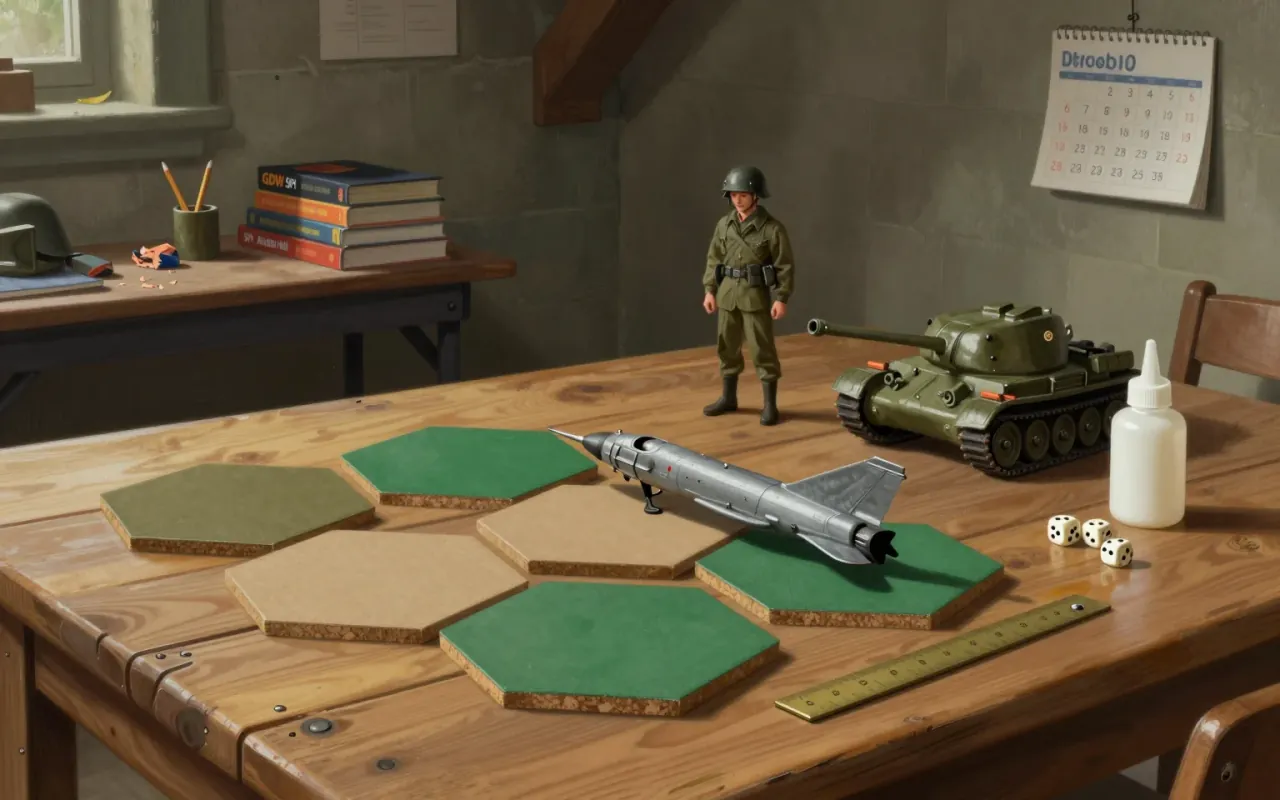
Players alternate turns on grid-based maps. Each turn consists of unit deployment, movement, attack, defence, and property capture. Attacks are either direct (adjacent, triggers counterattack) or indirect (immobile, line-of-sight range). Damage depends on attacker HP, weapon status (primary vs secondary), unit types, and defender terrain — and the same factors govern counterattack damage. Most units consume finite ammunition for primary weapons, falling back to secondary weapons until resupplied. Terrain modifies movement, vision, and defence. Air units ignore terrain effects. All units consume fuel per turn; ground units immobilise when exhausted, air units are destroyed.
What works
The dual-weapon system creates clear tactical asymmetries: tanks cannot hit helicopters, artillery cannot hit infantry at close range, and anti-air units have no effect on tanks. Terrain defence modifiers force deliberate positioning — forests and mountains boost infantry, cities protect all units. The CO Power meter rewards engagement without punishing caution: it fills only through combat, not idle turns. Fuel and ammo constraints make every move accountable, not just every attack.
What does not
It does not support online play. It does not scale difficulty meaningfully across early missions — many rely on identical terrain layouts and predictable AI behaviour. It does not abstract away resource management: fuel, ammo, and HP are tracked per unit, but no macroeconomic layer (e.g., production queues, research trees) exists to deepen strategic pacing. CO Powers feel like scripted events rather than player-controllable levers.
Who it is for, and who it is not
It is for players who enjoy discrete, bounded decision spaces and systems where cause and effect are legible and repeatable. It is not for players who need narrative momentum, emergent chaos, or asynchronous or online competition. It is not for players who dislike tracking per-unit states across dozens of units.
Is it worth your time
Yes — if you want a tightly scoped, rule-driven strategy game that demands precise calculation and rewards pattern recognition over reflexes. It asks for patience, attention to unit synergies, and tolerance for repetition in early missions. It does not ask for speed, improvisation, or narrative investment.