gamesbriefs
Topic

Strategy

Deciding what not to do, which is the part everyone skips.

60
in games
9:53
average
593 min
in total
70
across the network
Strategy across the network →
All briefs60
9:13

Advance Wars 2: Black Hole Rising

Intelligent Systems · 2003

Advance Wars 2: Black Hole Rising is a Game Boy Advance turn-based strategy game released in 2001 by Intelligent Systems. It refines the Wars series’ core loop with non-linear campaign progression, Super CO Powers, and terrain-specific objectives like capturing Black Cannons. It asks players to sequence actions across turns with precision, not flair. Its rigour is its strength—and its limit.

9:22

Arma 3

Bohemia Interactive · 2013

Arma 3 is a military simulation released for PC in September 2013 by Bohemia Interactive. It runs on expansive, photorealistic terrains spanning hundreds of square kilometres. Its realism is systemic: weapons obey ballistics, diving requires dedicated equipment, and electronic warfare or disguise can replace combat entirely. Nearly all gameplay systems—including AI, HUD, and assists—are adjustable via custom difficulty settings. Players pursue fixed mission objectives through self-directed tactics, from solo stealth to squad coordination. It supports extensive modding and user-generated content via the Eden Editor. It is not a narrative-driven shooter. It is a toolset for tactical problem-solving under self-imposed constraints.

9:56

Command & Conquer (1995 video game)

Westwood Studios · 1995

Command & Conquer (1995) is a real-time strategy game developed by Westwood Studios. It builds on Dune II’s interface and adds pre-rendered 3D sprites, FMV briefings, and a streamed pop/rock/techno soundtrack. Players command GDI or Nod in a Tiberium-fuelled war. They deploy an MCV on flat land, gather Tiberium via harvesters, convert it to credits at refineries, store excess in silos, maintain power with plants, build units in faction-specific production structures, and advance along a tech tree. GDI prioritises firepower and armour at higher cost and slower speed; Nod prioritises speed, numbers, and unconventional tactics at lower durability and weaker weapons. Campaigns feature branching mission selection, FMV briefings, and objectives to destroy or capture enemy forces and bases. The DOS release supported up to four-player multiplayer; the Gold edition expanded this.

9:44

The King of Fighters '94

SNK · 1994

The King of Fighters '94 is SNK’s inaugural team-based fighter, released in 1994 on the Neo Geo arcade system. It abandons round-based combat for sequential 3-on-3 matches using eight fixed teams. Players choose entry order, gain life restoration after each KO, and may call sidelined teammates for support attacks. A power gauge charges via blocking or damage — or manually, at high risk — and briefly strengthens basic attacks. It builds directly on SNK’s prior 2D fighting work in Fatal Fury and Art of Fighting, but shifts focus from individual mastery to team curation and structural rhythm.

9:58

League of Legends

Riot Games · 2009

League of Legends is a five-versus-five MOBA where two teams push lanes, level champions via XP, spend gold on items, and destroy the enemy Nexus. It launched free-to-play on 27 October 2009. It has no single-player mode. It draws from Defense of the Ancients and Asian free-to-play design. It asks for sustained attention, team coordination, and adaptation to constant change.

9:36

Overwatch (2016 video game)

Blizzard Entertainment · 2016

Overwatch is a team-based, online multiplayer first-person shooter released by Blizzard Entertainment in May 2016. It reuses assets from the cancelled Titan project but builds a new near-future world around the Omnic Crisis and the Overwatch peacekeeping force. Two teams of six select from over two dozen heroes—categorised as Damage, Tank, or Support—each with unique kits and an ultimate ability charged by combat actions. Players switch heroes mid-match to adapt to objectives like capturing control points or escorting payloads, all within time limits and asymmetric attacker-defender framing. Custom game modes are possible via limited scripting tools. Progression yields only cosmetic loot boxes. The setting is bright, cartoonish, and optimistic.

9:44

Overwatch (2023 video game)

Blizzard Entertainment · 2022

Overwatch (2023) is a live-service hero shooter built on enforced role discipline, rapid iteration, and seasonal storytelling. It discards the original’s six-player format and promised PvE to double down on PvP refinement—and on sustaining engagement through constant design recalibration.

9:09

PUBG: Battlegrounds

PUBG Corporation · 2017

PUBG: Battlegrounds is a battle royale shooter where up to 100 players parachute onto an island, scavenge for gear, and fight to be the last survivor. The safe zone shrinks over time, forcing players into tighter spaces and more frequent encounters. Players choose solo, duo, or squad (up to four) modes, begin with no functional gear, and must rapidly adapt to dynamic conditions including shifting flight paths, red-zone bombings, and loot-dropping planes. It launched in early access on Windows in March 2017 and later on Xbox One, and was developed by Krafton's PUBG Studios and published by Krafton.

7:56

Unreal Tournament 3

Epic Games · 2007

Unreal Tournament 3 is a 2007 PC arena shooter built for online multiplayer. It delivers eight distinct modes, each with explicit rules: Duel’s winner-stays queue, Warfare’s orb-driven node capture, and Vehicle Capture the Flag’s hover board–only traversal. The hover board disables weapons and leaves players vulnerable when hit — a hard constraint, not a flourish. Single-player is AI-driven re-skins of multiplayer maps. It asks for rhythm, precision, and tolerance of enforced limitations — nothing more.

9:42

Warcraft III: Reign of Chaos

Blizzard · 2002

Warcraft III: Reign of Chaos is a 2002 real-time strategy game by Blizzard. It uses fog-of-war, upkeep penalties, fixed top-down perspective, and hero progression to enforce tight, consequential decision-making.

11:08

UFO: Enemy Unknown

Julian Gollop · 2013

UFO: Enemy Unknown is a 1994 strategy game developed by Julian and Nick Gollop under Mythos Games. It divides play between the Geoscape—a global strategic layer beginning 1 January 1999—and the Battlescape—a voxel-based, turn-based tactical layer triggered by alien contact. It establishes the X-COM franchise. It asks players to manage finite resources, absorb permanent loss, and reconcile two deeply asymmetrical systems. It falls short in explanation, feedback, and accessibility—but not in consequence.

9:50

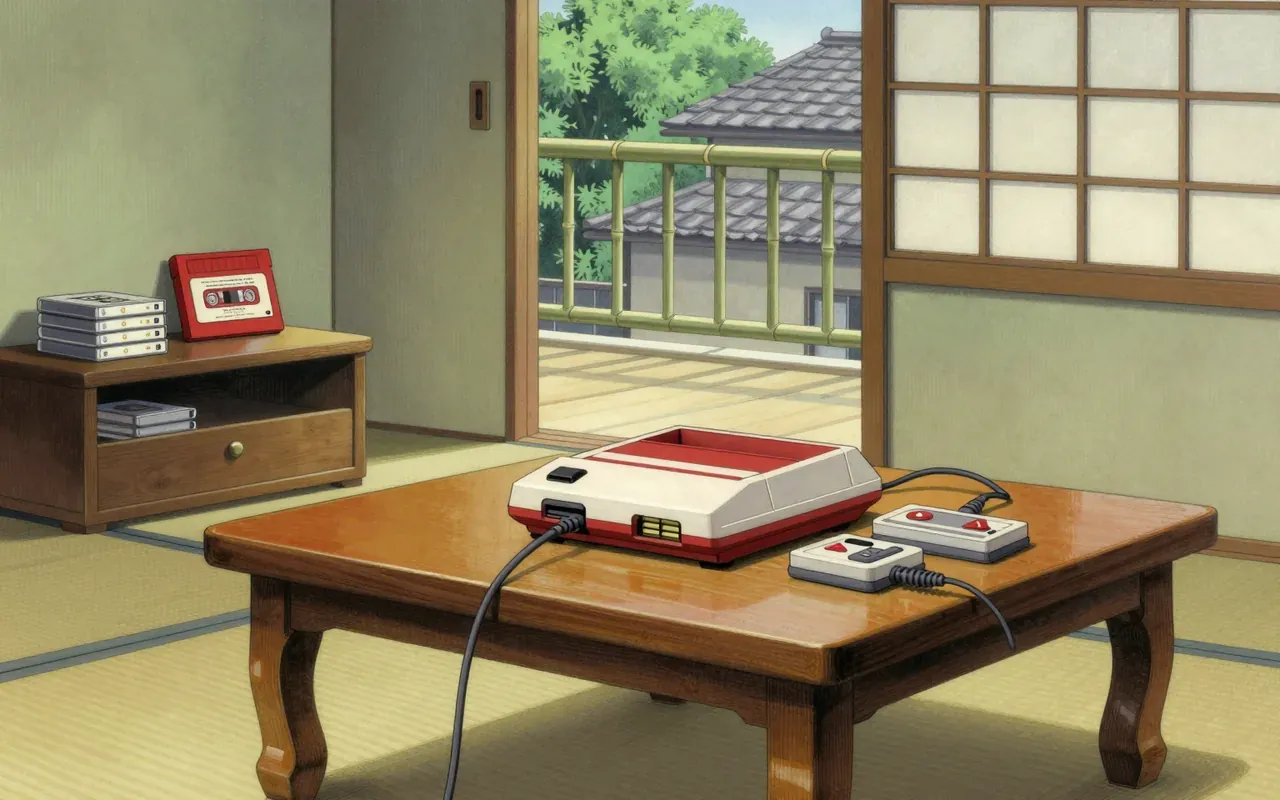
Famicom Wars

Nintendo · 1988

Famicom Wars is Nintendo’s 1988 turn-based strategy game for the Famicom. Players command Red Star or Blue Moon across 15 initial maps, aiming to capture the enemy headquarters or eliminate all enemy units in one turn. Each turn provides funds to build units at owned factories, seaports, and airports; conquering cities near headquarters yields extra funds. Only foot soldiers can conquer cities, enabling repair/refuelling. Unit roles differ in firepower and support. Two secret ending maps unlock depending on the nation chosen against the CPU.

8:53

Plants vs. Zombies (video game)

PopCap Games · 2009

Plants vs. Zombies is a tower defence and strategy video game developed and originally published by PopCap Games for Windows and OS X in May 2009.

10:13

Shining Force

Sega · 1992

Shining Force is a turn-based tactical role-playing game published by Sega during its console era (1983–2001), grouped with franchises like Phantasy Star and Megami Tensei. Battles occur on square grids: units move by Move stat, act once per turn (attack, cast, use item, or search), and turn order combines agility and randomness. Units gain EXP from combat and supportive actions like healing, enabling level progression. Allied units are individually characterized—each with background and personality—similar to Fire Emblem. Exploration mode functions as a traditional Japanese-style RPG, with Max representing the army outside battle. No claims support narrative branching, real-time elements, or modern UX features.

10:48

Squad (video game)

Offworld Industries · 2015

Squad is a realism-based military tactical first-person shooter developed and published by Offworld Industries in 2015. It is exclusively distributed via Steam.

9:00

Aion (video game)

NCSoft · 2008

Aion (2008) is an MMORPG by NCSoft that merges PvP and PvE into a single territorial combat system—confined to the Abyss and Balaurea—where Legions battle players and NPCs alike for fortress control using siege weapons from PvE raids. Skills unlock in fixed chains, with later abilities more powerful and strictly dependent on earlier ones. Faction-based PvP is limited to opposing races, with no exceptions outside duels, the Arena, or Panesterra. Controlling a fortress funds the Legion and grants faction-wide vendor discounts and travel perks. The design demands coordination, sequencing discipline, and commitment to a rigid zone-and-race framework.

9:09

Front Mission (video game)

Square · 1995

Front Mission is a linear, story-driven tactical RPG where players command modular mecha called wanzers across a point-and-click world map, customising them under strict weight-to-power limits and managing part-specific damage states in mission-based combat.

10:30

Guild Wars (video game)

ArenaNet · 2005

Guild Wars (2005) is a competitive online role-playing game developed by ArenaNet and published by NCSoft. It features instanced PvE and PvP, a level cap of 20 (extendable to 200 attribute points via quests), and a strict eight-skill loadout drawn from a library of over a thousand. It replaces gear dependency and grinding with skill-based combat, profession-locked builds, and modular progression across missions and arenas. Revenue came from standalone expansions and microtransactions—not subscriptions.

10:43

Lineage (video game)

NCSoft · 1998

Lineage is a medieval fantasy MMORPG developed and published by NCSoft. It launched in September 1998 as the company’s first game. It is built on NetHack’s stat, monster, and item systems with MMO mechanics added.

11:18

Soulcalibur (video game)

Namco · 1998

Soulcalibur (1999, Dreamcast) is Namco’s weapon-based fighting sequel to Soul Edge. It introduces eight-way sustained movement, forgiving input buffering, and expanded Guard Impact mechanics. Its design centres on weapon-driven character styles, tactical movement interacting with ring-out, and diversity in weapon behaviour and clash reactions.

9:16

StarCraft (video game)

Blizzard · 1998

StarCraft is a foundational RTS defined by enforced asymmetry across three races—Protoss, Zerg, and Terrans—each with unique units, economies, and strategic identities. Its campaign delivers thirty fixed missions, ten per race, with AI difficulty escalating automatically. It offers no difficulty adjustment, no mission retries, and no explicit pedagogy—only systemic divergence and player-driven translation.

9:38

Suikoden (video game)

Konami · 1995

Suikoden (1995) is a Konami-published RPG that uses weapon range, speed-based turn order, and Rock-Paper-Scissors–driven duel and war systems to shape its combat and narrative. It demands strategic party formation, rewards systematic recruitment, and allows consequential failure in optional battles. It is structurally rigorous but opaque in execution details.

8:46

Dota 2

Valve · 2013

Dota 2 is a rigid, team-bound MOBA that demands mastery of role, map, and timing — with zero concessions to newcomers or casual investment.

9:20

Shogun: Total War

Creative Assembly · 2000

Shogun: Total War is a foundational strategy game that fused turn-based empire management with real-time battlefield tactics. Its ambition—to simulate feudal Japanese unification—was matched only by its structural compromises. The campaign map was added late. Systems coexist but rarely converse. Yet its combat loop remains legible, its faction asymmetry functional, and its provincial logic direct. It rewards patience, pattern recognition, and tolerance for abstraction.

10:16

Advance Wars

Intelligent Systems · 2001

Advance Wars is a deterministic, grid-based strategy game where victory is defined by elimination or capture — never story, never spectacle. Its rules are tight, its feedback immediate, its constraints absolute. It runs on the Game Boy Advance. It was made by Intelligent Systems. It came out in 2001.

10:18

Advance Wars: Days of Ruin

Intelligent Systems · 2008

Advance Wars: Days of Ruin is a 2008 turn-based strategy game developed by Intelligent Systems for the Nintendo DS. It departs from earlier entries with a darker tone, toned-down CO powers, no Tag powers, and new units and terrain effects. Players command military forces on grid-based maps to defeat enemies by destroying all units or capturing their headquarters. Fog of war, weather, and terrain shape tactics. The campaign contains 26 story-driven missions. Multiplayer supports local hot-seat and online play via Nintendo Wi-Fi Connection.

9:32

Age of Empires II

Ensemble Studios · 1999

Age of Empires II is a real-time strategy game developed by Ensemble Studios in 1999, running on the Genie Game Engine. It is the second title in the original Age of Empires series. Players advance one of 13 civilizations through four historical Ages to build towns, gather resources, create armies, and defeat opponents.

9:58

Apex Legends

Respawn Entertainment · 2019

Apex Legends is a squad-first, ping-driven, live-service hero shooter that prioritises coordinated entry, rapid adaptation, and long-term commitment over solo expression or narrative resolution.

9:09

Counter-Strike 2

Valve · 2023

Counter-Strike 2 refines rather than reimagines. Its strength lies in constraint: fixed teams, no respawns, round-based economy, and mechanical precision. It asks for commitment to a narrow, high-stakes loop — and gives nothing back to players who stray from it.

10:08

Counter-Strike: Global Offensive

Valve · 2012

Counter-Strike: Global Offensive is a team-based, round-driven, economy-focused multiplayer shooter where asymmetry, recoil control, and mode-specific rules define every session.

9:11

Dishonored 2

Arkane Studios · 2016

Dishonored 2 is a first-person action-adventure with stealth elements, developed by Arkane Lyon and published by Bethesda Softworks in November 2016. It runs on the proprietary Void Engine. Players choose between Emily Kaldwin or Corvo Attano, each with distinct supernatural abilities — all optional.

10:24

Enemy Territory: Quake Wars

Splash Damage · 2007

Enemy Territory: Quake Wars is a class-based, objective-focused, team-oriented multiplayer FPS set in the Quake universe. Developed by Splash Damage and released in 2007, it uses a heavily modified id Tech 4 engine and introduces vehicles — a first for the Quake series. Teams are asymmetrical (human GDF and alien Strogg), yet share the same basic weapons and tools. Gameplay focuses on one or two main objectives at a time, not spread across the map. New objectives appear dynamically during play, often tied to class-specific capabilities. Players can form fireteams — user-created or game-generated — to coordinate strategy. An XP-based progression system rewards mission completion, resetting per campaign.

10:10

Fire Emblem Awakening

Intelligent Systems · 2012

Fire Emblem Awakening is a tactical RPG for Nintendo 3DS where grid-based combat, relationship-building, and permadeath choices define every session. It launched as the series’ make-or-break title — and succeeded by selling 400,000 units in Japan within its first year.

8:10

Fire Emblem: The Blazing Blade

Intelligent Systems · 2003

Fire Emblem: The Blazing Blade is a tactical RPG where permanent death, class-based roles, and square-grid combat define every choice. It asks players to weigh risk against reward, memorise ranges, and accept loss as instruction—not failure.

10:12

Guild Wars 2

ArenaNet · 2012

Guild Wars 2 delivers responsive storytelling, dynamic world events, and skill-based combat — all without subscription fees. But its 'living world' relied on scheduled, often temporary content. Its branching narrative lives behind instanced doors. Its ambition outpaced its persistence.

10:01

Halo 2

Bungie · 2004

Halo 2 is a first-person shooter released on November 9, 2004, by Bungie. It is a sequel to Halo: Combat Evolved. Players alternate between Master Chief and the Arbiter across a campaign structured around distinct factional perspectives and combat systems. Gameplay emphasises tactical weapon management—including dual-wielding, faction-specific ammo mechanics (overheating vs. reloading), and vehicle hijacking—within a regenerating-shield health model. Its multiplayer introduced automated matchmaking via Xbox Live playlists, prioritising accessible, skill-balanced online sessions over manual server selection.

11:28

Halo 3

Bungie · 2007

Halo 3 is a first-person shooter released on September 25, 2007, by Bungie. It is the third mainline Halo title. It features on-foot and vehicular combat, a fixed loadout system, and Forge—a real-time, budget-limited map editor for multiplayer maps.

9:45

Heroes of Newerth

S2 Games · 2010

Heroes of Newerth is a 2010 MOBA developed by S2 Games, built on the K2 Engine, and based heavily on Defense of the Ancients. It features two factions — Legion and Hellbourne — competing to destroy the opponent’s central structure (World Tree or Sacrificial Shrine). Matches begin with a hero-picking phase designed to enforce role balance. Players progress by earning gold and experience through lane control, jungling, and killing neutral objectives like kongor and golems. Heroes fill strict functional roles (Carry, Support, Ganker, Jungler, Suicide) and are defined by primary attribute and attack type. Released for Windows, Macintosh, and Linux, it shifted to freeware in 2011 and made all heroes free for online play in 2012.

10:35

Hitman 3

IO Interactive · 2021

Hitman 3 refines the assassination loop to its sharpest point: observe, disguise, infiltrate, eliminate. It assumes competence. It delivers density. It ends where it began — in the architecture of opportunity.

10:38

Hitman: Blood Money

IO Interactive · 2006

Hitman: Blood Money is a stealth assassination game released in May 2006. It is the fourth title in the Hitman franchise. Developed by IO Interactive and published by Eidos Interactive, it launched on Windows, PlayStation 2, Xbox, and Xbox 360. The player controls Agent 47 in third-person, navigating levels with a map that shows topography, targets, and characters. Armed guards, security checkpoints, and witnesses obstruct progress. The game penalises excessive noise and violence. New mechanics include climbing, body disposal, using NPCs as human shields, improved unarmed combat, and weapon and equipment upgrades — five weapons and some equipment can be upgraded. Missions allow multiple elimination methods, including accidental-looking kills and improvised weaponry, even in the presence of bystanders. Critics praised the game at release, and retrospectives have called it the best in the series.

8:31

Marvel vs. Capcom: Infinite

Capcom · 2017

Marvel vs. Capcom: Infinite is a 2D tag-team fighter built around instant switching and temporary stone powers — a deliberate pivot from assist-driven complexity to combo-driven clarity.

9:07

Plants vs. Zombies 2

PopCap Games · 2013

Plants vs. Zombies 2 tightens the original’s loop into a five-row, sun-gated, one-mistake-per-lane test—but adds time travel without mechanical consequence, and free-to-play friction without structural reinvention.

9:27

Radiant Historia

Atlus · 2010

Radiant Historia is a tightly authored, system-led RPG where timeline navigation and grid combat are interlocked — not decorative. Its constraints (DS hardware, reset enemy positions, fixed branches) are visible, consistent, and consequential. It asks for attention to sequence, spatial relationships, and cause-and-effect — not endurance or memorisation.

10:52

Soulcalibur III

Namco · 2005

Soulcalibur III is a tightly wound, offline-only PlayStation 2 fighting game that binds narrative, strategy, and character systems into one progression loop. It demands interplay across modes, rewards precision in timed inputs, and refuses to separate personality from equipment. Its absence of online play is a structural choice—not an omission. It is dense, deliberate, and uninterested in hand-holding.

9:06

Splatoon 3

Nintendo · 2022

Splatoon 3 refines Nintendo's ink-based shooter without altering its foundational logic. It delivers tight, readable combat where weapon choice directly shapes movement, coverage, and team function. Its strength lies in consistency—not expansion.

10:01

Starsiege: Tribes

Dynamix · 1998

Starsiege: Tribes is a squad-based, multiplayer, first-person shooter developed by Dynamix as a side project alongside Starsiege. It features 40 outdoor maps, jetpack-assisted movement, physics-based skiing, and armour-class-dependent loadouts. Its dominant mode is Capture the Flag, where flags must be at base to score. It was one of Dynamix's best-known titles.

10:20

Street Fighter V

Capcom · 2016

Street Fighter V is a 2D fighting game released in 2016. It uses two resource gauges — EX (built by landing attacks) and V-Gauge (built by receiving attacks) — to power special moves, counters, dodges, and transformative abilities. The visible Stun Meter incentivises aggressive, consecutive offence. It launched with minimal single-player content and poor online features. It failed to meet its sales target of 2 million units in March 2016.
10:26

Tactics Ogre

Quest · 1995

Tactics Ogre is a tightly wound tactical RPG where turn order is dynamic, consequence is immediate, and narrative choice reshapes the world physically and morally.

9:38

Team Fortress 2

Valve · 2007

Team Fortress 2 is a 2007 multiplayer first-person shooter by Valve Corporation for Windows, Xbox 360, and PlayStation 3. Players join RED or BLU teams and select from nine classes, each with fixed primary, secondary, and melee weapons. Victory depends on class synergy and objective execution. Critical hits randomly triple damage for some weapons. Objectives are introduced via video and announced mid-match by the Administrator.

10:13

Ultimate Marvel vs. Capcom 3

Capcom · 2011

Ultimate Marvel vs. Capcom 3 is a 2011 tag-team fighting game developed by Capcom’s Division 2 and Eighting. It uses a simplified three-button control scheme and emphasises rapid character swapping, aerial exchanges with meter manipulation, and the X-Factor mechanic for temporary damage, speed, and health regeneration boosts. Victory goes to the team that defeats all three opponents or holds more cumulative health at round end.

10:32

Unreal Tournament 2003

Epic Games · 2002

Unreal Tournament 2003 is a rule-bound multiplayer arena shooter with six distinct modes—each defined by unambiguous objectives, scoring, and role constraints. It offers no single-player campaign, no persistent progression, and no abstraction between action and consequence. Its design demands precision, awareness, and adherence to mode-specific logic—not improvisation or narrative immersion.

10:38

Valorant

Riot Games · 2020

Valorant is a first-person tactical hero shooter developed and published by Riot Games. It launched on June 2, 2020. Players assume culturally grounded Agents in 5v5 attack/defend matches focused on Spike planting and defusal. Every round begins with a classic pistol and at least one signature ability charge. Weapons and ability charges are purchased using money earned from round outcomes, kills, and objectives. Agents have unique abilities requiring charges and ultimates charged via kills or orbs. Automatic and semi-automatic weapons feature unique spray patterns requiring player control for accuracy. Riot Games operates the Valorant Champions Tour.

8:54

Dragon Quest III

Chunsoft · 1988

Dragon Quest III establishes foundational RPG structure — open-world traversal, class-based party building, day/night gating, turn-based combat, and experience-driven progression — all built on hardware constraints that shaped its rhythms and rules.

9:11

Final Fantasy X

Square · 2001

Final Fantasy X (2001) is a PlayStation 2 RPG by Square that replaces the Active Time Battle system with the Conditional Turn-Based Battle system, abandons traditional leveling for the Sphere Grid, redefines summoning via persistent Aeons, and implements interactive Overdrives. It runs on a continuous 3D world map.

10:36

StarCraft II

Blizzard · 2010

StarCraft II is a real-time strategy game developed and published by Blizzard Entertainment for Windows and Mac OS X. Players act as military commanders for one of three species across single-player campaigns and multiplayer modes. Versus mode supports team sizes from 1v1 up to 4v4. Player skill is ranked in regional ladders divided into bronze through grandmaster leagues. Archon mode allows multiple humans to jointly control one player's forces in a 1v1 match. Co-op mode pairs two players against AI-controlled opponents, each commanding a unique hero commander. Commanders level up across co-op matches, unlocking upgrades and abilities that alter future gameplay. Mutations are optional modifiers that alter co-op missions with increased difficulty and chaotic effects.

10:28

Suikoden II

Konami · 1998

Suikoden II is a PlayStation RPG by Konami (1998) that ties narrative, recruitment, and strategy into a single arithmetic: level gaps dictate XP, rune slots dictate magic, and sidequests dictate who joins your army. It refuses to explain itself — and rewards attention to its systems with structural integrity, not spectacle.

10:52

Suikoden III

Konami · 2002

Suikoden III is a PlayStation 2 RPG by Konami Computer Entertainment Tokyo. It uses the Trinity Sight System to rotate control among Hugo, Chris, and Geddoe — each representing one side of a three-way conflict between the Grassland tribes, Zexen, and Harmonia. Protagonists are fully voiced. Recruitment of the 108 Stars of Destiny has no time limits. Combat features tandem front/back row action and chant-interruptible rune magic. Army battles use a node-based grid.

9:45

The Legend of Zelda: A Link to the Past

Nintendo · 1991

A Link to the Past establishes the template for action-adventure structure: item-gated progression, parallel worlds with hard transitions, and dungeons as sequential logic puzzles. It assumes player patience, rewards observation, and refuses to separate exploration from consequence.

12:08

Total War: Shogun 2

Creative Assembly · 2011

Total War: Shogun 2 is a systemic strategy game that demands sustained attention across long sessions. It gives players deep control over settlement, economy, religion, diplomacy, and battlefield tactics—but offers no hand-holding for their interplay. Its strength lies in enforced trade-offs: ashigaru versus samurai, stealth versus siege, faith versus expansion. It assumes competence, not curiosity.

9:29

Vandal Hearts

Konami · 1996

Vandal Hearts is a 1996 Konami tactical RPG defined by its isometric, rotatable 3D terrain, side-by-side turn structure, flexible movement, and strict leader-death loss condition. It offers varied stage objectives but no narrative or progression systems beyond core combat.