What the game is
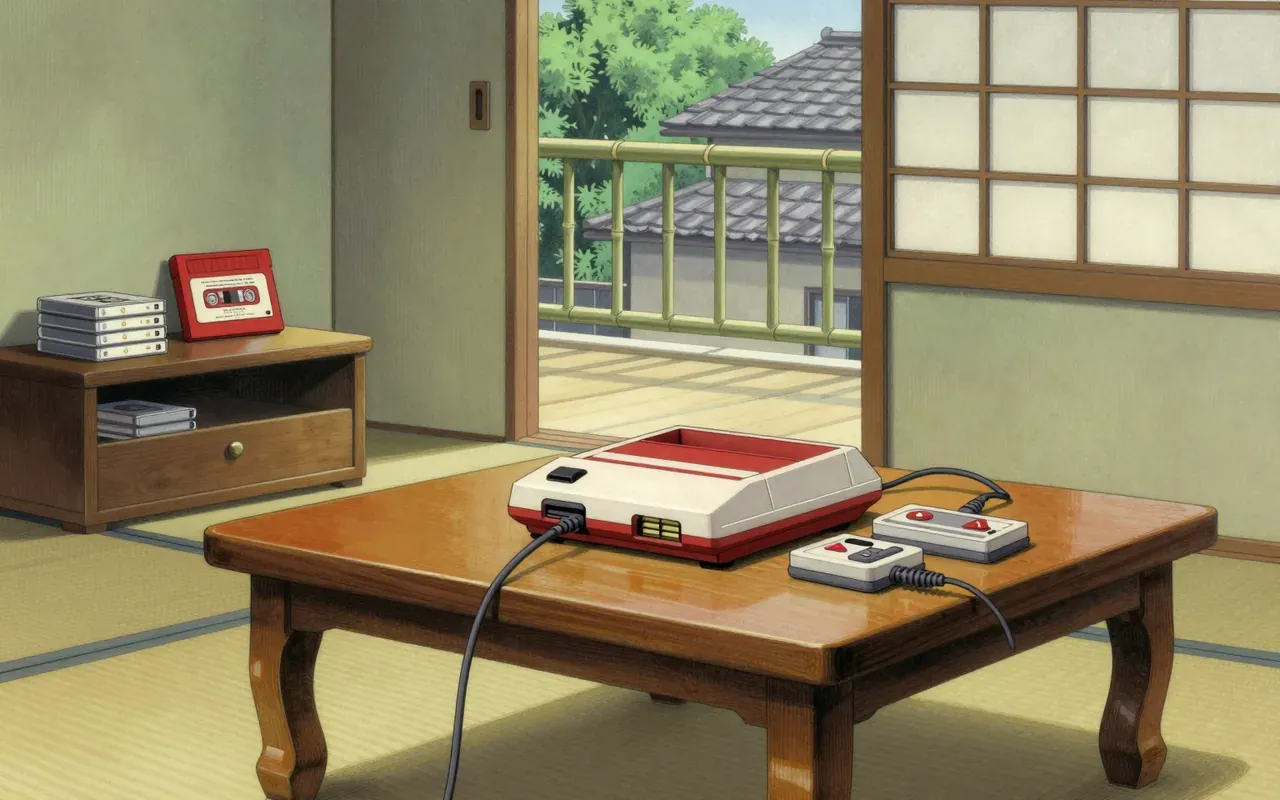
Famicom Wars is Nintendo’s 1988 turn-based strategy game for the Famicom. It pits Red Star against Blue Moon across discrete maps. It establishes core real-time-adjacent strategy constraints: production tied to captured infrastructure, strict unit roles, and victory by capture or total elimination.
How it actually plays
Players take turns commanding Red Star or Blue Moon across grid-based maps. Red Star always moves first. Each turn grants funds to build units at owned factories, seaports, and airports. Conquering cities near headquarters yields extra funds. Only foot soldiers can capture cities, which then serve as repair/refuelling points. Units fall into ten land, four air, and two sea types — each with distinct firepower or support roles. Victory requires capturing the enemy headquarters or eliminating all enemy units in one turn.
What works
The loop is tight: move, attack, capture, build, repeat. The rule that shapes it is absolute turn order (Red Star always leads) and rigid unit specialisation. Foot soldiers are irreplaceable keys—no other unit can seize cities, so they anchor every campaign. The two secret ending maps reward nation choice, not skill, adding light asymmetry.
What does not
It does not scale complexity meaningfully beyond its 15 base maps. It offers no multiplayer beyond local two-player. It gives no explanation of unit synergies or terrain effects. It withholds visual feedback for damage states and unit range—players infer effectiveness from outcomes alone.
Who it is for, and who it is not
It is for players who value deterministic outcomes, clear win conditions, and hardware-limited design discipline. It is not for players expecting narrative, unit progression, fog of war, or adaptive AI.
Is it worth your time
Yes—if you want a lean, rule-bound turn-based strategy game that demands unit economy, map control, and sequential planning on Famicom hardware. It asks for patience, not reflexes. It does not ask for familiarity with later genre conventions, nor does it reward them.