gamesbriefs
Genres

Strategy

45
briefs
9:51
average
443 min
in total
29
people
All briefs45
9:13

Advance Wars 2: Black Hole Rising

Intelligent Systems · 2003

Advance Wars 2: Black Hole Rising is a Game Boy Advance turn-based strategy game released in 2001 by Intelligent Systems. It refines the Wars series’ core loop with non-linear campaign progression, Super CO Powers, and terrain-specific objectives like capturing Black Cannons. It asks players to sequence actions across turns with precision, not flair. Its rigour is its strength—and its limit.
9:56

Command & Conquer (1995 video game)

Westwood Studios · 1995

Command & Conquer (1995) is a real-time strategy game developed by Westwood Studios. It builds on Dune II’s interface and adds pre-rendered 3D sprites, FMV briefings, and a streamed pop/rock/techno soundtrack. Players command GDI or Nod in a Tiberium-fuelled war. They deploy an MCV on flat land, gather Tiberium via harvesters, convert it to credits at refineries, store excess in silos, maintain power with plants, build units in faction-specific production structures, and advance along a tech tree. GDI prioritises firepower and armour at higher cost and slower speed; Nod prioritises speed, numbers, and unconventional tactics at lower durability and weaker weapons. Campaigns feature branching mission selection, FMV briefings, and objectives to destroy or capture enemy forces and bases. The DOS release supported up to four-player multiplayer; the Gold edition expanded this.

9:42

Warcraft III: Reign of Chaos

Blizzard · 2002

Warcraft III: Reign of Chaos is a 2002 real-time strategy game by Blizzard. It uses fog-of-war, upkeep penalties, fixed top-down perspective, and hero progression to enforce tight, consequential decision-making.

11:08

UFO: Enemy Unknown

Julian Gollop · 2013

UFO: Enemy Unknown is a 1994 strategy game developed by Julian and Nick Gollop under Mythos Games. It divides play between the Geoscape—a global strategic layer beginning 1 January 1999—and the Battlescape—a voxel-based, turn-based tactical layer triggered by alien contact. It establishes the X-COM franchise. It asks players to manage finite resources, absorb permanent loss, and reconcile two deeply asymmetrical systems. It falls short in explanation, feedback, and accessibility—but not in consequence.

9:50

Famicom Wars

Nintendo · 1988

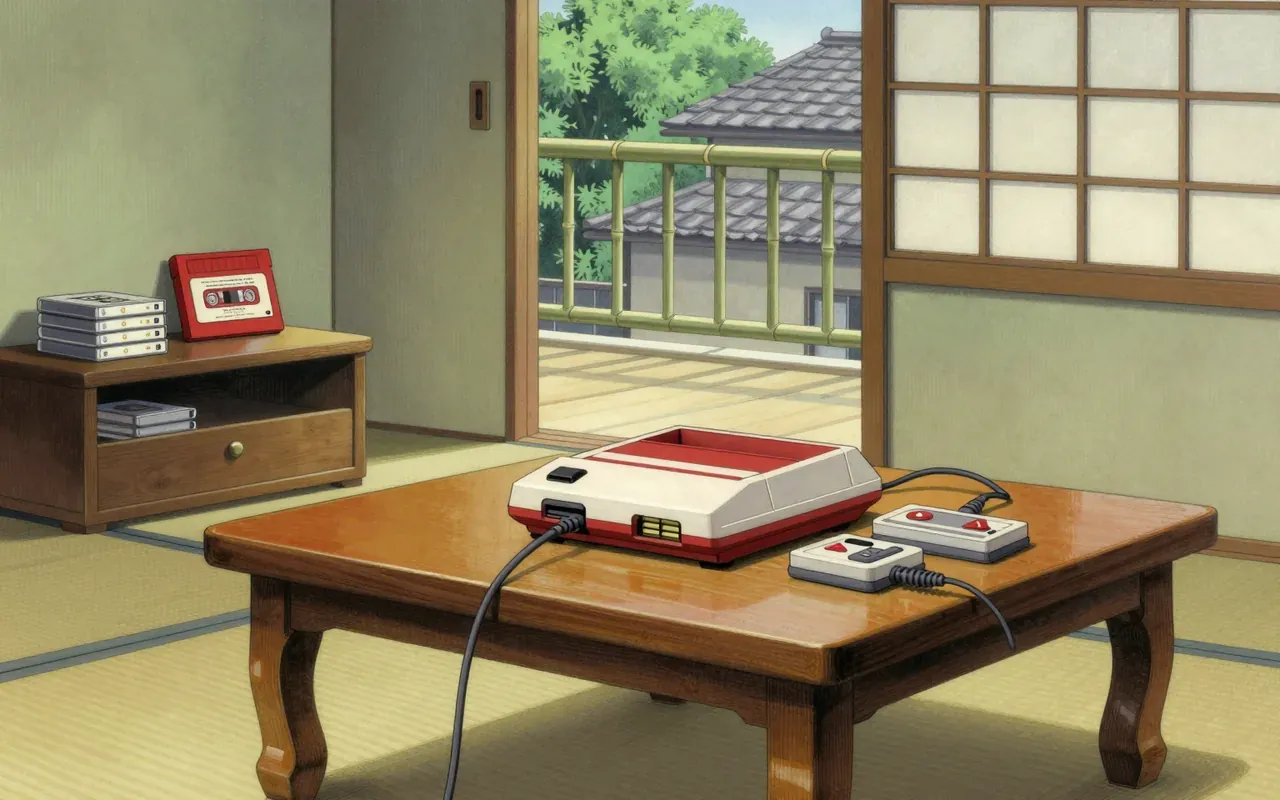
Famicom Wars is Nintendo’s 1988 turn-based strategy game for the Famicom. Players command Red Star or Blue Moon across 15 initial maps, aiming to capture the enemy headquarters or eliminate all enemy units in one turn. Each turn provides funds to build units at owned factories, seaports, and airports; conquering cities near headquarters yields extra funds. Only foot soldiers can conquer cities, enabling repair/refuelling. Unit roles differ in firepower and support. Two secret ending maps unlock depending on the nation chosen against the CPU.

8:53

Plants vs. Zombies (video game)

PopCap Games · 2009

Plants vs. Zombies is a tower defence and strategy video game developed and originally published by PopCap Games for Windows and OS X in May 2009.

10:13

Shining Force

Sega · 1992

Shining Force is a turn-based tactical role-playing game published by Sega during its console era (1983–2001), grouped with franchises like Phantasy Star and Megami Tensei. Battles occur on square grids: units move by Move stat, act once per turn (attack, cast, use item, or search), and turn order combines agility and randomness. Units gain EXP from combat and supportive actions like healing, enabling level progression. Allied units are individually characterized—each with background and personality—similar to Fire Emblem. Exploration mode functions as a traditional Japanese-style RPG, with Max representing the army outside battle. No claims support narrative branching, real-time elements, or modern UX features.

10:48

Squad (video game)

Offworld Industries · 2015

Squad is a realism-based military tactical first-person shooter developed and published by Offworld Industries in 2015. It is exclusively distributed via Steam.

9:00

Aion (video game)

NCSoft · 2008

Aion (2008) is an MMORPG by NCSoft that merges PvP and PvE into a single territorial combat system—confined to the Abyss and Balaurea—where Legions battle players and NPCs alike for fortress control using siege weapons from PvE raids. Skills unlock in fixed chains, with later abilities more powerful and strictly dependent on earlier ones. Faction-based PvP is limited to opposing races, with no exceptions outside duels, the Arena, or Panesterra. Controlling a fortress funds the Legion and grants faction-wide vendor discounts and travel perks. The design demands coordination, sequencing discipline, and commitment to a rigid zone-and-race framework.

9:09

Front Mission (video game)

Square · 1995

Front Mission is a linear, story-driven tactical RPG where players command modular mecha called wanzers across a point-and-click world map, customising them under strict weight-to-power limits and managing part-specific damage states in mission-based combat.

10:30

Guild Wars (video game)

ArenaNet · 2005

Guild Wars (2005) is a competitive online role-playing game developed by ArenaNet and published by NCSoft. It features instanced PvE and PvP, a level cap of 20 (extendable to 200 attribute points via quests), and a strict eight-skill loadout drawn from a library of over a thousand. It replaces gear dependency and grinding with skill-based combat, profession-locked builds, and modular progression across missions and arenas. Revenue came from standalone expansions and microtransactions—not subscriptions.

10:43

Lineage (video game)

NCSoft · 1998

Lineage is a medieval fantasy MMORPG developed and published by NCSoft. It launched in September 1998 as the company’s first game. It is built on NetHack’s stat, monster, and item systems with MMO mechanics added.

9:16

StarCraft (video game)

Blizzard · 1998

StarCraft is a foundational RTS defined by enforced asymmetry across three races—Protoss, Zerg, and Terrans—each with unique units, economies, and strategic identities. Its campaign delivers thirty fixed missions, ten per race, with AI difficulty escalating automatically. It offers no difficulty adjustment, no mission retries, and no explicit pedagogy—only systemic divergence and player-driven translation.

9:38

Suikoden (video game)

Konami · 1995

Suikoden (1995) is a Konami-published RPG that uses weapon range, speed-based turn order, and Rock-Paper-Scissors–driven duel and war systems to shape its combat and narrative. It demands strategic party formation, rewards systematic recruitment, and allows consequential failure in optional battles. It is structurally rigorous but opaque in execution details.

9:30

Civilization VI

Firaxis · 2016

Civilization VI is a turn-based 4X strategy game where players grow a single civilization from antiquity to the near future by exploring, expanding, exploiting, and exterminating.

8:46

Dota 2

Valve · 2013

Dota 2 is a rigid, team-bound MOBA that demands mastery of role, map, and timing — with zero concessions to newcomers or casual investment.

9:20

Shogun: Total War

Creative Assembly · 2000

Shogun: Total War is a foundational strategy game that fused turn-based empire management with real-time battlefield tactics. Its ambition—to simulate feudal Japanese unification—was matched only by its structural compromises. The campaign map was added late. Systems coexist but rarely converse. Yet its combat loop remains legible, its faction asymmetry functional, and its provincial logic direct. It rewards patience, pattern recognition, and tolerance for abstraction.

10:16

Advance Wars

Intelligent Systems · 2001

Advance Wars is a deterministic, grid-based strategy game where victory is defined by elimination or capture — never story, never spectacle. Its rules are tight, its feedback immediate, its constraints absolute. It runs on the Game Boy Advance. It was made by Intelligent Systems. It came out in 2001.

10:18

Advance Wars: Days of Ruin

Intelligent Systems · 2008

Advance Wars: Days of Ruin is a 2008 turn-based strategy game developed by Intelligent Systems for the Nintendo DS. It departs from earlier entries with a darker tone, toned-down CO powers, no Tag powers, and new units and terrain effects. Players command military forces on grid-based maps to defeat enemies by destroying all units or capturing their headquarters. Fog of war, weather, and terrain shape tactics. The campaign contains 26 story-driven missions. Multiplayer supports local hot-seat and online play via Nintendo Wi-Fi Connection.

9:32

Age of Empires II

Ensemble Studios · 1999

Age of Empires II is a real-time strategy game developed by Ensemble Studios in 1999, running on the Genie Game Engine. It is the second title in the original Age of Empires series. Players advance one of 13 civilizations through four historical Ages to build towns, gather resources, create armies, and defeat opponents.

9:09

Counter-Strike 2

Valve · 2023

Counter-Strike 2 refines rather than reimagines. Its strength lies in constraint: fixed teams, no respawns, round-based economy, and mechanical precision. It asks for commitment to a narrow, high-stakes loop — and gives nothing back to players who stray from it.
10:06

Dark Age of Camelot

Mythic Entertainment · 2001

Dark Age of Camelot is the first MMORPG built explicitly around persistent, three-faction realm versus realm warfare. Its design enforces rigid class roles, prioritises RvR balance over cross-realm equivalence, and delivers action through customisable Quickbars—not adaptive AI or dynamic systems. It runs on Linux servers handling ~4,000 players per world, constrained by a 10 kbit/s per-player data stream. It is Mythic Entertainment's first MMORPG and the game for which the studio is best known.

8:50

Diner Dash

PlayFirst · 2003

Diner Dash is a time-management game where players direct Flo to complete restaurant service tasks under increasing time and mood constraints.

10:24

Enemy Territory: Quake Wars

Splash Damage · 2007

Enemy Territory: Quake Wars is a class-based, objective-focused, team-oriented multiplayer FPS set in the Quake universe. Developed by Splash Damage and released in 2007, it uses a heavily modified id Tech 4 engine and introduces vehicles — a first for the Quake series. Teams are asymmetrical (human GDF and alien Strogg), yet share the same basic weapons and tools. Gameplay focuses on one or two main objectives at a time, not spread across the map. New objectives appear dynamically during play, often tied to class-specific capabilities. Players can form fireteams — user-created or game-generated — to coordinate strategy. An XP-based progression system rewards mission completion, resetting per campaign.

10:10

Fire Emblem Awakening

Intelligent Systems · 2012

Fire Emblem Awakening is a tactical RPG for Nintendo 3DS where grid-based combat, relationship-building, and permadeath choices define every session. It launched as the series’ make-or-break title — and succeeded by selling 400,000 units in Japan within its first year.

8:10

Fire Emblem: The Blazing Blade

Intelligent Systems · 2003

Fire Emblem: The Blazing Blade is a tactical RPG where permanent death, class-based roles, and square-grid combat define every choice. It asks players to weigh risk against reward, memorise ranges, and accept loss as instruction—not failure.

10:14

Fire Emblem: Three Houses

Intelligent Systems · 2019

Fire Emblem: Three Houses is a tactical RPG released in 2019 by Intelligent Systems in partnership with Koei Tecmo. Intelligent Systems provided the main plot, game system, and mechanics; Koei Tecmo handled the bulk of the programming. Players choose their character's gender and name at the start. Gameplay alternates between story-driven battles and social simulation segments at Garreg Mach Monastery—the central hub for all activities. Selecting a house determines the narrative path from that point forward. The opening half focuses on school life, then the story skips ahead five years and shifts to war, locking the player to their chosen house. Players manage a calendar with limited days to allocate to varied monastery activities—including teaching, field exercises, greenhouse planting, fishing, and free-time interactions. Relationships are built via Support actions influenced by player choices and dialogue.
9:45

Heroes of Newerth

S2 Games · 2010

Heroes of Newerth is a 2010 MOBA developed by S2 Games, built on the K2 Engine, and based heavily on Defense of the Ancients. It features two factions — Legion and Hellbourne — competing to destroy the opponent’s central structure (World Tree or Sacrificial Shrine). Matches begin with a hero-picking phase designed to enforce role balance. Players progress by earning gold and experience through lane control, jungling, and killing neutral objectives like kongor and golems. Heroes fill strict functional roles (Carry, Support, Ganker, Jungler, Suicide) and are defined by primary attribute and attack type. Released for Windows, Macintosh, and Linux, it shifted to freeware in 2011 and made all heroes free for online play in 2012.

9:07

Plants vs. Zombies 2

PopCap Games · 2013

Plants vs. Zombies 2 tightens the original’s loop into a five-row, sun-gated, one-mistake-per-lane test—but adds time travel without mechanical consequence, and free-to-play friction without structural reinvention.

10:52

Soulcalibur III

Namco · 2005

Soulcalibur III is a tightly wound, offline-only PlayStation 2 fighting game that binds narrative, strategy, and character systems into one progression loop. It demands interplay across modes, rewards precision in timed inputs, and refuses to separate personality from equipment. Its absence of online play is a structural choice—not an omission. It is dense, deliberate, and uninterested in hand-holding.

9:06

Splatoon 3

Nintendo · 2022

Splatoon 3 refines Nintendo's ink-based shooter without altering its foundational logic. It delivers tight, readable combat where weapon choice directly shapes movement, coverage, and team function. Its strength lies in consistency—not expansion.

10:26

Tactics Ogre

Quest · 1995

Tactics Ogre is a tightly wound tactical RPG where turn order is dynamic, consequence is immediate, and narrative choice reshapes the world physically and morally.

10:38

Valorant

Riot Games · 2020

Valorant is a first-person tactical hero shooter developed and published by Riot Games. It launched on June 2, 2020. Players assume culturally grounded Agents in 5v5 attack/defend matches focused on Spike planting and defusal. Every round begins with a classic pistol and at least one signature ability charge. Weapons and ability charges are purchased using money earned from round outcomes, kills, and objectives. Agents have unique abilities requiring charges and ultimates charged via kills or orbs. Automatic and semi-automatic weapons feature unique spray patterns requiring player control for accuracy. Riot Games operates the Valorant Champions Tour.

10:09

Cities: Skylines

Colossal Order · 2015

Cities: Skylines is a systems-first city-builder where players manage zoning, infrastructure, taxation, and district-level regulations to grow a functional urban area. It rewards methodical planning and iterative adjustment—not storytelling, speed, or spectacle.

9:05

Civilization II

Sid Meier · 1996

Civilization II is a foundational turn-based strategy game where players build a civilization from a primitive tribe while competing with computer-controlled rivals on a tile-based map. It offers three victory paths—conquest, space colonisation, or survival to 2020 AD—and lets players choose from 21 historical civilizations or create a custom one. Brian Reynolds was the primary designer; the 'Sid Meier's' prefix functioned as a quality signal. The base game supports only single-player mode. It models historical development through abstraction, not simulation.

10:21

Civilization IV

Firaxis · 2005

Civilization IV is a 4X turn-based strategy game built on the Gamebryo engine. It uses the empire-building model: players construct, expand, exploit, and exterminate across a procedurally generated square grid map.

8:39

Factorio

Wube Software · 2016

Factorio is a factory simulation game developed and published by Czech studio Wube Software.

10:05

RimWorld

Ludeon Studios · 2016

RimWorld is a construction and management simulation game developed and published by Ludeon Studios for Windows, macOS, and Linux. It functions as a story generator driven by procedural 'storyteller' algorithms that select events to shape narrative experiences. Players oversee stranded colonists on a procedurally generated planet, forming and sustaining a colony while managing survival needs, mental stability, and external threats. Colonists are task-driven rather than directly controlled, and the game ends via spaceship construction, AI-assisted ship recovery, or DLC-specific endings. Events scale in difficulty and are influenced by configurable storyteller modes and difficulty presets.

9:35

SimCity 2000

Maxis / Will Wright · 1993

SimCity 2000 replaces top-down abstraction with isometric spatial logic, adds elevation and underground layers, and expands infrastructure choice—but offers no deeper explanation of how its systems connect. It rewards experimentation, not mastery.

9:18

SimCity 3000

Maxis · 1999

SimCity 3000 refines the city simulation loop with decay, density, and deal-making — but never asks why the city exists, only how to keep its accounts balanced.

10:36

StarCraft II

Blizzard · 2010

StarCraft II is a real-time strategy game developed and published by Blizzard Entertainment for Windows and Mac OS X. Players act as military commanders for one of three species across single-player campaigns and multiplayer modes. Versus mode supports team sizes from 1v1 up to 4v4. Player skill is ranked in regional ladders divided into bronze through grandmaster leagues. Archon mode allows multiple humans to jointly control one player's forces in a 1v1 match. Co-op mode pairs two players against AI-controlled opponents, each commanding a unique hero commander. Commanders level up across co-op matches, unlocking upgrades and abilities that alter future gameplay. Mutations are optional modifiers that alter co-op missions with increased difficulty and chaotic effects.

10:28

Suikoden II

Konami · 1998

Suikoden II is a PlayStation RPG by Konami (1998) that ties narrative, recruitment, and strategy into a single arithmetic: level gaps dictate XP, rune slots dictate magic, and sidequests dictate who joins your army. It refuses to explain itself — and rewards attention to its systems with structural integrity, not spectacle.

10:52

Suikoden III

Konami · 2002

Suikoden III is a PlayStation 2 RPG by Konami Computer Entertainment Tokyo. It uses the Trinity Sight System to rotate control among Hugo, Chris, and Geddoe — each representing one side of a three-way conflict between the Grassland tribes, Zexen, and Harmonia. Protagonists are fully voiced. Recruitment of the 108 Stars of Destiny has no time limits. Combat features tandem front/back row action and chant-interruptible rune magic. Army battles use a node-based grid.

12:08

Total War: Shogun 2

Creative Assembly · 2011

Total War: Shogun 2 is a systemic strategy game that demands sustained attention across long sessions. It gives players deep control over settlement, economy, religion, diplomacy, and battlefield tactics—but offers no hand-holding for their interplay. Its strength lies in enforced trade-offs: ashigaru versus samurai, stealth versus siege, faith versus expansion. It assumes competence, not curiosity.

9:29

Vandal Hearts

Konami · 1996

Vandal Hearts is a 1996 Konami tactical RPG defined by its isometric, rotatable 3D terrain, side-by-side turn structure, flexible movement, and strict leader-death loss condition. It offers varied stage objectives but no narrative or progression systems beyond core combat.