gamesbriefs
Culture

Retro

140
briefs
9:43
average
1360 min
in total
67
people
All briefs140
11:06

1080° Snowboarding

Nintendo · 1998

1080° Snowboarding is a Nintendo 64 snowboarding game released in 1998. Players control one of five snowboarders in third-person across eight levels. Core gameplay splits between racing (Race, Time Attack, 2 Players, Match Race) and trick-based scoring (Trick Attack, Contest). Tricks — 24 standard and 5 secret — fall into grab or spin categories and require circular stick motions plus R, Z, and B inputs. Scoring rewards complexity, combos, and timing. Characters and boards have distinct stats affecting technique, speed, weight, balance, and edge control. The game emphasises realistic physics and responsive controls.

9:13

Advance Wars 2: Black Hole Rising

Intelligent Systems · 2003

Advance Wars 2: Black Hole Rising is a Game Boy Advance turn-based strategy game released in 2001 by Intelligent Systems. It refines the Wars series’ core loop with non-linear campaign progression, Super CO Powers, and terrain-specific objectives like capturing Black Cannons. It asks players to sequence actions across turns with precision, not flair. Its rigour is its strength—and its limit.

8:39

Alone in the Dark (1992 video game)

Infogrames · 1994

Alone in the Dark (1992) is a 3D horror adventure game set in 1920s Louisiana. The player selects Edward Carnby or Emily Hartwood and begins trapped in the attic of the haunted Derceto mansion. Escape requires exploration, weight-managed inventory use, and puzzle-solving—some enemies demand ritual solutions; others must be avoided entirely. Fixed camera angles and mixed 2D/3D visuals create deliberate tension. It received international attention upon release.

12:21

The Bard's Tale II: The Destiny Knight

Interplay · 1986

The Bard's Tale II: The Destiny Knight is a 1986 Interplay dungeon crawl that expands the first game’s scope with six cities, an explorable wilderness, banks, casinos, and the Archmage class — but retains its opaque interface and unrefined pacing.

10:29

Broken Sword: The Shadow of the Templars

Revolution Software · 1996

Broken Sword: The Shadow of the Templars is a 1996 point-and-click adventure game developed by Revolution Software. It stars George Stobbart and Nicole Collard in a globe-trotting investigation sparked by a bombing in Paris. Players solve puzzles using a point-and-click interface, hand-drawn environments, and dialogue-driven exposition. Death is possible — a rarity for its time — and saves are manual. It launched on PC and PlayStation in 1996, with a Game Boy Advance port in 2002.

9:35

Broken Sword II: The Smoking Mirror

Revolution Software · 1997

Broken Sword II: The Smoking Mirror is a 1997 point-and-click adventure by Revolution Software. It runs on PC and PlayStation. Players guide George Stobbart—and briefly Nicole Collard—through hand-drawn 2D environments using a mouse or gamepad. Interaction relies on right-clicking for clues, branching dialogue for exposition, and collecting/combining objects to solve puzzles. A dynamic map unlocks new locations as the story progresses. It sold one million copies in the mid-1990s and was well received.

8:44

Bubble Shooter

Ilyon Dynamics · 2002

Bubble Shooter is a 2002 puzzle game by Absolutist, later expanded by Ilyon Dynamics. It asks players to clear marbles by matching three or more of the same colour before they reach the bottom line. It has four difficulty levels and two scoring modes: Classic (no limits) and Sniper (fewest shots wins).

9:14

Clock Tower (1996 video game)

Human Entertainment · 1996

Clock Tower (1996) is a point-and-click survival horror game with 3D graphics, released by Human Entertainment on Super NES in 1995 and on PlayStation as Clock Tower 2 in 1996. Players navigate using cursor clicks, manage inventory via screen-top access, and survive Scissorman under a dynamic strength system shown by cursor colour. Narrative branches from early choices lead to ten possible endings.

9:56

Command & Conquer (1995 video game)

Westwood Studios · 1995

Command & Conquer (1995) is a real-time strategy game developed by Westwood Studios. It builds on Dune II’s interface and adds pre-rendered 3D sprites, FMV briefings, and a streamed pop/rock/techno soundtrack. Players command GDI or Nod in a Tiberium-fuelled war. They deploy an MCV on flat land, gather Tiberium via harvesters, convert it to credits at refineries, store excess in silos, maintain power with plants, build units in faction-specific production structures, and advance along a tech tree. GDI prioritises firepower and armour at higher cost and slower speed; Nod prioritises speed, numbers, and unconventional tactics at lower durability and weaker weapons. Campaigns feature branching mission selection, FMV briefings, and objectives to destroy or capture enemy forces and bases. The DOS release supported up to four-player multiplayer; the Gold edition expanded this.

7:58

Doom (1993 video game)

id Software · 1993

Doom (1993) is a first-person shooter for MS-DOS and Windows developed by id Software. It uses a 2.5D engine: environments render in 3D perspective but movement is confined to a 2D plane, and enemies are 2D sprites using billboarding. Players assume the role of a space marine fighting demons and possessed undead humans across labyrinthine levels grouped into episodes, each ending in a boss fight. Completion requires reaching a marked exit room while managing limited ammo, health, and armor—and avoiding hazards like toxic waste and crushing ceilings. Five difficulty levels scale enemy count, damage, speed, and aggression. The game supports cooperative and deathmatch multiplayer over local networks and modding via WAD files. Its design prioritises fast-paced action over narrative, with minimal plot conveyed through inter-episode text.

10:18

Dragon's Lair (1983 video game)

Cinematronics · 1983

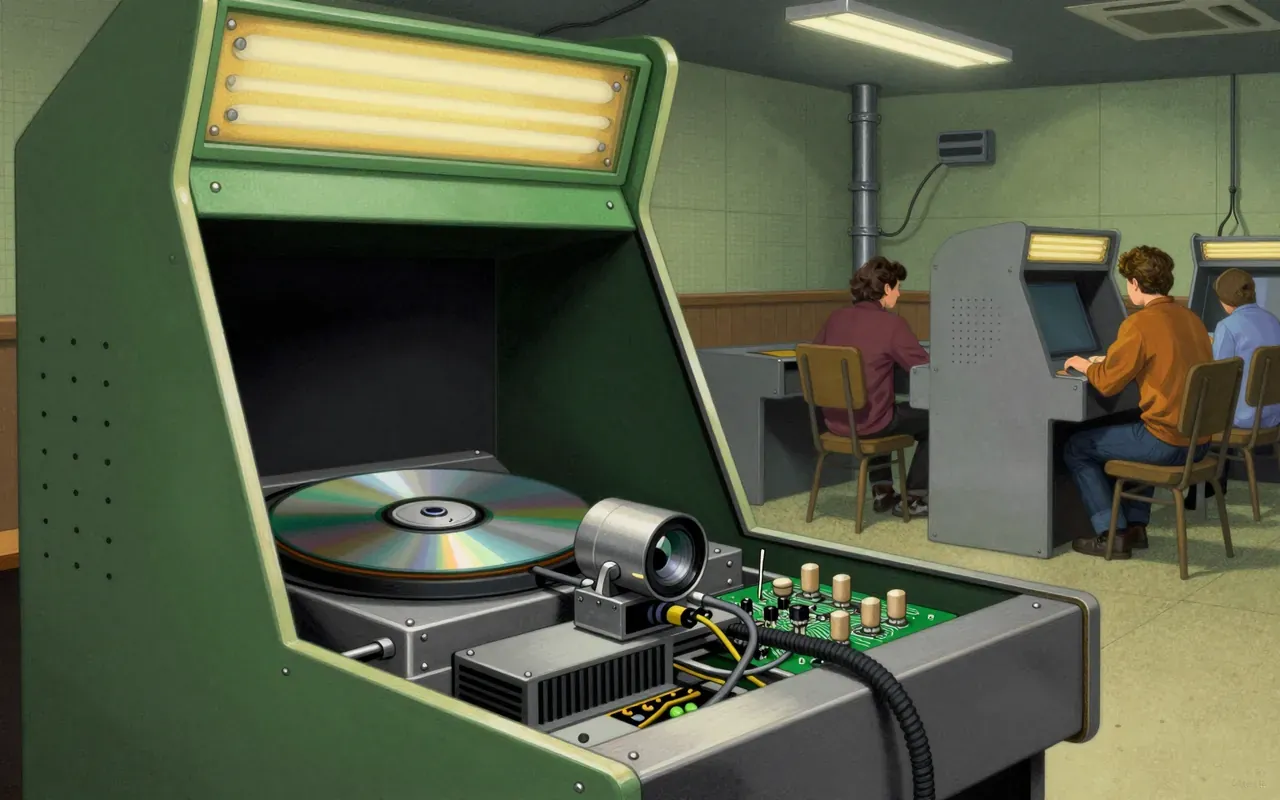
Dragon's Lair (1983) is an arcade-exclusive interactive film where players respond to quick time events during hand-animated cutscenes. It runs on LaserDisc hardware. Players control Dirk the Daring’s reflexes — not his movement or decisions. Narrative progression is predetermined. Levels are grouped into three cycles, selected dynamically. Dying moves the player forward. Failed levels must be repeated before reaching the Dragon's Lair. Some scenes repeat; some are mirrored, reversing required inputs. Operators could configure the cabinet to demand more coins mid-session. Cinematronics organised production in partnership with Advanced Microcomputer Systems and Don Bluth Productions. Starcom was formed to control rights. It was the first major LaserDisc video game.

9:47

Full Throttle (1995 video game)

LucasArts · 1995

Full Throttle is a 1995 LucasArts graphic adventure game built on SCUMM with INSANE for FMV, played from a third-person perspective using point-and-click navigation.

12:35

Hitman: Codename 47

IO Interactive · 2000

Hitman: Codename 47 is a foundational stealth-action hybrid built on compromise: a forced pivot from MMO to shooter, then reshaped by executive vision into something slower, tenser, and more systemic. It rewards silence with money, punishes civilian deaths with deductions, and forces players to drag bodies to avoid alerts — all while running on a bespoke engine that pioneered ragdoll physics. Its brilliance lies in how it stitches together ideas from Deus Ex and Thief, then bends them around corpse logistics. Its flaw is that it never fully sheds its run-and-gun roots — some levels abandon stealth outright, and movement remains stubbornly unrefined. It is not a polished experience. It is a working blueprint.

9:37

Indy 500 (1977 video game)

Atari · 1977

Indy 500 (1977) is a cartridge for the Atari 2600 offering fourteen variations across four gameplay modes — Race Car, Crash n' Score, Tag, and Ice Race — each defined by distinct win conditions, player configurations, and physics constraints.

8:53

King's Field (1994 video game)

FromSoftware · 1994

King's Field (1994) is FromSoftware’s debut PlayStation action role-playing game. It is a first-person dungeon crawler set in a vast underground labyrinth. The player explores five real-time 3D dungeon environments to uncover the source of a monster invasion.

10:04

King's Field (1995 video game)

FromSoftware · 1995

King's Field (1995) is FromSoftware’s second game and the first King's Field released outside Japan. It is Prince Aleph’s slow, solitary trek across the island of Melanat to recover the Moonlight Sword. Its design is defined by hardware-imposed slowness: movement, combat, and exploration all resist immediacy. It asks for patience, repetition, and tolerance of ambiguity — not engagement through clarity or reward.

10:48

King's Quest I

Sierra On-Line · 1984

King's Quest I is a foundational graphic adventure that trades player freedom for architectural control — every screen is a stage, every command a test of precise positioning, and every death a reminder that the machine holds all the cards.

9:20

Kirby 64: The Crystal Shards

Nintendo · 2000

Kirby 64: The Crystal Shards is a 2000 Nintendo 64 platformer developed by HAL Laboratory. It uses 3D rendering but locks movement to a 2D plane. Players collect 98 crystal shards across six worlds using Kirby’s core actions—walk, jump, inhale, fly—and seven copy abilities. Power Combos let players mix two abilities for 28 possible effects. Vehicle-based segments include riding King Dedede’s back, minecarts, and log flumes. Controls use the D-pad exclusively, following usability testing with children. All shards must be collected to reach the final boss and true ending.

9:51

Lunar Lander (1979 video game)

Atari · 1979

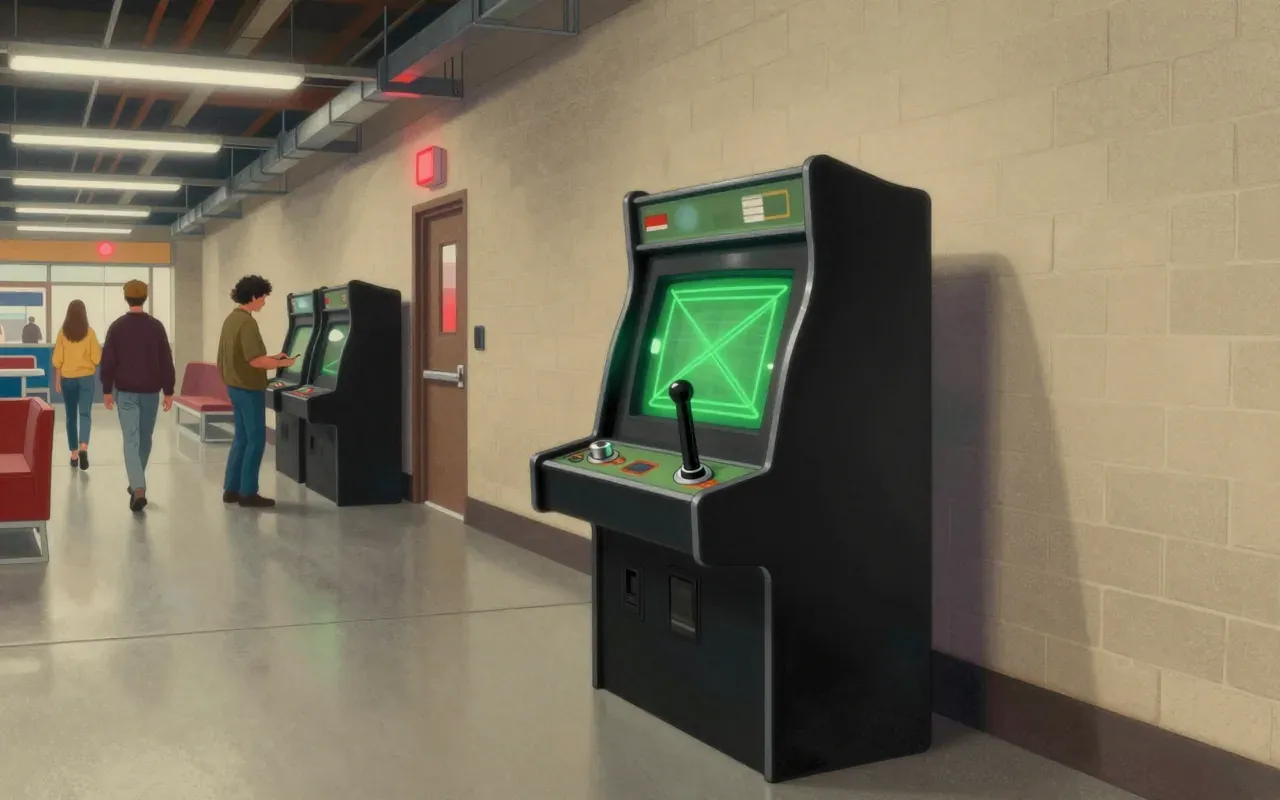
Lunar Lander (1979) is a vector-based arcade game by Atari, Inc. that reduces piloting to rotation, thrust, and fuel. It offers no story, no characters, no world—only a side-view landscape, a fragile module, and the unblinking arithmetic of descent.

9:26

Marvel vs. Capcom: Clash of Super Heroes

Capcom · 1998

Marvel vs. Capcom: Clash of Super Heroes is a 1998 2D tag-team fighting game developed by Capcom’s Division 2 for the CP System II arcade system. Players select two fighters, swap between them mid-match, and rely on off-screen regeneration and randomly assigned guest characters with limited uses. It introduces the simultaneous 'Variable Cross' attack and grants unlimited use of the Hyper Combo Gauge. Its 2D animated cartoon-style graphics follow Capcom’s post-Darkstalkers aesthetic.

9:36

NBA Jam (1993 video game)

Midway · 1994

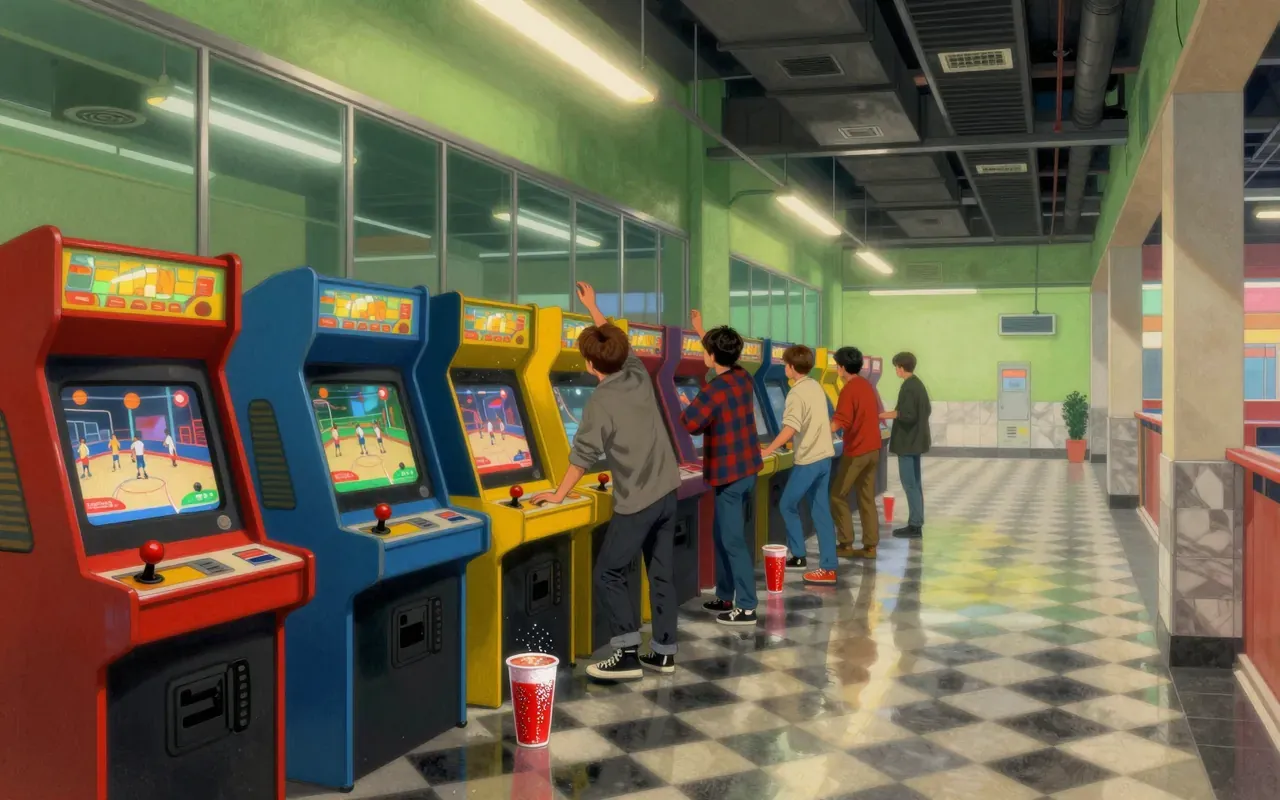
NBA Jam (1993) is a two-on-two arcade basketball game developed and published by Midway, featuring NBA-licensed teams and digitized likenesses of real players.

9:56

Need for Speed: Most Wanted (2005 video game)

Black Box · 2005

Need for Speed: Most Wanted (2005) is a street-racing game set in the fictional city of Rockport. Players use licensed real-world cars to defeat 15 Blacklist racers, complete varied race types—including Tollbooth and Speedtrap—and evade increasingly aggressive police pursuits governed by a heat-based escalation system. Cars can be upgraded and customised in Career mode. The game features Career, Quick Race, Challenge Series, and multiplayer modes on certain console editions.

9:46

Revelations: Persona

Atlus · 1996

Revelations: Persona is Atlus’s 1996 PlayStation RPG that introduces the Persona series. It casts high school students who summon Personas—Jungian self-manifestations—to fight supernatural threats in a town shaped by lunar cycles and branching narrative paths.

9:31

Pokémon Red, Blue, and Yellow

Game Freak · 1998

Pokémon Red, Blue, and Yellow are tightly constrained Game Boy RPGs built around three screens, turn-based battles, and enforced social play. They demand cooperation—not for story, but for completion. They reward patience, not improvisation. They are about checking boxes, not breaking rules.

10:14

Prince of Persia (1989 video game)

Brøderbund · 1989

Prince of Persia (1989) is a cinematic platformer where time, health, and animation are tightly coupled systems—not flourishes. It originated on the Apple II during Broderbund’s early, hardware-conscious phase. Its design forces rhythm, precision, and memory. It does not adapt. It does not forgive. It runs on clocks, triangles, and rotoscoped frames.

8:12

Prince of Persia 2: The Shadow and the Flame

Brøderbund · 1993

Prince of Persia 2: The Shadow and the Flame is a 1993 Broderbund-published cinematic platformer that escalates tension through larger environments, denser combat, and an unforgiving real-time clock—without altering the foundational verbs established on the Apple II.

8:20

Punch-Out!! (1984 video game)

Nintendo · 1984

Punch-Out!! (1984) is a rigid, reactive arcade boxing game built around telegraphed eye cues, fixed timing, and forced replay. It asks players to memorise patterns, not adapt to them. It gives no identity beyond initials and no outcome beyond repetition or defeat.

9:27

RalliSport Challenge

Rainbow Studios · 2002

RalliSport Challenge is a 2002 offroad racing game developed by Rainbow Studios. It features four race types—Rally, Hillclimb, Ice Racing, and Rallycross—each defined by distinct terrain-based rules and consequences. Players progress through career mode to unlock cars, choose between Beginner (mid-rally restart) and Normal (full-rally restart) modes, and race either sequentially or against AI. It belongs to the same offroad lineage as Motocross Madness and MX vs. ATV.

9:00

Ridge Racer (1993 video game)

Namco · 1994

Ridge Racer (1993) is a Namco arcade racing game built on System 22 hardware, defined by drifting, texture-mapped 3D graphics, and a lap-based race loop across one track in four difficulty tiers.

9:32

R4: Ridge Racer Type 4

Namco · 1998

R4: Ridge Racer Type 4 is a PlayStation racing game centred on powersliding — using either Drift (single brake tap) or Grip (brake/gas alternation) depending on car make — within a structured Grand Prix progression where qualifying positions determine vehicle unlocks and upgrades. It introduces team- and manufacturer-based story modes, Time Attack, two-player split-screen VS. Battle (a series first), four-player Link Cable support, car decoration, Extra Trials versus prototypes, and PocketStation integration for car trading in Japan.

10:48

Samurai Shodown (1993 video game)

SNK · 1993

Samurai Shodown (1993) is a weapon-based 2D fighting game released by SNK for the Neo Geo arcade system. Set in late-1780s feudal Japan, it replaces hand-to-hand combos with deliberate, high-risk strikes. Slow motion highlights impact. A referee lifts white or red flags to confirm hits. Blood appears on contact. It is SNK’s first arcade fighter built around weapons.

9:14

Shinobi (1987 video game)

Sega · 1987

Shinobi (1987) is a Sega arcade game where Joe Musashi fights Zeed across timed stages using shurikens, melee, and one-per-stage ninjutsu techniques. Movement is precise. Death is absolute. Progression is hostage-driven. It is not about lore, scale, or stamina — it is about reading space, committing to motion, and choosing when to spend your one irreplaceable power.

10:14

Space Quest I

Sierra On-Line · 1986

Space Quest I is a 1986 graphic adventure built on Sierra’s AGI engine. It asks players to type commands, navigate layered 2D spaces, consult the manual constantly for copy protection, and tolerate platform-specific interface splits—including no menus on Apple II. Its humour relies on parser friction, hardware constraints, and satirical worldbuilding. It works as a design document for early Sierra adventure grammar—not as a frictionless play experience.

8:40

Street Fighter: The Movie (console video game)

Capcom · 1995

Street Fighter: The Movie (console video game) is a 1995 Capcom release for PlayStation and Sega Saturn. It adapts the 1994 film using digitised actor footage and bases its combat on Super Street Fighter II Turbo. Four modes exist: Movie Battle (Guile infiltrating Shadaloo City), Street Battle (twelve-fighter ladder), Vs. Mode, and Trial Mode. Super Special Moves require a half-full Super Combo gauge and two-button inputs. Regional versions differ in naming and voice samples. The Japanese release is titled Street Fighter: Real Battle on Film.

9:00

Ultima I: The First Age of Darkness

Origin Systems · 1981

Ultima I: The First Age of Darkness is a foundational computer RPG where 'The Stranger'—summoned from another world—must destroy the Gem of Immortality to end Mondain's rule in Sosaria.

8:50

Unreal (1998 video game)

Epic Games · 1998

Unreal (1998) is a 3D first-person shooter co-developed by Epic MegaGames and Digital Extremes. You play Prisoner 849, a survivor of the crashed prison ship Vortex Rikers on the alien planet Na Pali. You fight through Skaarj-controlled mines, ruined Nali temples, a water temple, a Titan arena, alien installations, and the Skaarj Mothership — uncovering narrative via journals and environmental decay. Its strength lies in atmosphere, scale, and scripted set-pieces. Its limits are linearity, shallow combat, and fragmented storytelling.

10:00

Wizardry: Proving Grounds of the Mad Overlord

Sir-Tech · 1981

Wizardry: Proving Grounds of the Mad Overlord is a 1981 dungeon-crawl RPG by Sirotech Software. It demands manual mapping, enforces strict party alignment rules, and offers no in-dungeon saving. Its ten-level dungeon beneath Trebor's castle exists solely to be descended — one floor at a time — until the party reaches Werdna and retrieves the amulet.

11:08

UFO: Enemy Unknown

Julian Gollop · 2013

UFO: Enemy Unknown is a 1994 strategy game developed by Julian and Nick Gollop under Mythos Games. It divides play between the Geoscape—a global strategic layer beginning 1 January 1999—and the Battlescape—a voxel-based, turn-based tactical layer triggered by alien contact. It establishes the X-COM franchise. It asks players to manage finite resources, absorb permanent loss, and reconcile two deeply asymmetrical systems. It falls short in explanation, feedback, and accessibility—but not in consequence.

8:49

Bejeweled (video game)

PopCap Games · 2001

Bejeweled is a browser-based match-three puzzle game developed by PopCap Games and first released in 2000. Players swap adjacent gems to form lines of three or more identical gems, clearing them and triggering cascading falls. Swaps that fail to produce a match revert automatically. It features untimed and timed modes — the former ending when no moves remain, the latter requiring point accumulation to stall a depleting timer — and later introduced competitive multiplayer with special gems.

9:36

Diablo (video game)

Blizzard · 1996

Diablo (1996) is an action role-playing dungeon crawler developed by Blizzard North and published by Blizzard Entertainment for Windows. Players navigate procedurally generated levels using mouse-driven movement and keyboard-based spellcasting. Dungeon themes shape layout—catacombs feature long corridors, caves are non-linear. Quests are randomly assigned from tiers; only the final two are mandatory. Items degrade with use and are destroyed at zero durability. Griswold the Blacksmith repairs them for a fee; Warriors may self-repair at durability cost. Staves enable spellcasting without spell knowledge or mana. The game establishes a tight, friction-driven loop: explore, degrade, return, repeat—until the final two quests gate the end.
9:02

Guitar Hero (video game)

Harmonix · 2005

Guitar Hero (2005) is a rhythm game where players press coloured fret buttons and strum in time with scrolling notes on screen. Developed by Harmonix and published by RedOctane for the PlayStation 2, it uses a custom guitar-shaped controller with five colour-coded frets and a strum bar. Gameplay draws from Frequency and Amplitude, and supports both left- and right-handed configurations. A Rock Meter fails the song if depleted, and Star Power can be activated via whammy bar or tilt. Players earn points for hitting notes, chords and sustains, and increase a score multiplier through consecutive successful hits. Hammer-on and pull-off techniques allow faster note series without strumming each note. Standard controllers map notes to face buttons.

11:22

Heretic (video game)

Raven Software · 1994

Heretic (1994) is a first-person shooter developed by Raven Software. It is the first entry in the Serpent Riders trilogy and is set in the dark fantasy world of Silverspring. The game uses a modified Doom engine to deliver level-based combat, key-driven progression, and fantasy-themed interactivity.

10:04

NBA 2K (video game)

2K Sports · 1999

NBA 2K (1999) is the inaugural title of the NBA 2K series, released for the Sega Dreamcast. Developed by Visual Concepts and published by Sega, it features real NBA players and teams from the 1999–2000 season, custom player and team creation, and fictional commentary by Bob Steele and Rod West.

10:02

Wipeout (video game)

Psygnosis · 1995

Wipeout is a 1995 PlayStation anti-gravity racing game set in the F3600 league of 2052. Players select from eight craft—two per team—each defined by acceleration, top speed, mass, and turning radius. Six tracks depict futuristic Canada, the United States, and Japan. A seventh, Firestar, is set on Mars and unlocked only after completing the Rapier Championship.

8:50

Asteroids (video game)

Atari · 1979

Asteroids (1979) is a multidirectional shooter developed by Atari, Inc. It uses custom vector-display hardware derived from Lunar Lander. The player controls a triangular spaceship with rotation, forward thrust, and forward fire. Movement obeys inertia: the ship continues drifting until thrust alters direction or friction halts it. Asteroids break into smaller, faster fragments when shot. Two types of flying saucers traverse the field and fire back. Screen edges wrap both horizontally and vertically. Hyperspace teleports the ship to a random location at risk of self-destruction or collision. The game features a high-score table with player initials. It was designed for arcade play and includes exploitable behaviours like edge-lurking to evade saucer aim.
8:58

Boulder Dash (video game)

First Star Software · 1984

Boulder Dash is a deterministic puzzle game built on gravity, grids, and consequence. It gives you Rockford, dirt, boulders, time, and diamonds—and nothing else. Its rigour is its reward.

10:40

Centipede (video game)

Atari · 1981

Centipede is a fixed shooter arcade game developed and published by Atari, Inc. in 1981. The player controls the Bug Blaster at the bottom of the screen with a trackball and shoots upward at a segmented centipede descending through a field of mushrooms. Shooting a segment turns it into a mushroom and splits the centipede; the rear piece grows a new head. The centipede moves horizontally until hitting a mushroom or screen edge, then drops one level and reverses. Mushrooms take four shots to destroy and award one point each. Their accumulation speeds the centipede’s descent. A 1998 Windows PC remake was released by Hasbro Interactive.
9:35

Dragon Quest (video game)

Chunsoft · 1986

Dragon Quest (1986) is a single-player RPG developed by Chunsoft. It simplifies Western RPG conventions for console audiences. The player controls a young hero who must defeat the Dragonlord and retrieve the stolen Balls of Light. Progression relies on open exploration gated by enemy strength, turn-based combat with four commands, and stat growth tied to experience and name input. Save systems differ: passwords in Japan, battery-backed RAM in North America. Its design prioritises narrative clarity and incremental empowerment over mechanical complexity.

9:35

F-Zero (video game)

Nintendo · 1990

F-Zero is a 1990 SNES launch title. It is a futuristic racing tournament set in 2560. Players select one of four characters, each piloting a unique hovercar. Races are five laps long. Players must avoid hazards like slip zones and magnets. Collisions drain a power meter. Energy is restored via pit areas. Lap placement must improve each time to avoid disqualification. Each lap grants a ~4-second 'Super Jet' boost and points based on finish position. The game uses Mode 7 graphics to simulate pseudo-3D motion.

9:34

Fallout (video game)

Interplay · 1997

Fallout (1997) is a foundational CRPG built on rigid arithmetic and player-driven consequence. Its design refuses abstraction: if your Luck is six, you fail 40% of critical rolls. If your Speech is 65%, you unlock one branch—not all. It does not ask you to believe. It asks you to calculate.

10:02

Golden Axe (video game)

Sega · 1989

Golden Axe is a 1989 arcade beat 'em up where players choose one of three warriors to fight through fixed screens of enemies in Yuria, using melee attacks and elemental spells that consume a finite magic resource — refilled only by kicking a blue thief — while health is restored by food dropped by a green thief. Sega announced plans to revive the dormant franchise in 2023.

9:51

Grandia (video game)

Game Arts · 1997

Grandia is a role-playing video game developed by Game Arts and published by Entertainment Software Publishing for the Sega Saturn in 1997. It uses 3D environments with 2D animated bitmap sprites for characters. The camera rotates freely in third-person and must be rotated to reveal hidden items or passageways. The game features a rotational party roster. Party members' statistics increase upon leveling up through experience points earned from defeating enemies. Characters learn new abilities by repeatedly using weapons or spells until their Skill Level increases. Weapons are divided into classes: swords, maces, axes, whips, and knives. A Skill screen in the main menu lists each party member's potential abilities and their learning requirements. The game encourages periodic switching between weapons.

9:25

Joust (video game)

Williams Electronics · 1982

Joust is a Williams Electronics coin-operated arcade game from 1982. It features two-player cooperative or competitive play on a single screen with floating rock platforms above lava. Players control knights on birds — ostrich for Player 1, stork for Player 2 — using horizontal joystick movement and vertical wing-flap timing. Combat resolves via mid-air lance collision based on relative height. Defeated enemies become falling eggs that can be collected for points or left to hatch into new enemies. Three enemy types — Bounder, Hunter, Shadow Lord — differ in colour, AI behaviour, and point value. A pterodactyl appears periodically and must be defeated during a precise animation frame. An indestructible Lava Troll grabs low-flying characters. Lives are lost on collision or lava contact. The game was widely ported to home systems by external developers and publishers.

9:04

Kangaroo (video game)

Sun Electronics · 1982

Kangaroo is a tightly wound 1982 arcade platformer where vertical movement, joystick-based jumping, and face-to-face punching define every second of play. It delivers immediacy and clarity at the cost of variety and longevity.

10:14

Mario Party (video game)

Hudson Soft · 1998

Mario Party (1998) is a Hudson Soft-developed, Nintendo-published multiplayer party game for the Nintendo 64. It uses a board-game structure with dice-based movement, star-collecting goals, coin-earning mini-games, and eight themed boards. Six characters are playable. Up to four players may join, with at least one human and adjustable AI difficulty. Game length is chosen before play: Lite (20 turns), Standard (35), or Full (50). Stars are purchased from Toad using coins earned exclusively through mini-games played once per turn.

9:23

Metroid (video game)

Nintendo · 1986

Metroid (1986) is a foundational action-adventure game where Samus Aran explores the planet Zebes, acquiring abilities like the Morph Ball and Screw Attack to unlock new areas. It uses nonlinear progression, mandatory boss fights (Kraid and Ridley), and a password save system. It is one of Nintendo’s major franchises and features Samus Aran, a Nintendo character with international recognition.

9:00

Millipede (video game)

Atari · 1982

Millipede is a fixed shooter arcade game developed and published by Atari, Inc. in 1982. The player controls Archer, an elf, using a trackball and fire button to destroy a descending millipede and other insect enemies while avoiding collisions. The millipede moves horizontally, drops one row upon hitting obstacles or edges, and splits when shot — its rear segment growing a new head. Gameplay includes varied enemy behaviours, special items like DDT bombs, bonus swarm levels, and dynamic mushroom field changes inspired by Conway's Game of Life.

10:18

Pengo (video game)

Sega · 1982

Pengo is a 1982 arcade maze game developed by Coreland and published by Sega Enterprises, Inc. The player controls Pengo — a red penguin in the Antarctic — using a four-position joystick and one button to slide or crush ice blocks in an overhead maze. The goal is to eliminate all Sno-Bees and Sno-Bee eggs each round, optionally aligning three diamond blocks for bonus points. Rounds end when all enemies and eggs are destroyed; doing so in under 60 seconds awards time-based bonus points. The game features 16 rounds with intermissions.

8:38

Phantasy Star (video game)

Sega · 1987

Phantasy Star (1987) is a traditional Japanese RPG developed and published by Sega for the Master System. It alternates between top-down overworld exploration and first-person dungeon/battle navigation. Players control Alis, recruit Noah, Odin, and Myau, share one inventory, visit towns to buy gear, face random monster encounters outside towns, and manually map complex dungeons.

9:22

Quake (video game)

id Software · 1996

Quake is id Software’s first true 3D first-person shooter. It launched in 1996. It uses a fully 3D engine. It introduced Internet deathmatch via QuakeWorld. Its single-player campaign has four episodes. Each episode contains seven to eight levels, including one secret level. Episode one’s secret level features very low gravity. Players explore levels, face monsters, and find secret areas before reaching an exit. Switches or keys open doors. Reaching the exit advances the player to the next level. There is no dedicated "use" key — players activate objects by physically pushing against them. The player can wield up to eight weapons but always carries at least an axe and a shotgun. Four separate ammo pools — shells, nails, rockets, and cells — feed specific weapons. Power-ups include Ring of Shadows (invisibility), Pentagram of Protection (invulnerability), and Quad Damage (quadruples weapon damage). Armor has three tiers, each blocking a fixed percentage of damage regardless of durability.

9:28

Scramble (video game)

Konami · 1981

Scramble (1981) is Konami’s first major arcade hit — a horizontally scrolling shooter where the player pilots a jet across six seamless terrain sections, using separate buttons for forward fire and bombs while managing a depleting fuel supply replenished only by destroying fuel tanks. Success requires surviving, defeating enemies, and destroying a base in the final section to trigger a mission-complete flag — then repeating the cycle at increased difficulty.

10:09

The Dig (video game)

LucasArts · 1995

The Dig is a 1995 LucasArts point-and-click adventure game for PC and Macintosh. It casts the player as Commander Boston Low, stranded on an alien world after a failed lunar mission, investigating ancient ruins to understand a vanished civilisation and find a way home.

10:48

The Longest Journey (video game)

Funcom · 1999

The Longest Journey is a third-person point-and-click adventure game developed and published by Funcom in 1999. It is structured in chapters where players advance the story by completing tasks like talking to characters and solving puzzles. Dialogue is expansive and mostly non-essential to progression, serving instead to build character, location, and lore. Input differs by platform: PC uses a context-sensitive mouse cursor, iOS uses touch-screen interaction. Interaction is guided by icons: Eye for examine, Mouth for talk/consume, Hand for use/pick up. On PC, the cursor changes colour to signal interactivity: red for exits, light blue for multi-action objects. A map screen enables travel between major locations, with new destinations unlocking as the story progresses. Puzzles rely on subtle environmental and conversational clues. Items are stored in an inventory and flash when usable on a compatible object. The game was very well-received both by critics and users. The game was published in 9 languages: English, Norwegian, French, Dutch, Swedish, Italian, Polish, Russian and Spanish.

9:28

Time Crisis (video game)

Namco · 1997

Time Crisis is a 1995 Namco arcade light-gun shooter defined by its foot pedal mechanic, three-stage structure, and strict one-minute countdown per area. It asks players to balance rapid shooting with minimal ducking to conserve time. It helped set the standard for the lightgun shooter genre. Its design offers no narrative, no flexibility, and no recovery—only repetition, rhythm, and risk.

10:00

Diddy Kong Racing

Rare · 1997

Diddy Kong Racing is a 1997 Nintendo 64 kart racer developed and published by Rare. Players select from ten characters and race across five worlds—each containing four tracks—using cars, hovercraft, or aeroplanes. Victory over antagonist Wizpig comes solely through winning races. Vehicle types impose clear trade-offs: the car is all-round but slowest on sand and water; the hovercraft handles those surfaces but suffers poor acceleration and manoeuvrability; the aeroplane accesses aerial zones and turns sharply but has the lowest speed. All characters can use all vehicles. The design asks players to match vehicle to terrain—and learn why the match fails as often as it succeeds.

8:25

NBA Street

EA Sports · 2001

NBA Street is a deliberate departure from EA Sports’ simulation ethos. It trades authenticity for attitude, structure for swagger, and time limits for point thresholds. Its design insists on expression before execution—and rewards repetition, not mastery.

8:50

Need for Speed: Underground 2

Black Box · 2004

Need for Speed: Underground 2 is a racing game where tuning, driving, and discovery are inseparable. It asks you to treat Bayview as terrain—not backdrop—and rewards persistence over precision. Its constraints are deliberate: no fast travel, no race menus, no hand-holding for hidden events. It works because those constraints shape a specific kind of attention: one tuned to corners, shortcuts, and the hum of a modified engine echoing off concrete.

9:20

Shogun: Total War

Creative Assembly · 2000

Shogun: Total War is a foundational strategy game that fused turn-based empire management with real-time battlefield tactics. Its ambition—to simulate feudal Japanese unification—was matched only by its structural compromises. The campaign map was added late. Systems coexist but rarely converse. Yet its combat loop remains legible, its faction asymmetry functional, and its provincial logic direct. It rewards patience, pattern recognition, and tolerance for abstraction.

9:56

Sonic R

Sonic Team · 1997

Sonic R (1997) is a foot-racing game co-developed by Sonic Team and Traveller's Tales for the Sega Saturn. It emphasises jumping, exploration, and item-based progression across five themed tracks — with reverse racing, ring trading, and unlockable characters tied to hidden token collection. Its design responds directly to Saturn hardware limits: custom engine, 12-layer transparency, and 30 fps target. It is not a kart racer, nor a traditional Sonic platformer — but a constrained experiment in 3D movement under technical duress.

10:30

Wipeout 2097

Psygnosis · 1996

Wipeout 2097 is a PlayStation-era anti-gravity racing game developed by Psygnosis using the console as primary reference hardware in preparation for its September 1995 Western launch. Players race against AI opponents, aiming to finish in the highest position possible. Vehicles travel at high speeds and require air-brakes for cornering. A weapons system lets players eliminate opponents mid-race. Each vehicle has a shield energy quota; depletion from weapons or impacts destroys the craft. Destroyed ships can be recharged at pit stops at the cost of race time. The Quake Disruptor creates a wave effect that launches opponents into the air. Difficulty escalates across three classes — Vector, Venom, Rapier — each with higher speeds and more complex tracks.

8:30

Yoshi's Story

Nintendo · 1997

Yoshi's Story is a Nintendo platform game released in 1997, built around two modes—Story and Trial—with a pop-up storybook aesthetic and pre-rendered 3D graphics.

10:16

Advance Wars

Intelligent Systems · 2001

Advance Wars is a deterministic, grid-based strategy game where victory is defined by elimination or capture — never story, never spectacle. Its rules are tight, its feedback immediate, its constraints absolute. It runs on the Game Boy Advance. It was made by Intelligent Systems. It came out in 2001.

10:18

Advance Wars: Days of Ruin

Intelligent Systems · 2008

Advance Wars: Days of Ruin is a 2008 turn-based strategy game developed by Intelligent Systems for the Nintendo DS. It departs from earlier entries with a darker tone, toned-down CO powers, no Tag powers, and new units and terrain effects. Players command military forces on grid-based maps to defeat enemies by destroying all units or capturing their headquarters. Fog of war, weather, and terrain shape tactics. The campaign contains 26 story-driven missions. Multiplayer supports local hot-seat and online play via Nintendo Wi-Fi Connection.

10:46

AEW Fight Forever

Yuke's · 2023

AEW Fight Forever is a deliberate step back: a wrestling game that abandons simulation for swing, realism for rhythm, and scale for structure. It works because its constraints are clear and consistent—not despite them.

9:32

Age of Empires II

Ensemble Studios · 1999

Age of Empires II is a real-time strategy game developed by Ensemble Studios in 1999, running on the Genie Game Engine. It is the second title in the original Age of Empires series. Players advance one of 13 civilizations through four historical Ages to build towns, gather resources, create armies, and defeat opponents.

9:06

Donkey Kong Country

Rare · 1994

Donkey Kong Country is a side-scrolling platform game where players control Donkey and Diddy Kong across 40 levels accessed via a world map. Gameplay involves jumping between platforms, avoiding obstacles, swapping between characters with distinct abilities (Donkey: stronger, terrain-slap; Diddy: faster, more agile), defeating enemies through jumping, rolling, or throwing barrels, and completing boss fights at the end of each area. The game features collectibles, animal buddies with special abilities, bonus stages, and multiplayer modes.

9:59

Doom 64

Midway · 1997

Doom 64 is a first-person shooter for the Nintendo 64 developed and published by Midway Games. Its gameplay follows the established Doom formula: players advance through 28 story levels and 4 secret levels by battling demons, collecting weapons and keys, and activating switches to reach each level's exit while surviving deadly ambushes and traps. The game uses a customized version of the Doom engine enabling new level geometry and dynamic colored lighting, and features unique visual assets including redesigned weapons and monsters. All weapons from Doom II return with new sprites and sound effects, plus a new weapon—the Unmaker—which uses hitscan but appears projectile-based and can be upgraded via three ancient artifacts scattered across levels. Most enemies from Doom and Doom II appear with similar behavior and attributes, though some—including the revenant, arch-vile, spiderdemon, and 'heavy weapon dude'—are omitted, and one new enemy—the nightmare imp—is added. A unique final boss, the Mother Demon, appears. The game’s narrative follows the Doom Marine returning alone to exterminate resurrected demons in quarantined UAC installations, culminating in his permanent self-exile in Hell after defeating the Mother Demon.

10:47

EverQuest

Verant Interactive · 1999

EverQuest is a foundational 3D MMORPG that demands group reliance, punishes solo risk, and treats servers as persistent social spaces — not content delivery platforms.

10:06

Fate/Stay Night

Type-Moon · 2004

Fate/Stay Night is a foundational Japanese visual novel that prioritises narrative architecture over interactivity. Its design demands rereading, rewards attention to subtext, and refuses to collapse its three routes into a single coherent whole — making it a deliberate, demanding, and historically significant text-based experience.

11:08

Grim Fandango

LucasArts · 1998

Grim Fandango (1998) is LucasArts’ first 3D adventure game. It replaces UI cues with Manny Calavera’s head-turning and inventory management with coat-jacket animations. Players solve puzzles by collecting and combining objects, talking through dialogue trees, and navigating pre-rendered environments — all without death or unwinnable states. Its strengths are its writing, voice acting, soundtrack, and stylised world. Its weaknesses are stiff movement, fixed-camera disorientation, and repetitive environmental feedback. It rewards patience and attention. It resists speed and muscle memory.

8:58

Kirby's Dream Land

Nintendo · 1992

Kirby's Dream Land is a foundational Game Boy platformer defined by room-based navigation, breath-powered flight, and inhalation combat. Its design choices reflect hardware limits and deliberate pacing — not ambition to transcend them.

10:55

Mario Kart 64

Nintendo · 1997

Mario Kart 64 is a foundational local multiplayer racing game built around item-driven chaos, weight-class trade-offs, and split-screen immediacy. It asks players to react faster than they think—and to forgive the game when luck overrides skill. Its hardware constraints shaped its clarity: no HUD clutter, no camera tricks, no persistence beyond the next race.

9:18

Mario Kart Wii

Nintendo · 2008

Mario Kart Wii is a 2008 Wii racing game where 24 Mario characters race on 32 themed tracks using items to attack or boost. It supports two- to four-player local split screen and Battle Mode (balloon popping). Motion controls via the bundled Wii Wheel define its feel — intuitive but imprecise. Half the content is locked behind completion objectives. Online play ended in May 2014.

9:13

Mortal Kombat II

Midway · 1993

Mortal Kombat II is a 1993 arcade fighting game by Midway. It improves on the original with faster pacing, refined movement options, and expanded finishers. It removes bonus games in favour of a win-counter. Finishing moves are disabled against or by boss or secret characters.

8:39

Pac-Man

Namco · 1980

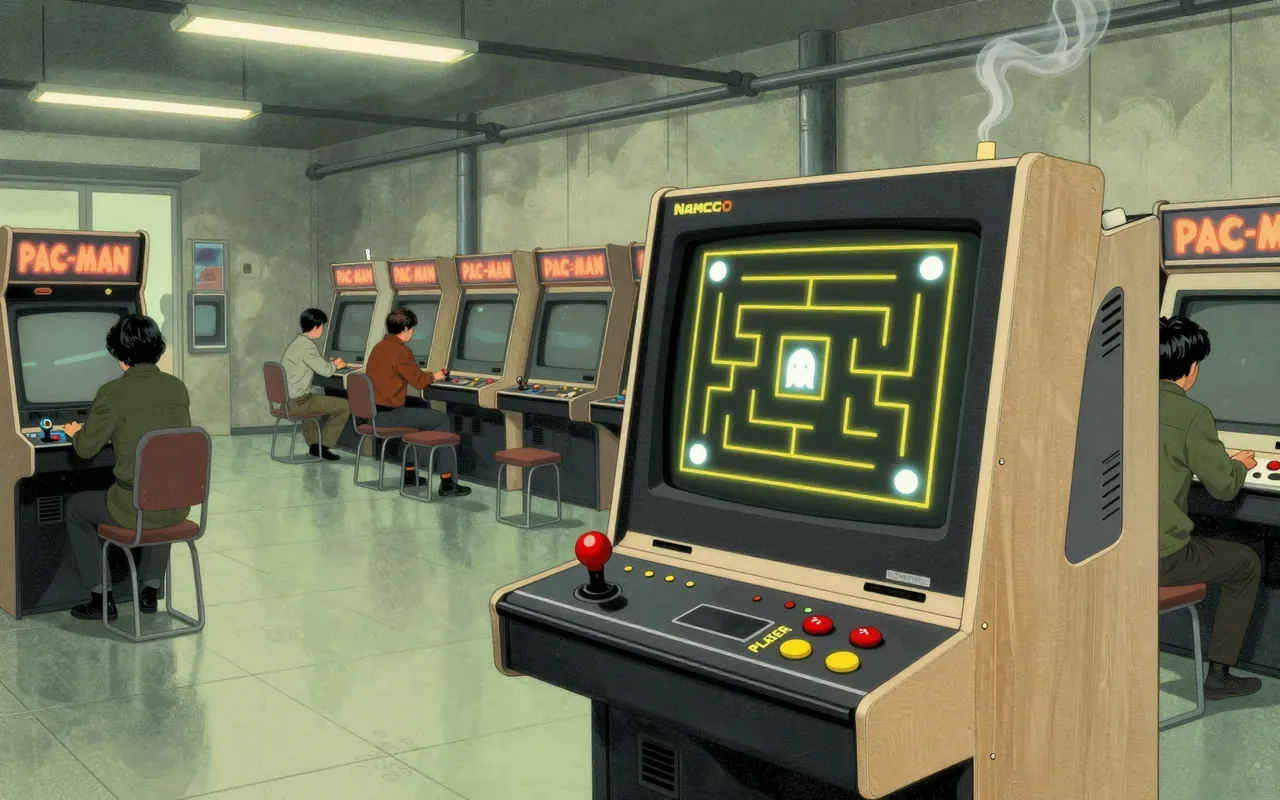
Pac-Man is a foundational arcade game released by Namco in Japan in 1980 (test-marketed 22 May, wide release July) and North America in November 1980. Its design centres on eating dots in a fixed maze while evading four ghosts—Blinky, Pinky, Inky, and Clyde—each governed by a distinct AI rule. Power pellets temporarily reverse ghost behaviour and enable Pac-Man to consume them. Completion of each level requires clearing all dots; contact with a ghost costs a life. The game ends when all lives are lost.

10:59

Pong

Atari · 1972

Pong is not simple — it is surgically constrained.

11:25

Quake 4

Raven Software · 2005

Quake 4 is a movement-first FPS built on Quake’s legacy, not its future.

10:06

Quake II

id Software · 1997

Quake II is a mission-driven, first-person shooter released in 1997 by id Software for Windows 95. It shifts the Quake series to a retaliatory human assault on the alien planet Stroggos against the Strogg. Movement is slower than Quake’s, with added crouching. Six new weapons join four redesigned Quake weapons; four Quake weapons are omitted. Power-ups include Quad Damage plus six new ones. Single-player uses repeated CGI cutscenes to mark progress through objectives like stealing a Tank Commander’s head or calling in an airstrike. Multiplayer supports deathmatch, co-op, and Capture the Flag via client/server and OpenGL. It establishes the human–Strogg war narrative that most later Quake entries follow — unlike Quake III Arena, which abandons continuity for arena combat.

9:18

Return to Castle Wolfenstein

Gray Matter Interactive · 2001

Return to Castle Wolfenstein is a first-person shooter built on id Tech 3, where the player navigates levels and fights enemies including Nazi soldiers, undead, and experimental mutants. In the game's single-player mode, players use combat and stealth to complete objectives across 27 levels in 7 missions. Missions begin with a mission briefing, providing information about objectives, and may include activities such as reaching the end of an area, defeating all the enemies, collecting certain items, eliminating specific enemies, or stealth missions. The player acquires weapons and ammo throughout levels, including for pistols, submachine guns, rifles, grenades, rockets, flamethrowers, and experimental weapons including the Venom, a minigun, and the Tesla Gun, which shoots electricity at enemies. Some weapons have alternate fire modes, such as rifles that have a scope, or shoot projectiles. The player can also engage in melee combat by either kicking or using a knife. Damage is location-specific, with headshots damaging enemies more than other areas. Special items can be collected that increase the player's health, ammo, armor, or stamina.

9:37

Shin Megami Tensei II

Atlus · 1994

Shin Megami Tensei II is a first-person, post-apocalyptic RPG for the Super Famicom, developed by Atlus’s Creative Department 1st Production (Team Maniax). It uses lunar phase to gate demon negotiation, law/chaos/neutrality alignment to shape story and recruitment, and fusion with inheritance and accident mechanics to build party composition. It demands system literacy, tolerates opacity, and rewards consistent alignment play.

8:49

SSX

EA Canada · 2000

SSX (2000) is a PlayStation 2 arcade snowboard racer where tricks directly fuel speed via a boost meter. Developed by EA Vancouver (then EA Canada) under the EA Sports BIG banner, it replaces simulation with rhythm, timing, and terrain-as-launchpad. Uber Tricks, rivalries, and open-world structure belong to sequels — the original delivers tight, repeatable races across discrete global courses. It works because tricks are mandatory, not decorative. It wears thin because it offers no stakes beyond the next jump.

10:57

SSX Tricky

EA Canada · 2001

SSX Tricky is a 2001 arcade snowboarding game developed by EA Canada for PlayStation 2, GameCube, and Xbox. It builds on SSX with twelve characters, Uber Tricks triggered by adrenaline, a rivalry system activated by knocking down opponents, and progression tied to medals and trick books. Tracks include remixes of Merqury City and Tokyo Megaplex, plus Garibaldi and Alaska.

8:34

Tekken 2

Namco · 1995

Tekken 2 refines the original's 3D fighting mechanics with new defensive and movement options—attack reversals, back throws, chain-throws, and character-specific sidesteps—while retaining the infinite plane and four-button layout. Its home console version adds structured training and endurance modes (Survival, Team Battle, Time Attack, Practice) with health carryover systems that shape long-session play. Unlock progression ties directly to Arcade Mode completion, and hardware constraints shaped the PlayStation port's development focus.

9:35

ToeJam & Earl

Sega · 1992

ToeJam & Earl is a 1992 Sega game that turns Earth into a stack of floating islands. Players control alien rappers searching for 10 spacecraft wreckage pieces. Movement is in 3/4 perspective. Islands are randomly generated and linked by elevators. Falling off an island drops the player to the layer below, requiring elevator relocation. The game supports single-player and cooperative two-player modes. In two-player mode, proximity unifies the screen and unlocks exclusive dialogue; separation splits the screen. Presents deliver temporary power-ups, but their contents are unknown until opened — and the 'Randomizer' power-up scrambles effects. Earthlings act as unpredictable NPCs, some hostile, some helpful.

11:09

Tsukihime

Type-Moon · 2000

Tsukihime is a foundational Japanese visual novel that establishes narrative consequence as core gameplay — through death-triggered tutorials, rigid route architecture, and a completionist epilogue. Its 2000 release at Comiket 59 and immediate patching reflect its origins as an iterative, community-facing object — not a polished product. It asks for patience with prose, tolerance for adult content, and acceptance of its narrow interactivity. It gives back tightly controlled emotional arcs and structural clarity — nothing more.

9:35

Unreal II: The Awakening

Legend Entertainment · 2003

Unreal II: The Awakening is a 2003 first-person shooter developed by Legend Entertainment using the Unreal Engine. Its single-player campaign alternates between planetary/base combat missions and interlude levels aboard an orbiting spaceship, where players upgrade equipment and receive instructions. Its multiplayer expansion, XMP, is team-based (red vs. blue), built around artifact capture and generator control. Development was fraught. The game commercially failed and received an underwhelming reception. It was Legend’s final release.

8:36

Wave Race 64

Nintendo · 1996

Wave Race 64 is a buoy-locked racing game for the Nintendo 64. It demands strict adherence to directional rules across escalating difficulty tiers. No story. No AI nuance. Just precision, points, and progression earned one lap at a time.

10:29

Wolfenstein 3D

id Software · 1992

A foundational first-person shooter that uses rigid grid-based level design, fixed-height walls, and Nazi iconography as structural constraints—not just theme—to create a fast, lethal, and relentlessly focused combat loop.

9:01

Yoshi's Island

Nintendo · 1995

Yoshi's Island is a 2D side-scrolling platform game developed and published by Nintendo for the SNES. Players control Yoshis through 48 levels across six worlds to rescue Baby Luigi and reunite the brothers. It emphasises puzzle-solving and item-collecting — including hidden flowers and red coins — over pure platforming. Players use run-and-jump mechanics, a flutter jump, tongue-based enemy capture, egg-throwing, and transformation abilities. Every fourth level features a boss fight against an enlarged prior enemy. Yoshi collects coins for extra lives and retains his long tongue from Super Mario World.

8:24

Arkanoid

Taito · 1986

Arkanoid is a 1986 Taito arcade game. It is a block breaker where the player controls the Vaus paddle to bounce a ball and destroy bricks across 33 (or 36) levels.

10:02

BurgerTime

Data East · 1982

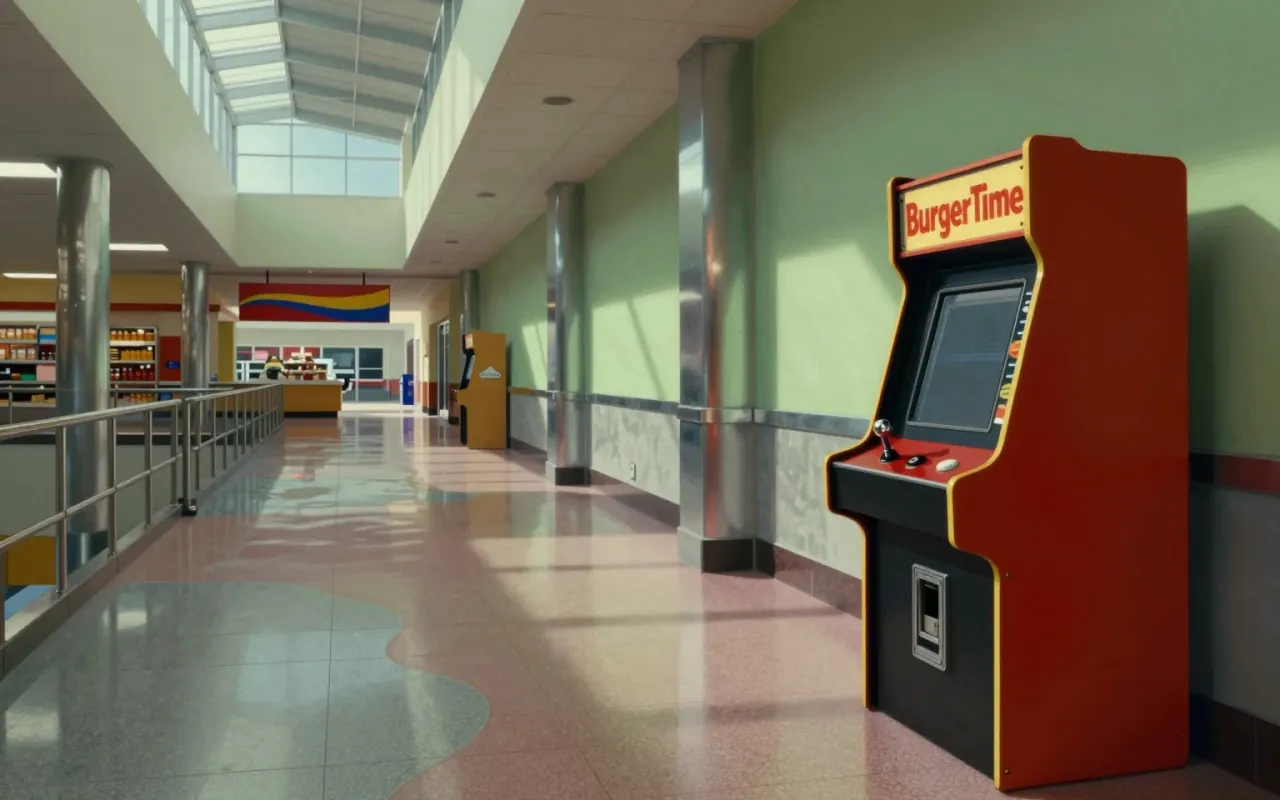
BurgerTime is a 1982 Data East arcade game where chef Peter Pepper walks across oversized burger ingredients on platforms and ladders to make them fall and stack into complete hamburgers while avoiding anthropomorphic hot dogs, fried eggs, and pickles. A limited supply of pepper can be thrown forward to briefly stun enemies. It was Data East's first major hit after abandoning the DECO Cassette System for dedicated arcade cabinets.

8:53

Chrono Trigger

Square · 1995

Chrono Trigger is a 1995 turn-based RPG by Square that integrates combat into its field maps, replaces random encounters with visible or ambush enemies, and maintains clear, direct cause-and-effect in hit point management.

9:05

Civilization II

Sid Meier · 1996

Civilization II is a foundational turn-based strategy game where players build a civilization from a primitive tribe while competing with computer-controlled rivals on a tile-based map. It offers three victory paths—conquest, space colonisation, or survival to 2020 AD—and lets players choose from 21 historical civilizations or create a custom one. Brian Reynolds was the primary designer; the 'Sid Meier's' prefix functioned as a quality signal. The base game supports only single-player mode. It models historical development through abstraction, not simulation.

9:28

Day of the Tentacle

LucasArts · 1993

Day of the Tentacle is a 1993 LucasArts point-and-click adventure built on the SCUMM engine. It uses time travel as a structural puzzle mechanic, splitting three protagonists across past, present, and future. Players switch between them and move items across eras using Chron-o-Johns or temporal placement. It features voice acting — a LucasArts first — and relies on cause-and-effect logic over reflexes or narrative choice.

10:20

Dig Dug

Namco · 1982

Dig Dug (Namco, 1982) is a maze chaser where the player carves tunnels to manipulate enemy movement and trigger rock falls. Its core loop — stop, latch, inflate, dodge — demands split-second timing and spatial foresight. It works because every action has immediate, visible, physical consequences. It does not work as a long-form experience: no story, no scaling challenge beyond repetition, no system depth beyond its two mechanics. It is for players who value clarity, consequence, and compact design over expansion or expression.

10:06

Doom II

id Software · 1994

Doom II is a deliberate, unapologetic escalation—not reinvention—of the original's formula. It loads the same engine with more demons, bigger maps, and sharper stakes, asking players to navigate chaos with muscle memory and opportunism. Its value lies entirely in how it plays now: tight, hostile, and unrelenting.

8:54

Dragon Quest III

Chunsoft · 1988

Dragon Quest III establishes foundational RPG structure — open-world traversal, class-based party building, day/night gating, turn-based combat, and experience-driven progression — all built on hardware constraints that shaped its rhythms and rules.

8:42

Final Fantasy VI

Square · 1994

Final Fantasy VI is a role-playing game for the Super Nintendo Entertainment System developed and published by Square. Its gameplay is structured around four basic modes: overworld map, town and dungeon field maps, battle screen, and menu screen. The overworld map is a scaled-down representation of the game world used for directing characters to locations, with travel primarily by foot, chocobo, or airship. Enemies are randomly encountered on field maps and the overworld when traveling by foot, except in plot-driven cases. The menu screen is used to configure the traveling party, equipment, learned magic, and gameplay settings, and also tracks experience points and character levels. Plot progression occurs as the player moves through towns and dungeons, where town citizens provide helpful information and some operate item or equipment shops.

8:26

Frogger

Konami · 1981

Frogger is a 1981 Konami arcade action game where the player guides frogs across a road and river to reach homes at the top of the screen.

9:57

Galaga

Namco · 1981

Galaga is a fixed shooter arcade game developed and published by Namco in 1981.

9:18

Galaga '88

Namco · 1988

A fixed shooter where formation, capture, and rescue define every session.

9:56

Grand Theft Auto III

Rockstar Games · 2001

Grand Theft Auto III is a foundational open-world action-adventure game that redefined spatial possibility in games—but its systems remain rigid, its controls unrefined, and its world more atmospheric than alive.

8:33

Gyruss

Konami · 1988

Gyruss is a Konami shoot 'em up arcade game from 1988. It uses one-point perspective with a central vanishing point. The player’s ship orbits the screen’s perimeter. Enemies are spaceships that must be destroyed to complete levels.

10:38

Jet Set Willy

Software Projects · 1984

Jet Set Willy is a flip-screen platformer where Miner Willy cleans his mansion after a party, navigating 60 rooms to collect glowing items. It abandons linear progression for open exploration, uses only left/right/jump controls, and punishes errors with room-reset deaths that cascade. Its design prioritises memory and timing over fairness or recovery.

10:39

King's Field III

FromSoftware · 1996

King’s Field III is a foundational FromSoftware RPG from 1996 that prioritises scale and slow-paced first-person exploration over responsiveness. Its overground world is vast. Its combat is lethargic — a melee round against a low-level creature can last up to five minutes. Players teleport between cities via a map screen. It follows King’s Field II (1996) and precedes Echo Night and Shadow Tower (1998). It was developed and published by FromSoftware for PlayStation.

10:54

Lode Runner

Brøderbund · 1983

Lode Runner is a tightly wound logic puzzle game built around a single, elegant mechanic: digging temporary holes to trap guards, then walking over them before they fill. It demands precision, foresight, and tolerance for opaque enemy behaviour. Its 150 levels escalate cleanly, and its shipped level editor made player authorship part of the core experience. It belongs to the Apple II era—not just chronologically, but architecturally.

8:47

Manic Miner

Bug-Byte · 1983

Manic Miner is a foundational platformer defined by constraint: fixed screens, fixed enemies, fixed timing, fixed reset. Its influence is historical. Its play is mechanical. Its value lies in how cleanly it exposes the grammar of the genre—before power-ups, before scrolling, before mercy.

10:20

Nights into Dreams

Sega · 1996

Nights into Dreams is a Saturn-exclusive action game where players alternate between timed ground navigation and fixed-path 3D flying to recover stolen Ideyas and defeat Wizeman.

11:02

Phantasy Star IV

Sega · 1993

Phantasy Star IV is a linear, story-driven RPG on the Sega Genesis. It uses turn-based combat, level-based progression, Technique-based magic, and combination attacks. Its manga-style panels and expanded script distinguish it within the series. Only 14 of 15 combination attacks function. Developed internally by Sega’s Consumer Development division, it belongs to Sega’s multi-million-selling Phantasy Star franchise.

8:47

Q*bert

Gottlieb · 1982

Q*bert is a 1982 Gottlieb arcade action-puzzle game where players use a diagonally mounted four-way joystick to hop Q*bert across a 28-cube pyramid, changing each cube’s colour by landing on it — with escalating rules per level — while avoiding deadly purple enemies, neutralising green enemies on contact, and surviving falls off the pyramid.

9:00

Robotron: 2084

Williams Electronics · 1982

A foundational twin-stick shooter that replaces rhythm with reflex, structure with surge, and progression with persistence.

9:38

Sinistar

Williams Electronics · 1982

Sinistar is a 1982 Williams Electronics arcade shooter where the player collects crystals from planetoids to build Sinibombs, using them to destroy Sinistar — a demonic skull-faced spacecraft constructed by red worker ships and guarded by warrior ships. It was not widely ported to home systems. It followed Defender (1981) and Stargate (1981), and sits alongside Joust and Robotron: 2084 as one of Williams’ popular and influential titles.

9:56

Sonic the Hedgehog 2

Sega · 1992

Sonic the Hedgehog 2 is a side-scrolling platformer released on the Sega Genesis. It tasks the player with stopping Doctor Robotnik from stealing the Chaos Emeralds to power the Death Egg. It introduces Tails as a controllable sidekick and the spin dash as a core mobility tool.

10:30

Sonic the Hedgehog 3

Sega · 1994

Sonic the Hedgehog 3 is a 1994 Genesis/Mega Drive 2D side-scrolling platformer. It features Sonic and Tails across six zones (each with two acts), introduces Knuckles as an antagonist, and expands narrative through visual cutscenes. Players control Sonic while Tails runs alongside; a second player may join at any time to control Tails separately. Players may also play as Sonic or Tails alone. Tails can fly briefly by spinning his tails like a helicopter rotor. Unlike Sonic, Tails can also swim underwater. Levels are populated with 'Badniks', robots created by the villain, Dr. Robotnik; Sonic and Tails can defeat them by jumping on them or using the 'spin dash' attack, which also gives the character a speed boost. The levels include obstacles and other features such as vertical loops, corkscrews, breakable walls, spikes, water that the player can drown in, and bottomless pits.

9:06

Sonic Adventure

Sega · 1998

Sonic Adventure is the first main Sonic game built for 3D — and the Dreamcast’s launch title.

10:24

Sonic & Knuckles

Sega · 1994

Sonic & Knuckles is a 1994 Sega Genesis platformer developed by Sega Technical Institute. Players choose Sonic or Knuckles to traverse six side-scrolling levels on Angel Island, each with two acts ending in miniboss and boss fights. Sonic jumps higher and uses shields; Knuckles glides and climbs walls. Cutscenes differ by character, reflecting their adversarial relationship. Bonus stages activate at checkpoints with 20+ rings — one involves orbiting glowing spheres while avoiding a rising light fence; the other is a bouncing slot-machine room.

8:40

Sonic the Hedgehog

Sega · 1991

Sonic the Hedgehog (1991) is a speed-first 2D platformer built to define Sega’s identity against Nintendo. Its loop is acceleration → memorised path → consequence of misstep → rapid recovery. It asks for repetition, not explanation. It rewards anticipation, not reaction. It is not generous. It is specific.

8:29

Space Hawk

Orca · 1982

Space Hawk is a 1982 Intellivision multidirectional shooter where survival in drifting outer space is the sole objective.

8:31

Space Invaders

Taito · 1978

Space Invaders is a fixed shooter arcade game developed by Taito in 1978. The player controls a horizontally moving Laser Base at the bottom of the screen and fires upward at descending alien invaders arranged in five rows of eleven. Aliens move as a group, descending one step when hitting screen edges. The game ends immediately if any alien reaches the bottom — regardless of remaining lives. Aliens fire back; hits cost lives. Stationary bunkers provide partial cover but degrade from both alien and player fire. Movement and music accelerate as invaders are eliminated. Clearing all triggers a new wave starting lower. A mystery ship occasionally crosses the top for bonus points. It was Taito's most popular title and the most popular arcade game in history, beginning the golden age of arcade video games and contributing significantly to the growth of video games in the late 1970s.

9:40

Street Fighter II

Capcom · 1991

Street Fighter II (Capcom, 1991) is a timed, one-on-one, close-quarters combat fighting game. Players win rounds by depleting an opponent's health bar or having more health when time expires. Matches are best-of-three rounds. The original arcade version allows up to 10 rounds per match. A second player can join mid-single-player to trigger head-to-head play. Every third single-player match includes a bonus stage involving destruction of objects for points. Draws result in computer victory (single-player) or mutual loss (two-player). It is part of the Street Fighter franchise — one of Capcom's flagship franchises and among the most popular fighting game series in the genre.

11:30

Super Mario 64

Nintendo · 1996

Super Mario 64 is a 1996 Nintendo 64 platform game and action-adventure title. It is the first Super Mario game with 3D graphics and a large open world. Bowser invades Princess Peach’s castle, kidnaps her, and hides Power Stars in magical paintings. As Mario, the player traverses levels and collects Power Stars to unlock areas of the castle, reach Bowser and rescue Peach. Mario’s abilities are far more diverse than in previous games. He can walk, run, jump, crouch, crawl, climb, swim, kick, grab objects, and punch using the game controller's analog stick and buttons. He can execute special jumps by combining a regular jump with other actions, including the double and triple jumps, long jump, backflip, and wall jump. The player can adjust the camera—operated by a Lakitu broadcasting Mario—and toggle between first-person and third-person view.

9:51

Super Mario Bros.

Nintendo · 1985

Super Mario Bros. establishes a foundational platforming loop: move right through side-scrolling stages, avoid hazards and enemies, collect coins and power-ups, and reach the flagpole. Core mechanics include dynamic size-changing via Super Mushroom (granting temporary invincibility and brick-breaking), precise jump-based enemy defeat (with varied responses per enemy type), and life management through coin counts, hidden items, and chaining actions. World 1-1 functions as an embedded tutorial, teaching mechanics through repetition and escalation rather than explicit instruction. Hardware constraints shaped design decisions—e.g., Goombas were made with a flipped sprite to save memory, clouds and bushes reuse the same tile, and background tiles are algorithmically generated. The game’s scrolling engine, adapted from Excitebike, enables smooth acceleration from walk to run—a technical departure from constant-speed movement in earlier platformers.

12:00

Super Mario World

Nintendo · 1990

Super Mario World is a 2D side-scrolling platformer for the SNES, built around dual-layer navigation (overworld map + linear side-scrolling levels), expanded movement mechanics (Spin Jump, Cape Feather flight/gliding), and new systems like Yoshi riding, power-up storage, and secret Star Road routes.

9:16

Tetris

Alexey Pajitnov · 1984

Tetris (1985) is a puzzle game where tetrominoes descend one at a time from the top-centre of a rectangular field; players move and rotate them horizontally until they land, aiming to form complete horizontal lines that vanish and cause blocks above to fall. Line clears grant points and increase descent speed; the game ends when pieces stack to the top ('topping out'). The original version ran on the Elektronika 60 and IBM PC, and its core design remains consistent across versions.

9:27

The Last Ninja

System 3 · 1987

The Last Ninja is a precise, path-constrained isometric action-adventure that forces players to learn terrain, timing, and ritualised interaction. It works because its systems interlock cleanly—but it refuses flexibility, improvisation, or narrative expansion.

9:45

The Legend of Zelda: A Link to the Past

Nintendo · 1991

A Link to the Past establishes the template for action-adventure structure: item-gated progression, parallel worlds with hard transitions, and dungeons as sequential logic puzzles. It assumes player patience, rewards observation, and refuses to separate exploration from consequence.

8:46

The Sims 2

Maxis · 2004

The Sims 2 is a 2004 Maxis simulation that introduces full 3D, lifespan management, genetics, and 360° camera control to the franchise. It expands domestic agency but offers no narrative cohesion across its pre-built neighborhoods.

9:39

Zaxxon

Sega · 1982

Zaxxon is a 1982 Sega arcade shooter that pioneered isometric projection to create a pseudo-3D environment where altitude management—indicated by shadow and altimeter—is central to navigating fortress walls and obstacles. Movement is constrained to constant forward speed with vertical control only via joystick, requiring players to learn and internalise altitude-based spatial reasoning. Its design demanded new interface cues (joystick illustrations) due to unfamiliar control logic.

11:32

Zork

Infocom · 1977

Zork is a text adventure game developed by Infocom, released in episodic form starting in 1977, where players explore the abandoned Great Underground Empire by issuing natural-language commands to a sarcastic, conversational parser.