What the game is
RalliSport Challenge is a 2002 offroad racing game developed by Rainbow Studios—the studio known for Motocross Madness and MX vs. ATV—featuring four race disciplines built around terrain-specific consequences: cliffs, ice, gravel-asphalt transitions, and point-to-point navigation.
How it actually plays
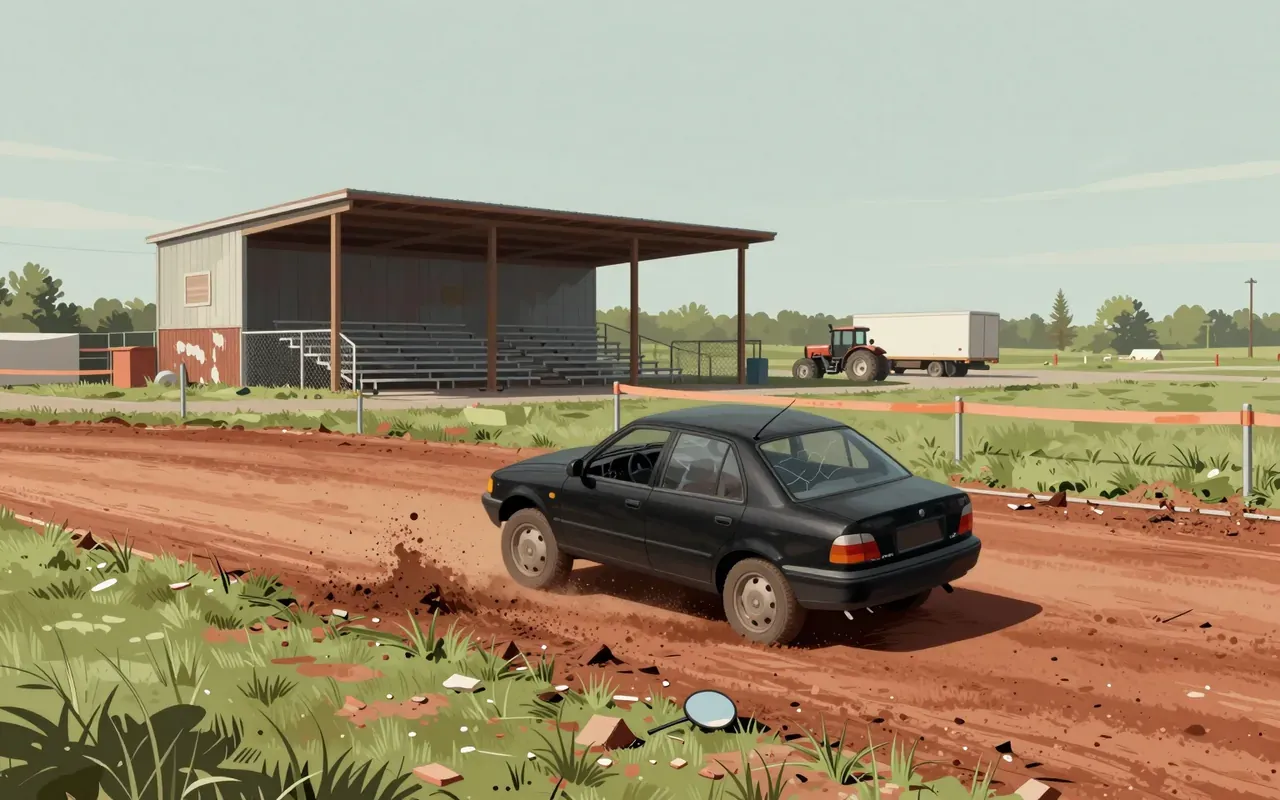
RalliSport Challenge runs four distinct race types: Rally (point-to-point), Hillclimb (single-car ascent/descent on cliff-lined mountain roads), Ice Racing (lap-based on icy tracks with snow run-off zones), and Rallycross (multi-car, mixed-surface lap racing). Career mode forces sequential races; single race pits you against AI. Beginner mode lets you restart anywhere mid-rally; Normal mode demands full restarts. You begin with eight cars and must complete career mode to unlock the remaining 21.
What works
Each race type establishes a clear, immediate physical rule: Rally demands route fidelity and pace management over distance; Hillclimb punishes vertical misjudgement with irreversible crash penalties; Ice Racing turns run-off into positional cost; Rallycross forces surface adaptation under pressure. The Beginner/Normal toggle meaningfully reshapes player agency—not just difficulty.
What does not
It does not sustain long-term engagement outside career progression. There is no dynamic weather, no damage model beyond performance degradation from crashes, no tuning or customisation, and no post-career endgame. The split-screen multiplayer exists but is not described in terms of pacing, balance or session length.
Who it is for, and who it is not
It is for players who value direct cause-and-effect driving, where losing control means sliding off a cliff or burying into snow—not respawning or rubber-banding. It is not for players who need granular car tuning, story context, or asynchronous progression.
Is it worth your time
Yes—if you want tactile, consequence-driven offroad racing that treats surface, slope and physics as first-order constraints. It is not worth your time if you expect modern assists, narrative framing, or scalable difficulty beyond Beginner/Normal toggles.