gamesbriefs
8:36in productionCh. 1 · The Buoy Rule/ 8:36 · ceiling 15 min
Racing & sports · Retro

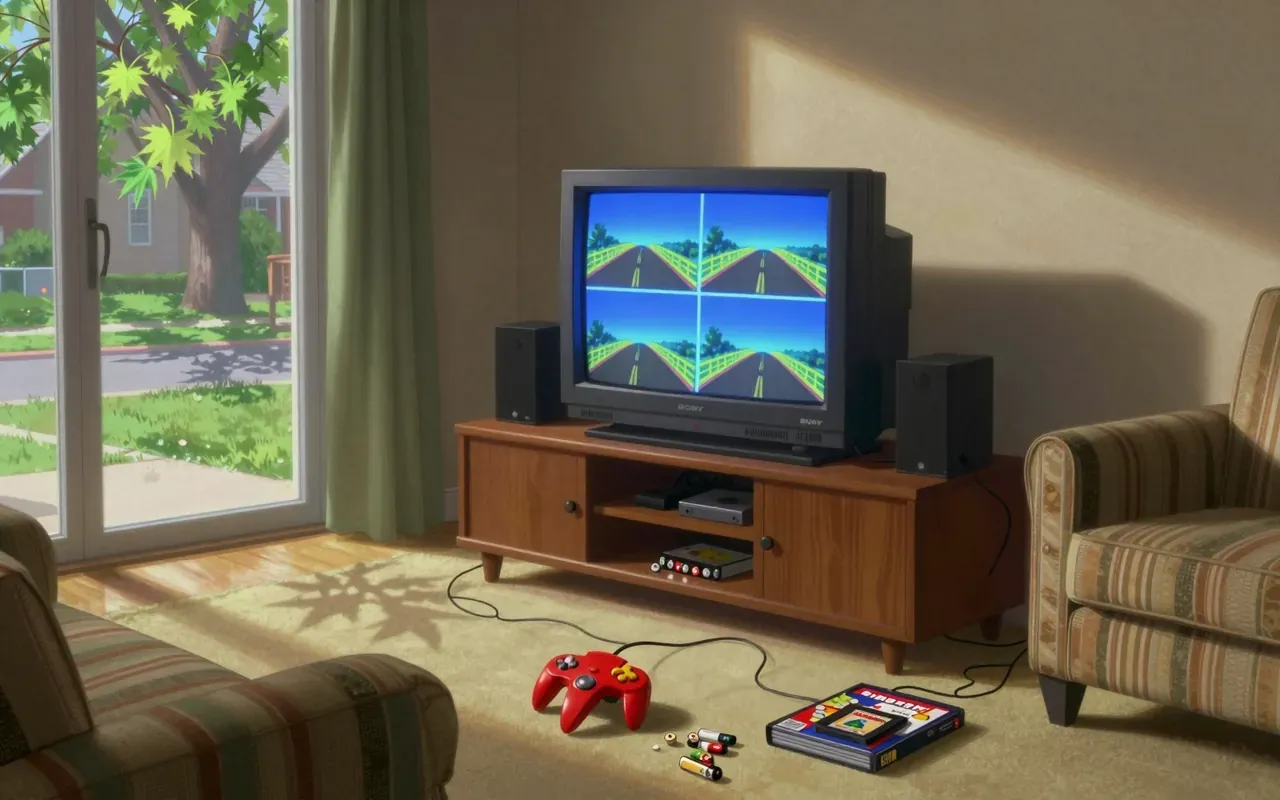
Wave Race 64

Wave Race 64 is not about water — it’s about the geometry of obedience.

Wave Race 64 is a buoy-locked racing game for the Nintendo 64. It demands strict adherence to directional rules across escalating difficulty tiers. No story. No AI nuance. Just precision, points, and progression earned one lap at a time.

Chapters & takeaways4
  1. 0:48
    The Buoy Rule

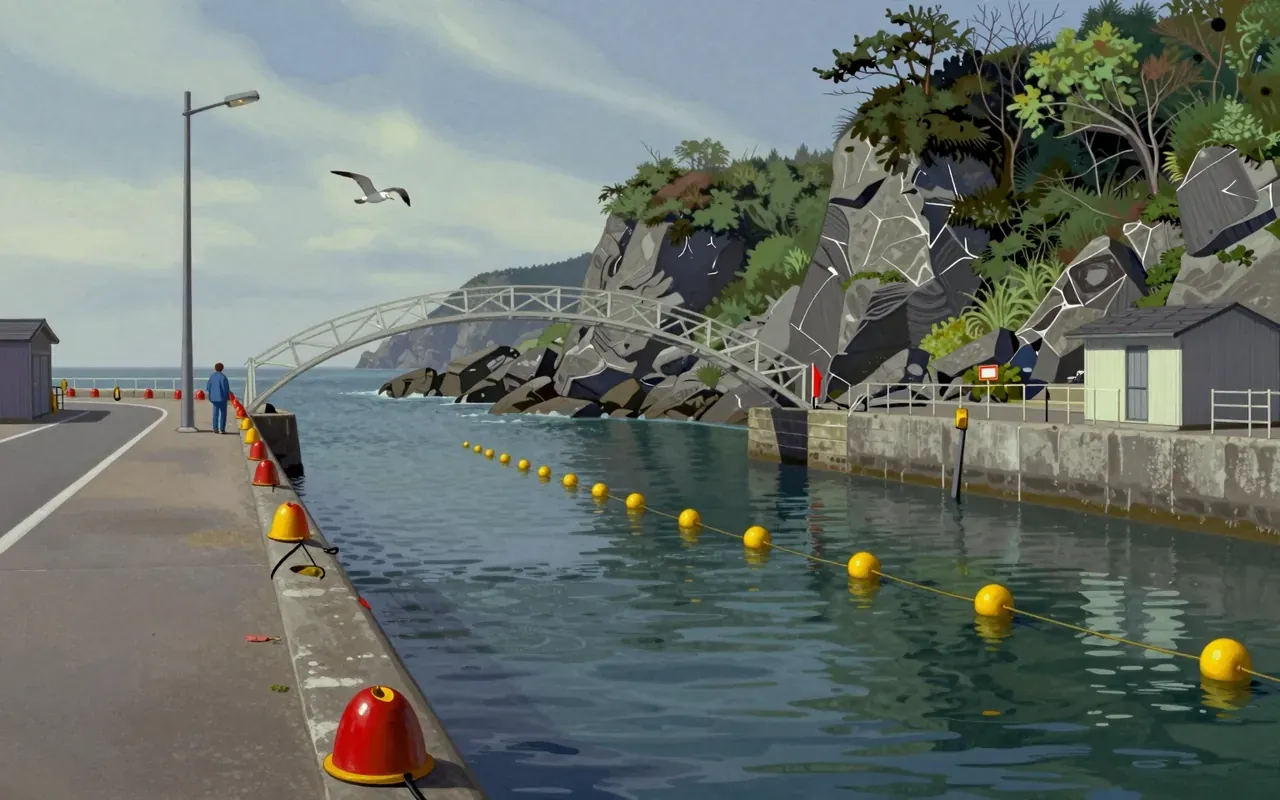
    Every race is a test of directional discipline: red buoys on the right, yellow on the left — no exceptions, no forgiveness.

  2. 2:21
    Points Over Place

    Championship mode ends not when you cross the line, but when your cumulative points fall short — failure is arithmetic, not timing.

  3. 4:06
    Locked by Logic

    Reverse isn’t a gimmick — it’s Expert mode flipped, and you can’t access it until you prove you’ve mastered the forward version.

  4. 5:29
    Made by Nintendo, Released on N64

    Nintendo built it. Kyoto shipped it. The Nintendo 64 launched it — Japan first, June 1996.

Worth your time?

Yes. Play the whole thing.

4/ 5
What works
  • buoy rule creates unambiguous spatial logic
  • unlock chain forces mastery before escalation
  • point-based qualification adds consequence to every lap
What does not
  • narrative
  • character
  • exploration
  • adaptive AI
Play it if
  • players who enjoy procedural challenge
  • players who value pattern recognition
  • players who seek incremental mastery
Skip it if
  • players seeking narrative
  • players seeking social play
  • players seeking environmental interactivity
The written brief1 min read

What the game is

Wave Race 64 is a Nintendo-developed racing game for the Nintendo 64, released in 1996. Players race personal watercrafts on buoy-marked courses under changing weather conditions.

How it actually plays

The player races a personal watercraft around buoys on timed courses. Red buoys must be passed on the right; yellow on the left. Championship mode demands first-place finishes across a sequence of races — six courses on Normal, seven on Hard, eight on Expert or Reverse. Reverse is Expert with backwards-oriented tracks. Hard, Expert, and Reverse are locked until the prior difficulty is completed. Points are awarded per race rank; failing the required total triggers disqualification and game over.

What works

The buoy rule — red right, yellow left — creates immediate, unambiguous spatial logic. Each course is a closed loop defined by those constraints. The unlock chain forces mastery before escalation. Point-based qualification adds consequence to every lap, not just the finish.

What does not

It offers no narrative, no world-building beyond course geometry, and no adaptive AI. The constraint is purely procedural: buoy discipline and point thresholds. There is no variation in vehicle handling across difficulties — only track layout, orientation, and number.

Who it is for, and who it is not

It is for players who enjoy procedural challenge, pattern recognition, and incremental mastery. It is not for players seeking narrative, social play, progression systems beyond difficulty tiers, or environmental interactivity.

Is it worth your time

Yes — if you want tight, buoy-based racing with escalating structural stakes and no padding. It asks for precision, memory, and consistency across increasingly demanding layouts. It does not ask for story, character, or exploration.


Same shelf · Racing & sports4 of 22
Up next in Games

Wolfenstein 3D

id Software · 1992 · 10:29

Wolfenstein 3D isn’t about Nazis—it’s about how a grid, a raycaster, and ten bullets per room invented the FPS.

10:29