
gamesbriefs
Studio · Publisher

Nintendo

Website →
53
briefs
9:40
average
513 min
in total
On games.briefs53
11:06

1080° Snowboarding

Nintendo · 1998

1080° Snowboarding is a Nintendo 64 snowboarding game released in 1998. Players control one of five snowboarders in third-person across eight levels. Core gameplay splits between racing (Race, Time Attack, 2 Players, Match Race) and trick-based scoring (Trick Attack, Contest). Tricks — 24 standard and 5 secret — fall into grab or spin categories and require circular stick motions plus R, Z, and B inputs. Scoring rewards complexity, combos, and timing. Characters and boards have distinct stats affecting technique, speed, weight, balance, and edge control. The game emphasises realistic physics and responsive controls.


9:13

Advance Wars 2: Black Hole Rising

Intelligent Systems · 2003

Advance Wars 2: Black Hole Rising is a Game Boy Advance turn-based strategy game released in 2001 by Intelligent Systems. It refines the Wars series’ core loop with non-linear campaign progression, Super CO Powers, and terrain-specific objectives like capturing Black Cannons. It asks players to sequence actions across turns with precision, not flair. Its rigour is its strength—and its limit.
8:20

Donkey Kong (1981 video game)

Nintendo · 1981

Donkey Kong (1981) is Nintendo’s first major arcade success and one of the first platform games. Developed by Shigeru Miyamoto after Radar Scope’s failure, it casts the player as Jumpman ascending a New York construction site across four single-screen stages—25, 50, 75, and 100 meters—to rescue Pauline from Donkey Kong. Gameplay revolves around running, jumping over gaps and obstacles, climbing ladders, and avoiding barrels, oil drums, cement pans, springs, and falling hazards—all under a shrinking bonus timer. Points reward precise actions: leaping, hammering, collecting items, and removing rivets. Lives end on contact, fatal falls, or timer expiry. Jumpman later became Mario.

9:20

Kirby 64: The Crystal Shards

Nintendo · 2000

Kirby 64: The Crystal Shards is a 2000 Nintendo 64 platformer developed by HAL Laboratory. It uses 3D rendering but locks movement to a 2D plane. Players collect 98 crystal shards across six worlds using Kirby’s core actions—walk, jump, inhale, fly—and seven copy abilities. Power Combos let players mix two abilities for 28 possible effects. Vehicle-based segments include riding King Dedede’s back, minecarts, and log flumes. Controls use the D-pad exclusively, following usability testing with children. All shards must be collected to reach the final boss and true ending.

9:31

Pokémon Red, Blue, and Yellow

Game Freak · 1998

Pokémon Red, Blue, and Yellow are tightly constrained Game Boy RPGs built around three screens, turn-based battles, and enforced social play. They demand cooperation—not for story, but for completion. They reward patience, not improvisation. They are about checking boxes, not breaking rules.

8:20

Punch-Out!! (1984 video game)

Nintendo · 1984

Punch-Out!! (1984) is a rigid, reactive arcade boxing game built around telegraphed eye cues, fixed timing, and forced replay. It asks players to memorise patterns, not adapt to them. It gives no identity beyond initials and no outcome beyond repetition or defeat.

9:16

EarthBound

Nintendo · 1994

EarthBound is a 1994 Nintendo RPG that rejects the genre’s conventions: no overworld map, no random encounters, no top-down grid. Instead, it builds a seamless, oblique-projection world where enemies are visible NPCs, combat begins with spatial positioning, and progression is deliberately unstable. It asks players to read the environment, not the menu.

9:50

Famicom Wars

Nintendo · 1988

Famicom Wars is Nintendo’s 1988 turn-based strategy game for the Famicom. Players command Red Star or Blue Moon across 15 initial maps, aiming to capture the enemy headquarters or eliminate all enemy units in one turn. Each turn provides funds to build units at owned factories, seaports, and airports; conquering cities near headquarters yields extra funds. Only foot soldiers can conquer cities, enabling repair/refuelling. Unit roles differ in firepower and support. Two secret ending maps unlock depending on the nation chosen against the CPU.

9:58

Super Smash Bros. Brawl

Nintendo · 2008

Super Smash Bros. Brawl is a Nintendo-published platform fighter released in 2008. It uses percentage-based damage, ring-out objectives, simplified controls, and Smash Ball-triggered Final Smashes. It supports local multiplayer with multiple controllers, custom profiles, and single-player modes including The Subspace Emissary.

9:35

F-Zero (video game)

Nintendo · 1990

F-Zero is a 1990 SNES launch title. It is a futuristic racing tournament set in 2560. Players select one of four characters, each piloting a unique hovercar. Races are five laps long. Players must avoid hazards like slip zones and magnets. Collisions drain a power meter. Energy is restored via pit areas. Lap placement must improve each time to avoid disqualification. Each lap grants a ~4-second 'Super Jet' boost and points based on finish position. The game uses Mode 7 graphics to simulate pseudo-3D motion.

10:14

Mario Party (video game)

Hudson Soft · 1998

Mario Party (1998) is a Hudson Soft-developed, Nintendo-published multiplayer party game for the Nintendo 64. It uses a board-game structure with dice-based movement, star-collecting goals, coin-earning mini-games, and eight themed boards. Six characters are playable. Up to four players may join, with at least one human and adjustable AI difficulty. Game length is chosen before play: Lite (20 turns), Standard (35), or Full (50). Stars are purchased from Toad using coins earned exclusively through mini-games played once per turn.

9:23

Metroid (video game)

Nintendo · 1986

Metroid (1986) is a foundational action-adventure game where Samus Aran explores the planet Zebes, acquiring abilities like the Morph Ball and Screw Attack to unlock new areas. It uses nonlinear progression, mandatory boss fights (Kraid and Ridley), and a password save system. It is one of Nintendo’s major franchises and features Samus Aran, a Nintendo character with international recognition.

10:04

Splatoon (video game)

Nintendo · 2015

Splatoon is a Nintendo-developed and published team-based third-person shooter released in 2015 for the Wii U. It features online four-versus-four matches, local one-versus-one, and a single-player campaign. Players control Inklings who transform between humanoid and squid forms. In humanoid form, they shoot ink to cover terrain or splat opponents. In squid form, they swim through their own ink—including up walls and through grates—to hide and replenish ink. Enemy ink impedes movement, blocks swimming, and deals damage. Matches use the Wii U GamePad for map viewing and teammate launching, and players enter with a primary weapon, secondary weapon, and a special attack charged by inking terrain. Four competitive multiplayer modes define the experience: Turf War, Splat Zones, Tower Control, and Rainmaker.

9:14

Super Smash Bros. (video game)

Nintendo · 1999

Super Smash Bros. (1999) is a Nintendo-published crossover fighting game that discards life bars for percentage-based knockback physics. Players move freely in two dimensions across large, dynamic stages. Damage increases as a percentage, making characters fly farther with each hit. KOs occur when a character is launched off open stage boundaries. Recovery is possible mid-air using jumps. All characters share identical control schemes. The game prioritises aerial mobility and stage awareness over traditional fighting game conventions like blocking or complex inputs.

8:35

Pokémon Gold and Silver

Game Freak · 1999

Pokémon Gold and Silver refine the series’ core loop with a real-time clock and expanded Pokédex, but offer no structural departure from the top-down, random-encounter, EXP-driven RPG formula established earlier.

9:20

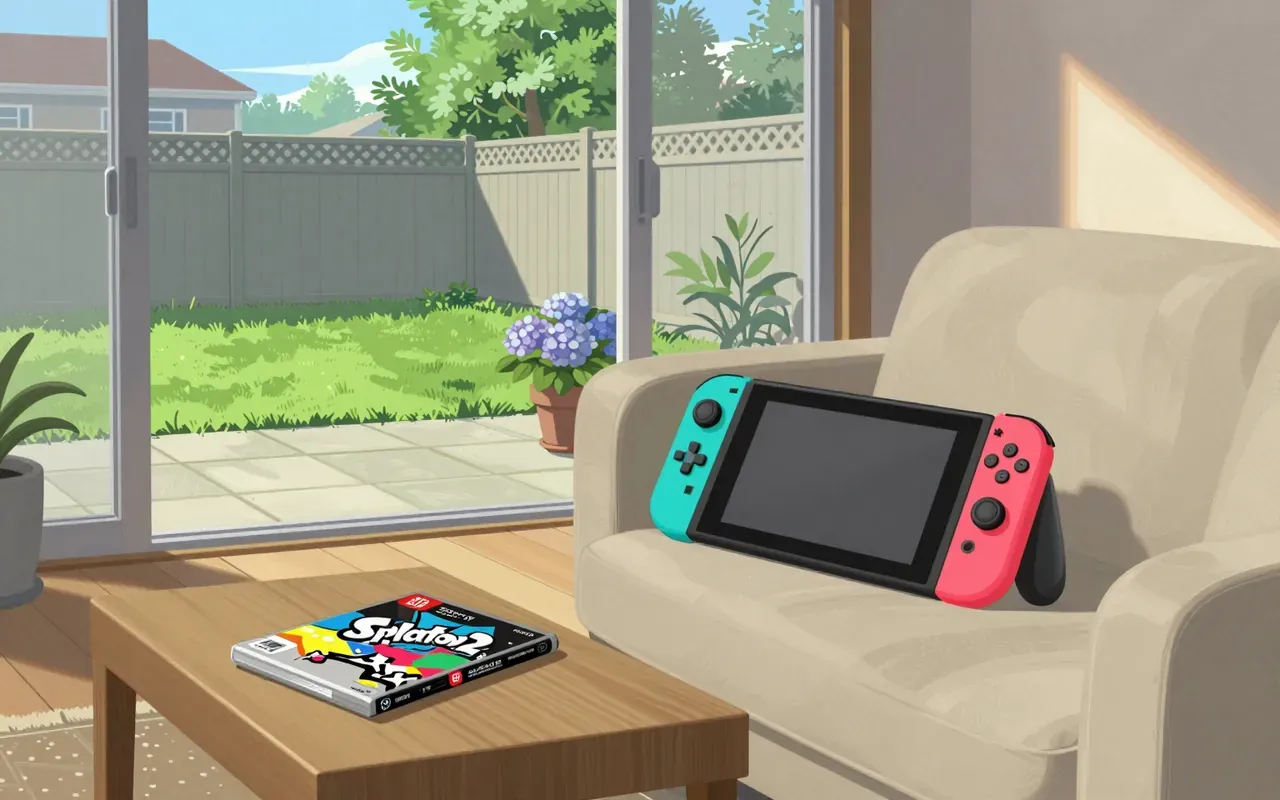
Splatoon 2

Nintendo · 2017

Splatoon 2 is a Nintendo-published third-person shooter built around ink-based terrain control, morphing between humanoid and cephalopodic forms, with structured competitive and co-op modes.

9:10

Super Smash Bros. Ultimate

Nintendo · 2018

Super Smash Bros. Ultimate is a platform fighter for up to eight players. It belongs to Nintendo’s Super Smash Bros. franchise. It uses a percentage-based knockback system, three victory conditions, toggleable Final Smashes, random items including Poké Balls and Assist Trophies, and stage variants with adjustable hazards. Players can save custom rule presets. It includes Spirits and World of Light as core single-player systems.

8:30

Yoshi's Story

Nintendo · 1997

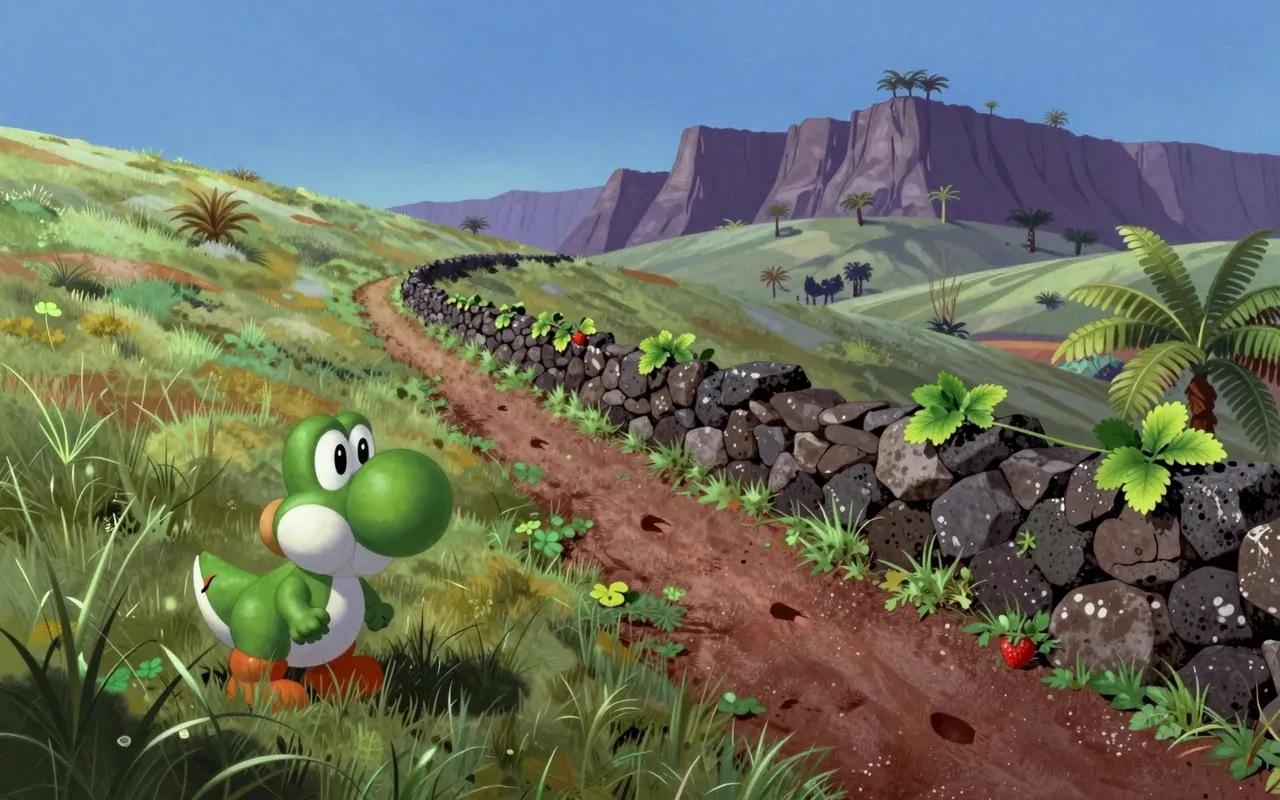
Yoshi's Story is a Nintendo platform game released in 1997, built around two modes—Story and Trial—with a pop-up storybook aesthetic and pre-rendered 3D graphics.

10:16

Advance Wars

Intelligent Systems · 2001

Advance Wars is a deterministic, grid-based strategy game where victory is defined by elimination or capture — never story, never spectacle. Its rules are tight, its feedback immediate, its constraints absolute. It runs on the Game Boy Advance. It was made by Intelligent Systems. It came out in 2001.

10:18

Advance Wars: Days of Ruin

Intelligent Systems · 2008

Advance Wars: Days of Ruin is a 2008 turn-based strategy game developed by Intelligent Systems for the Nintendo DS. It departs from earlier entries with a darker tone, toned-down CO powers, no Tag powers, and new units and terrain effects. Players command military forces on grid-based maps to defeat enemies by destroying all units or capturing their headquarters. Fog of war, weather, and terrain shape tactics. The campaign contains 26 story-driven missions. Multiplayer supports local hot-seat and online play via Nintendo Wi-Fi Connection.

9:06

Donkey Kong Country

Rare · 1994

Donkey Kong Country is a side-scrolling platform game where players control Donkey and Diddy Kong across 40 levels accessed via a world map. Gameplay involves jumping between platforms, avoiding obstacles, swapping between characters with distinct abilities (Donkey: stronger, terrain-slap; Diddy: faster, more agile), defeating enemies through jumping, rolling, or throwing barrels, and completing boss fights at the end of each area. The game features collectibles, animal buddies with special abilities, bonus stages, and multiplayer modes.

9:39

Donkey Kong Country 2

Rare · 1995

Donkey Kong Country 2 is a tightly wound 2D platformer where asymmetrical character abilities, mandatory boss gates, and zero-tolerance checkpointing define its rhythm. It teaches through repetition, punishes hesitation, and refuses to separate movement from consequence.

11:06

Donkey Kong Country 3

Rare · 1996

Donkey Kong Country 3 is a 1996 platform game by Rare where Dixie Kong and Kiddy Kong navigate 48 levels across 8 worlds using dual-character switching, vehicle-based overworld traversal, and direct animal friend control.

9:42

Excitebike

Nintendo · 1984

Excitebike is a tightly wound physics puzzle disguised as a motocross racer. Its loop is simple: accelerate, jump, land, repeat—until your timing is flawless. It asks for patience, precision, and tolerance for abrupt failure. It gives back immediate feedback, clear rules, and rare creative agency via its track editor. It withholds story, scalability, and forgiveness. It is not nostalgic fluff. It is functional design—brutal, specific, and still sharp.

9:27

F-Zero GX

Nintendo · 2003

F-Zero GX is a high-speed futuristic racing game built around track memorisation, reflexes, and precise vehicle control. It retains core mechanics from F-Zero X but expands them with customizable machines, energy-based boosting and damage, dynamic track elements (dash/jump plates, obstacles), and advanced cornering techniques like drifting and snaking. Its structure includes Grand Prix, Story, Time Attack, and multiplayer modes, all governed by energy management, vehicle tuning, and escalating difficulty. The game was developed by Amusement Vision and published by Nintendo for the GameCube.

10:10

Fire Emblem Awakening

Intelligent Systems · 2012

Fire Emblem Awakening is a tactical RPG for Nintendo 3DS where grid-based combat, relationship-building, and permadeath choices define every session. It launched as the series’ make-or-break title — and succeeded by selling 400,000 units in Japan within its first year.

8:10

Fire Emblem: The Blazing Blade

Intelligent Systems · 2003

Fire Emblem: The Blazing Blade is a tactical RPG where permanent death, class-based roles, and square-grid combat define every choice. It asks players to weigh risk against reward, memorise ranges, and accept loss as instruction—not failure.

10:14

Fire Emblem: Three Houses

Intelligent Systems · 2019

Fire Emblem: Three Houses is a tactical RPG released in 2019 by Intelligent Systems in partnership with Koei Tecmo. Intelligent Systems provided the main plot, game system, and mechanics; Koei Tecmo handled the bulk of the programming. Players choose their character's gender and name at the start. Gameplay alternates between story-driven battles and social simulation segments at Garreg Mach Monastery—the central hub for all activities. Selecting a house determines the narrative path from that point forward. The opening half focuses on school life, then the story skips ahead five years and shifts to war, locking the player to their chosen house. Players manage a calendar with limited days to allocate to varied monastery activities—including teaching, field exercises, greenhouse planting, fishing, and free-time interactions. Relationships are built via Support actions influenced by player choices and dialogue.

8:39

Kirby Super Star

Nintendo · 1996

Kirby Super Star is a side-scrolling platformer anthology composed of seven distinct game modes and two minigames. It unifies them with Kirby’s core abilities: inhalation, copying, floating flight, guarding, and Helper-based cooperation.

8:58

Kirby's Dream Land

Nintendo · 1992

Kirby's Dream Land is a foundational Game Boy platformer defined by room-based navigation, breath-powered flight, and inhalation combat. Its design choices reflect hardware limits and deliberate pacing — not ambition to transcend them.

10:55

Mario Kart 64

Nintendo · 1997

Mario Kart 64 is a foundational local multiplayer racing game built around item-driven chaos, weight-class trade-offs, and split-screen immediacy. It asks players to react faster than they think—and to forgive the game when luck overrides skill. Its hardware constraints shaped its clarity: no HUD clutter, no camera tricks, no persistence beyond the next race.

9:18

Mario Kart Wii

Nintendo · 2008

Mario Kart Wii is a 2008 Wii racing game where 24 Mario characters race on 32 themed tracks using items to attack or boost. It supports two- to four-player local split screen and Battle Mode (balloon popping). Motion controls via the bundled Wii Wheel define its feel — intuitive but imprecise. Half the content is locked behind completion objectives. Online play ended in May 2014.

8:15

Mother 3

Nintendo · 2006

Mother 3 is a Nintendo-published multiplayer RPG. It uses top-down party exploration, rhythm-activated turn-based combat, XP-driven permanent stat growth, equipment-based attribute boosts, hot-spring healing, and frog-mediated saving. Dragon Power serves as late-game battle-earned currency. It offers a tightly authored, environmentally embedded RPG loop—but its most distinctive mechanics arrive late and remain narrowly scoped.

9:52

Ring Fit Adventure

Nintendo · 2019

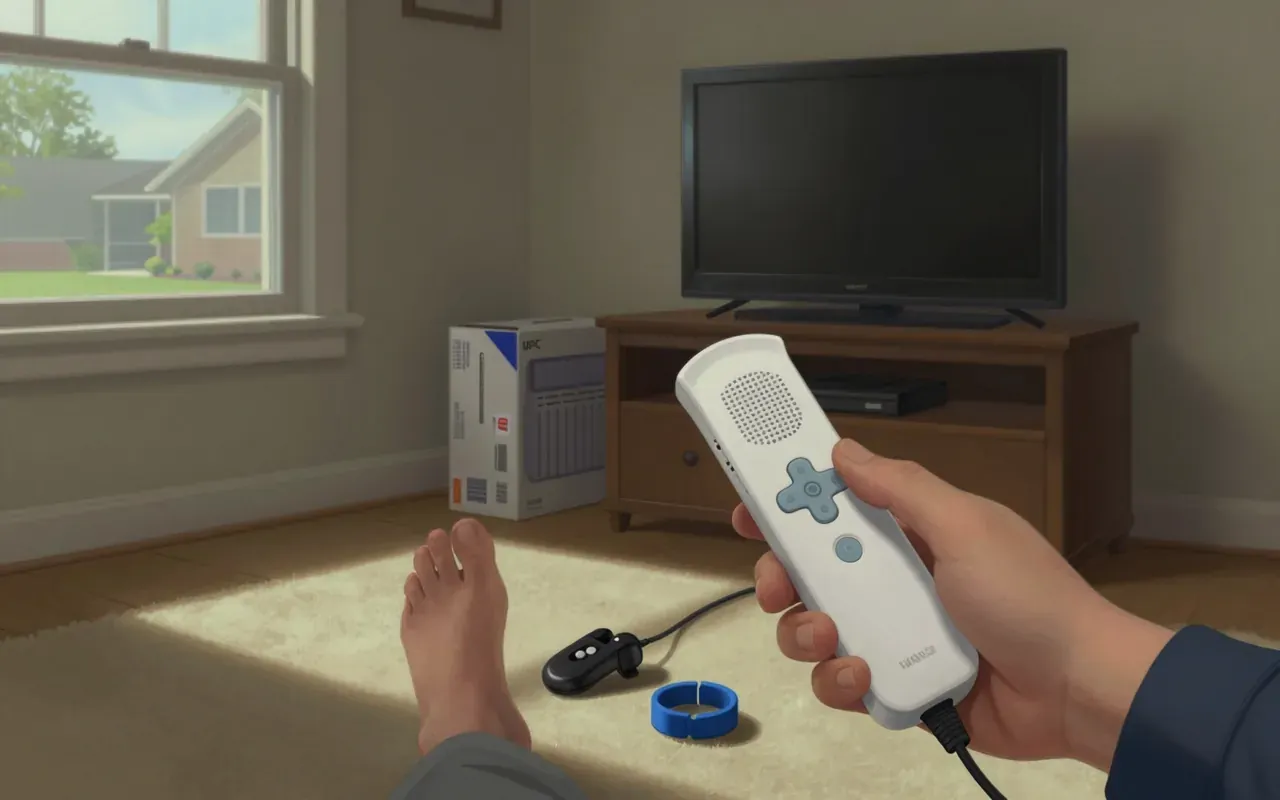
Ring Fit Adventure is an exercising role-playing video game developed and published by Nintendo for the Nintendo Switch. It requires two physical components—the Ring-Con and the Leg Strap—to translate real-world movement and strain into in-game actions. Its main mode is a turn-based RPG where overworld navigation (running in place, jumping via Ring-Con squeeze-and-release) and combat (exercise-based attacks, abdominal press defence) are fully dependent on those accessories. Exercises are colour-coded by target muscle group: red for arms, blue for legs, yellow for core, green for yoga. The design prioritises embodied routine over mechanical depth or narrative ambition.

9:06

Splatoon 3

Nintendo · 2022

Splatoon 3 refines Nintendo's ink-based shooter without altering its foundational logic. It delivers tight, readable combat where weapon choice directly shapes movement, coverage, and team function. Its strength lies in consistency—not expansion.

9:22

The Legend of Zelda: Tears of the Kingdom

Nintendo · 2023

Tears of the Kingdom is an expansion of Breath of the Wild’s open-world action-adventure framework, adding verticality through sky islands and the Depths, new traversal and construction mechanics, and four mandatory story dungeons.

8:36

Wave Race 64

Nintendo · 1996

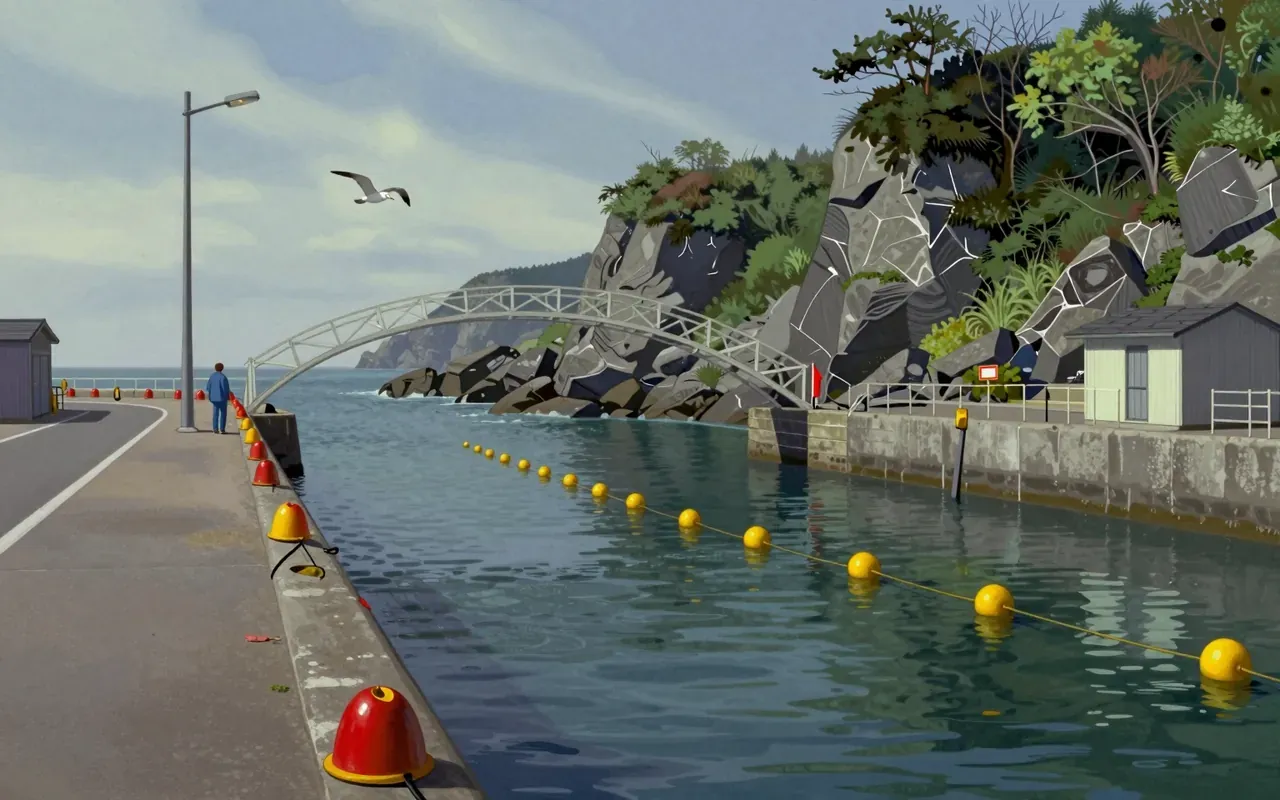
Wave Race 64 is a buoy-locked racing game for the Nintendo 64. It demands strict adherence to directional rules across escalating difficulty tiers. No story. No AI nuance. Just precision, points, and progression earned one lap at a time.

10:24

Wii Fit

Nintendo · 2007

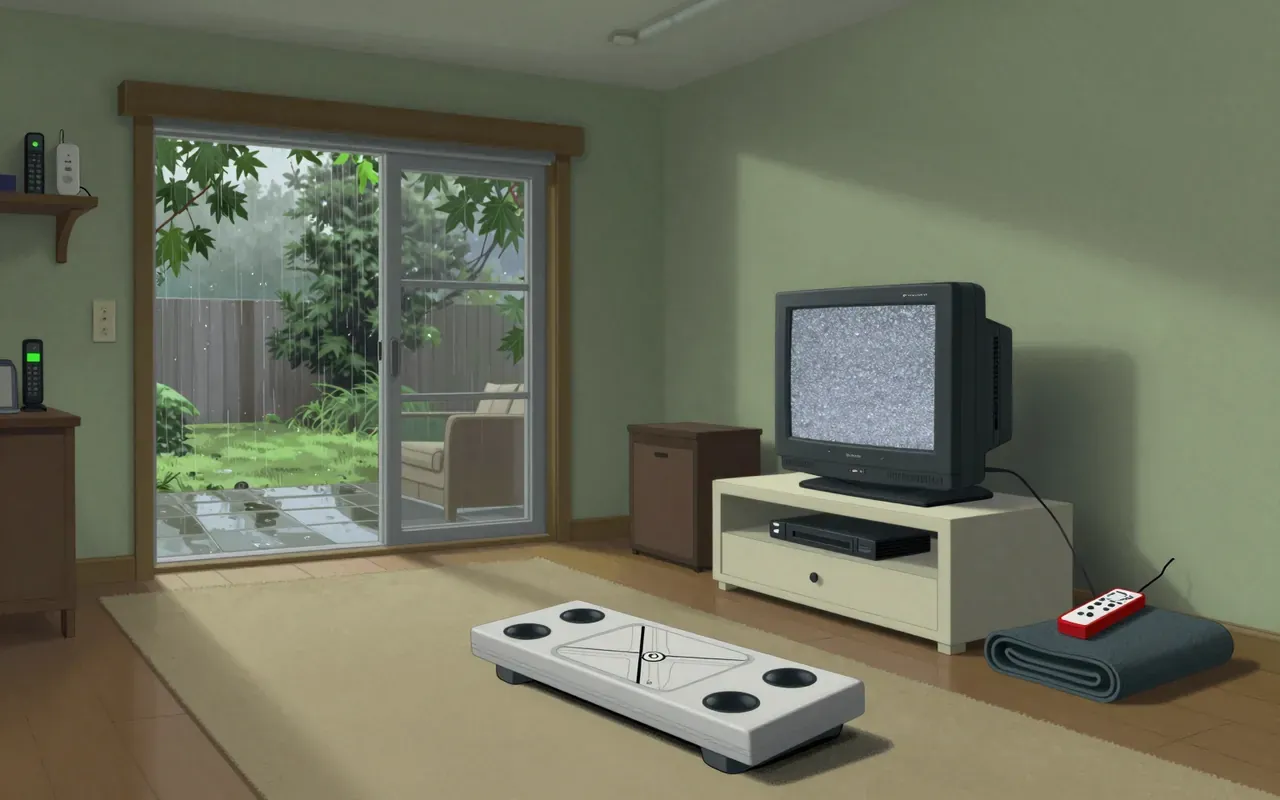
Wii Fit is a simulation of physical discipline built around a single hardware input: the Wii Balance Board. It measures weight and centre of balance in real time. It offers over 40 activities — yoga, strength training, aerobics, balance games — all calibrated to that input. It supports up to eight user profiles, each tied to date of birth, height, and a Mii. It logs external activity manually. It uses an on-screen trainer in yoga and strength modes. It does not simulate athletic development. It simulates accountability.

9:01

Yoshi's Island

Nintendo · 1995

Yoshi's Island is a 2D side-scrolling platform game developed and published by Nintendo for the SNES. Players control Yoshis through 48 levels across six worlds to rescue Baby Luigi and reunite the brothers. It emphasises puzzle-solving and item-collecting — including hidden flowers and red coins — over pure platforming. Players use run-and-jump mechanics, a flutter jump, tongue-based enemy capture, egg-throwing, and transformation abilities. Every fourth level features a boss fight against an enlarged prior enemy. Yoshi collects coins for extra lives and retains his long tongue from Super Mario World.

9:31

Mario Kart 8

Nintendo · 2014

Mario Kart 8 is a polished, accessible, and relentlessly social racing game built for short bursts and local chaos. Its anti-gravity gimmick adds spectacle but not substance. Its strength is in consistent, responsive feedback — not innovation.

11:14

Metroid Prime

Retro Studios · 2003

Metroid Prime redefined what a 3D adventure could be — not through spectacle, but structure.

11:30

Super Mario 64

Nintendo · 1996

Super Mario 64 is a 1996 Nintendo 64 platform game and action-adventure title. It is the first Super Mario game with 3D graphics and a large open world. Bowser invades Princess Peach’s castle, kidnaps her, and hides Power Stars in magical paintings. As Mario, the player traverses levels and collects Power Stars to unlock areas of the castle, reach Bowser and rescue Peach. Mario’s abilities are far more diverse than in previous games. He can walk, run, jump, crouch, crawl, climb, swim, kick, grab objects, and punch using the game controller's analog stick and buttons. He can execute special jumps by combining a regular jump with other actions, including the double and triple jumps, long jump, backflip, and wall jump. The player can adjust the camera—operated by a Lakitu broadcasting Mario—and toggle between first-person and third-person view.

9:51

Super Mario Bros.

Nintendo · 1985

Super Mario Bros. establishes a foundational platforming loop: move right through side-scrolling stages, avoid hazards and enemies, collect coins and power-ups, and reach the flagpole. Core mechanics include dynamic size-changing via Super Mushroom (granting temporary invincibility and brick-breaking), precise jump-based enemy defeat (with varied responses per enemy type), and life management through coin counts, hidden items, and chaining actions. World 1-1 functions as an embedded tutorial, teaching mechanics through repetition and escalation rather than explicit instruction. Hardware constraints shaped design decisions—e.g., Goombas were made with a flipped sprite to save memory, clouds and bushes reuse the same tile, and background tiles are algorithmically generated. The game’s scrolling engine, adapted from Excitebike, enables smooth acceleration from walk to run—a technical departure from constant-speed movement in earlier platformers.

12:00

Super Mario World

Nintendo · 1990

Super Mario World is a 2D side-scrolling platformer for the SNES, built around dual-layer navigation (overworld map + linear side-scrolling levels), expanded movement mechanics (Spin Jump, Cape Feather flight/gliding), and new systems like Yoshi riding, power-up storage, and secret Star Road routes.

11:54

Super Metroid

Nintendo · 1994

Super Metroid is a 2D side-scrolling action-adventure game set on the fictional planet Zebes, where Samus Aran pursues a Metroid stolen by Ridley. Its design revolves around non-linear exploration, directional combat, and progressive ability-gated traversal using power-ups like Morph Ball, Spring Ball, and Speed Booster. Movement mechanics—including wall jumping and Moon Walking—expand spatial agency. Systems like the automap, inventory screen, and save stations structure progression. The game is part of Nintendo's Metroid franchise and was sold as an individual title among more than 5.9 billion Nintendo games sold worldwide.

9:20

Super Smash Bros. Melee

Nintendo · 2001

Super Smash Bros. Melee is a platform fighter where damage is tracked as a percentage that directly governs knockback, not depletion. Players use directional joystick input plus a single button to perform attacks—including special moves mapped to B + direction. Victory comes from knocking opponents off themed stages—not reducing their health to zero. Up to four players compete locally in Stock or Time modes. It is a Nintendo-published title featuring internationally recognised Nintendo characters. It belongs to the Super Smash Bros. franchise, a major Nintendo IP.

9:45

The Legend of Zelda: A Link to the Past

Nintendo · 1991

A Link to the Past establishes the template for action-adventure structure: item-gated progression, parallel worlds with hard transitions, and dungeons as sequential logic puzzles. It assumes player patience, rewards observation, and refuses to separate exploration from consequence.

9:27

The Legend of Zelda: Breath of the Wild

Nintendo · 2017

Breath of the Wild replaces authored sequence with systemic consequence. Its design asks you to observe, test, and adapt — then discard your answer when the next object breaks, the next storm hits, or the next slope demands a new use for the same shield.

11:03

The Legend of Zelda: Ocarina of Time

Nintendo · 1998

A foundational 3D action-adventure that established targeting, context-sensitivity, and music-as-mechanic—but does so with hardware-imposed friction, not elegance.

9:44

Wii Sports

Nintendo · 2006

Wii Sports is a hardware demo disguised as a game. It reduces sport to arm motion. It asks nothing of the player but gesture—and gives back only confirmation. It worked because it was the first thing many people ever did with motion control. It does not work as a game today.