What the game is
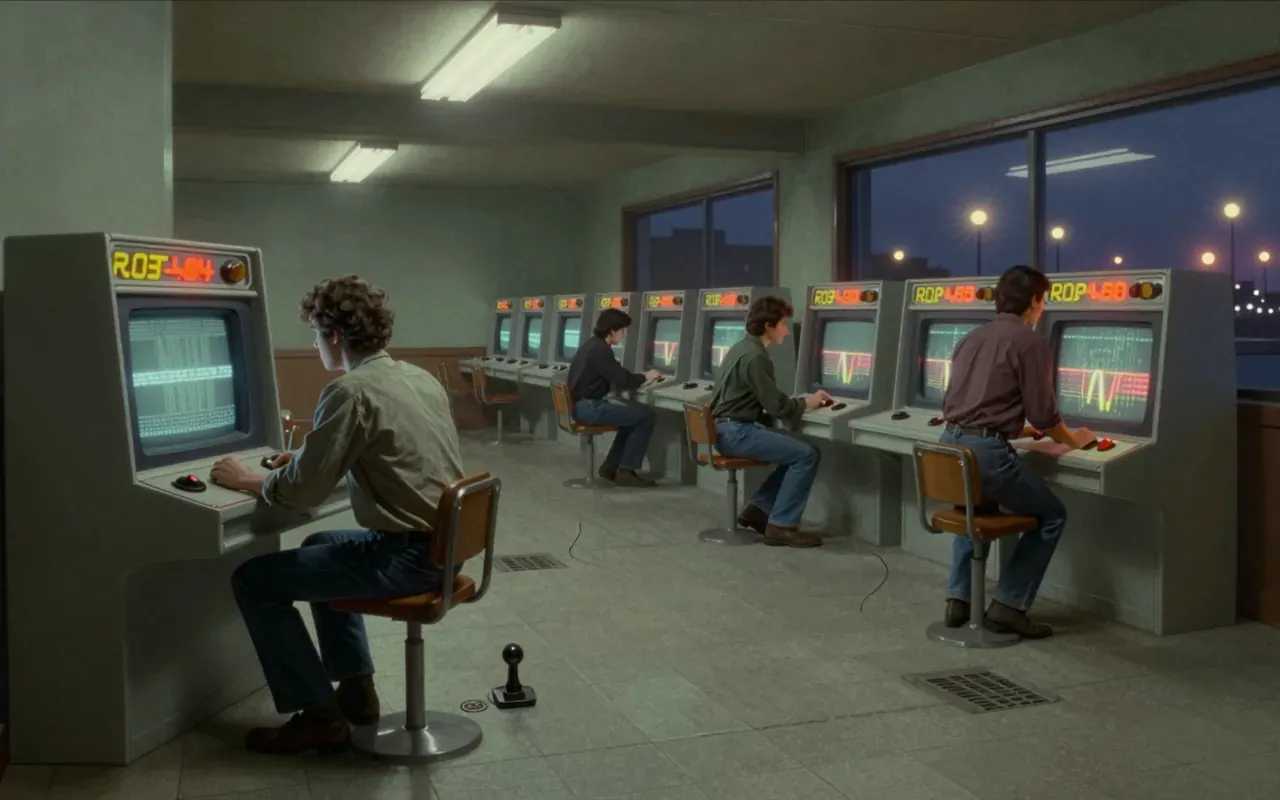
Sinistar is a multidirectional shooter arcade game released by Williams Electronics in 1982. It pits a lone player spacecraft against enemy worker and warrior ships in a race to either build or destroy Sinistar — a giant anthropomorphic spacecraft with a demonic skull face.
How it actually plays
The player pilots a lone spacecraft through a scrolling region of space, guided by a mini-map at the top. Planetoids drift slowly; shooting them yields white crystals, but over-firing makes them explode. Crystals become Sinibombs on collection. Red worker ships collect crystals to build Sinistar — a demonic skull-faced spacecraft — while warrior ships attack the player, shoot planetoids, and guard the construction. Sinistar appears only after 20 crystals are assembled, then chases the player on screen, speaking digitised threats. It takes 13 Sinibombs to destroy it. Victory warps the player to a new zone, where damaged Sinistars can be repaired.
What works
The asymmetry between worker and warrior roles creates constant tension: workers cannot harm you but steal crystals; warriors do both. The mini-map gives spatial awareness without clutter. Sinistar’s appearance triggers a hard shift — from resource management to evasion and precision bombing. Its digitised voice and facial animation make it feel like an active antagonist, not just a target.
What does not
It offers no recovery from misjudged timing. The 49-way joystick demands precision the game never teaches. There is no pause, no save, no explanation of the 20-piece build or 13-bomb weakness. The hardware bug granting 255 lives is not a feature — it is an unintended artefact with no design intent behind it.
Who it is for, and who it is not
It is for players who value immediate, tactile feedback and thrive under unrelenting pressure. It is not for players who need scaffolding, explanation, or room to learn — every session assumes fluency from the first second.
Is it worth your time
Yes — if you want a tight, hardware-driven arcade loop defined by scarcity, competition for resources, and escalating threat. No — if you expect narrative, progression beyond zone rotation, or control that accommodates hesitation.