gamesbriefs
Genres

Shooter

95
briefs
9:51
average
936 min
in total
43
people
All briefs95
9:22

Arma 3

Bohemia Interactive · 2013

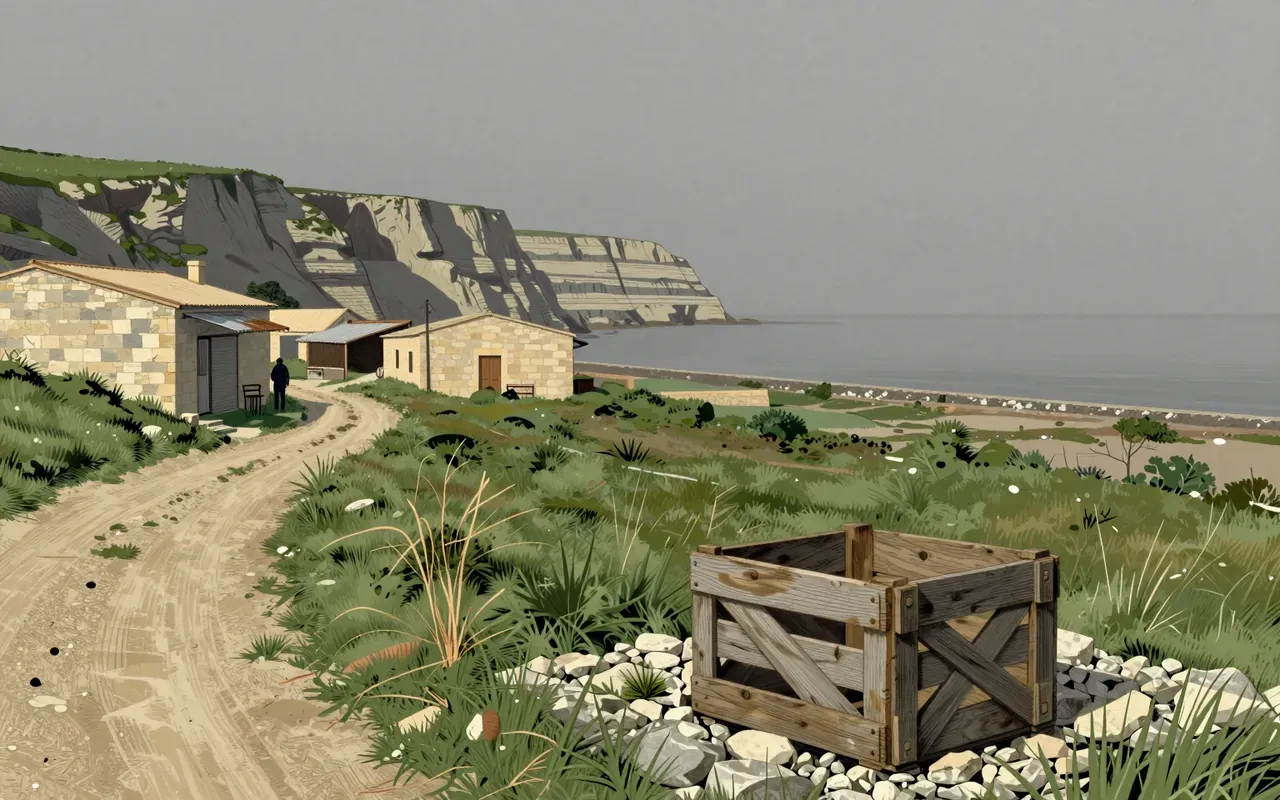
Arma 3 is a military simulation released for PC in September 2013 by Bohemia Interactive. It runs on expansive, photorealistic terrains spanning hundreds of square kilometres. Its realism is systemic: weapons obey ballistics, diving requires dedicated equipment, and electronic warfare or disguise can replace combat entirely. Nearly all gameplay systems—including AI, HUD, and assists—are adjustable via custom difficulty settings. Players pursue fixed mission objectives through self-directed tactics, from solo stealth to squad coordination. It supports extensive modding and user-generated content via the Eden Editor. It is not a narrative-driven shooter. It is a toolset for tactical problem-solving under self-imposed constraints.

7:58

Doom (1993 video game)

id Software · 1993

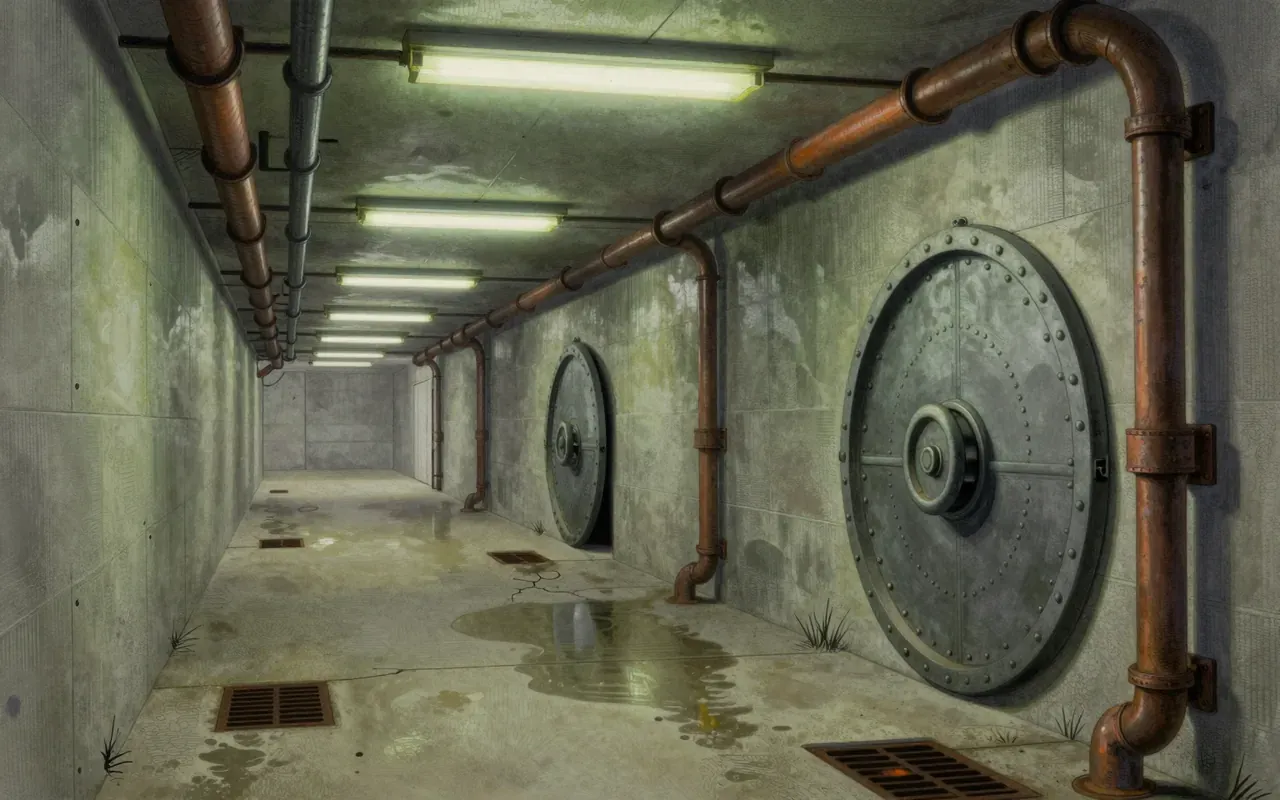
Doom (1993) is a first-person shooter for MS-DOS and Windows developed by id Software. It uses a 2.5D engine: environments render in 3D perspective but movement is confined to a 2D plane, and enemies are 2D sprites using billboarding. Players assume the role of a space marine fighting demons and possessed undead humans across labyrinthine levels grouped into episodes, each ending in a boss fight. Completion requires reaching a marked exit room while managing limited ammo, health, and armor—and avoiding hazards like toxic waste and crushing ceilings. Five difficulty levels scale enemy count, damage, speed, and aggression. The game supports cooperative and deathmatch multiplayer over local networks and modding via WAD files. Its design prioritises fast-paced action over narrative, with minimal plot conveyed through inter-episode text.

10:22

F.E.A.R. (video game)

Monolith Productions · 2005

F.E.A.R. is a first-person shooter psychological horror game developed by Monolith Productions in Kirkland, Washington. It uses the studio’s LithTech engine and centres on reflex time, adaptive AI, and melee as a core combat pillar.

10:22

Hexen: Beyond Heretic

Raven Software · 1995

Hexen: Beyond Heretic is a 1995 first-person shooter with action-adventure and action role-playing elements. It is the second entry in the 'Serpent Riders' trilogy. It is set in the dark fantasy world of Silverspring. It runs on a modified Doom engine.

9:36

Overwatch (2016 video game)

Blizzard Entertainment · 2016

Overwatch is a team-based, online multiplayer first-person shooter released by Blizzard Entertainment in May 2016. It reuses assets from the cancelled Titan project but builds a new near-future world around the Omnic Crisis and the Overwatch peacekeeping force. Two teams of six select from over two dozen heroes—categorised as Damage, Tank, or Support—each with unique kits and an ultimate ability charged by combat actions. Players switch heroes mid-match to adapt to objectives like capturing control points or escorting payloads, all within time limits and asymmetric attacker-defender framing. Custom game modes are possible via limited scripting tools. Progression yields only cosmetic loot boxes. The setting is bright, cartoonish, and optimistic.

9:44

Overwatch (2023 video game)

Blizzard Entertainment · 2022

Overwatch (2023) is a live-service hero shooter built on enforced role discipline, rapid iteration, and seasonal storytelling. It discards the original’s six-player format and promised PvE to double down on PvP refinement—and on sustaining engagement through constant design recalibration.

9:17

Payday: The Heist

Overkill Software · 2011

Payday: The Heist is a 2011 cooperative FPS by Overkill Software. It establishes the core loop of theft-driven co-op play, hostage-based revival, and civilian protection. Its randomisation adds replayability without altering mechanics. It lacks progression, narrative, or solo support. It runs on PlayStation 3 and Windows.

9:09

PUBG: Battlegrounds

PUBG Corporation · 2017

PUBG: Battlegrounds is a battle royale shooter where up to 100 players parachute onto an island, scavenge for gear, and fight to be the last survivor. The safe zone shrinks over time, forcing players into tighter spaces and more frequent encounters. Players choose solo, duo, or squad (up to four) modes, begin with no functional gear, and must rapidly adapt to dynamic conditions including shifting flight paths, red-zone bombings, and loot-dropping planes. It launched in early access on Windows in March 2017 and later on Xbox One, and was developed by Krafton's PUBG Studios and published by Krafton.

10:48

Prey (2017 video game)

Arkane Studios · 2017

Prey (2017) is a first-person immersive sim set aboard the Talos I space station. You play as Morgan Yu, a scientist surviving a Typhon outbreak. You begin with a wrench and gradually unlock weapons, Neuromod abilities, and environmental tools. Talos I opens in stages—from linear missions to free exploration—and supports multiple solutions via systemic interactions: oil spills, turrets, explosive canisters, and the Gloo Cannon. It draws inspiration from System Shock and Arx Fatalis. It shares only its name with Human Head Studios’ earlier Prey series. It was developed by Arkane Austin under Raphaël Colantonio’s leadership.

9:45

Tom Clancy's Splinter Cell (video game)

Ubisoft Montreal · 2002

Tom Clancy's Splinter Cell (2002) is a stealth action-adventure developed by Ubisoft Montreal, built from assets of the cancelled third-person shooter The Drift. It establishes light as a core gameplay stat via a persistent light meter, forces players into shadows, limits ammunition, and ties all vision modes—including night and thermal—to that same visibility logic. It was Ubisoft Montreal’s breakout title and a direct competitive response to Metal Gear Solid.

9:59

Tom Clancy's Splinter Cell: Blacklist

Ubisoft Toronto · 2013

Tom Clancy's Splinter Cell: Blacklist is a 2013 action-adventure stealth game developed by Ubisoft Toronto — its debut project. It gives players three clear paths: silent infiltration, aggressive stealth, or direct combat — each supported by tools like the Tri-Rotor drone, light destruction, corpse hiding, and sensor goggles. It runs in third-person. Players rotate the camera, crouch, run, and scale ledges. Killing alerts enemies who see corpses — so hiding bodies is essential. The game’s strength is its tight, readable cause-and-effect loop. Its weakness is the separation of its systems: stealth, action, and progression never fully converge.

8:40

Tom Clancy's Splinter Cell: Chaos Theory

Ubisoft Montreal · 2005

Tom Clancy's Splinter Cell: Chaos Theory is a 2005 stealth action game developed by Ubisoft Montreal. It refines the series' core stealth loop around two interdependent detection systems: light exposure and relative noise. Guards react intelligently to environmental changes and coordinate tactically. Alarms trigger only on discovery—not on being seen—and no longer cause automatic failure. It expands close-quarters options and introduces equipment loadouts tied to lethality constraints.
8:50

Unreal (1998 video game)

Epic Games · 1998

Unreal (1998) is a 3D first-person shooter co-developed by Epic MegaGames and Digital Extremes. You play Prisoner 849, a survivor of the crashed prison ship Vortex Rikers on the alien planet Na Pali. You fight through Skaarj-controlled mines, ruined Nali temples, a water temple, a Titan arena, alien installations, and the Skaarj Mothership — uncovering narrative via journals and environmental decay. Its strength lies in atmosphere, scale, and scripted set-pieces. Its limits are linearity, shallow combat, and fragmented storytelling.

9:41

Unreal Tournament 2004

Epic Games · 2004

Unreal Tournament 2004 is a multiplayer-first first-person shooter built around movement systems, weapon dual-fires, and vehicle-integrated game types. It establishes clear win conditions per mode—objective sequencing in Assault, node capture and core destruction in Onslaught, hoop scoring in Bombing Run, flag retrieval in Capture the Flag. It falls short as a solo experience and offers no scaffolding for players unfamiliar with its movement grammar or objective logic.

7:56

Unreal Tournament 3

Epic Games · 2007

Unreal Tournament 3 is a 2007 PC arena shooter built for online multiplayer. It delivers eight distinct modes, each with explicit rules: Duel’s winner-stays queue, Warfare’s orb-driven node capture, and Vehicle Capture the Flag’s hover board–only traversal. The hover board disables weapons and leaves players vulnerable when hit — a hard constraint, not a flourish. Single-player is AI-driven re-skins of multiplayer maps. It asks for rhythm, precision, and tolerance of enforced limitations — nothing more.

8:54

Warsow (video game)

Amanieu d'Ohsson · 2005

Warsow is a movement-first FPS built on Quake II. Its design forces mastery of physics-based tricks—dash, dodge, wall jump, rocket jump—as the sole path to advantage. It trades narrative, progression and accessibility for purity of motion and competitive clarity.

10:45

Call of Duty: Warzone (2020 video game)

Infinity Ward · 2020

Call of Duty: Warzone (2020) is a free-to-play battle royale built on the IW 8.0 engine, supporting up to 150 players per match. It uses an in-game Cash system to gate access to weapons, perks, and respawns via Buy Stations and Loadout Drops. Players begin each match with a basic pistol and two armor plates, then scavenge weapons, equipment, and killstreaks across large photogrammetry-rich maps including Verdansk, Rebirth Island, Caldera, and Fortune's Keep. Battle Royale features shrinking zones and the Gulag respawn mechanic; Plunder and Resurgence offer alternative loops. The game integrated progression with Modern Warfare, Black Ops Cold War, and Vanguard before server shutdown on September 21, 2023.

9:41

Wolfenstein (2009 video game)

Raven Software · 2009

Wolfenstein (2009) is a first-person shooter that adds a supernatural layer — the Veil — to id Tech 4. It lets players slow time, bypass obstacles, and kill shielded enemies. Raven Software built it using id’s engine technology. Development problems led to layoffs. The Veil is mechanically functional but narratively detached. It is a technical demonstration, not a unified experience.

11:39

Borderlands (video game)

Gearbox Software · 2009

Borderlands (2009) is a role-playing shooter developed by Gearbox Software. It combines first-person shooter action with RPG systems—including four distinct Vault Hunters, branching skill trees, mission-driven progression, and a procedural loot engine generating over 15 million weapon and gear variations. Its cell-shaded-like art style gives Pandora a comic-book appearance. Players fight hostile wildlife and human forces on the fictional planet while seeking a fabled Vault.

11:13

Crysis (video game)

Crytek · 2007

Crysis is a first-person shooter developed by Crytek and published by Electronic Arts. It was released on PC in November 2007. It casts the player as Delta Force soldier Nomad on a hostile tropical island. Its core design premise is 'adaptive tactics'—requiring players to shift between stealth, aggression, lethality and mobility based on terrain, enemy placement and Nanosuit energy state.

8:27

Destiny (video game)

Bungie · 2014

Destiny is a server-dependent first-person shooter that structures player time around repeated group activities — strikes, raids, patrols, and PvP matches — all governed by Light-level gating and tied to Bungie.net infrastructure. Its strength lies in rhythmic, communal combat execution. Its weakness is systemic opacity and narrative detachment. It asks for consistency, not curiosity.

10:12

Far Cry (video game)

Crytek · 2004

Far Cry (2004) is a first-person shooter set in a dynamic tropical archipelago. It uses environmental cover, sound, and optical tools to create a sensor-driven combat loop. Enemies react, coordinate, and communicate. Its open maps contrast with linear missions. It is Crytek’s debut AAA title, built on CryEngine, and the first Far Cry game.

10:09

Half-Life (video game)

Valve · 1998

Half-Life replaces cutscenes with continuous control, levels with chapters, and abstract challenges with environmental logic. It asks players to observe, adapt, and inhabit a world—not just shoot through it.

11:22

Heretic (video game)

Raven Software · 1994

Heretic (1994) is a first-person shooter developed by Raven Software. It is the first entry in the Serpent Riders trilogy and is set in the dark fantasy world of Silverspring. The game uses a modified Doom engine to deliver level-based combat, key-driven progression, and fantasy-themed interactivity.

9:36

The House of the Dead

Sega · 1996

The House of the Dead is a 1996 Sega arcade rail shooter defined by strict shooting discipline, enemy-clearance gating, and boss-pattern literacy. Its design rewards fast, accurate head shots and punishes hesitation or misaim. It offers no narrative, no progression beyond path selection, and no mechanical expansion — only escalation within its narrow loop.

8:32

Insurgency (video game)

New World Interactive · 2014

Insurgency (2014) is a tactical shooter defined by omission: no crosshair, no health bar, no minimap, no instant respawn. Players join Security or Insurgents in a fictional Middle Eastern conflict. At round start, they spend supply points on class-specific weapons. Guns kill fast. Death means spectating until their team completes an objective. Every design choice removes feedback to force presence, patience, and trust.

10:54

Killing Floor (video game)

Tripwire Interactive · 2009

Killing Floor is a co-op first-person shooter where players survive escalating waves of ZEDs using perks, door welding, and a between-wave trader. It launched on Steam on May 14, 2009. It began as a mod for Unreal Tournament 2004. It is Tripwire Interactive’s second game.

10:25

Rage (video game)

id Software · 2011

Rage is a first-person shooter with integrated vehicular traversal and combat, featuring customizable weapons and ammo, dual enemy archetypes, and structured racing events with variable opposition and armament. Players upgrade vehicles via event rewards and engage in both open-world exploration and mission-based progression.

8:37

Rust (video game)

Facepunch Studios · 2018

Rust is a multiplayer survival game developed and published by Facepunch Studios. It launched in 2018. Players must gather or steal materials to survive in a harsh open world. They manage hunger, thirst, and health. Other players are the primary threat. Combat uses firearms and bows. NPC vehicles occasionally roam and attack armed players. Crafting is initially limited until specific items are discovered. Players build bases or join clans for protection. Raiding is central. The game operates on 'Wipes' that reset progress regularly.

10:48

Squad (video game)

Offworld Industries · 2015

Squad is a realism-based military tactical first-person shooter developed and published by Offworld Industries in 2015. It is exclusively distributed via Steam.

8:40

Tempest (video game)

Atari · 1981

Tempest is a 1981 arcade tube shooter developed and published by Atari, Inc. It places a claw-shaped blaster on the near edge of a 3D, lane-based surface — often a closed tube — viewed from one end.

8:42

Armored Core (video game)

FromSoftware · 1997

Armored Core (1997) is FromSoftware’s first mecha combat game. Players pilot highly modular Armored Cores across open desert bases and space stations, engaging enemies that appear from all directions. Customisation is functional: swapping leg units changes mobility; weapon choices define combat range. Credits earned from missions fund upgrades, but ammunition and repair costs are deducted even on failure. There is no hand-holding — no map, no waypoints, no enemy indicators. The loop is austere, spatial, and penalised.

8:50

Asteroids (video game)

Atari · 1979

Asteroids (1979) is a multidirectional shooter developed by Atari, Inc. It uses custom vector-display hardware derived from Lunar Lander. The player controls a triangular spaceship with rotation, forward thrust, and forward fire. Movement obeys inertia: the ship continues drifting until thrust alters direction or friction halts it. Asteroids break into smaller, faster fragments when shot. Two types of flying saucers traverse the field and fire back. Screen edges wrap both horizontally and vertically. Hyperspace teleports the ship to a random location at risk of self-destruction or collision. The game features a high-score table with player initials. It was designed for arcade play and includes exploitable behaviours like edge-lurking to evade saucer aim.

10:40

Centipede (video game)

Atari · 1981

Centipede is a fixed shooter arcade game developed and published by Atari, Inc. in 1981. The player controls the Bug Blaster at the bottom of the screen with a trackball and shoots upward at a segmented centipede descending through a field of mushrooms. Shooting a segment turns it into a mushroom and splits the centipede; the rear piece grows a new head. The centipede moves horizontally until hitting a mushroom or screen edge, then drops one level and reverses. Mushrooms take four shots to destroy and award one point each. Their accumulation speeds the centipede’s descent. A 1998 Windows PC remake was released by Hasbro Interactive.

8:28

Defender (video game)

Williams Electronics · 1981

Defender is a 1981 coin-operated arcade shooter by Williams Electronics. It demands constant attention across multiple threats on a scrolling, featureless planetary surface. Its control scheme fractures movement and action. Its scoring system rewards endurance, not mastery. Its influence is real — but its play is uncompromising.

9:52

Deus Ex (video game)

Warren Spector / Ion Storm · 2000

Deus Ex (2000) is an action role-playing game developed by Ion Storm and directed by Warren Spector. It combines first-person shooter, stealth, and RPG elements in a hub-based city structure. Players control JC Denton, a nanotech-augmented agent, and navigate environments using climbing, swimming, crouching, and object interaction. Missions are optional and objectives permit multiple solutions—stealth, hacking, or armed assault. Dialogue choices affect some events. Augmentations are permanent and energy-costed. Inventory space is limited. The game was built on the Unreal Engine, requiring added RPG systems. A post-release patch added deathmatch-style multiplayer.

9:00

Millipede (video game)

Atari · 1982

Millipede is a fixed shooter arcade game developed and published by Atari, Inc. in 1982. The player controls Archer, an elf, using a trackball and fire button to destroy a descending millipede and other insect enemies while avoiding collisions. The millipede moves horizontally, drops one row upon hitting obstacles or edges, and splits when shot — its rear segment growing a new head. Gameplay includes varied enemy behaviours, special items like DDT bombs, bonus swarm levels, and dynamic mushroom field changes inspired by Conway's Game of Life.

9:22

Quake (video game)

id Software · 1996

Quake is id Software’s first true 3D first-person shooter. It launched in 1996. It uses a fully 3D engine. It introduced Internet deathmatch via QuakeWorld. Its single-player campaign has four episodes. Each episode contains seven to eight levels, including one secret level. Episode one’s secret level features very low gravity. Players explore levels, face monsters, and find secret areas before reaching an exit. Switches or keys open doors. Reaching the exit advances the player to the next level. There is no dedicated "use" key — players activate objects by physically pushing against them. The player can wield up to eight weapons but always carries at least an axe and a shotgun. Four separate ammo pools — shells, nails, rockets, and cells — feed specific weapons. Power-ups include Ring of Shadows (invisibility), Pentagram of Protection (invulnerability), and Quad Damage (quadruples weapon damage). Armor has three tiers, each blocking a fixed percentage of damage regardless of durability.

9:28

Scramble (video game)

Konami · 1981

Scramble (1981) is Konami’s first major arcade hit — a horizontally scrolling shooter where the player pilots a jet across six seamless terrain sections, using separate buttons for forward fire and bombs while managing a depleting fuel supply replenished only by destroying fuel tanks. Success requires surviving, defeating enemies, and destroying a base in the final section to trigger a mission-complete flag — then repeating the cycle at increased difficulty.

10:04

Splatoon (video game)

Nintendo · 2015

Splatoon is a Nintendo-developed and published team-based third-person shooter released in 2015 for the Wii U. It features online four-versus-four matches, local one-versus-one, and a single-player campaign. Players control Inklings who transform between humanoid and squid forms. In humanoid form, they shoot ink to cover terrain or splat opponents. In squid form, they swim through their own ink—including up walls and through grates—to hide and replenish ink. Enemy ink impedes movement, blocks swimming, and deals damage. Matches use the Wii U GamePad for map viewing and teammate launching, and players enter with a primary weapon, secondary weapon, and a special attack charged by inking terrain. Four competitive multiplayer modes define the experience: Turf War, Splat Zones, Tower Control, and Rainmaker.

9:28

Time Crisis (video game)

Namco · 1997

Time Crisis is a 1995 Namco arcade light-gun shooter defined by its foot pedal mechanic, three-stage structure, and strict one-minute countdown per area. It asks players to balance rapid shooting with minimal ducking to conserve time. It helped set the standard for the lightgun shooter genre. Its design offers no narrative, no flexibility, and no recovery—only repetition, rhythm, and risk.

11:01

Fortnite Battle Royale

Epic Games · 2017

Fortnite Battle Royale is a free-to-play battle royale released by Epic Games in September 2017. It supports up to 100 players per match in solo or squad formats. Players descend from the Battle Bus onto a large island, gather weapons and resources—including wood, stone, and metal—and build temporary structures for movement, defense, or combat. The game is played in third-person perspective, with a continuously shrinking safe zone forcing encounters. It uses microtransactions and a battle pass system for revenue and supports cross-platform play across PC, console, and mobile.

9:20

Splatoon 2

Nintendo · 2017

Splatoon 2 is a Nintendo-published third-person shooter built around ink-based terrain control, morphing between humanoid and cephalopodic forms, with structured competitive and co-op modes.

9:58

Apex Legends

Respawn Entertainment · 2019

Apex Legends is a squad-first, ping-driven, live-service hero shooter that prioritises coordinated entry, rapid adaptation, and long-term commitment over solo expression or narrative resolution.

10:53

Borderlands 2

Gearbox Software · 2012

Borderlands 2 is a shooter built around loot as feedback, class skills as rhythm, and repetition as reward. Its design commits to systems over spectacle—and it works.

9:08

Bulletstorm

People Can Fly · 2011

Bulletstorm is a first-person shooter built around one idea: make killing absurdly creative, then reward it instantly. Its design forces constant verticality, slow-motion decision-making, and weapon-specific improvisation. It has no narrative weight, no competitive layer, and no ambition beyond its loop. It succeeds precisely where it narrows its focus—and fails where it tries to widen it.

9:09

Counter-Strike 2

Valve · 2023

Counter-Strike 2 refines rather than reimagines. Its strength lies in constraint: fixed teams, no respawns, round-based economy, and mechanical precision. It asks for commitment to a narrow, high-stakes loop — and gives nothing back to players who stray from it.

10:08

Counter-Strike: Global Offensive

Valve · 2012

Counter-Strike: Global Offensive is a team-based, round-driven, economy-focused multiplayer shooter where asymmetry, recoil control, and mode-specific rules define every session.

9:56

Crysis 2

Crytek · 2011

Crysis 2 is a first-person shooter developed by Crytek and released in March 2011. It is a direct sequel to Crysis. It casts you as Force Recon Marine Alcatraz in an evacuated, war-torn New York City—the 'urban jungle'.

10:48

Deathloop

Arkane Studios · 2021

Deathloop is a first-person shooter built around a deterministic time-loop puzzle. Players control Colt Vahn, who must kill eight Visionaries before midnight to break the loop. Time advances only when moving between Blackreef’s four districts. NPC routines and environmental access shift with time-of-day. Actions in one district affect others. There is exactly one valid kill order. Every failure resets progress.

10:08

Destiny 2

Bungie · 2017

Destiny 2 is a free-to-play online first-person shooter developed by Bungie, released in 2017. It features a shared-world environment with role-playing elements. Activities are divided between PvE (story missions, three-player strikes, dungeons, six-player raids, free-roam patrol with public events, and exploration-focused activities featuring NPCs outside social spaces) and PvP (objective-based and deathmatch modes). Players embody Guardians wielding Light—and later Darkness—to defend Earth’s last city against alien threats. It runs on the Tiger Engine, uses Bungie.net for player statistics and account management, and supports companion mobile apps for news, inventory, and group finding.

9:59

Doom 64

Midway · 1997

Doom 64 is a first-person shooter for the Nintendo 64 developed and published by Midway Games. Its gameplay follows the established Doom formula: players advance through 28 story levels and 4 secret levels by battling demons, collecting weapons and keys, and activating switches to reach each level's exit while surviving deadly ambushes and traps. The game uses a customized version of the Doom engine enabling new level geometry and dynamic colored lighting, and features unique visual assets including redesigned weapons and monsters. All weapons from Doom II return with new sprites and sound effects, plus a new weapon—the Unmaker—which uses hitscan but appears projectile-based and can be upgraded via three ancient artifacts scattered across levels. Most enemies from Doom and Doom II appear with similar behavior and attributes, though some—including the revenant, arch-vile, spiderdemon, and 'heavy weapon dude'—are omitted, and one new enemy—the nightmare imp—is added. A unique final boss, the Mother Demon, appears. The game’s narrative follows the Doom Marine returning alone to exterminate resurrected demons in quarantined UAC installations, culminating in his permanent self-exile in Hell after defeating the Mother Demon.

9:50

Doom Eternal

id Software · 2020

Doom Eternal is a first-person shooter where players control the Doom Slayer to battle demonic forces of Hell. Combat is fast-paced and requires constant movement. Players must manage health, armor, and ammo — restoring health via Glory Kills after staggering enemies, refilling armor by igniting enemies with a flamethrower, and obtaining ammo by using the chainsaw on enemies (except for BFG and Crucible Blade ammo and charges, which are only available in combat arenas). Glory Kills recharge the Blood Punch melee attack, which destroys enemy armor. The Destructible Demons system causes enemies' bodies to deteriorate progressively as they take damage. The Slayer is highly agile, capable of double-jumping, wall-climbing, and using an omnidirectional dash to evade enemies.

10:24

Enemy Territory: Quake Wars

Splash Damage · 2007

Enemy Territory: Quake Wars is a class-based, objective-focused, team-oriented multiplayer FPS set in the Quake universe. Developed by Splash Damage and released in 2007, it uses a heavily modified id Tech 4 engine and introduces vehicles — a first for the Quake series. Teams are asymmetrical (human GDF and alien Strogg), yet share the same basic weapons and tools. Gameplay focuses on one or two main objectives at a time, not spread across the map. New objectives appear dynamically during play, often tied to class-specific capabilities. Players can form fireteams — user-created or game-generated — to coordinate strategy. An XP-based progression system rewards mission completion, resetting per campaign.

10:32

Far Cry 2

Ubisoft Montreal · 2008

Far Cry 2 is a systemic shooter where every choice carries weight—and every weight pulls you deeper into the war’s inertia.

12:52

Far Cry 3

Ubisoft Montreal · 2012

Far Cry 3 is a first-person shooter set on a pirate- and mercenary-controlled tropical archipelago. Ubisoft Montreal developed it in 2012 using the Dunia engine, building on its work with Far Cry 2.

10:44

Far Cry 4

Ubisoft Montreal · 2014

Far Cry 4 is a polished, iterative open-world shooter that prioritises environmental spectacle and weapon-led combat over narrative weight or systemic innovation. It works best when treated as a tactical sandbox — not a story world.

9:55

Far Cry 5

Ubisoft Montreal · 2018

Far Cry 5 is a first-person shooter developed by Ubisoft Montreal and released in 2018. It runs on the Dunia engine. Players explore Hope County freely on foot or by vehicle. They customise their silent protagonist, engage in ranged and melee combat, and use a ballistics system with bullet drop. Progression is region-based: most of the world opens after the intro, and Resistance Points earned through actions trigger story events.

8:39

Far Cry 6

Ubisoft Montreal · 2021

Far Cry 6 is a first-person shooter set on the fictional Caribbean island of Yara, where the player assumes the role of Dani Rojas, a guerrilla fighter attempting to topple the dictatorship of Antón Castillo.

10:01

Halo 2

Bungie · 2004

Halo 2 is a first-person shooter released on November 9, 2004, by Bungie. It is a sequel to Halo: Combat Evolved. Players alternate between Master Chief and the Arbiter across a campaign structured around distinct factional perspectives and combat systems. Gameplay emphasises tactical weapon management—including dual-wielding, faction-specific ammo mechanics (overheating vs. reloading), and vehicle hijacking—within a regenerating-shield health model. Its multiplayer introduced automated matchmaking via Xbox Live playlists, prioritising accessible, skill-balanced online sessions over manual server selection.

11:28

Halo 3

Bungie · 2007

Halo 3 is a first-person shooter released on September 25, 2007, by Bungie. It is the third mainline Halo title. It features on-foot and vehicular combat, a fixed loadout system, and Forge—a real-time, budget-limited map editor for multiplayer maps.

13:26

Halo: Combat Evolved

Bungie · 2001

Halo: Combat Evolved is a foundational console FPS that redefined player agency through hardware-aware design — not open-ended freedom, but tightly scoped, controller-optimised loops of movement, shielding, and vehicle-based pacing.

8:39

Hexen II

Raven Software · 1997

Hexen II is a 1997 first-person shooter built on a modified Quake engine. It is the second sequel in the 'Serpent Riders' trilogy. It features action-adventure and action role-playing elements.

10:38

Hitman: Blood Money

IO Interactive · 2006

Hitman: Blood Money is a stealth assassination game released in May 2006. It is the fourth title in the Hitman franchise. Developed by IO Interactive and published by Eidos Interactive, it launched on Windows, PlayStation 2, Xbox, and Xbox 360. The player controls Agent 47 in third-person, navigating levels with a map that shows topography, targets, and characters. Armed guards, security checkpoints, and witnesses obstruct progress. The game penalises excessive noise and violence. New mechanics include climbing, body disposal, using NPCs as human shields, improved unarmed combat, and weapon and equipment upgrades — five weapons and some equipment can be upgraded. Missions allow multiple elimination methods, including accidental-looking kills and improvised weaponry, even in the presence of bystanders. Critics praised the game at release, and retrospectives have called it the best in the series.

10:54

Left 4 Dead

Valve · 2008

Left 4 Dead is a cooperative first-person shooter released in 2008 by Valve. Players control one of four survivors navigating zombie-infested environments to reach safe areas. Its defining feature is the AI Director, which dynamically adjusts enemy spawns and item placements to ensure varied, tension-filled experiences across playthroughs. Cooperation is structurally enforced via mechanics like wall-visible teammate outlines, shared healing, mandatory revival from incapacitation, and lethal consequences for repeated failure to recover. Campaign mode includes safehouse checkpoints, crescendo events, and defensive finales, while multiple modes (Versus, Survival, Single-Player) extend replayability. The game uses the Source engine and emphasizes cinematic, film-inspired presentation and communication systems — including voice callouts and visual cues — to sustain coordinated group action.

10:38

Left 4 Dead 2

Valve · 2009

Left 4 Dead 2 is a tightly wound co-op FPS that uses procedural pacing and rigid inventory to forge intense, fleeting group cohesion — but collapses without live human coordination.

9:45

Payday 2

Overkill Software · 2013

Payday 2 is a cooperative heist shooter released in 2013 by Overkill Software, developed with funding from Starbreeze Studios after their 2012 acquisition, and led in design by David Goldfarb.

11:25

Quake 4

Raven Software · 2005

Quake 4 is a movement-first FPS built on Quake’s legacy, not its future.

9:05

Quake Champions

id Software · 2018

Quake Champions is a fast-paced arena-based shooter built on a hybrid id Tech and Saber3D Engine. It launched free-to-play with Ranger only, added purchasable characters, and replaced loot boxes with a battle pass model. It omits VR, Vulkan, SnapMaps, and mod support. Hardware limitations prevented console release. Each character has one passive and one active ability. It departs from Quake’s legacy of Internet deathmatch and fully 3D engine innovation.

10:06

Quake II

id Software · 1997

Quake II is a mission-driven, first-person shooter released in 1997 by id Software for Windows 95. It shifts the Quake series to a retaliatory human assault on the alien planet Stroggos against the Strogg. Movement is slower than Quake’s, with added crouching. Six new weapons join four redesigned Quake weapons; four Quake weapons are omitted. Power-ups include Quad Damage plus six new ones. Single-player uses repeated CGI cutscenes to mark progress through objectives like stealing a Tank Commander’s head or calling in an airstrike. Multiplayer supports deathmatch, co-op, and Capture the Flag via client/server and OpenGL. It establishes the human–Strogg war narrative that most later Quake entries follow — unlike Quake III Arena, which abandons continuity for arena combat.

9:49

Quake III Arena

id Software · 1999

Quake III Arena (1999) is a multiplayer-first FPS built atop OpenGL hardware acceleration. It replaces narrative with tiered bot combat in the Arena Eternal — a gladiatorial setting created by the alien Vadrigar. Players advance through eight fixed tiers, mastering role-specialised weapons that spawn at fixed map locations on timed intervals. Tournament maps serve as two-player duels and function as 'boss battles' in single-player. No story campaign exists. Combatants include figures drawn from Doom, Quake, and Quake II.

9:23

Rage 2

Avalanche Studios · 2019

Rage 2 is a first-person shooter co-developed by Avalanche Studios and id Software. Players control Walker — a customisable Ranger — in an apocalyptic open world. Combat blends firearms, the wingstick, Nanotrite powers, and Overdrive, a mode that increases gun damage, heals Walker continuously, and boosts enemy energy drops. Vehicular combat includes trucks, buggies, and gyrocopters — and players may drive any vehicle in the world. The game offers no verified details about platforms, release date beyond 2019, sales, length, frame rate, resolution, player count, or critical reception.

9:18

Return to Castle Wolfenstein

Gray Matter Interactive · 2001

Return to Castle Wolfenstein is a first-person shooter built on id Tech 3, where the player navigates levels and fights enemies including Nazi soldiers, undead, and experimental mutants. In the game's single-player mode, players use combat and stealth to complete objectives across 27 levels in 7 missions. Missions begin with a mission briefing, providing information about objectives, and may include activities such as reaching the end of an area, defeating all the enemies, collecting certain items, eliminating specific enemies, or stealth missions. The player acquires weapons and ammo throughout levels, including for pistols, submachine guns, rifles, grenades, rockets, flamethrowers, and experimental weapons including the Venom, a minigun, and the Tesla Gun, which shoots electricity at enemies. Some weapons have alternate fire modes, such as rifles that have a scope, or shoot projectiles. The player can also engage in melee combat by either kicking or using a knife. Damage is location-specific, with headshots damaging enemies more than other areas. Special items can be collected that increase the player's health, ammo, armor, or stamina.

9:06

Splatoon 3

Nintendo · 2022

Splatoon 3 refines Nintendo's ink-based shooter without altering its foundational logic. It delivers tight, readable combat where weapon choice directly shapes movement, coverage, and team function. Its strength lies in consistency—not expansion.

10:01

Starsiege: Tribes

Dynamix · 1998

Starsiege: Tribes is a squad-based, multiplayer, first-person shooter developed by Dynamix as a side project alongside Starsiege. It features 40 outdoor maps, jetpack-assisted movement, physics-based skiing, and armour-class-dependent loadouts. Its dominant mode is Capture the Flag, where flags must be at base to score. It was one of Dynamix's best-known titles.

9:38

Team Fortress 2

Valve · 2007

Team Fortress 2 is a 2007 multiplayer first-person shooter by Valve Corporation for Windows, Xbox 360, and PlayStation 3. Players join RED or BLU teams and select from nine classes, each with fixed primary, secondary, and melee weapons. Victory depends on class synergy and objective execution. Critical hits randomly triple damage for some weapons. Objectives are introduced via video and announced mid-match by the Administrator.

10:40

Tribes 2

Dynamix · 2001

Tribes 2 is a multiplayer-only shooter built for large-scale, movement-driven team tactics — not solo heroics.

9:35

Unreal II: The Awakening

Legend Entertainment · 2003

Unreal II: The Awakening is a 2003 first-person shooter developed by Legend Entertainment using the Unreal Engine. Its single-player campaign alternates between planetary/base combat missions and interlude levels aboard an orbiting spaceship, where players upgrade equipment and receive instructions. Its multiplayer expansion, XMP, is team-based (red vs. blue), built around artifact capture and generator control. Development was fraught. The game commercially failed and received an underwhelming reception. It was Legend’s final release.

10:47

Unreal Tournament

Epic Games · 1999

Unreal Tournament (1999) is a tightly constrained arena shooter built for repeatable, high-skill duels. Its design rejects sprawl, narrative, and persistence in favour of immediate spatial logic, weapon-based physics, and player-defined rulesets. It remains potent not because it aged well—but because it never tried to age at all.

10:32

Unreal Tournament 2003

Epic Games · 2002

Unreal Tournament 2003 is a rule-bound multiplayer arena shooter with six distinct modes—each defined by unambiguous objectives, scoring, and role constraints. It offers no single-player campaign, no persistent progression, and no abstraction between action and consequence. Its design demands precision, awareness, and adherence to mode-specific logic—not improvisation or narrative immersion.
10:38

Valorant

Riot Games · 2020

Valorant is a first-person tactical hero shooter developed and published by Riot Games. It launched on June 2, 2020. Players assume culturally grounded Agents in 5v5 attack/defend matches focused on Spike planting and defusal. Every round begins with a classic pistol and at least one signature ability charge. Weapons and ability charges are purchased using money earned from round outcomes, kills, and objectives. Agents have unique abilities requiring charges and ultimates charged via kills or orbs. Automatic and semi-automatic weapons feature unique spray patterns requiring player control for accuracy. Riot Games operates the Valorant Champions Tour.

10:29

Wolfenstein 3D

id Software · 1992

A foundational first-person shooter that uses rigid grid-based level design, fixed-height walls, and Nazi iconography as structural constraints—not just theme—to create a fast, lethal, and relentlessly focused combat loop.

7:54

BioShock

Ken Levine / Irrational Games · 2007

BioShock is a first-person shooter with role-playing customisation and stealth elements. You play as silent protagonist Jack, guided through Rapture toward objectives. You battle enemies using traditional weapons and plasmids—magic-like superpowers that consume EVE and can unlock new areas. Weapons are upgraded at scattered stations and fitted with varied ammo. Health is tracked and restored with consumables. Plasmids grant superpowers like fire or electricity, and can unlock new areas by melting ice or tripping locks. Using plasmids requires EVE, replenished via hypos or consumable food and drink. The player has a health meter that decreases when they take damage and can restore it with food or medical packs found throughout Rapture.

10:06

Doom II

id Software · 1994

Doom II is a deliberate, unapologetic escalation—not reinvention—of the original's formula. It loads the same engine with more demons, bigger maps, and sharper stakes, asking players to navigate chaos with muscle memory and opportunism. Its value lies entirely in how it plays now: tight, hostile, and unrelenting.

9:57

Galaga

Namco · 1981

Galaga is a fixed shooter arcade game developed and published by Namco in 1981.

9:18

Galaga '88

Namco · 1988

A fixed shooter where formation, capture, and rescue define every session.

8:33

Gyruss

Konami · 1988

Gyruss is a Konami shoot 'em up arcade game from 1988. It uses one-point perspective with a central vanishing point. The player’s ship orbits the screen’s perimeter. Enemies are spaceships that must be destroyed to complete levels.

10:05

Half-Life 2

Valve · 2004

Half-Life 2 is a 2004 first-person shooter by Valve. It is played from Gordon Freeman’s perspective in a linear campaign combining combat, exploration, puzzle-solving, platforming, and scripted sequences. Its core innovation is the gravity gun, which lets the player pull and throw objects to solve puzzles and fight. The game maintains seamless transitions between modes and integrates physics-based interaction throughout.

10:42

Resident Evil 4

Capcom · 2005

Resident Evil 4 (Capcom, 2005) is a GameCube action-horror title in which Leon S. Kennedy rescues Ashley Graham from a cult in rural Spain. It replaces fixed camera angles and slower pacing with dynamic over-the-shoulder shooting, laser-sighted aiming, limb-targeted combat, context-sensitive environmental interaction, and quick time events. It received universal acclaim and was a financial success for Capcom, leading to ports across multiple systems.

9:00

Robotron: 2084

Williams Electronics · 1982

A foundational twin-stick shooter that replaces rhythm with reflex, structure with surge, and progression with persistence.

9:38

Sinistar

Williams Electronics · 1982

Sinistar is a 1982 Williams Electronics arcade shooter where the player collects crystals from planetoids to build Sinibombs, using them to destroy Sinistar — a demonic skull-faced spacecraft constructed by red worker ships and guarded by warrior ships. It was not widely ported to home systems. It followed Defender (1981) and Stargate (1981), and sits alongside Joust and Robotron: 2084 as one of Williams’ popular and influential titles.

8:29

Space Hawk

Orca · 1982

Space Hawk is a 1982 Intellivision multidirectional shooter where survival in drifting outer space is the sole objective.

8:31

Space Invaders

Taito · 1978

Space Invaders is a fixed shooter arcade game developed by Taito in 1978. The player controls a horizontally moving Laser Base at the bottom of the screen and fires upward at descending alien invaders arranged in five rows of eleven. Aliens move as a group, descending one step when hitting screen edges. The game ends immediately if any alien reaches the bottom — regardless of remaining lives. Aliens fire back; hits cost lives. Stationary bunkers provide partial cover but degrade from both alien and player fire. Movement and music accelerate as invaders are eliminated. Clearing all triggers a new wave starting lower. A mystery ship occasionally crosses the top for bonus points. It was Taito's most popular title and the most popular arcade game in history, beginning the golden age of arcade video games and contributing significantly to the growth of video games in the late 1970s.
9:08

Spy Hunter

Midway · 1983

Spy Hunter is a 1983 Midway arcade game. It is a vertical scrolling, top-down vehicular combat game where the player drives the G-6155 Interceptor sports car as a spy. The player uses a yoke, pedal, and gearshift to steer and control speed. The car has a machine gun with unlimited ammunition fired by pressing and holding a yoke button. Enemy vehicles—including a bomb-dropping helicopter—try to destroy the player's car or force it off the road. A score counter increments while the car is moving and on the road. Additional points are earned by destroying enemy vehicles using weapons or forcing them off the road.
9:39

Zaxxon

Sega · 1982

Zaxxon is a 1982 Sega arcade shooter that pioneered isometric projection to create a pseudo-3D environment where altitude management—indicated by shadow and altimeter—is central to navigating fortress walls and obstacles. Movement is constrained to constant forward speed with vertical control only via joystick, requiring players to learn and internalise altitude-based spatial reasoning. Its design demanded new interface cues (joystick illustrations) due to unfamiliar control logic.