What the game is
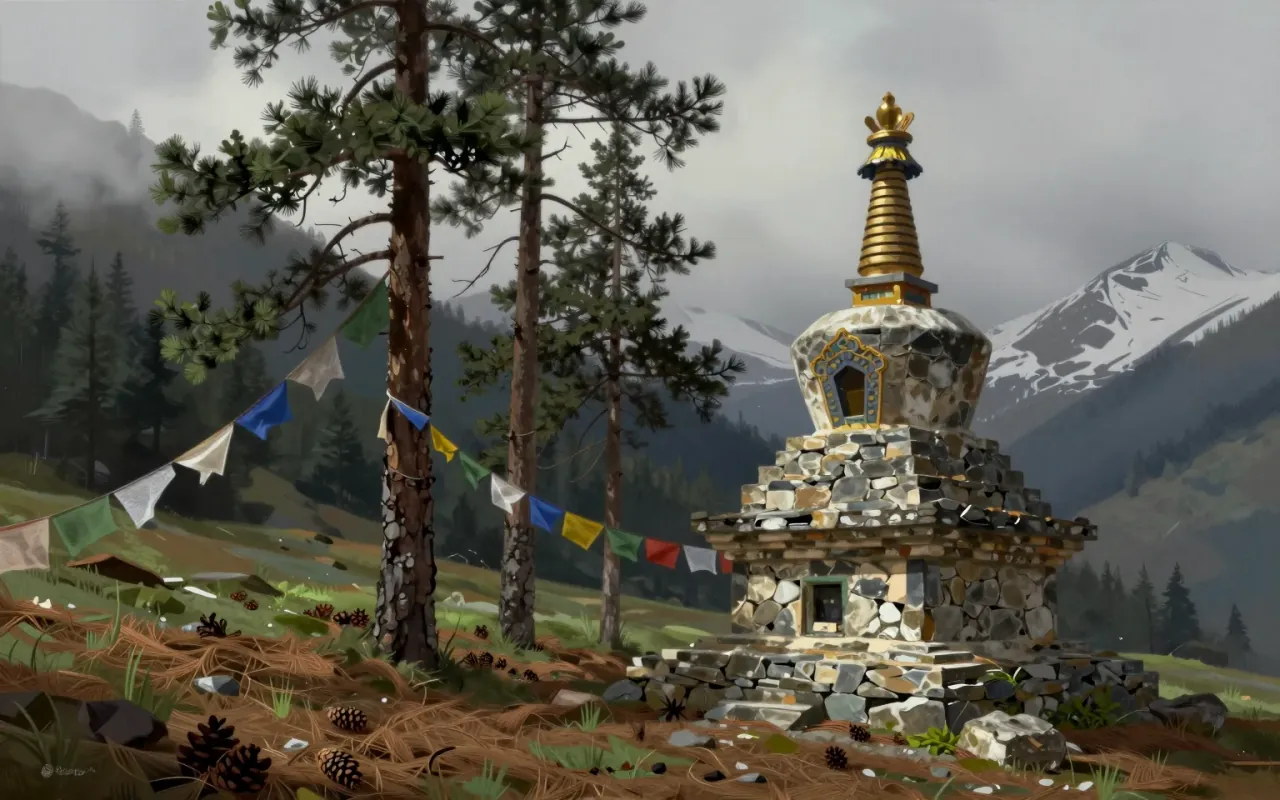
Far Cry 4 is a first-person action-adventure game developed by Ubisoft Montreal and released in 2014. It casts the player as Ajay Ghale, a Kyrati-American returning to the fictional Himalayan country of Kyrat to scatter his mother’s ashes. It runs on the Dunia engine, built by Ubisoft Montreal from CryEngine foundations.
How it actually plays
You play as Ajay Ghale in first-person, moving through Kyrat’s open world. Combat is cover-based and weapon-driven, with pistols, shotguns, sniper rifles, bows, flamethrowers, and grenade launchers. You kick objects and hide enemy corpses — new interactions absent in earlier Far Cry titles. Missions support stealth or assault, but both rely on the same loop: scout, engage, loot, upgrade, repeat. Weapon progression is gated behind narrative or gameplay advancement. There is no persistent stamina, no dialogue branching, no skill tree — only gear unlocks and outpost captures.
What works
Kyrat’s vertical terrain — cliffs, temples, forests, rivers — makes traversal and combat spatially engaging. Weapon variety creates distinct tactical rhythms: bows demand precision, flamethrowers punish groups, sniper rifles reward patience. Hiding corpses and kicking objects give momentary, tactile control over consequences. Stealth and assault feel like viable, divergent paths — not just cosmetic differences — because enemy AI reacts meaningfully to sound, sight, and bodies.
What does not
The story does not land. Ajay’s motivation — scattering his mother’s ashes — frames the journey but does not shape it. Characters lack interiority. Side content repeats structures without variation. The world reacts to your presence but not your choices. Progression is linear beneath its open appearance: outposts must be cleared to unlock fast travel and story missions, and weapon upgrades require fixed milestones.
Who it is for, and who it is not
It is for players who enjoy open-world games as curated playgrounds, not living worlds. It suits those who value immediate feedback, clear cause-and-effect in combat, and environmental spectacle over narrative cohesion or systemic depth. It is not for players seeking moral ambiguity, emergent storytelling, or mechanical novelty beyond iteration.
Is it worth your time
Yes, if you want a dense, reactive open world where combat systems interlock cleanly and environmental interaction feels consequential. No, if you expect narrative depth, systemic consequence, or meaningful player agency beyond tactical choice. It asks for your attention in bursts — not sustained investment.