What the game is
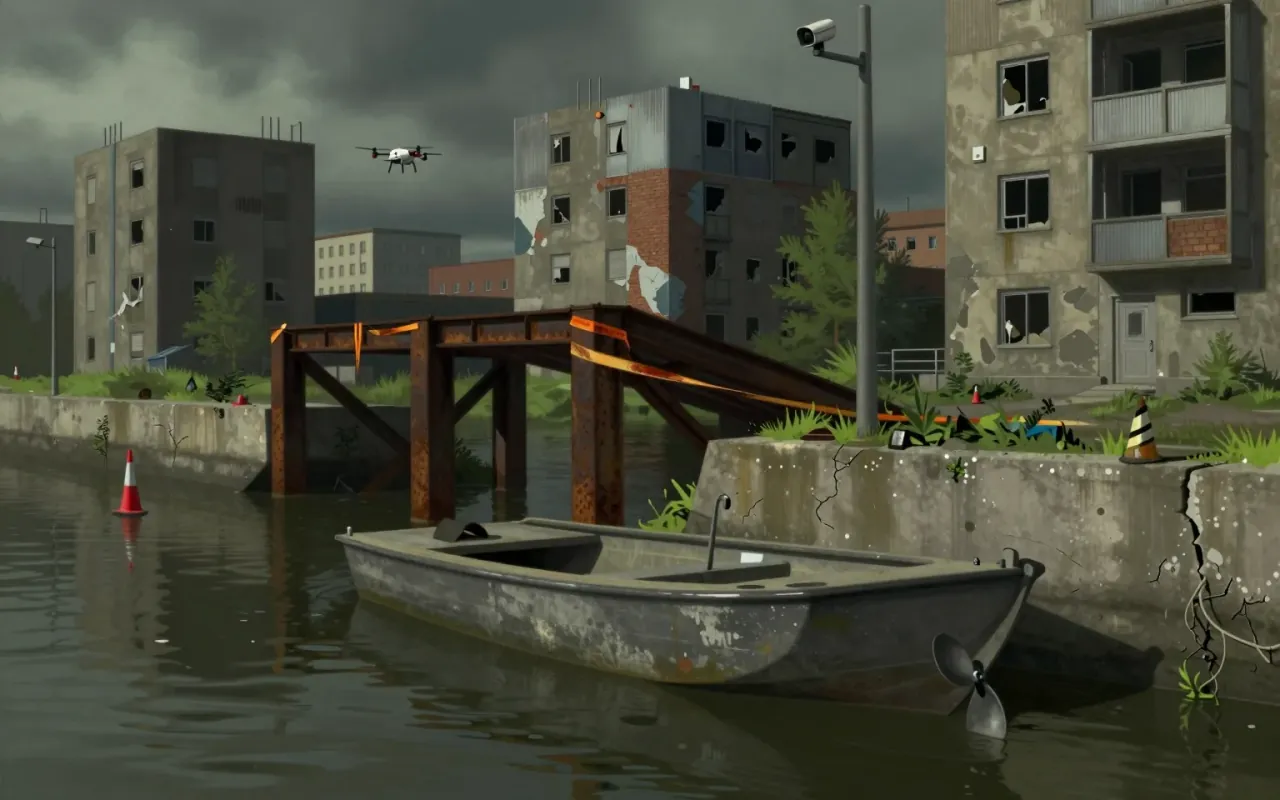
Half-Life 2 is a first-person shooter released in 2004 by Valve. It casts the player as Gordon Freeman in a resistance effort to liberate Earth from the alien Combine empire.
How it actually plays
You move as Gordon Freeman through a linear sequence of scripted, physics-driven scenarios. Combat relies on environmental interaction — grabbing, throwing, and shielding with objects using the gravity gun. Puzzles require manipulating physics-based elements. Platforming, vehicle sections (airboat and buggy), and NPC-led sequences alternate without loading screens or UI breaks.
What works
The gravity gun establishes a consistent, tactile rule: every object has mass, velocity, and purpose. The game introduces it early, reinforces it constantly, and builds combat, puzzles, and spectacle around it. Seamless transitions between shooting, platforming, and scripted sequences maintain momentum without breaking immersion.
What does not
It does not support player-authored goals. There is no open world, no branching paths, no dialogue choices, no inventory management beyond ammo and health, and no persistent consequences for failure beyond checkpoint reload.
Who it is for, and who it is not
It is for players who value authored, moment-to-moment interactivity over autonomy or customisation. It is not for players who require open-ended exploration, systemic depth, or narrative agency.
Is it worth your time
Yes — if you want a tightly paced, physics-integrated shooter that demands spatial awareness and improvisation in real time. It asks for sustained attention across 12–15 hours, but never asks you to learn systems outside its own loop: grab, aim, throw, react.