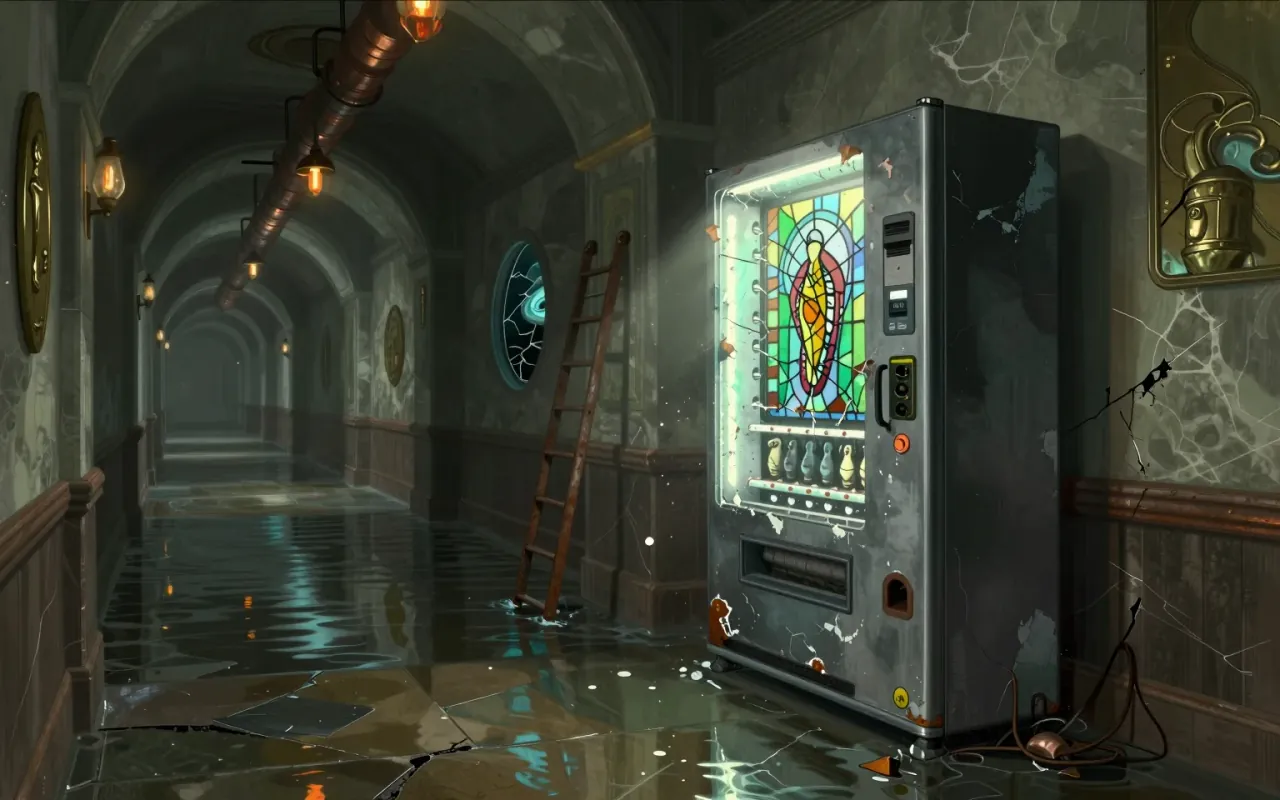
What the game is
A first-person shooter with role-playing customization and stealth elements, set in the underwater city of Rapture. You play as silent protagonist Jack, battling enemies with traditional weapons and plasmids while upgrading gear and managing health and EVE.
How it actually plays
You move in first-person through Rapture’s decaying art-deco corridors. You fight with guns and plasmids—fire, electricity, ice—that consume EVE. You upgrade weapons at scattered stations to reduce recoil or extend range. You swap ammo types for different enemies. You restore health with food or medical packs. You restore EVE with hypos or consumables like soda or wine. Jack says nothing. The game guides you toward objectives.
What works
The plasmid system ties power fantasy to environmental interaction—melting ice, tripping locks, shocking enemies—making ability gating feel diegetic. Weapon upgrades and ammo swaps give tactical granularity without complexity. The art-deco decay of Rapture is legible and consistent, reinforcing theme through architecture and sound.
What does not
It does not let you shape the story. It does not let you choose sides meaningfully. It does not allow open exploration: progression is gated by plasmid unlocks and scripted sequences. It does not support co-op or multiplayer. It does not vary the core loop beyond resource management and enemy type.
Who it is for, and who it is not
It is for players who want a linear, authored experience where combat systems serve worldbuilding—not for those seeking emergent play, moral ambiguity with real consequence, or systemic freedom.
Is it worth your time
Yes—if you want a tightly wound, self-contained shooter-RPG hybrid that uses its setting as both backdrop and mechanic, and if you accept its fixed narrative path and limited player expression beyond combat tuning.