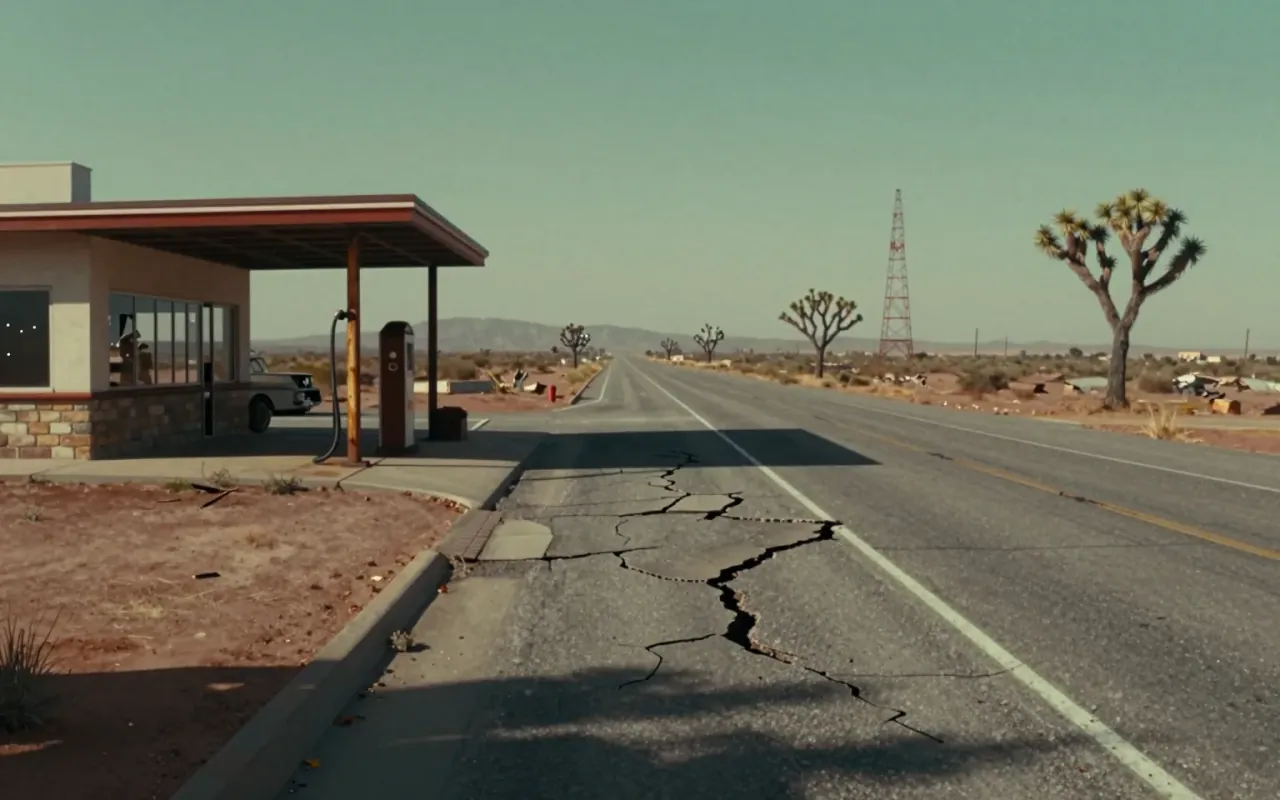
Fallout 2 doesn’t give you freedom — it gives you arithmetic, consequences, and a ticking clock.
Fallout 2 is a role-playing video game developed by Black Isle Studios in 1998. It is a direct sequel built on the same engine and design philosophy as its predecessor. It is not the origin of the Fallout series — Black Isle did not create the original Fallout, though many of its founding members came from that team.
Fallout 2 is a role-playing video game — but Black Isle Studios did not create the original Fallout.
2:09
Build Your Limits
Character creation is a constrained design act: 40 points across seven stats, three tagged skills, and up to two double-edged traits.
3:14
Skills Are Numbers
All 18 skills are percentage-based, and their initial values derive directly from stats — not level or class.
4:22
Earned, Not Given
Experience comes from actions — not story beats — and development was fractured by internal disagreement over team structure.
5:32
The Clock Is Real
It is a turn-based, stat-driven, choice-heavy RPG with a hard 13-year time limit and no resolution outside its engine’s constraints.
6:58
Legacy, Not Genesis
Black Isle is most famous for Fallout — yet it inherited the series’ DNA rather than inventing it.
Worth your time?
Yes. Play the whole thing.
4/ 5
What works
Character creation is deeply consequential: the 40-point stat cap forces trade-offs.
Skills have percentage-based effectiveness, making progression legible and testable.
Traits introduce systemic friction — every benefit carries a cost.
Reputation systems and non-linear quest resolution mean choices alter how NPCs react and which paths remain open.
What does not
It does not scale gracefully with player power: late-game stats and skill percentages inflate without meaningful counterbalance.
The 13-year clock creates artificial pressure that often overrides organic pacing.
It offers no mid-session save flexibility — only manual saves between encounters.
Its engine imposes rigid limits on dialogue branching depth and environmental interactivity beyond what the source material confirms.
Play it if
It is for players who enjoy parsing stat dependencies, weighing trait trade-offs, and treating dialogue as a tactical resource.
It is not for players who rely on visual feedback, real-time responsiveness, or narrative scaffolding to sustain engagement.
Skip it if
It is not for players who rely on visual feedback, real-time responsiveness, or narrative scaffolding to sustain engagement.
The written brief2 min read
What the game is
Fallout 2 is a role-playing video game developed by Black Isle Studios in 1998. It is a direct sequel built on the same engine and design philosophy as its predecessor. It is not the origin of the Fallout series — Black Isle did not create the original Fallout, though many of its founding members came from that team.
How it actually plays
The player begins by selecting a pre-made character or customising one. They assign seven primary statistics — strength, perception, endurance, charisma, intelligence, agility, and luck — with a hard cap of 40 points total. Three skills can be tagged for a 20% boost. Up to two traits, each with paired positive and negative effects, are chosen from sixteen options. Combat is turn-based and action-point-driven. Experience points accrue through in-game actions. The world must be explored and resolved within a strict 13-year time limit.
What works
Character creation is deeply consequential: the 40-point stat cap forces trade-offs. Skills have percentage-based effectiveness, making progression legible and testable. Traits introduce systemic friction — every benefit carries a cost. Reputation systems and non-linear quest resolution mean choices alter how NPCs react and which paths remain open. Time-limited world exploration creates urgency without scripting every moment.
What does not
It does not scale gracefully with player power: late-game stats and skill percentages inflate without meaningful counterbalance. The 13-year clock creates artificial pressure that often overrides organic pacing. It offers no mid-session save flexibility — only manual saves between encounters. Its engine imposes rigid limits on dialogue branching depth and environmental interactivity beyond what the source material confirms.
Who it is for, and who it is not
It is for players who enjoy parsing stat dependencies, weighing trait trade-offs, and treating dialogue as a tactical resource. It is not for players who rely on visual feedback, real-time responsiveness, or narrative scaffolding to sustain engagement.
Is it worth your time
Yes — if you want a stat-driven, choice-dense RPG where every decision carries mechanical weight and consequence, and you accept the constraints of its 1998 engine and design philosophy. No — if you expect modern pacing, visual fidelity, or narrative hand-holding.