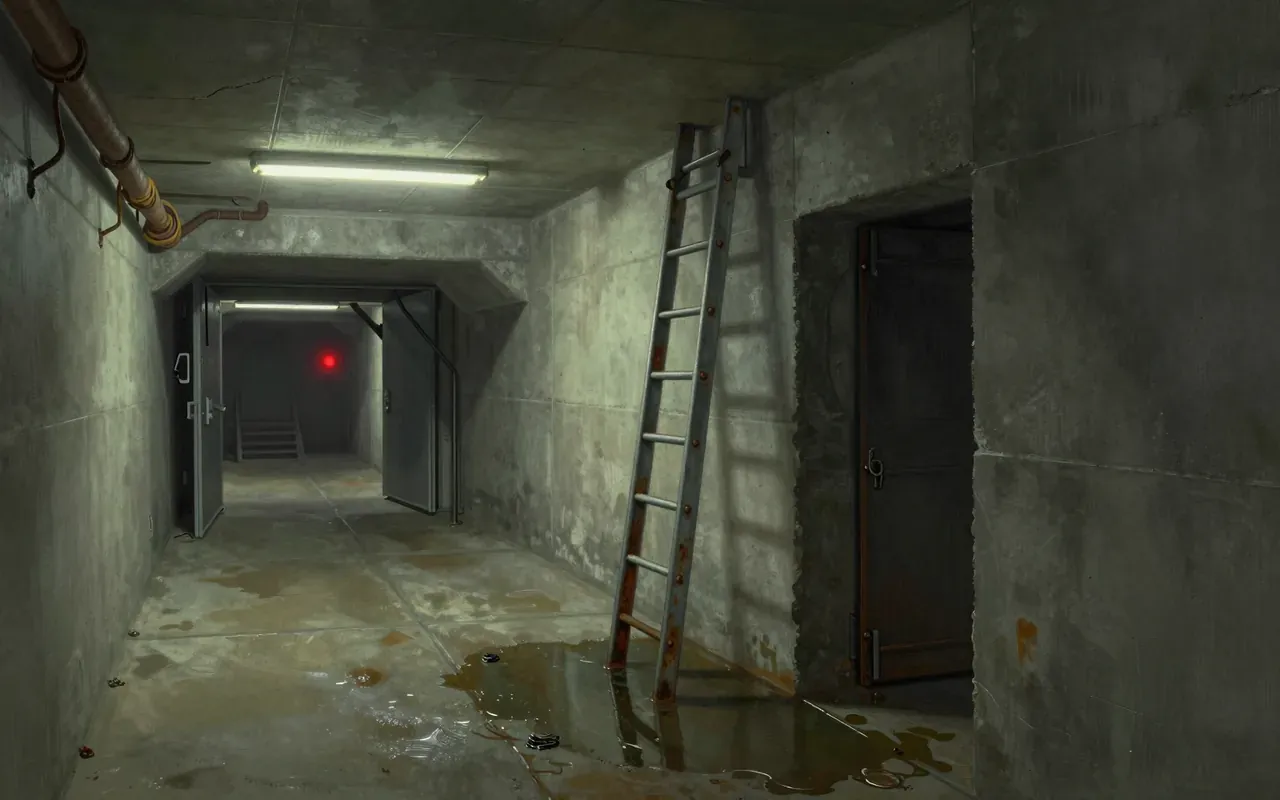
What the game is
Quake 4 is a 2005 first-person shooter developed by Raven Software using id Software’s engine technology, released under id’s catalog after Raven’s 1997 acquisition by Activision. It is a single-player–focused continuation of the Quake II narrative with expanded physics and multiplayer constrained by no bot support.
How it actually plays
Quake 4 asks players to master movement techniques inherited from Quake III Arena and Quake Live — strafe-jumping, rocket jumping, ramp jumping, crouch slides — while adding physics-driven interactions: shooting through teleporters, bouncing grenades and napalm fire off jump-pads. A session is a linear, story-driven run through scripted combat arenas, punctuated by scripted set-pieces and environmental puzzles that rely on the new physics. Multiplayer is client-server, supports up to 16 players, and offers six modes — but no bots.
What works
The movement system delivers satisfying momentum and verticality, building directly on Quake III Arena and Quake Live. Physics-based grenade and napalm bounce off jump-pads adds tactical texture. The 16-player client-server multiplayer architecture scales beyond Doom 3’s four-player limit.
What does not
The multiplayer lacks bot support, making solo practice impossible. The single-player campaign does not innovate beyond its physics additions and scripted pacing. It does not expand the Quake universe meaningfully beyond continuing the Quake II storyline.
Who it is for, and who it is not
It is for players who value precise, high-speed movement systems and want a Quake-style campaign with modern (2005) physics flourishes. It is not for players seeking deep multiplayer progression, narrative ambition, or standalone world-building.
Is it worth your time
It is worth your time only if you want a tightly paced, movement-heavy FPS campaign built on Quake’s legacy mechanics — not as a multiplayer destination, and not as a narrative or technical landmark.