gamesbriefs
8:50in productionCh. 1 · Crash Landing/ 8:50 · ceiling 15 min
Shooter · Retro

Unreal (1998 video game)

Unreal doesn’t let you play the hero — it makes you walk the ruins of someone else’s empire.

Unreal (1998) is a 3D first-person shooter co-developed by Epic MegaGames and Digital Extremes. You play Prisoner 849, a survivor of the crashed prison ship Vortex Rikers on the alien planet Na Pali. You fight through Skaarj-controlled mines, ruined Nali temples, a water temple, a Titan arena, alien installations, and the Skaarj Mothership — uncovering narrative via journals and environmental decay. Its strength lies in atmosphere, scale, and scripted set-pieces. Its limits are linearity, shallow combat, and fragmented storytelling.

Chapters & takeaways4
  1. 1:04
    Crash Landing

    You begin as a prisoner aboard a ship that crashes onto an alien world — not as a soldier, not a saviour, but cargo that survived.

  2. 2:08
    Ruins and Slavery

    You move through layered oppression: Skaarj mines, ruined Nali villages, and infested temples — each zone revealing power through architecture, not exposition.

  3. 3:31
    Story in the Bones

    Journals beside corpses and the Titan arena force narrative and spectacle into physical space — not cutscenes, but places you must enter and survive.

  4. 4:45
    Darkness After the Blast

    The mothership is a darkening labyrinth — its reactor destruction isn’t just a goal, it’s a shift in physics, light, and consequence.

Worth your time?

Yes. Play the whole thing.

3.5/ 5
What works
  • Its environmental storytelling works.
  • Detail texturing and real-time map editing enabled richer surfaces and lighting than contemporaries.
  • The Titan arena and reactor sabotage are clear, memorable set-pieces shaped by space and consequence.
What does not
  • It does not sustain momentum across its full length.
  • It does not offer meaningful player agency beyond movement and shooting.
  • It does not cohere its story into character or motive.
Play it if
  • Players who value deliberate pacing, architectural mood, and sci-fi worldbuilding over reflex-driven combat.
  • Players who want to experience a tightly wound, atmospheric FPS built for late-1990s hardware.
Skip it if
  • Players who need constant feedback, narrative clarity, or mechanical nuance.
The written brief1 min read

What the game is

Unreal (1998) is a 3D first-person shooter co-developed by Epic MegaGames and Digital Extremes. It casts the player as Prisoner 849, a survivor of the crashed prison ship Vortex Rikers on the alien planet Na Pali.

How it actually plays

The player moves through linear, scripted zones — mines, temples, arenas, alien installations, and a mothership — fighting Skaarj, Krall, Brutes, and monsters. Progress depends on reaching key objectives: freeing enslaved Nali, destroying the reactor, killing the Titan, and defeating the Skaarj Queen. Exploration is gated by locked doors, teleporters, and environmental puzzles. Journals found beside human remains deliver narrative in fragments. Light, texture, and spatial scale shape immersion more than interactivity.

What works

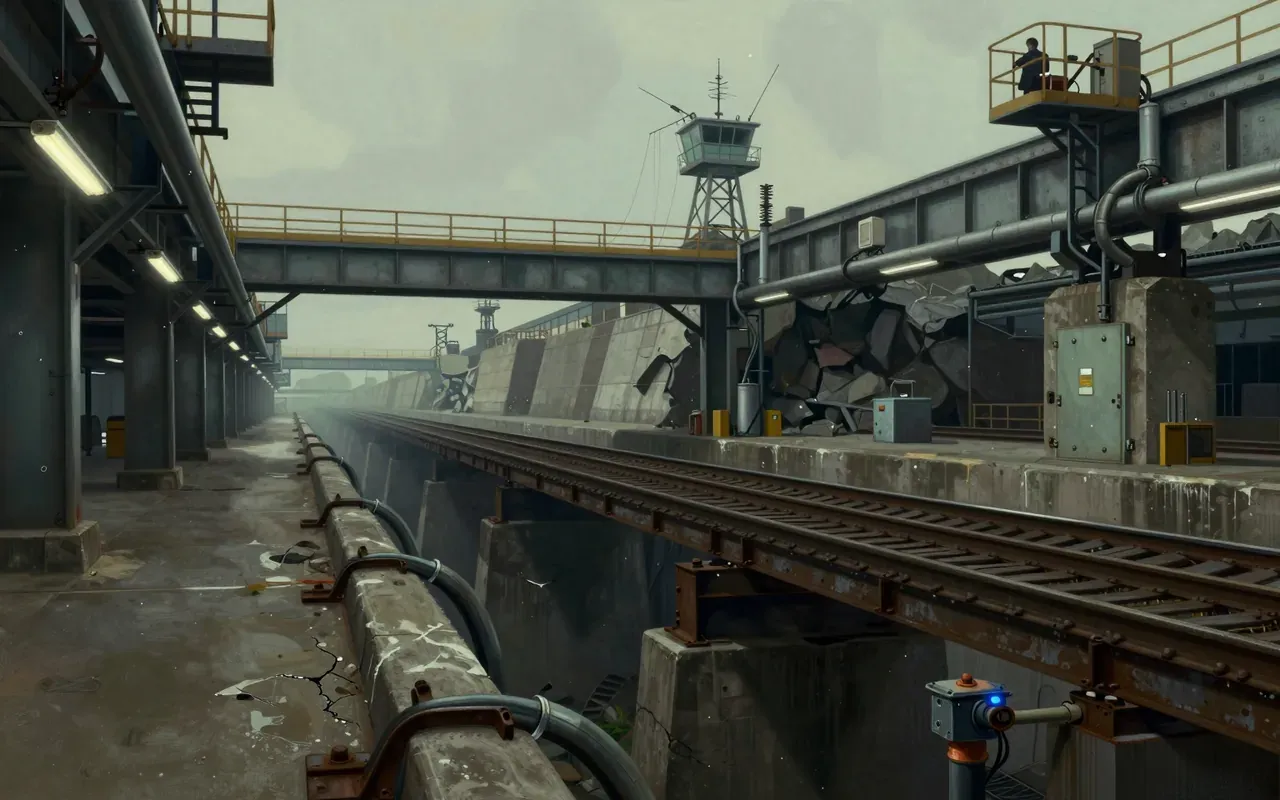
Its environmental storytelling works. Ruined Nali temples, flooded water temples, and the oppressive scale of the Skaarj Mothership establish hierarchy, history, and dread without dialogue. Detail texturing and real-time map editing enabled richer surfaces and lighting than contemporaries — making corridors feel lived-in, not procedural. The Titan arena and reactor sabotage are clear, memorable set-pieces shaped by space and consequence.

What does not

It does not sustain momentum across its full length. Set-pieces are strong but isolated. The combat loop lacks depth: weapons feel functional, not expressive. Enemy variety is visual rather than behavioural. There is no meaningful player agency beyond movement and shooting. The story remains distant, told in scraps, never cohering into character or motive.

Who it is for, and who it is not

It is for players who value deliberate pacing, architectural mood, and sci-fi worldbuilding over reflex-driven combat. It is not for players who need constant feedback, narrative clarity, or mechanical nuance.

Is it worth your time

Yes — if you want to experience a tightly wound, atmospheric FPS built for late-1990s hardware, where worldbuilding emerges from architecture, light, and silence rather than exposition. No — if you expect modern pacing, systemic AI, or open-ended play.
Same strand · Shooter4 of 93
7:58
Doom (1993 video game)id Software · 1993Doom (1993) is a first-person shooter for MS-DOS and Windows developed by id Software. It uses a 2.5D engine: environments render in 3D perspective but movement is confined to a 2D plane, and enemies are 2D sprites using billboarding. Players assume the role of a space marine fighting demons and possessed undead humans across labyrinthine levels grouped into episodes, each ending in a boss fight. Completion requires reaching a marked exit room while managing limited ammo, health, and armor—and avoiding hazards like toxic waste and crushing ceilings. Five difficulty levels scale enemy count, damage, speed, and aggression. The game supports cooperative and deathmatch multiplayer over local networks and modding via WAD files. Its design prioritises fast-paced action over narrative, with minimal plot conveyed through inter-episode text.
10:22
F.E.A.R. (video game)Monolith Productions · 2005F.E.A.R. is a first-person shooter psychological horror game developed by Monolith Productions in Kirkland, Washington. It uses the studio’s LithTech engine and centres on reflex time, adaptive AI, and melee as a core combat pillar.
10:22
Hexen: Beyond HereticRaven Software · 1995Hexen: Beyond Heretic is a 1995 first-person shooter with action-adventure and action role-playing elements. It is the second entry in the 'Serpent Riders' trilogy. It is set in the dark fantasy world of Silverspring. It runs on a modified Doom engine.
9:36
Overwatch (2016 video game)Blizzard Entertainment · 2016Overwatch is a team-based, online multiplayer first-person shooter released by Blizzard Entertainment in May 2016. It reuses assets from the cancelled Titan project but builds a new near-future world around the Omnic Crisis and the Overwatch peacekeeping force. Two teams of six select from over two dozen heroes—categorised as Damage, Tank, or Support—each with unique kits and an ultimate ability charged by combat actions. Players switch heroes mid-match to adapt to objectives like capturing control points or escorting payloads, all within time limits and asymmetric attacker-defender framing. Custom game modes are possible via limited scripting tools. Progression yields only cosmetic loot boxes. The setting is bright, cartoonish, and optimistic.
Up next in Games

Unreal Tournament 2004

Epic Games · 2004 · 9:41

Unreal Tournament 2004 is not a shooter with vehicles—it is a vehicle-integrated sport where movement is the first weapon.

9:41