gamesbriefs
8:31in productionCh. 1 · One action, one goal/ 8:31 · ceiling 15 min
Shooter · Retro

Space Invaders

Space Invaders doesn’t reward skill — it punishes hesitation.

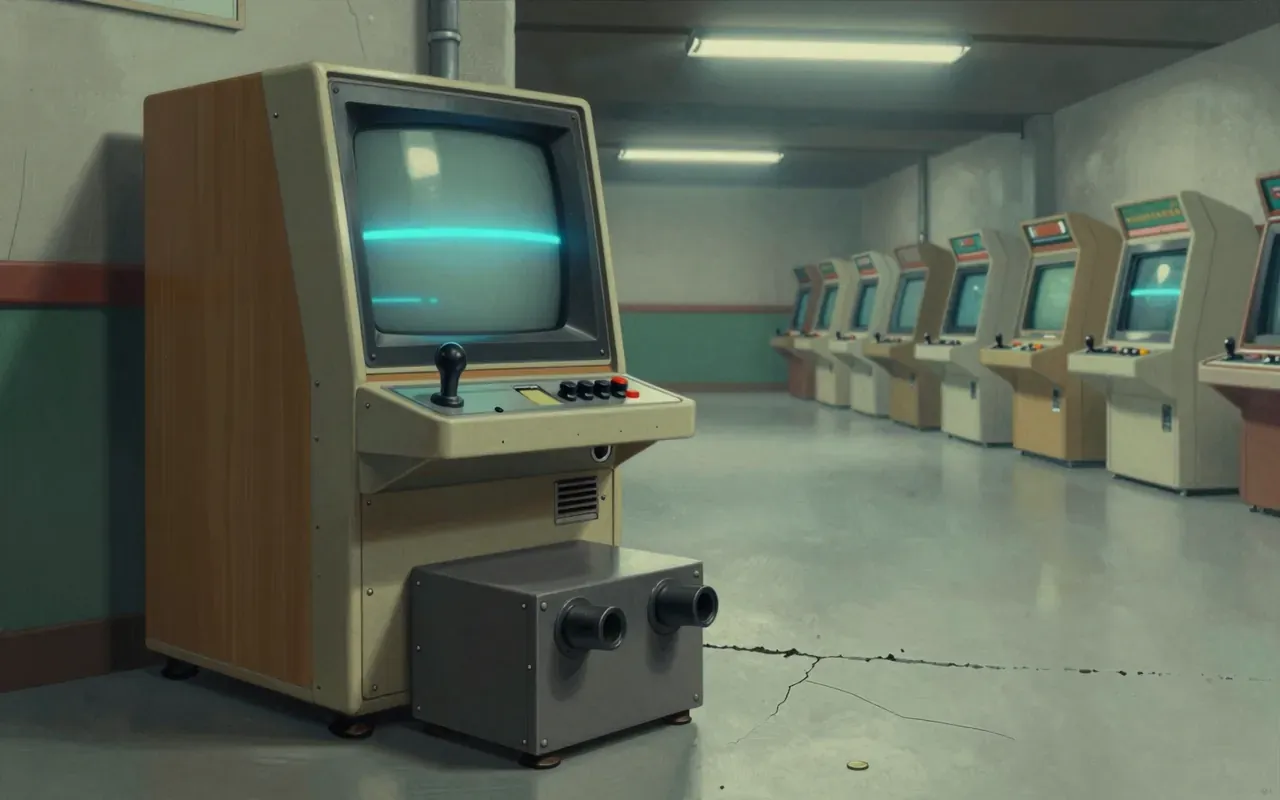
Space Invaders is a fixed shooter arcade game developed by Taito in 1978. The player controls a horizontally moving Laser Base at the bottom of the screen and fires upward at descending alien invaders arranged in five rows of eleven. Aliens move as a group, descending one step when hitting screen edges. The game ends immediately if any alien reaches the bottom — regardless of remaining lives. Aliens fire back; hits cost lives. Stationary bunkers provide partial cover but degrade from both alien and player fire. Movement and music accelerate as invaders are eliminated. Clearing all triggers a new wave starting lower. A mystery ship occasionally crosses the top for bonus points. It was Taito's most popular title and the most popular arcade game in history, beginning the golden age of arcade video games and contributing significantly to the growth of video games in the late 1970s.

Chapters & takeaways5
  1. 0:55
    One action, one goal

    You shoot aliens. You move left and right. Nothing else is possible.

  2. 1:32
    No retreat, no second wave

    Aliens descend as one unit — and the game ends the moment any touches the bottom.

  3. 2:19
    Cover that betrays you

    Bunkers protect — until they don’t. Alien fire and your own shots erode them equally.

  4. 3:31
    Music that tells you to hurry

    Speed isn’t optional — it’s the core feedback loop, baked into the music and motion.

  5. 4:34
    The machine that started the arcade

    Taito made it. It launched the golden age. Its cultural weight is factual — not aesthetic.

Worth your time?

Yes. Play the whole thing.

3.5/ 5
What works
  • escalating tension
  • immediate stakes
  • risk-reward cover system
  • rhythm-based feedback
What does not
  • narrative
  • character
  • mechanical variety
  • forgiveness
Play it if
  • design students
  • arcade historians
  • players who value clarity over comfort
Skip it if
  • casual players
  • story-driven audiences
  • those seeking modern UI or accessibility features
The written brief2 min read

What the game is

A fixed shooter arcade game developed by Taito in 1978. The player controls a horizontally moving Laser Base at the bottom of the screen and fires upward at descending alien invaders arranged in five rows of eleven.

How it actually plays

The player moves a Laser Base left and right along the bottom edge. They fire upward at five rows of eleven aliens overhead. Aliens move as one unit, shifting direction at screen edges and descending one step each time. Bunkers sit between player and invaders, degrading from both alien fire and player shots fired beneath them. Aliens fire back; one hit costs a life. The game ends instantly if any alien reaches the bottom — no second chances. As invaders die, their movement and the background music accelerate. Clearing all triggers a new wave starting lower on screen. A mystery ship occasionally crosses the top for bonus points.

What works

The rule that ending the game on any alien reaching the bottom creates immediate, unambiguous stakes. The accelerating tempo forces adaptation without instruction. The bunkers introduce risk-reward trade-offs: shelter versus self-damage. The mystery ship adds rare, timed reward without disrupting flow. The fixed perspective and simple inputs make intent legible in under two seconds.

What does not

It offers no recovery from mistakes. No pause. No save. No variation in alien behaviour beyond speed. No scoring nuance — points are purely per alien, with only one bonus target. The bunkers degrade predictably but offer no tactical depth beyond positioning. The loop tightens relentlessly, but never adapts to player skill — it only accelerates.

Who it is for, and who it is not

Players who want to understand how rhythm, consequence, and escalation define arcade design. Not for those seeking narrative, character, or mechanical variety. Not for players who need forgiveness, pacing control, or visual or thematic elaboration.

Is it worth your time

Yes — if you want to feel the raw architecture of arcade tension: escalating speed, shrinking margin for error, and absolute consequences for failure. It demands focus, rhythm, and spatial awareness in short bursts. It does not ask for story, character, or progression beyond survival. It is worth your time as a foundational design document — not as entertainment that has aged gracefully.
Same shelf · Shooter4 of 12
Up next in Games

Spy Hunter

Midway · 1983 · 9:08

A pure arcade reflex test disguised as espionage—no story, no growth, just steering, shooting, and surviving the next curve.

9:08