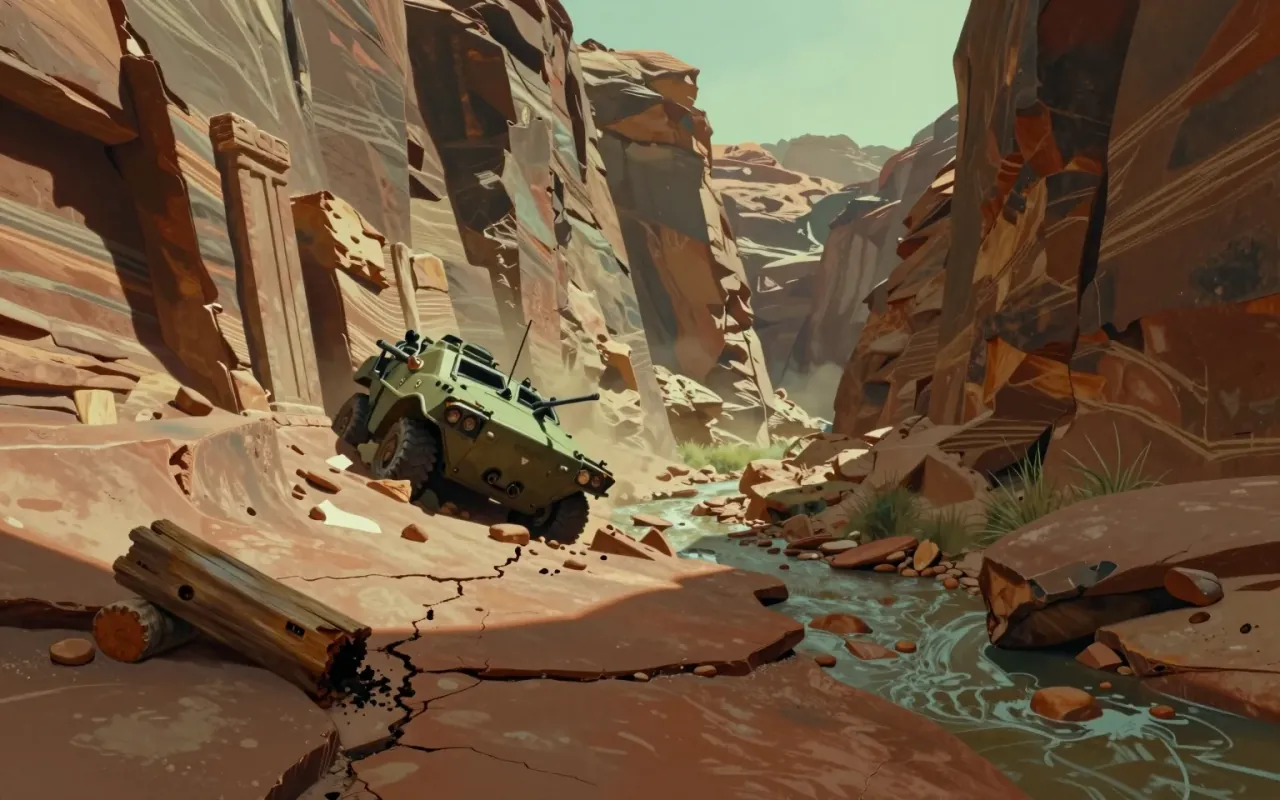
What the game is
Halo 3 is a first-person shooter released on September 25, 2007, by Bungie. It is the third mainline Halo title. It features on-foot and vehicular combat, a fixed loadout system, and Forge—a real-time, budget-limited map editor for multiplayer maps.
How it actually plays
Players move on foot or in vehicles. They carry one primary weapon, one secondary weapon (visible on their model), and one piece of equipment. Dual-wielding disables grenades and melee. Support weapons slow movement but increase firepower. Combat loops around positioning, weapon swapping, and timed equipment use. Forge allows real-time object placement within a strict budget.
What works
The visible secondary weapon reinforces loadout intentionality. The one-equipment limit forces tactical prioritisation. Support weapons create meaningful trade-offs between mobility and firepower. Forge’s real-time editing enables rapid, collaborative level iteration without external tools.
What does not
It does not support simultaneous grenade use and dual-wielding. It does not allow more than one piece of equipment. It does not let players carry support weapons without movement penalty. It does not hide the secondary weapon. It does not permit unbounded map editing in Forge.
Who it is for, and who it is not
It is for players who value deliberate, hardware-bound design choices and want to engage with a shooter where every carried item has a visible, mechanical cost. It is not for players seeking flexible loadouts, persistent progression, or narrative-driven single-player pacing.
Is it worth your time
Yes—if you want a tightly constrained, hardware-anchored shooter that demands spatial awareness, weapon discipline, and map knowledge. No—if you expect open-ended progression, narrative depth, or modern accessibility features.