gamesbriefs
8:40in productionCh. 1 · Branded velocity/ 8:40 · ceiling 15 min
Retro · Genres

Sonic the Hedgehog

Sonic isn’t about freedom—it’s about memorising corridors so you never brake.

Sonic the Hedgehog (1991) is a speed-first 2D platformer built to define Sega’s identity against Nintendo. Its loop is acceleration → memorised path → consequence of misstep → rapid recovery. It asks for repetition, not explanation. It rewards anticipation, not reaction. It is not generous. It is specific.

Chapters & takeaways4
  1. 1:08
    Branded velocity

    Sonic was engineered as corporate counterprogramming: blue to match Sega’s logo, boots borrowed from Michael Jackson, attitude modelled on Bill Clinton.

  2. 2:20
    No brakes, no pause

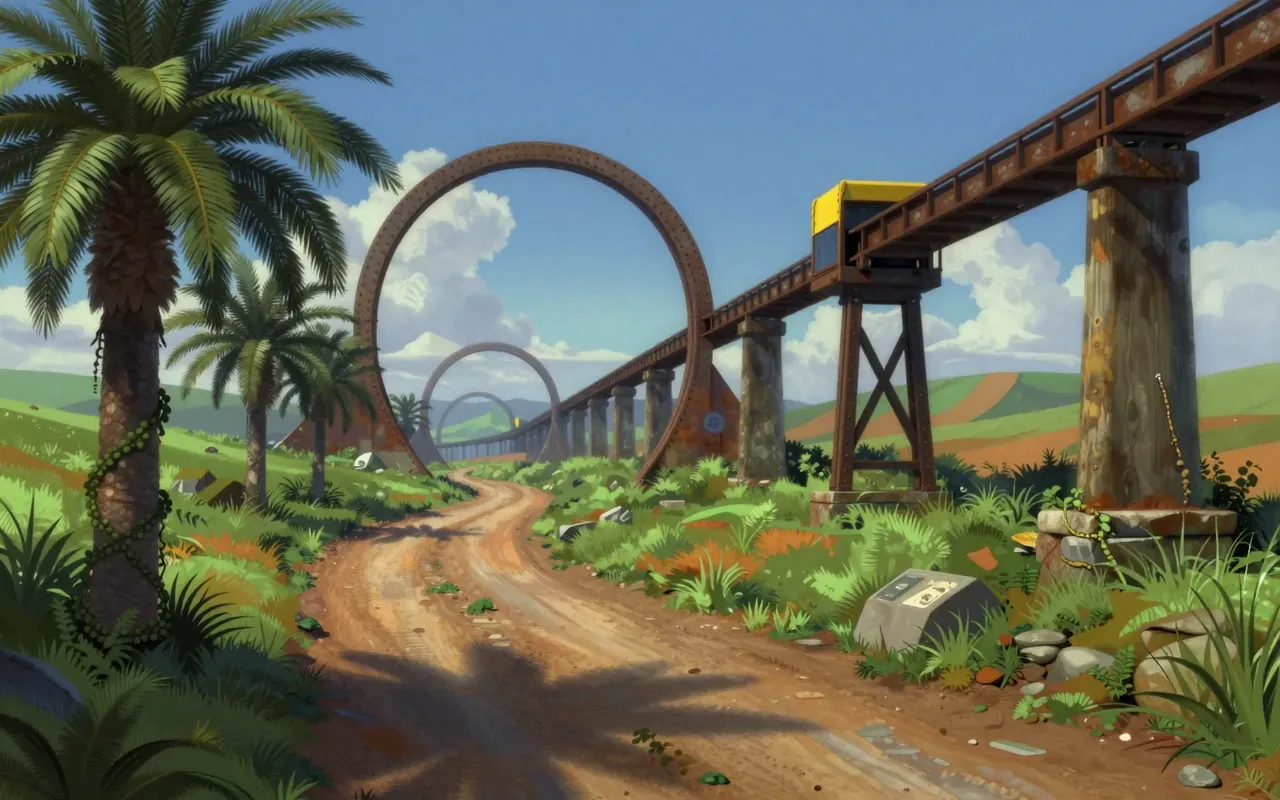
    Speed is not optional—it’s the core mechanic enforced by slopes, loops, pits, and branching paths.

  3. 3:40
    Pinball physics, not platformer logic

    One button controls jump and attack; springs and dash panels lock direction and velocity—no mid-air correction.

  4. 5:14
    Health that runs away from you

    Rings are health, currency, and timer: survive damage only if you hold them, then sprint to re-collect before they blink out.

Worth your time?

Yes. Play the whole thing.

4.5/ 5
What works
  • The ring health system ties survival to rhythm and risk.
  • The single-button control forces clarity.
  • Slopes, loops, and springs create a kinetic, pinball-like loop.
What does not
  • It does not sustain momentum without memorisation.
  • It does not explain its systems.
  • It does not recover gracefully from mistakes: rings fade, speed drops, and missed branches reset flow.
Play it if
  • Players who enjoy mastering terrain through repetition.
  • Players who reward precise, anticipatory movement.
Skip it if
  • Players who prefer exposition.
  • Players who expect adaptive difficulty.
  • Players who seek systemic experimentation.
The written brief1 min read

What the game is

A speed-based 2D platformer built to showcase the Genesis hardware and position Sega against Nintendo’s Mario series.

How it actually plays

The player holds right to accelerate down slopes and through loops. One button jumps and attacks. Springs and dash panels launch the player in fixed directions. Rings vanish seconds after being scattered by damage. Branching paths force memorisation: wrong turns kill speed.

What works

The ring health system ties survival to rhythm and risk: lose rings, lose safety, but gain time to recover if you act fast. The single-button control forces clarity. Slopes, loops, and springs create a kinetic, pinball-like loop.

What does not

It does not sustain momentum without memorisation. It does not explain its systems. It does not recover gracefully from mistakes: rings fade, speed drops, and missed branches reset flow.

Who it is for, and who it is not

It is for players who enjoy mastering terrain through repetition and reward precise, anticipatory movement. It is not for players who prefer exposition, adaptive difficulty, or systemic experimentation.

Is it worth your time

Yes—if you want a tightly wound, reactive platformer that demands spatial recall and split-second timing. No—if you expect modern accessibility, narrative scaffolding, or forgiving recovery.

Same shelf · Retro4 of 40
Up next in Games

Space Hawk

Orca · 1982 · 8:29

Space Hawk doesn’t test your aim—it tests whether you’ve read the manual.

8:29