gamesbriefs
Studio · Publisher

Sega

Website →
25
briefs
10:00
average
250 min
in total
On games.briefs25
9:14

Shinobi (1987 video game)

Sega · 1987

Shinobi (1987) is a Sega arcade game where Joe Musashi fights Zeed across timed stages using shurikens, melee, and one-per-stage ninjutsu techniques. Movement is precise. Death is absolute. Progression is hostage-driven. It is not about lore, scale, or stamina — it is about reading space, committing to motion, and choosing when to spend your one irreplaceable power.

9:36

The House of the Dead

Sega · 1996

The House of the Dead is a 1996 Sega arcade rail shooter defined by strict shooting discipline, enemy-clearance gating, and boss-pattern literacy. Its design rewards fast, accurate head shots and punishes hesitation or misaim. It offers no narrative, no progression beyond path selection, and no mechanical expansion — only escalation within its narrow loop.

10:04

NBA 2K (video game)

2K Sports · 1999

NBA 2K (1999) is the inaugural title of the NBA 2K series, released for the Sega Dreamcast. Developed by Visual Concepts and published by Sega, it features real NBA players and teams from the 1999–2000 season, custom player and team creation, and fictional commentary by Bob Steele and Rod West.

10:13

Shining Force

Sega · 1992

Shining Force is a turn-based tactical role-playing game published by Sega during its console era (1983–2001), grouped with franchises like Phantasy Star and Megami Tensei. Battles occur on square grids: units move by Move stat, act once per turn (attack, cast, use item, or search), and turn order combines agility and randomness. Units gain EXP from combat and supportive actions like healing, enabling level progression. Allied units are individually characterized—each with background and personality—similar to Fire Emblem. Exploration mode functions as a traditional Japanese-style RPG, with Max representing the army outside battle. No claims support narrative branching, real-time elements, or modern UX features.

9:26

Ecco the Dolphin (video game)

Sega · 1992

Ecco the Dolphin is an action-adventure game where the player controls a bottlenose dolphin navigating time-traveling plot-driven levels. Core mechanics include speed-based swimming, singing-based interaction and mapping, glyph-based puzzles, and survival constraints like air depletion and health management.

10:02

Golden Axe (video game)

Sega · 1989

Golden Axe is a 1989 arcade beat 'em up where players choose one of three warriors to fight through fixed screens of enemies in Yuria, using melee attacks and elemental spells that consume a finite magic resource — refilled only by kicking a blue thief — while health is restored by food dropped by a green thief. Sega announced plans to revive the dormant franchise in 2023.

10:18

Pengo (video game)

Sega · 1982

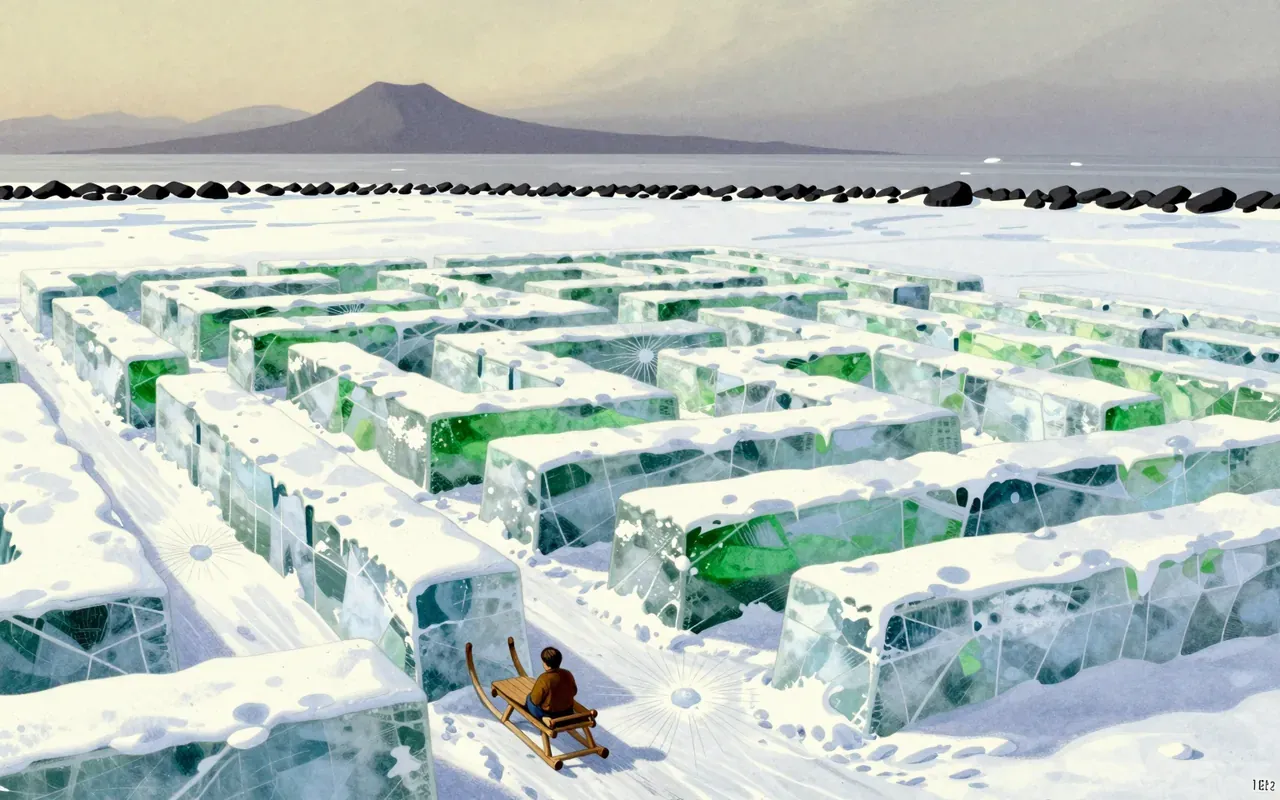
Pengo is a 1982 arcade maze game developed by Coreland and published by Sega Enterprises, Inc. The player controls Pengo — a red penguin in the Antarctic — using a four-position joystick and one button to slide or crush ice blocks in an overhead maze. The goal is to eliminate all Sno-Bees and Sno-Bee eggs each round, optionally aligning three diamond blocks for bonus points. Rounds end when all enemies and eggs are destroyed; doing so in under 60 seconds awards time-based bonus points. The game features 16 rounds with intermissions.

8:38

Phantasy Star (video game)

Sega · 1987

Phantasy Star (1987) is a traditional Japanese RPG developed and published by Sega for the Master System. It alternates between top-down overworld exploration and first-person dungeon/battle navigation. Players control Alis, recruit Noah, Odin, and Myau, share one inventory, visit towns to buy gear, face random monster encounters outside towns, and manually map complex dungeons.

11:24

Virtua Fighter (video game)

Sega · 1994

Virtua Fighter (1994) is the first 3D fighting game. It uses wireframe and flat-shaded quad polygons. Movement is restricted to two dimensions within a 3D space. It has eight playable characters, each with distinctive moves. Single-player mode requires fighting all eight in fixed order, then facing boss Dural. Matches are best-of-three, won by knockout, ring-out, or higher health at round end. Controls are limited to a stick and three buttons: punch, kick, guard. A port was bundled with the Sega Saturn at Japanese launch and sold at nearly one-to-one ratio with the console. Virtua Fighter and Virtua Fighter 2 together became Sega's best-selling arcade games of all time.

9:56

Sonic R

Sonic Team · 1997

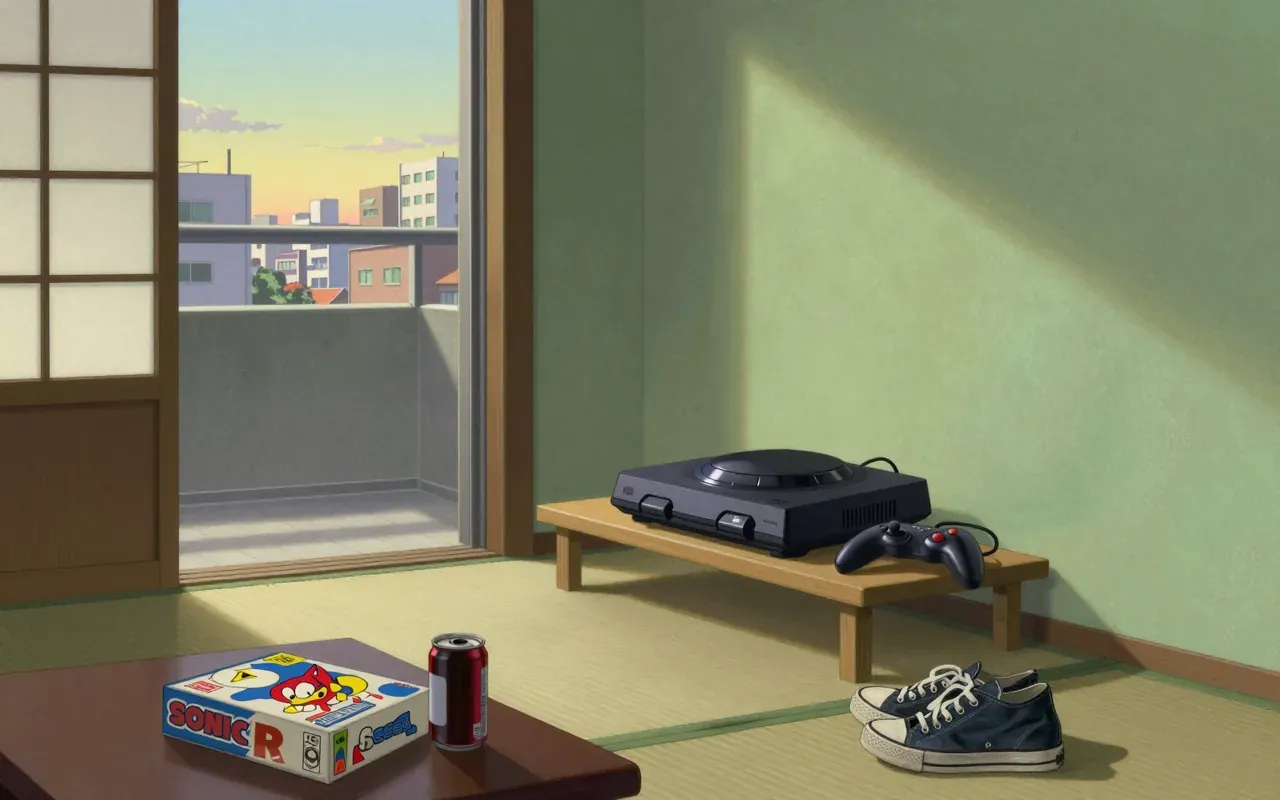
Sonic R (1997) is a foot-racing game co-developed by Sonic Team and Traveller's Tales for the Sega Saturn. It emphasises jumping, exploration, and item-based progression across five themed tracks — with reverse racing, ring trading, and unlockable characters tied to hidden token collection. Its design responds directly to Saturn hardware limits: custom engine, 12-layer transparency, and 30 fps target. It is not a kart racer, nor a traditional Sonic platformer — but a constrained experiment in 3D movement under technical duress.

7:45

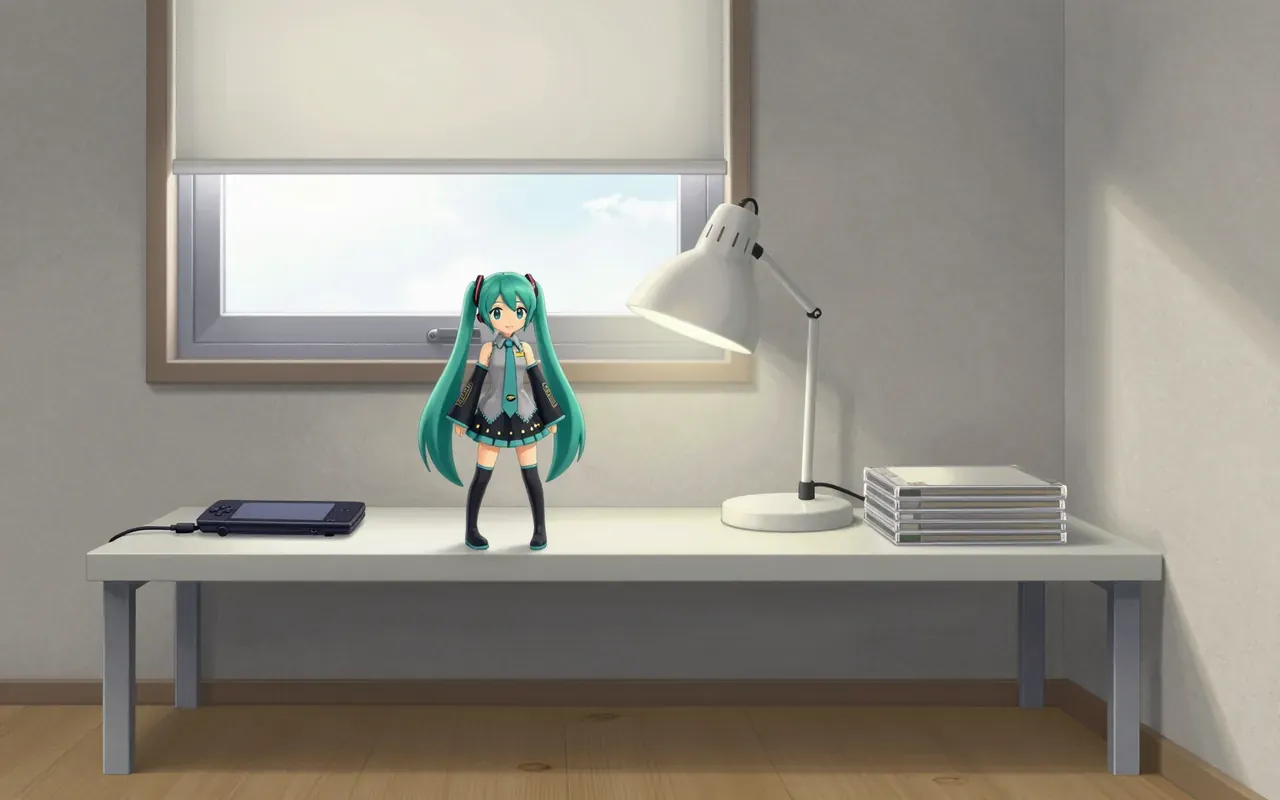
Hatsune Miku: Project Diva

Sega · 2009

Hatsune Miku: Project Diva is a rhythm game where players press buttons in time with Vocaloid songs across five escalating difficulty levels. Modules — Vocaloid characters or costume variants — appear in music videos depending on song type (solo or duet), but are not controlled. Progression is strictly linear: clearing Normal unlocks Hard, and completing songs unlocks new songs. It was successful in Japan for Sega and linked to their 2010 holographic concert work. No narrative, no multiplayer, no customisation beyond module selection. It asks for timing discipline and rewards it with more timing challenges.

10:44

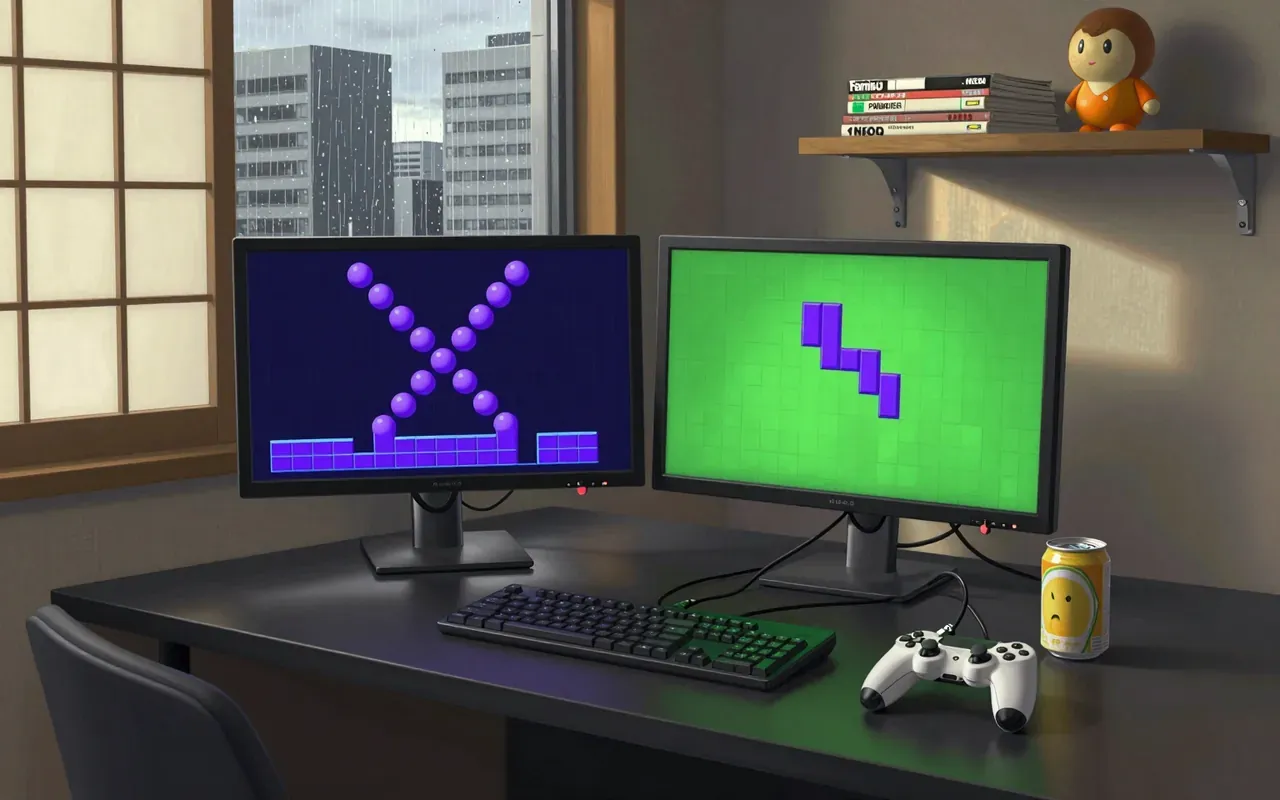
Puyo Puyo Tetris

Sonic Team · 2014

Puyo Puyo Tetris is a deliberate, unapologetic juxtaposition—not an integration—of two established puzzle systems. Its strength lies in clarity, consistency, and competitive rigour. Its limitation is structural separation: no rule, constraint, or feedback bridges Puyo and Tetris beyond shared menus and scoring.

9:35

ToeJam & Earl

Sega · 1992

ToeJam & Earl is a 1992 Sega game that turns Earth into a stack of floating islands. Players control alien rappers searching for 10 spacecraft wreckage pieces. Movement is in 3/4 perspective. Islands are randomly generated and linked by elevators. Falling off an island drops the player to the layer below, requiring elevator relocation. The game supports single-player and cooperative two-player modes. In two-player mode, proximity unifies the screen and unlocks exclusive dialogue; separation splits the screen. Presents deliver temporary power-ups, but their contents are unknown until opened — and the 'Randomizer' power-up scrambles effects. Earthlings act as unpredictable NPCs, some hostile, some helpful.

11:11

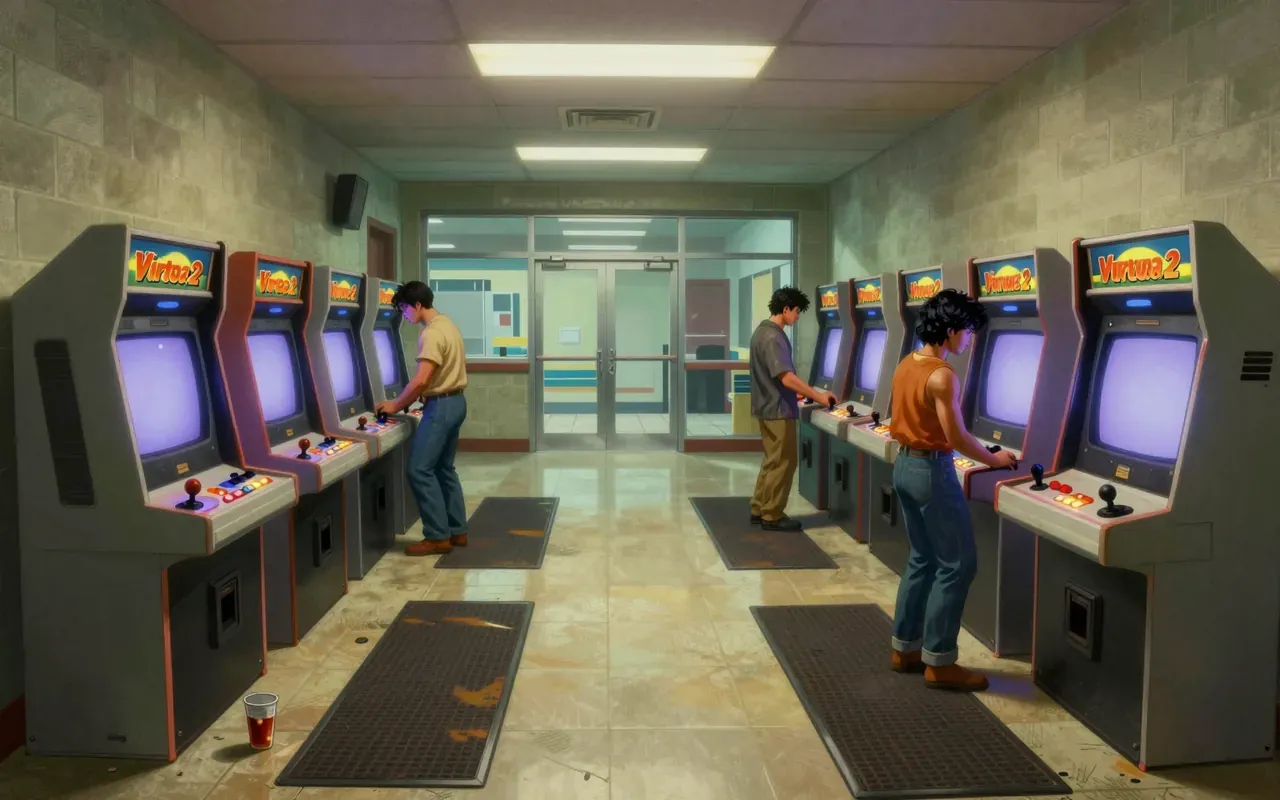
Virtua Fighter 2

Sega · 1995

Virtua Fighter 2 is a 3D one-on-one fighting game developed by Sega AM2 for the Sega Model 2 arcade system board. It introduced adjustable arena size and infinite health, enabling sumo-style ring-out play. All characters share core mechanics like universal throws, while differing in style and expanded move sets including counters and throw prevention. It features motion-captured, texture-mapped 3D characters running at 60 FPS. It became Sega's best-selling arcade title of all time.

11:47

Virtua Fighter 5

Sega · 2006

Virtua Fighter 5 is a rigorously tuned, system-first 3D fighter built for deep spatial and temporal literacy. Its design assumes player investment in frame data, ring geometry, and layered defensive logic—not spectacle or hand-holding.

8:26

Frogger

Konami · 1981

Frogger is a 1981 Konami arcade action game where the player guides frogs across a road and river to reach homes at the top of the screen.

10:20

Nights into Dreams

Sega · 1996

Nights into Dreams is a Saturn-exclusive action game where players alternate between timed ground navigation and fixed-path 3D flying to recover stolen Ideyas and defeat Wizeman.

11:02

Phantasy Star IV

Sega · 1993

Phantasy Star IV is a linear, story-driven RPG on the Sega Genesis. It uses turn-based combat, level-based progression, Technique-based magic, and combination attacks. Its manga-style panels and expanded script distinguish it within the series. Only 14 of 15 combination attacks function. Developed internally by Sega’s Consumer Development division, it belongs to Sega’s multi-million-selling Phantasy Star franchise.

9:56

Sonic the Hedgehog 2

Sega · 1992

Sonic the Hedgehog 2 is a side-scrolling platformer released on the Sega Genesis. It tasks the player with stopping Doctor Robotnik from stealing the Chaos Emeralds to power the Death Egg. It introduces Tails as a controllable sidekick and the spin dash as a core mobility tool.

10:30

Sonic the Hedgehog 3

Sega · 1994

Sonic the Hedgehog 3 is a 1994 Genesis/Mega Drive 2D side-scrolling platformer. It features Sonic and Tails across six zones (each with two acts), introduces Knuckles as an antagonist, and expands narrative through visual cutscenes. Players control Sonic while Tails runs alongside; a second player may join at any time to control Tails separately. Players may also play as Sonic or Tails alone. Tails can fly briefly by spinning his tails like a helicopter rotor. Unlike Sonic, Tails can also swim underwater. Levels are populated with 'Badniks', robots created by the villain, Dr. Robotnik; Sonic and Tails can defeat them by jumping on them or using the 'spin dash' attack, which also gives the character a speed boost. The levels include obstacles and other features such as vertical loops, corkscrews, breakable walls, spikes, water that the player can drown in, and bottomless pits.
9:06

Sonic Adventure

Sega · 1998

Sonic Adventure is the first main Sonic game built for 3D — and the Dreamcast’s launch title.

10:24

Sonic & Knuckles

Sega · 1994

Sonic & Knuckles is a 1994 Sega Genesis platformer developed by Sega Technical Institute. Players choose Sonic or Knuckles to traverse six side-scrolling levels on Angel Island, each with two acts ending in miniboss and boss fights. Sonic jumps higher and uses shields; Knuckles glides and climbs walls. Cutscenes differ by character, reflecting their adversarial relationship. Bonus stages activate at checkpoints with 20+ rings — one involves orbiting glowing spheres while avoiding a rising light fence; the other is a bouncing slot-machine room.

8:40

Sonic the Hedgehog

Sega · 1991

Sonic the Hedgehog (1991) is a speed-first 2D platformer built to define Sega’s identity against Nintendo. Its loop is acceleration → memorised path → consequence of misstep → rapid recovery. It asks for repetition, not explanation. It rewards anticipation, not reaction. It is not generous. It is specific.

12:08

Total War: Shogun 2

Creative Assembly · 2011

Total War: Shogun 2 is a systemic strategy game that demands sustained attention across long sessions. It gives players deep control over settlement, economy, religion, diplomacy, and battlefield tactics—but offers no hand-holding for their interplay. Its strength lies in enforced trade-offs: ashigaru versus samurai, stealth versus siege, faith versus expansion. It assumes competence, not curiosity.

9:39

Zaxxon

Sega · 1982

Zaxxon is a 1982 Sega arcade shooter that pioneered isometric projection to create a pseudo-3D environment where altitude management—indicated by shadow and altimeter—is central to navigating fortress walls and obstacles. Movement is constrained to constant forward speed with vertical control only via joystick, requiring players to learn and internalise altitude-based spatial reasoning. Its design demanded new interface cues (joystick illustrations) due to unfamiliar control logic.