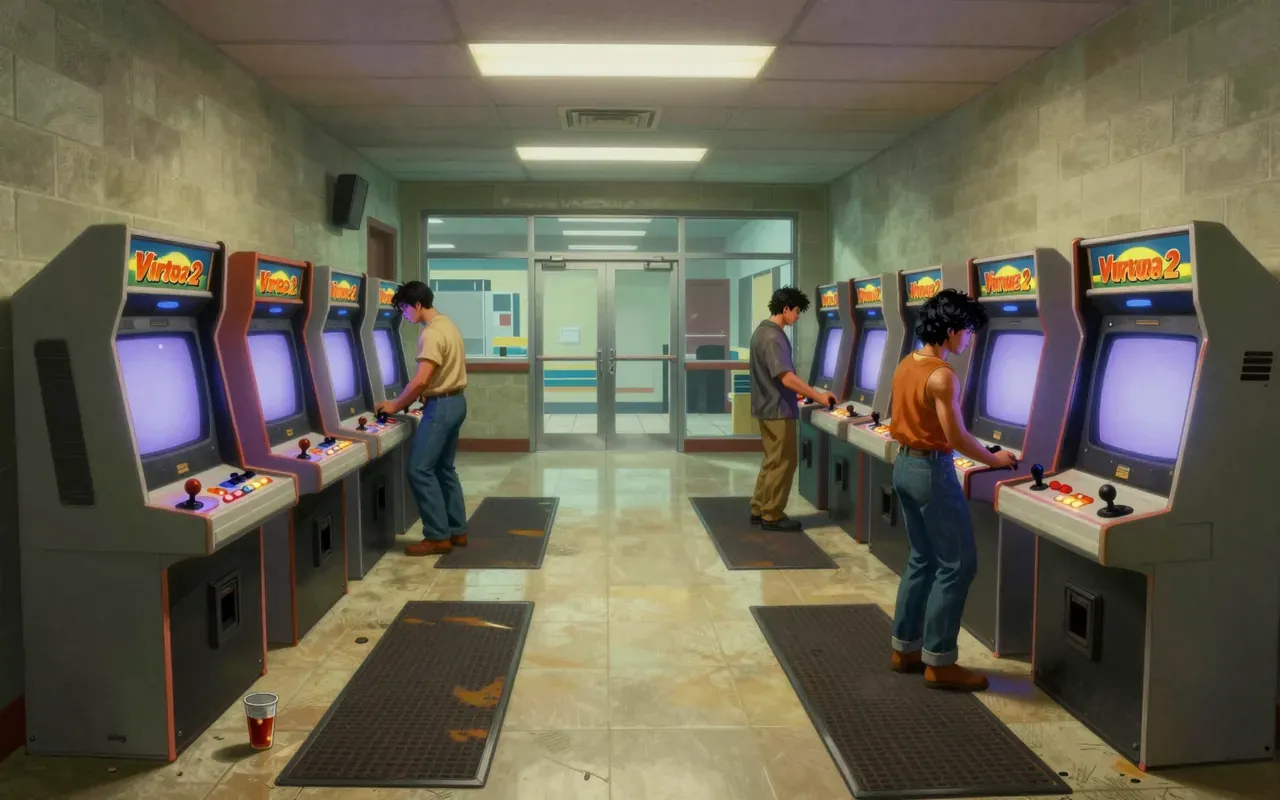
Virtua Fighter 2 didn’t invent 3D fighting—it taught it how to stand, turn, and throw in space.
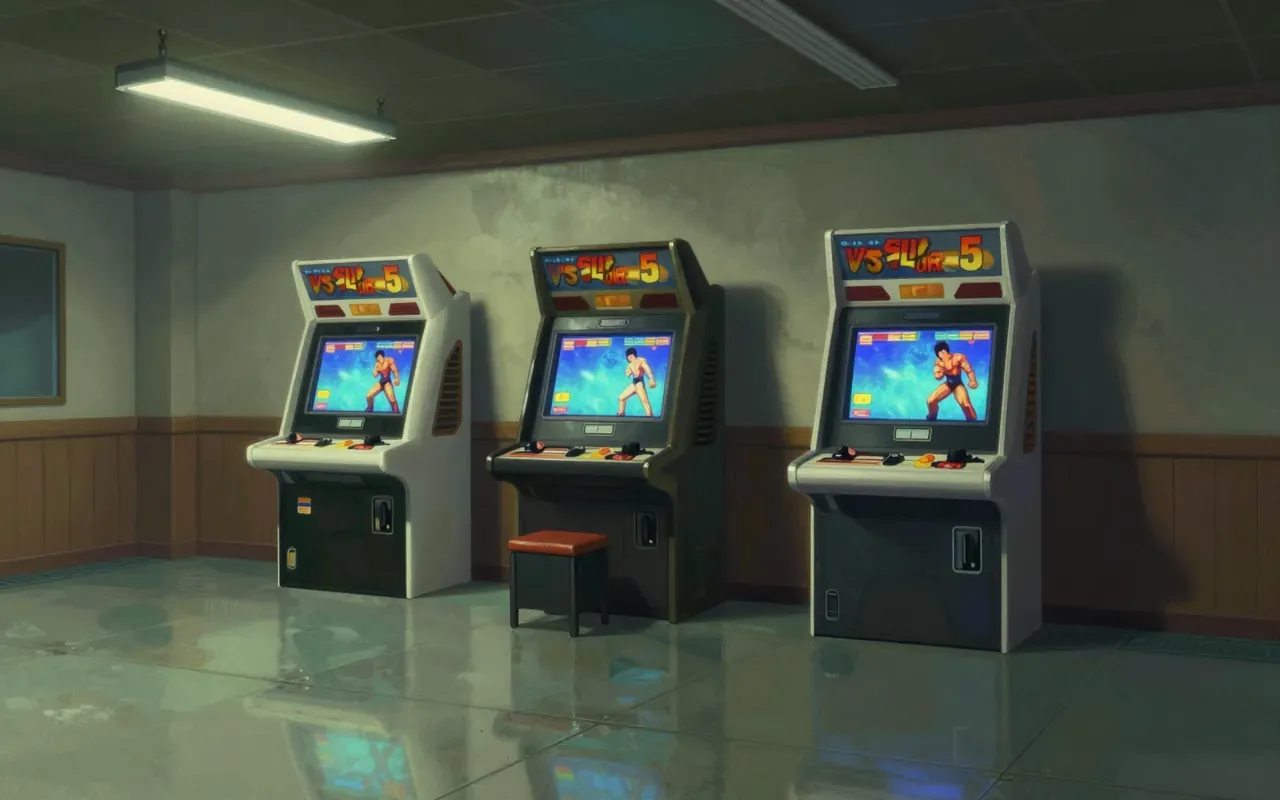
Virtua Fighter 2 is a 3D one-on-one fighting game developed by Sega AM2 for the Sega Model 2 arcade system board. It introduced adjustable arena size and infinite health, enabling sumo-style ring-out play. All characters share core mechanics like universal throws, while differing in style and expanded move sets including counters and throw prevention. It features motion-captured, texture-mapped 3D characters running at 60 FPS. It became Sega's best-selling arcade title of all time.
It is the first 3D fighting game to treat space as a weapon—not just a stage.
3:23
Two dials that change everything
Arena size and infinite health are not options—they’re levers that redefine victory.
5:10
Knock out or knock out
Ring-out isn’t a gimmick—it’s a parallel win condition with its own rhythm and risk.
6:38
Hardware that paid
It ran on custom hardware that made 60 FPS 3D motion possible—and sold more arcade cabinets than any other Sega title.
Worth your time?
Yes. Play the whole thing.
4.5/ 5
What works
The axis strikes for two new fighters make 3D movement meaningful—not just visual.
Universal throws and shared core mechanics create fairness across asymmetry.
Adjustable arena and infinite health let players isolate and master ring-out or technical exchanges.
The 60 FPS motion capture delivers physical weight and timing clarity absent in earlier polygonal fighters.
What does not
It does not include online multiplayer.
It does not feature voice acting.
It does not have a story mode.
It does not support four-player local play.
Play it if
It is for players who want to understand how 3D space became a tactical variable in combat.
It is for those who value precision over spectacle, and who treat hardware constraints as design prompts.
It is not for players who need guidance, context, or emotional scaffolding.
Skip it if
It is not for players who expect modern tutorials, assists, or narrative framing.
The written brief1 min read
What the game is
A 3D one-on-one fighting game built for the Sega Model 2 arcade system board. It is the second entry in Sega AM2’s Virtua Fighter series. It runs at 60 FPS with motion-captured, texture-mapped 3D characters.
How it actually plays
Players select a fighter and face successive opponents in best-of-three rounds. Victory comes from depleting health or ring-out. Input uses an eight-way stick and three buttons—guard, punch, kick—to execute directional combos. Arena size adjusts from tiny platforms to 82 metres. Health can be set to infinite, enabling sumo-style ring-out contests when combined with small arenas.
What works
The axis strikes for two new fighters make 3D movement meaningful—not just visual. Universal throws and shared core mechanics create fairness across asymmetry. Adjustable arena and infinite health let players isolate and master ring-out or technical exchanges. The 60 FPS motion capture delivers physical weight and timing clarity absent in earlier polygonal fighters.
What does not
It does not teach you. It offers no feedback on why a move failed. It assumes you will learn by repetition against human opponents. There is no story, no character progression, no single-player arc beyond sequence completion. Its depth is structural, not expressive.
Who it is for, and who it is not
It is for players who want to understand how 3D space became a tactical variable in combat. It is for those who value precision over spectacle, and who treat hardware constraints as design prompts. It is not for players who need guidance, context, or emotional scaffolding.
Is it worth your time
Yes—if you want to feel how 3D movement was first made consequential in fighting games. It demands spatial awareness, not reflexes. It rewards patience over aggression. It is not for players who expect modern tutorials, assists, or narrative framing.