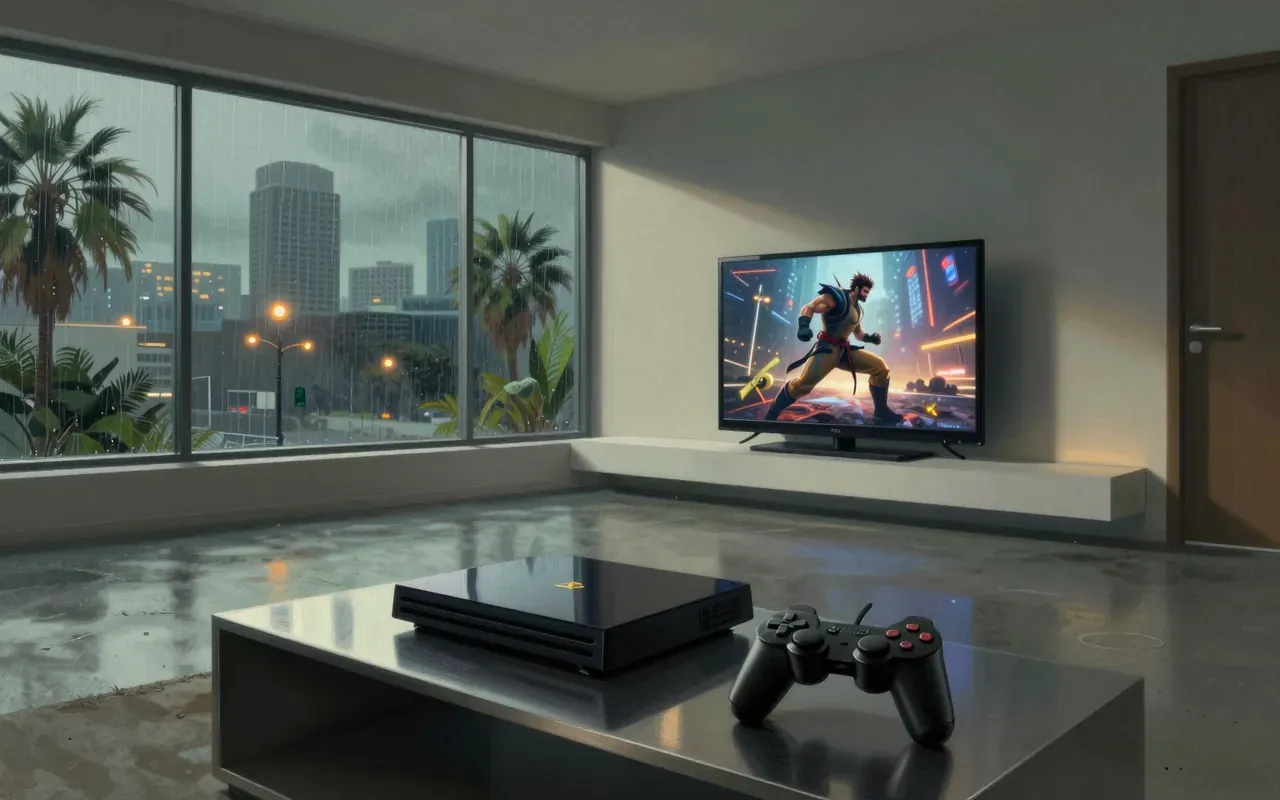
Strive ditches Instant Kill and ranked mode—not to dumb down Guilty Gear, but to make its chaos legible before it’s mastered.
Guilty Gear Strive is a 2D fighting game developed by Arc System Works in Yokohama. It reconstructs the franchise, removes Instant Kill, introduces Wall Break, omits mechanical explanations from its tutorial, and launches without ranked mode.
Strive is a full franchise reconstruction—not a sequel or remaster.
2:47
Stage Breaks, Not Just Combos
Wall Break turns corners into launchpads for arena transitions.
4:35
No Tutorial Explanations
It prioritises comprehension over simplicity—and hides the manual on purpose.
6:40
Pace Over Pressure
No ranked mode at launch means no forced skill treadmill.
Worth your time?
Yes. Play the whole thing.
4/ 5
What works
Wall Break creates dynamic arena shifts during corner combos
Accessibility is pursued through comprehensibility—not simplification
Omission of ranked mode supports self-paced learning
What does not
ranked mode at launch
Instant Kill
detailed tutorial explanations
Play it if
players who value expressive, high-speed 2D combat but distrust gatekeeping tutorials or forced progression
players who rely on ranked structure to define progression
Skip it if
players who require transparent mechanical scaffolding
The written brief1 min read
What the game is
Guilty Gear Strive is a 2D fighting game developed by Arc System Works in Yokohama. It is a complete reconstruction of the Guilty Gear franchise, launched in 2021.
How it actually plays
It plays as a 2D fighting game built around corner-based combos that trigger Wall Break stage transitions. It withholds mechanical exposition: the tutorial avoids detailed explanations of systems. It removes ranked matchmaking at launch to decouple play from performance pressure. It replaces Instant Kill with streamlined, visually legible combat rhythms.
What works
Wall Break creates dynamic arena shifts during corner combos. Accessibility is pursued through comprehensibility—not simplification—so new players can engage without decoding jargon. The omission of ranked mode supports self-paced learning.
What does not
It does not explain its own systems in the tutorial. It does not include ranked mode at launch. It does not retain Instant Kill—the franchise’s signature mechanic.
Who it is for, and who it is not
It is for players who value expressive, high-speed 2D combat but distrust gatekeeping tutorials or forced progression. It is not for players who require transparent mechanical scaffolding or competitive infrastructure from day one.
Is it worth your time
Yes—if you want a modern 2D fighter that asks you to feel momentum before mastering mechanics. No—if you need immediate clarity on how inputs map to outcomes, or if you rely on ranked structure to define progression.