What the game is
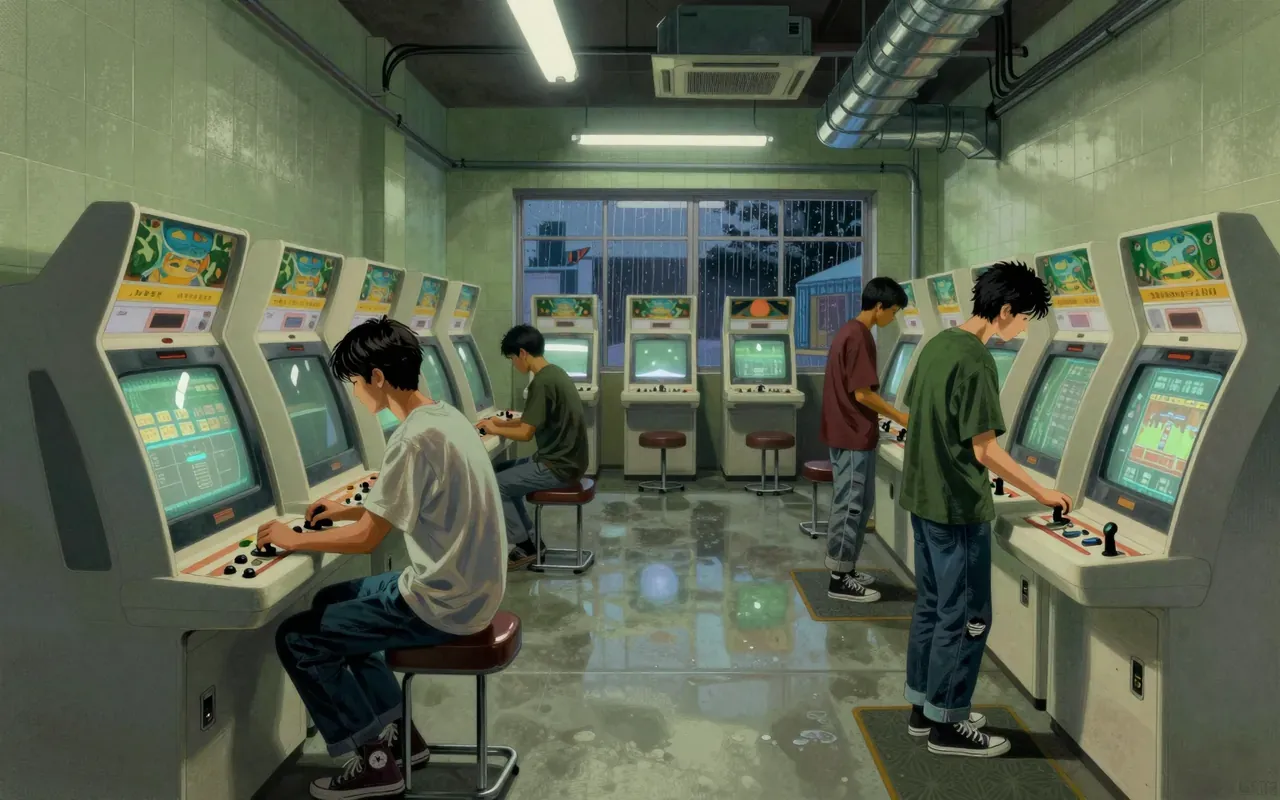
A 1998 PlayStation 2D arcade fighting game developed and published by Arc System Works. It is the first entry in the Guilty Gear franchise. It runs on hardware built for arcade cabinets, ported without structural concessions to home console limits.
How it actually plays
Players fight one-on-one using a six-button layout: four attack buttons (punch, kick, two weapon attacks) and two special-action buttons. Matches are fixed at two-out-of-three rounds. A tension gauge fills on hit or damage; when full, players execute Chaos Attacks. At half health, Chaos Mode triggers — red aura, unlimited Chaos Attacks. Instant kills end matches outright. Round duration is adjustable, but round count and single-player difficulty are locked.
What works
The six-button layout separates weapon-based attacks from bare-handed ones, reinforcing character identity through input. Instant kills create high-stakes moments where timing overrides stamina. Chaos Attacks reward aggression and risk, while Chaos Mode forces a dramatic shift in strategy mid-fight — not gradual escalation, but hard reset into overload.
What does not
It does not adapt to player skill. No adjustable difficulty in Arcade Mode. No option to play single rounds or best-of-one. No tutorial beyond Training Mode’s free play. Chaos Mode’s all-or-nothing activation at half health creates binary pacing — either cautious survival or explosive collapse — with no middle ground.
Who it is for, and who it is not
It is for players who treat mechanics as physical objects to be handled — those who want to map button pressure to frame windows, memorise recovery frames, and internalise the weight of a tension gauge. It is not for players who expect guidance, pacing control, or systemic forgiveness.
Is it worth your time
Only if you want to feel the friction of early arcade-to-console translation: jarring inputs, rigid structure, and systems that demand memorisation over adaptation. It rewards repetition, not responsiveness. You will spend time learning what the game withholds — no difficulty scaling, no round-count flexibility, no training scaffolding beyond free practice.