gamesbriefs
10:21in productionCh. 1 · The Core Loop/ 10:21 · ceiling 15 min
Sound & music · Game design

Guitar Hero II

Guitar Hero II is not about playing guitar—it’s about training your hand-eye timing against a fixed scroll speed, one chord at a time.

Guitar Hero II tightens the original's loop with chords, practice tools, and co-op roles—but remains rigid, unadaptive, and consequence-free. It trains timing, not musicianship.

Chapters & takeaways5
  1. 1:16
    The Core Loop

    You press a fret and strum—nothing more, nothing less.

  2. 2:27
    Refinements, Not Reinventions

    Three-note chords and mid-song handedness toggling add physical nuance without changing the input model.

  3. 3:48
    Rehearsal Without Penalty

    Practice mode isolates sections and slows playback—but never stops, even on total failure.

  4. 5:29
    Character Without Consequence

    You choose a guitarist and band name, then play bass or rhythm lines—but Career mode has no stakes.

  5. 6:20
    The Machine It Ran On

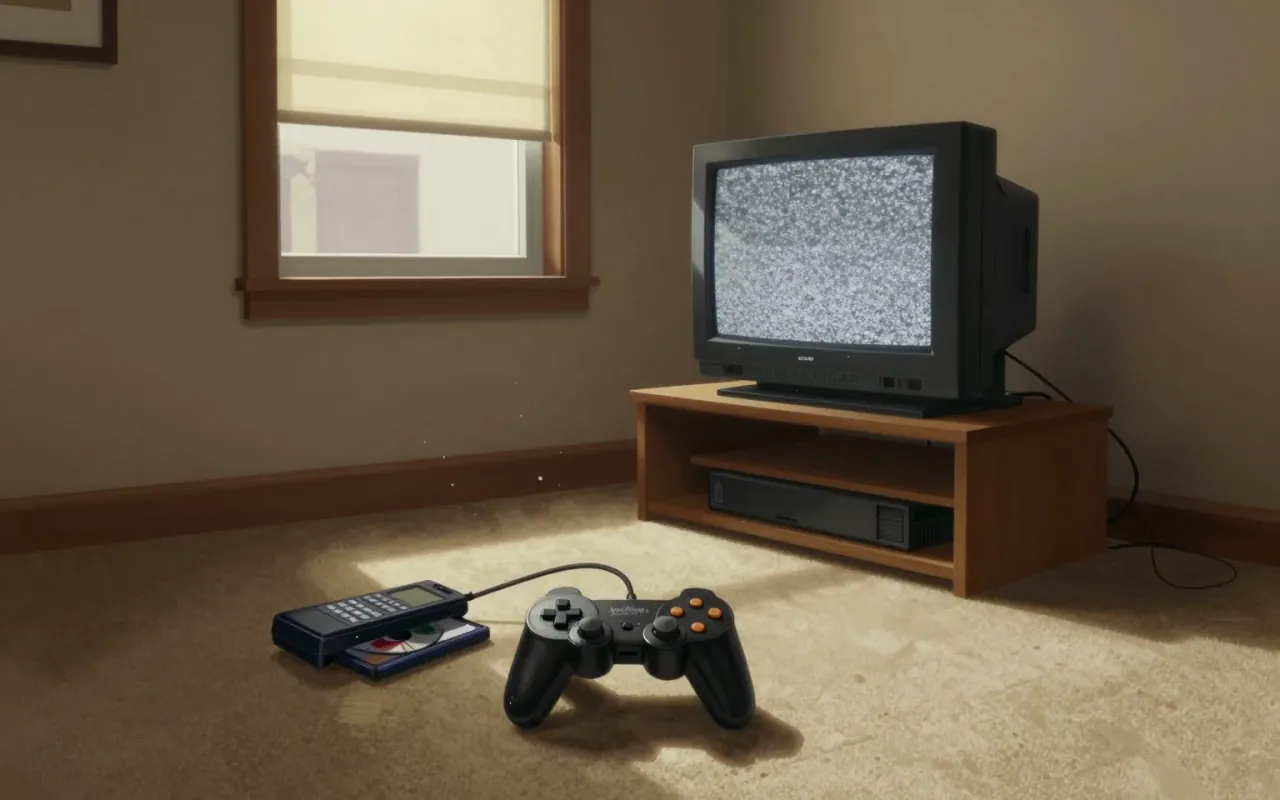
    Harmonix built it. RedOctane published it. It runs only on PlayStation 2.

Worth your time?

Yes. Play the whole thing.

3.5/ 5
What works
  • Practice mode isolates sections and slows playback without stopping
  • Three-note chords add tactile variety
  • Co-op Face-Off and Pro Face-Off modes enforce turn-based or simultaneous performance with clear win/loss states
What does not
  • music-business
  • cover-versions
Play it if
  • players who enjoy structured, repeatable physical feedback loops
  • groups wanting low-barrier co-op on PS2 hardware
Skip it if
  • players seeking deep musical expression
  • players seeking systems that evolve with mastery
The written brief1 min read

What the game is

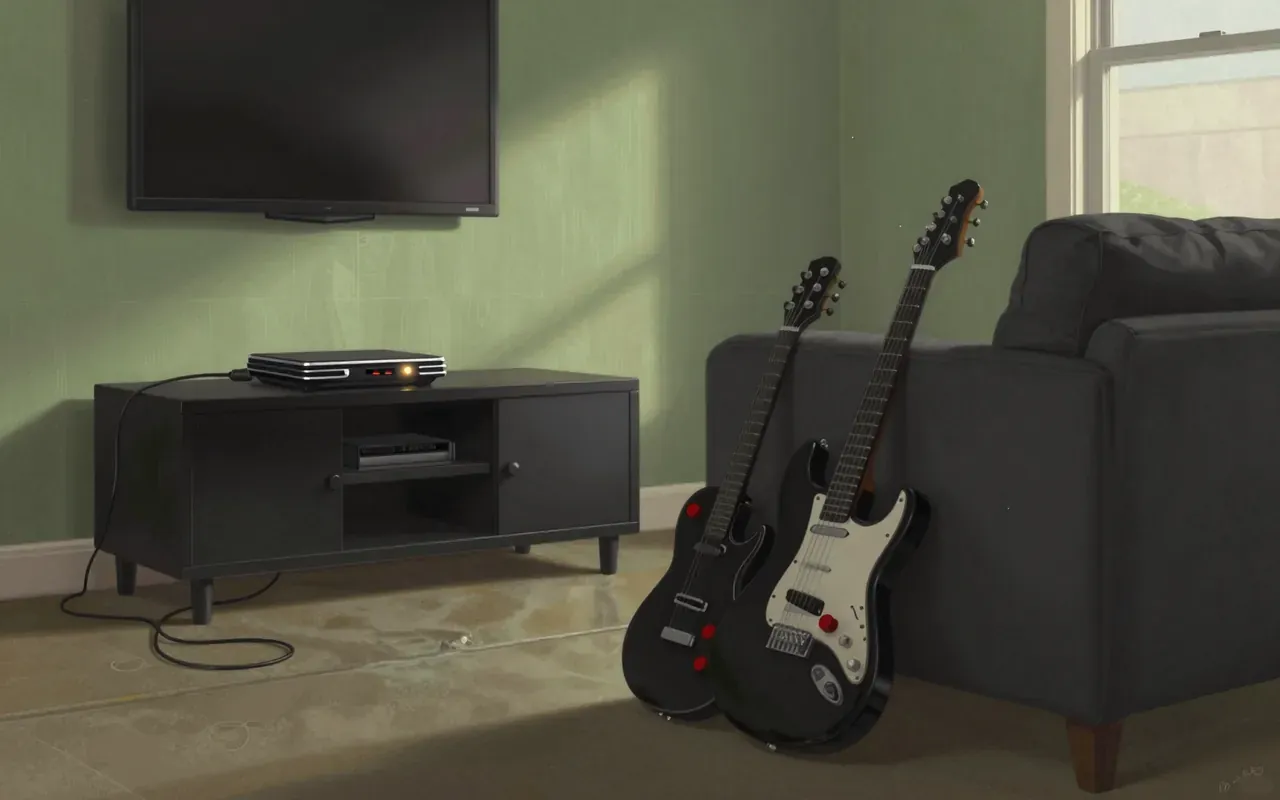
A PlayStation 2 rhythm game built around a five-fret guitar controller. It refines Guitar Hero’s note-hitting loop with chords, improved hammer-ons/pull-offs, handedness toggling, and Practice mode. It features licensed and cover songs across decades, and supports co-op lead/bass or rhythm parts.

How it actually plays

The player holds a fret button and presses the strum bar to hit scrolling notes. Three-note chords score triple points when played correctly. Handedness toggles mid-song via Pause menu. Practice mode isolates song sections like ‘Gtr Solo 4’ and lets players slow notes to Slowest without stopping playback. Bass lines are playable on most songs; rhythm guitar lines appear on others.

What works

Practice mode works as a rehearsal tool: it isolates sections, slows playback to Slowest, and never stops—letting players build muscle memory without penalty. Three-note chords add tactile variety. Co-op Face-Off and Pro Face-Off modes enforce turn-based or simultaneous performance with clear win/loss states.

What does not

Career mode offers no meaningful consequence for failure—songs restart, no penalty applies. The scoring system does not distinguish between precise timing and near-misses. There is no adaptive challenge: difficulty scales only through note density, not rhythmic complexity or structural variation.

Who it is for, and who it is not

It is for players who enjoy structured, repeatable physical feedback loops—and for groups wanting low-barrier co-op on PS2 hardware. It is not for players seeking deep musical expression, narrative stakes, or systems that evolve with mastery.

Is it worth your time

Yes—if you want to rehearse guitar-like timing with immediate feedback, or play co-op lead and bass in a living room with friends. No—if you expect expressive control, dynamic difficulty, or progression that rewards skill beyond repetition.
Same shelf · Sound & music4 of 5
Up next in Games

Halo 2

Bungie · 2004 · 10:01

Halo 2 invented modern console matchmaking—but its campaign is two brilliant halves glued together with duct tape.

10:01