What the game is
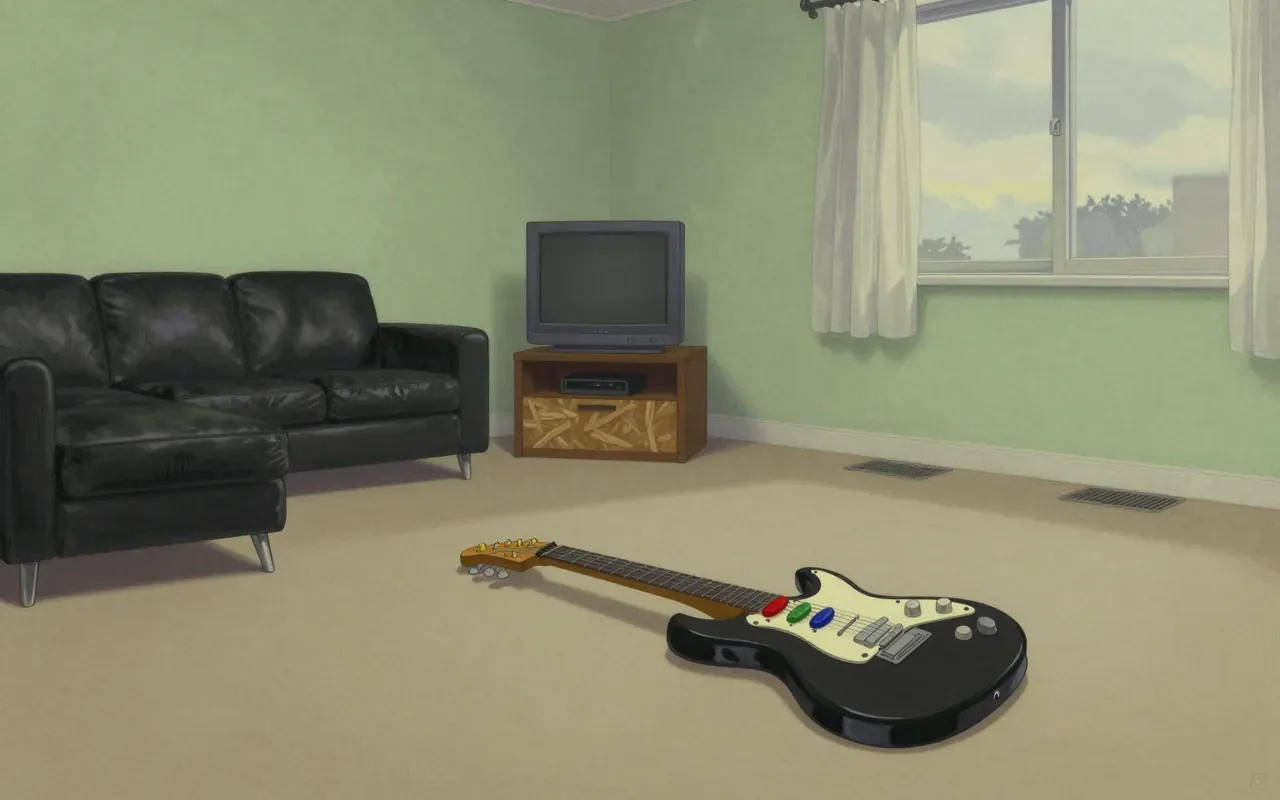
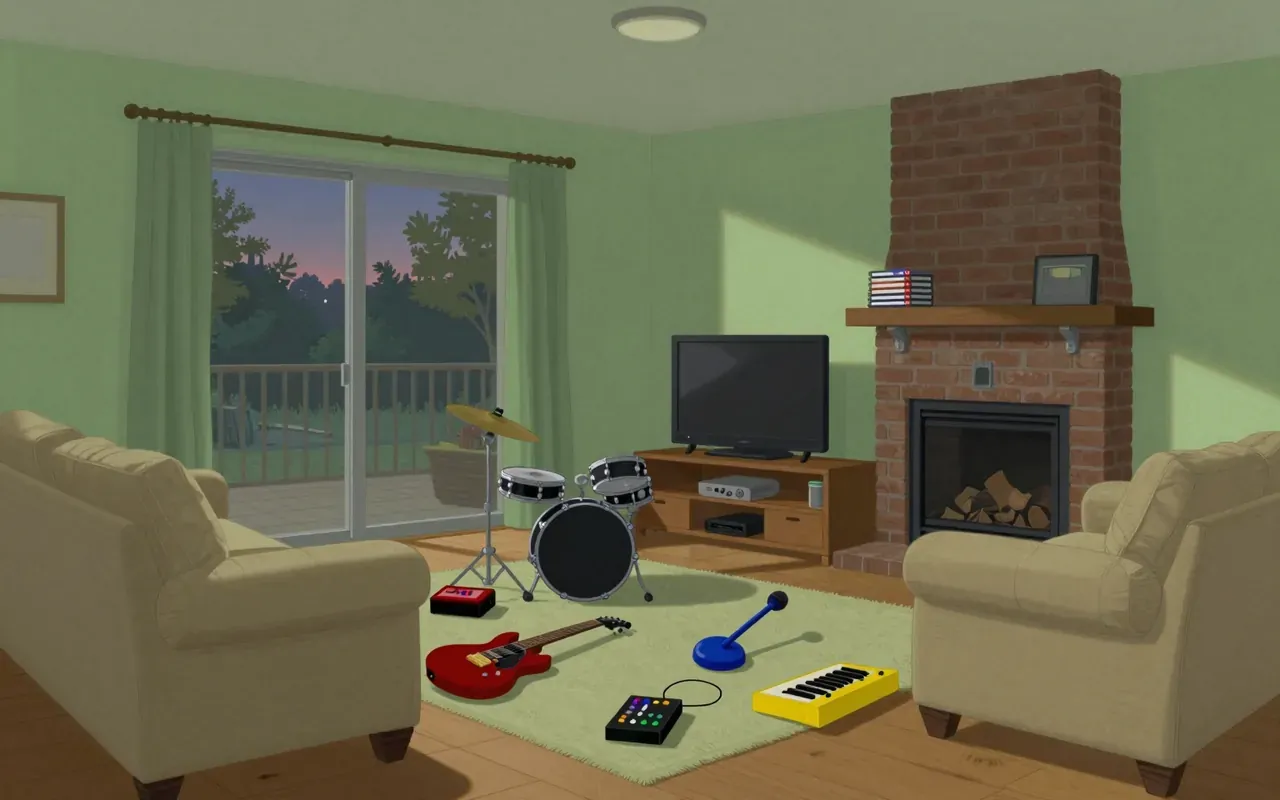
Rock Band is a four-player rhythm game released in November 2007 by Harmonix. It simulates live rock performance using dedicated peripherals: a Stratocaster-style guitar controller, a four-pad drum kit with kick pedal, and a USB microphone.
How it actually plays
Players press coloured fret buttons and strum for guitar and bass. They hit matching drum pads or step on a kick pedal for drums. They sing along to horizontally scrolling lyrics, matching pitch. Each instrument uses its own scrolling note lane—three vertical lanes for instruments, one horizontal band for vocals. Scoring rewards timing accuracy on instruments and pitch fidelity on vocals.
What works
The shared Overdrive mechanic forces real-time negotiation: activating it boosts score but only when all players agree. Failure recovery lets one player drop out without ending the song for everyone. Band World Tour ties venue progression to collective risk decisions—skip a tough gig or lose fans. The loop is tight: pick song, assign instruments, play, recover or restart, repeat.
What does not
Vocal scoring lacks nuance: it registers pitch but not tone, phrasing, or breath control. The Wii and PlayStation 2 versions omit features present on Xbox 360 and PlayStation 3. There is no solo path that meaningfully integrates all four roles—band play is cooperative by design, not choice.
Who it is for, and who it is not
It is for groups who treat games as social infrastructure—not for solo players, competitive players, or anyone unwilling to share screen time and agency. It is not for people who want deep individual progression, narrative, or technical vocal training.
Is it worth your time
Yes—if you have three others, a living room, and tolerance for shared failure. It demands coordination, not skill mastery. A session is a 3–5 minute song, repeated until all four players clear it together—or bail out mid-song using Overdrive. Without local multiplayer, it collapses into four parallel solos with no reason to stay.