What the game is
A 2016 2D fighting game, the first mainline KOF entry in over half a decade, and the series’ first fully 3D-rendered title. It belongs to SNK’s flagship franchise launched in 1994.
How it actually plays
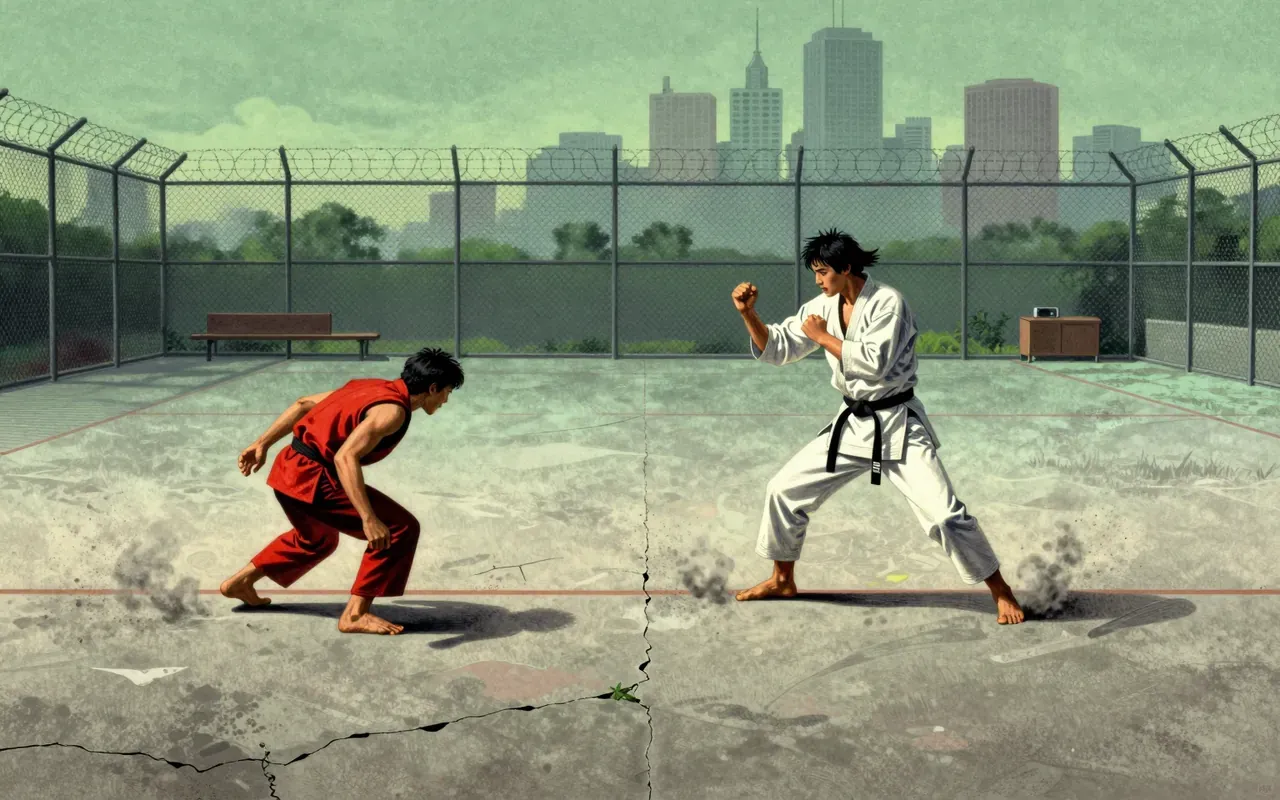
Players select a team of three fighters and fight through eight rounds on a 2D plane using full 3D models. Max Mode triggers a timed window for unlimited EX moves, with the timer modulated by character position. Supers cost one to three power bars — reduced by one bar when Max Mode is active. Just Defend lets players parry attacks. Rush Combo auto-generates combos and Desperation Moves when the energy bar fills, but deals less damage than manual execution. After eight rounds, players face two bosses.
What works
The three-fighter team system creates genuine momentum shifts and resource management across rounds. Max Super Special Moves and Climax Super Special Moves give clear escalation paths for comeback attempts. Just Defend rewards attentive defence with tangible counterpressure. The 2D plane preserves KOF’s horizontal rushdown identity despite 3D visuals.
What does not
Rush Combo undermines skill expression by rewarding button-mashing over timing and spacing. Max Mode’s position-sensitive timer adds confusion without strategic clarity. The 3D models introduce visual ambiguity in a genre where pixel-perfect reads are essential. It offers no online infrastructure, training mode depth, or rollback netcode in its original release.
Who it is for, and who it is not
It is for players who want a KOF-style team fighter with low entry barriers and visible feedback loops — especially those returning after years away or new to the series. It is not for players who demand technical rigour, deep frame-data literacy, or competitive parity.
Is it worth your time
It is worth your time if you want a modern SNK fighter that prioritises accessibility and team-based rhythm over precision or depth — but not if you need tight hitboxes, consistent frame data, or meaningful single-character mastery.