gamesbriefs
11:47in productionCh. 1 · Legacy in hardware/ 11:47 · ceiling 15 min
Fighting · Game design

Virtua Fighter 5

Virtua Fighter 5 doesn’t invite you in—it makes you earn every inch of the ring.

Virtua Fighter 5 is a rigorously tuned, system-first 3D fighter built for deep spatial and temporal literacy. Its design assumes player investment in frame data, ring geometry, and layered defensive logic—not spectacle or hand-holding.

Chapters & takeaways6
  1. 1:23
    Legacy in hardware

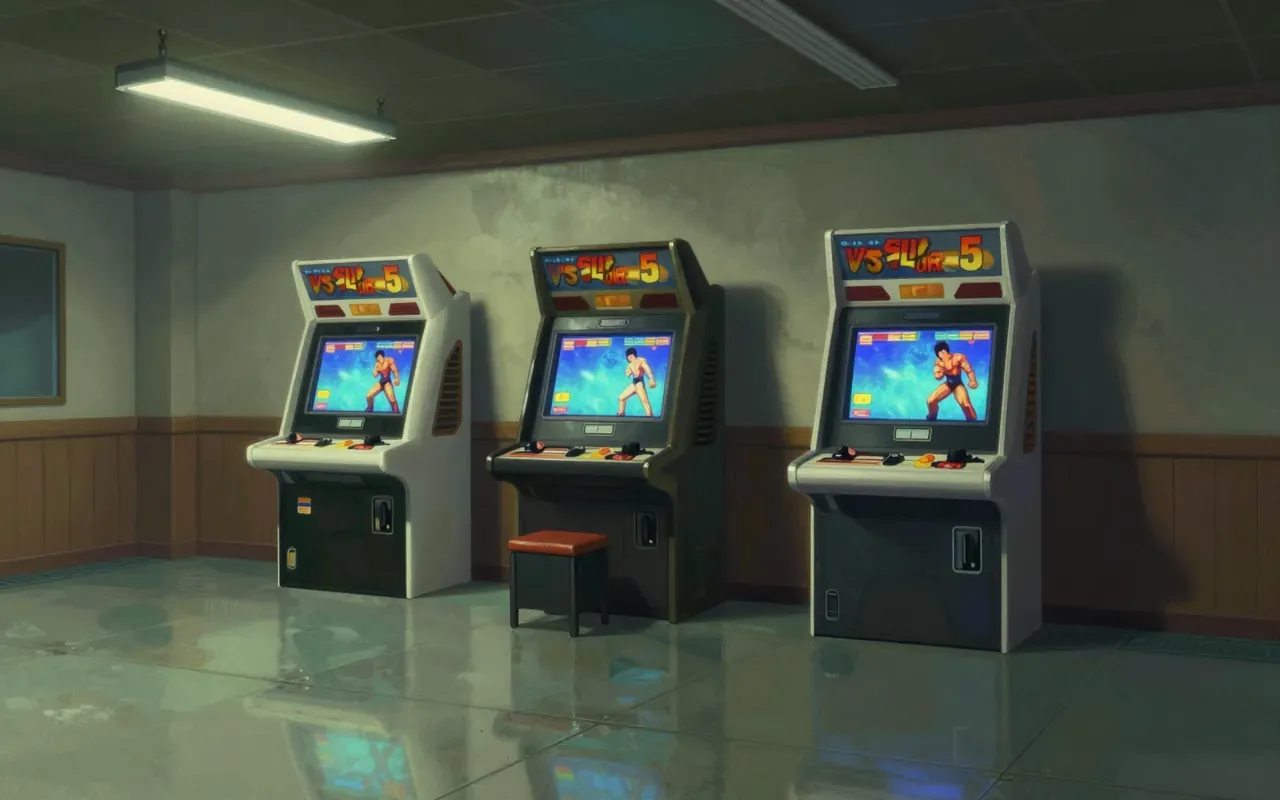
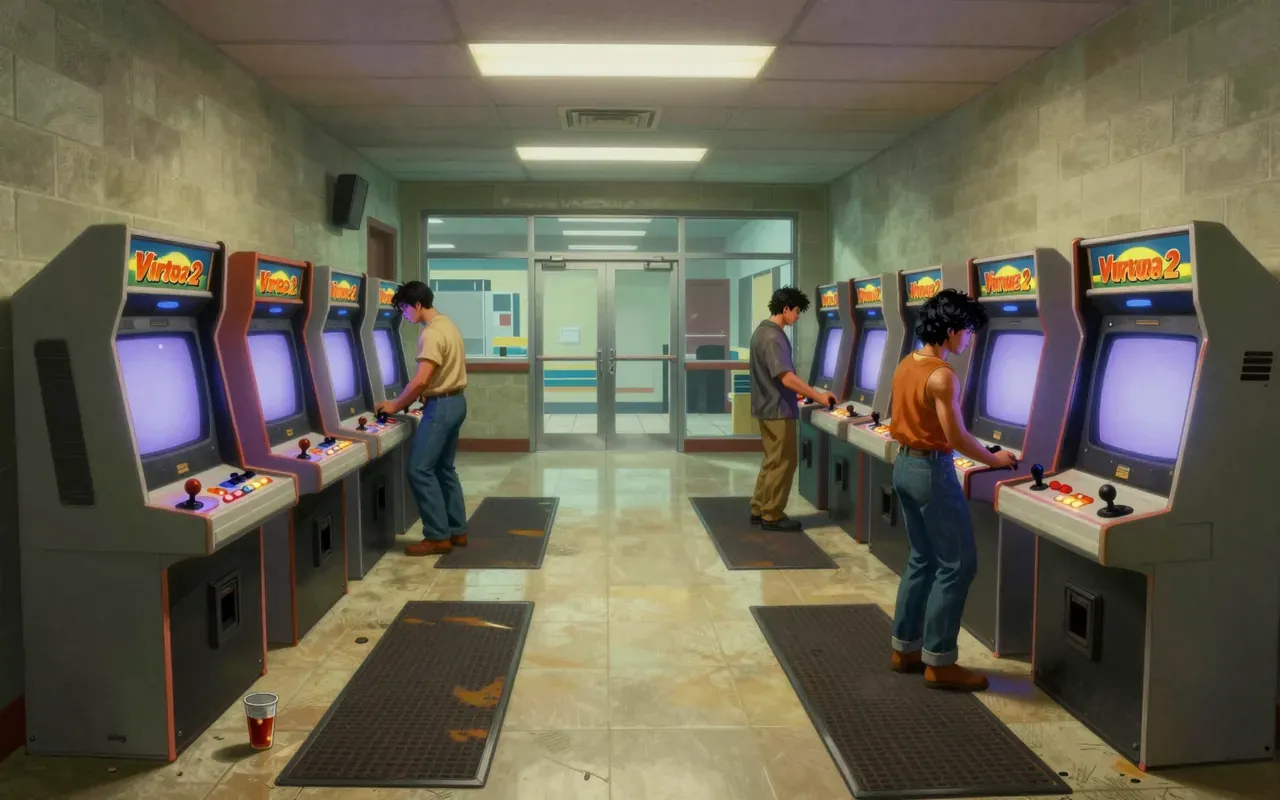
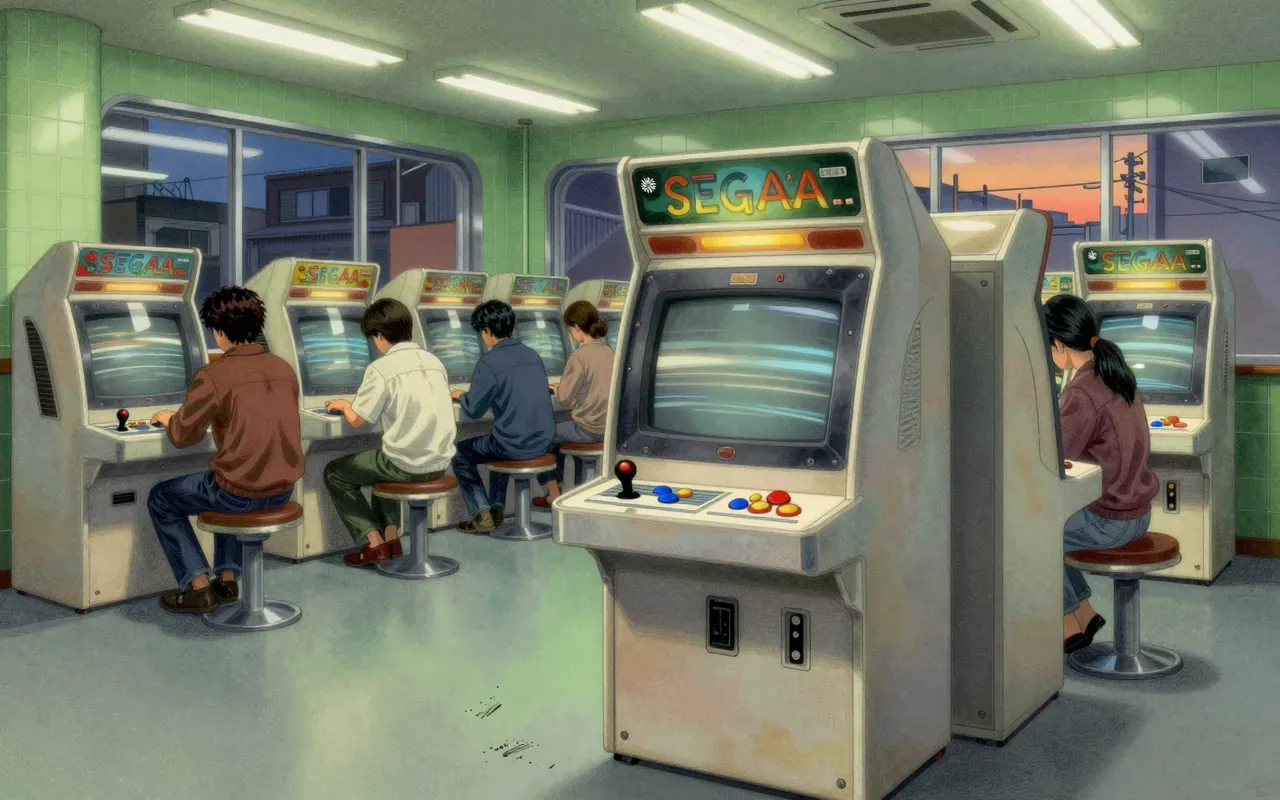
    Virtua Fighter 5 is the direct descendant of the first 3D fighting game—and built on three generations of arcade hardware evolution.

  2. 3:07
    Clash resets the clock

    The Clash System replaces reaction-based blocking with mutual, frame-perfect throw timing—resetting both players to neutral advantage.

  3. 4:29
    Evade becomes offence

    Offensive Move turns evasion into a forward-dashing commitment—with attack inputs mid-dash creating guaranteed stagger or crumple states.

  4. 5:31
    Juggles are physics-bound

    Bound combos are conditional: high-bound must land first, and success depends on opponent weight and stage type—not just input sequence.

  5. 6:44
    The ring is a variable

    Stages vary in ring geometry and wall configuration—and Wall Breaks only trigger from specific high attacks hitting opponents behind breakable walls.

  6. 8:02
    Throw speed is a trade-off

    Throws are slower overall (12 frames), but 0-frame variants return in guaranteed situations—preserving high-skill options without destabilising defence.

Worth your time?

Yes. Play the whole thing.

4.5/ 5
What works
  • Clash System symmetry
  • Offensive Move momentum
  • stage-based spatial variation
  • 0-frame throw preservation in evades
What does not
  • narrative
  • accessibility
  • tutorialisation
Play it if
  • system-thinkers
  • arcade-regulars
  • frame-data-literate-players
Skip it if
  • casual-fighters
  • story-driven-players
  • visual-feedback-reliant-players
The written brief2 min read

What the game is

Virtua Fighter 5 is a 2006 arcade-first 3D fighting game developed by Sega AM2. It is the fifth mainline entry in Sega’s foundational 3D fighting series—the first 3D fighting game ever—and the culmination of iterative refinement across Model 1, Model 2, and Model 3 hardware generations.

How it actually plays

Virtua Fighter 5 runs a frame-precise, spatially aware 3D fighting loop. Players evade, dash forward at an angle with Offensive Move, and chain stagger or crumple states into guaranteed combos. Throws take 12 frames by default—but drop to zero in evades. Clash System lets timed throws cancel attacks, resetting both players to neutral frame advantage. Bound combos require sequencing high-bound moves before low-bound ones, and only work on certain stages against certain weights. Wall Breaks occur only when high attacks hit opponents behind breakable walls.

What works

The Clash System creates clean, symmetrical risk-reward tension. Offensive Move transforms evasion into aggressive momentum. Stage variation—rings of differing shapes, weights, heights, and wall configurations—forces constant spatial recalibration. 0-frame throws in evades preserve high-skill expressiveness without breaking balance.

What does not

It does not accommodate casual play. There is no training mode scaffolding, no visual feedback for frame windows, no tutorialisation of the Bound System’s weight- and stage-dependent logic. Real-time commentary adds flavour but no pedagogy. The Clash System’s ‘moral’ framing does not soften its punishing neutrality: mis-timed throws leave you wide open.

Who it is for, and who it is not

It is for players who treat fighting games as systems to map, not stories to consume. It is not for players who rely on visual cues, auto-combos, or contextual assists. It assumes familiarity with frame data, ring geometry, and defensive layering.

Is it worth your time

Yes—if you want a fighting game that demands spatial memory, timing discipline, and system mastery. It does not offer narrative, spectacle, or accessibility. It asks for repetition, analysis, and patience. It rewards precision, not improvisation.
Same shelf · Fighting4 of 20
Up next in Games

Wave Race 64

Nintendo · 1996 · 8:36

Wave Race 64 is not about water — it’s about the geometry of obedience.

8:36