gamesbriefs
9:51in productionCh. 1 · Side-View Physics/ 9:51 · ceiling 15 min
Simulation · Retro

Lunar Lander (1979 video game)

Lunar Lander isn’t about the Moon—it’s about the weight of your own hand on a thruster handle.

Lunar Lander (1979) is a vector-based arcade game by Atari, Inc. that reduces piloting to rotation, thrust, and fuel. It offers no story, no characters, no world—only a side-view landscape, a fragile module, and the unblinking arithmetic of descent.

Chapters & takeaways4
  1. 0:58
    Side-View Physics

    It shows the Moon sideways—not as a destination, but as a vertical obstacle course drawn in glowing wire.

  2. 2:24
    Thruster = Time

    You don’t steer with buttons—you rotate and burn, trading fuel for control, one millisecond at a time.

  3. 4:16
    Fuel Is the Only Progression

    Every crash resets the map—but coins buy seconds, not stories.

  4. 5:48
    No Flavour, Just Figures

    The HUD tells you everything you need—and nothing you want.

Worth your time?

Yes. Play the whole thing.

3.5/ 5
What works
  • tactile thruster control
  • legible side-view vector display
  • sparse terrain forcing deliberate pathfinding
  • HUD presenting only essential data
What does not
  • narrative
  • progression
  • emotional stakes
Play it if
  • players who value mechanical clarity
  • players who treat repetition as refinement
Skip it if
  • players seeking pacing variety
  • players expecting systemic growth
The written brief1 min read

What the game is

Lunar Lander (1979) is an arcade game by Atari, Inc. that simulates piloting a lunar module in side-view using vector graphics. It is a pure physics-based landing simulator with fuel management, real-time orientation control, and coin-fed resource replenishment.

How it actually plays

The player rotates left or right and pulls a proportional thruster handle to control descent. Each landing or crash resets the terrain. Fuel depletes with thrust. Coins buy more fuel at any time. A close-up view triggers near touchdown. The HUD shows speed, altitude, fuel, score, and elapsed time.

What works

The proportional thruster handle delivers immediate, tactile feedback. The side-view vector display makes spatial relationships legible. Jagged terrain with sparse flat zones forces deliberate pathfinding. The HUD presents all critical data without clutter. The abort button provides a hard reset—a tactical escape, not a crutch.

What does not

It does not scale with skill. Difficulty levels alter responsiveness and gravity but do not deepen the loop. There is no narrative scaffolding, no feedback beyond HUD numbers, and no variation in objective—only land, crash, or abort. The terrain resets, but the challenge remains static.

Who it is for, and who it is not

It is for players who value mechanical clarity over narrative, restraint over reward, and repetition as refinement. It is not for players seeking pacing variety, emotional stakes, or systemic growth. It assumes no prior knowledge—but demands full attention from the first second.

Is it worth your time

Yes—if you want a stark, tactile lesson in vector-era physics simulation. It asks for patience, precision, and repeated failure. It gives no story, no progression beyond score, and no mercy. It is worth your time only as a focused, self-contained test of control under constraint.
Same strand · Simulation4 of 52
10:22
Colin McRae Rally (1998 video game)Codemasters · 1998Colin McRae Rally (1998) is a Codemasters rally simulation built around the 1998 World Rally Championship. It structures progression across three difficulty tiers — Novice (F2 front-wheel-drive), Intermediate (WRC four-wheel-drive), and Expert (Group B classics) — each with distinct cars and increasing challenge. Colin McRae and Nicky Grist provide authentic voice work, with McRae serving as the tutorial instructor. The game supports LAN multiplayer for up to eight players and two-player split-screen. A cheat-enabled Easter egg parodies the Barney and Betty Hill alien abduction incident. It was distributed in North America by Warner Bros. Interactive Entertainment.
8:58
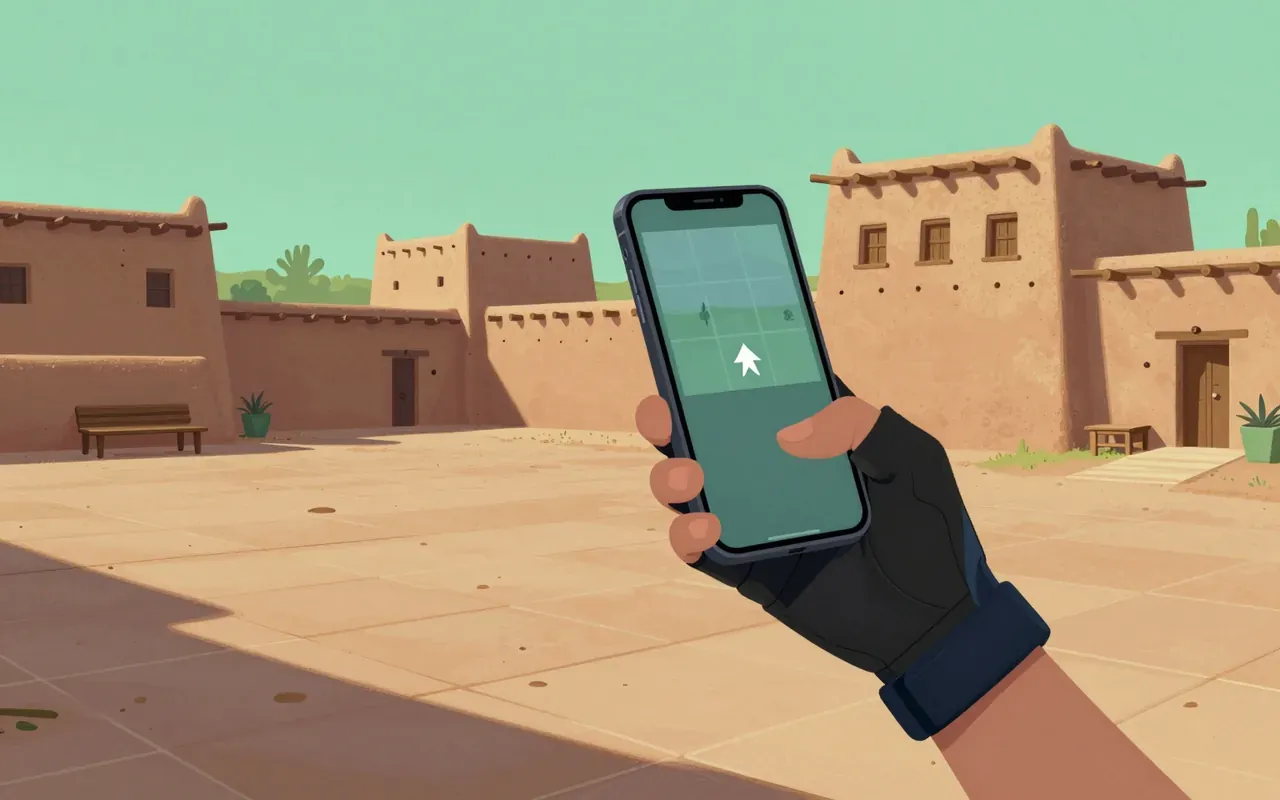
Fortnite CreativeEpic Games · 2018Fortnite Creative is a sandbox game mode developed by Epic Games. Players build custom worlds using Fortnite assets and publish them into the Fortnite Metaverse. Editing happens in real time via a handheld mobile phone tool. Players collaborate in Hubs capped at four people and teleport between islands using the Rift portal. Sessions support up to 100 players under custom rules. Each player may own up to 50 private islands. It is free-to-play across computer, console, and mobile platforms. Revenue comes from microtransactions, including the battle pass system.
10:18
Forza Motorsport (2005 video game)Turn 10 Studios · 2005Forza Motorsport (2005) is a simulation racing video game developed by Turn 10 Studios for Xbox. It was the inaugural title in a Microsoft Game Studios-commissioned series. It features licensed real-world cars, real and fictional tracks, arcade and career modes, driving assists, realistic vehicle damage, and deep car tuning.
10:51
Gran Turismo (1997 video game)Polyphony Digital · 1997Gran Turismo (1997) is a PlayStation sim racing game developed by Polyphony Digital. It emphasises realism through physics-driven handling, two distinct modes—Arcade and Simulation—and a curated roster of 140 cars from Japanese manufacturers. It was the first game to fully support the DualShock controller. It does not feature car damage. Its design prioritises mechanical fidelity over spectacle, progression over immediacy, and menu clarity over visual density.
Up next in Games

Marvel vs. Capcom: Clash of Super Heroes

Capcom · 1998 · 9:26

It trades fairness for fireworks — and never apologises.

9:26