gamesbriefs
7:45in productionCh. 1 · Timing Is Everything/ 7:45 · ceiling 15 min
RPG · Sound & music

Hatsune Miku: Project Diva

A rhythm game that treats Vocaloid characters as costumes, not collaborators — and rewards precision with more precision.

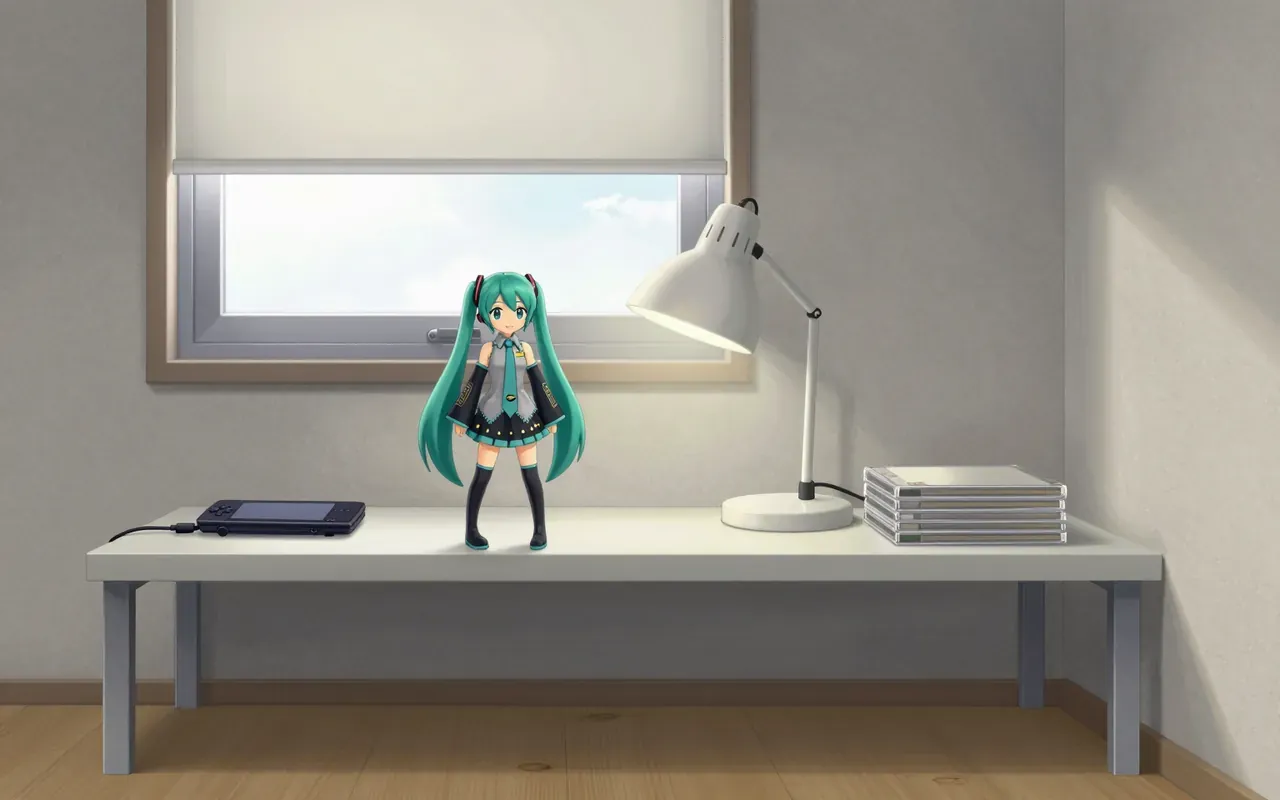
Hatsune Miku: Project Diva is a rhythm game where players press buttons in time with Vocaloid songs across five escalating difficulty levels. Modules — Vocaloid characters or costume variants — appear in music videos depending on song type (solo or duet), but are not controlled. Progression is strictly linear: clearing Normal unlocks Hard, and completing songs unlocks new songs. It was successful in Japan for Sega and linked to their 2010 holographic concert work. No narrative, no multiplayer, no customisation beyond module selection. It asks for timing discipline and rewards it with more timing challenges.

Chapters & takeaways4
  1. 0:56
    Timing Is Everything

    It is a rhythm game first: press buttons in time with on-screen prompts to Vocaloid songs.

  2. 2:04
    Characters You Watch, Not Control

    Modules are visual avatars, not agents — they appear in music videos based on song type, not player input.

  3. 3:17
    No Skipping Steps

    Five difficulty tiers unlock linearly — mastery of Normal is mandatory before Hard appears.

  4. 4:13
    More Songs, Not More Worlds

    Progress means unlocking more songs — and Sega’s Japanese success proves this loop resonated.

Worth your time?

Yes. Play the whole thing.

3.5/ 5
What works
  • module system ties visual identity to song choice and difficulty commitment
  • unlocking songs through completion creates clear forward momentum
  • five-tier difficulty ladder gives precise skill scaffolding
  • linking module appearance to song type makes selection meaningful
What does not
  • gives players control over module movement or choreography
  • supports multiplayer or asynchronous competition
  • allows remixing or customising music videos beyond module selection
  • decouples progression from repetition
Play it if
  • fans of Vocaloid music who want physical engagement with its rhythms
  • players who value structured, self-contained rhythm sessions with visible progression
Skip it if
  • players who require narrative or world-building
  • players seeking mechanical novelty beyond timing precision
The written brief1 min read

What the game is

Hatsune Miku: Project Diva is a PlayStation Portable rhythm game developed by Sega and Crypton Future Media. It uses Vocaloid songs performed by Hatsune Miku and other Vocaloids. Players press buttons to match on-screen prompts across escalating difficulty tiers. Progression unlocks new songs and higher difficulties sequentially.

How it actually plays

Players press buttons in time with on-screen sequences. Each song has five difficulty levels: Easy, Normal, Hard, Extreme, and sometimes Extra Extreme. Higher difficulties unlock only after clearing lower ones. Players choose modules — Vocaloid characters or costume variants — who appear in music videos but are not directly controlled. Module appearance depends on song type: solo songs show one module; duets show two.

What works

The module system ties visual identity to song choice and difficulty commitment. Unlocking songs through completion creates clear forward momentum. The five-tier difficulty ladder gives precise skill scaffolding. Linking module appearance to song type (solo/duet) makes selection meaningful, not cosmetic.

What does not

It does not give players control over the modules’ movement, expression, or choreography. It does not let players remix or customise music videos beyond module selection. It does not support multiplayer or asynchronous competition. It does not decouple progression from repetition — unlocking songs requires replaying cleared tracks.

Who it is for, and who it is not

It is for fans of Vocaloid music who want to engage physically with its rhythms and visually with its characters. It is for players who value structured, self-contained rhythm sessions with visible progression. It is not for players who require narrative, world-building, or mechanical novelty beyond timing precision.

Is it worth your time

It is worth your time if you want a rhythm game built around Vocaloid fandom, tight song progression, and visual spectacle tied to character selection. It is not worth your time if you expect player agency beyond timing inputs or seek narrative, exploration, or mechanical variety beyond difficulty scaling.
Same strand · RPG4 of 64
10:46
Final Fantasy XIV: StormbloodSquare Enix · 2017Stormblood is a systemic expansion — not a story one. It builds around constraints: fixed-level raids, XP loss on death, mecha-bound PvP, and jobs that start mid-level. It rewards precision, repetition, and group discipline. It withholds flexibility, narrative integration, and trial access to its hardest content.
9:43
The Outer WorldsObsidian Entertainment · 2019The Outer Worlds is a first-person action RPG where player agency is enforced by rigid, upfront stat choices — not narrative illusion. It runs on Windows, PS4, and Xbox One. Its world is built on corporate terraforming, not starship dogfights. Every dialogue option, inventory slot, and stealth path is earned, not granted.
7:42
TorchlightRunic Games · 2009Torchlight is a single-player action role-playing game released for Windows on October 27, 2009. It was developed by Runic Games and published by Perfect World Entertainment and Encore, Inc. The game is set in the fictional town of Torchlight and the caverns and dungeons nearby. Players control a lone hero who explores randomized dungeons built from hand-designed modular chunks. Combat is point-and-click on PC. The loop is clear: descend, kill monsters in large groups, collect loot, return to the single town hub to sell, buy, and accept quests. Quests drive progression through unique boss battles. Side and random quests offer optional detours. The modular chunk system creates dungeons with intention—not randomness for its own sake. Levers open secret doors. Bridges move. Rooms connect meaningfully. The isometric-like overhead perspective gives spatial clarity. Loot drops frequently and visibly. The town hub is lean: one place to sell, buy, and take quests—no filler. It does not support co-op or multiplayer. It offers no character customisation beyond class choice. There is no endgame beyond completing the main questline and replaying with new classes. The town hub is static and unchanging. No lore depth or worldbuilding beyond functional exposition.
9:09
Blade & SoulNCSoft · 2012Blade & Soul is a Wuxia-themed MMORPG developed and published by NCSoft. Launched in June 2012, it was NCSoft’s first MMORPG since Aion in 2008. It features open-world exploration, real-time combo-based combat, four folklore-inspired races, and extensive character customisation.
Up next in Games

Heroes of Newerth

S2 Games · 2010 · 9:45

Heroes of Newerth isn’t a relic — it’s a control group for everything MOBAs later softened.

9:45