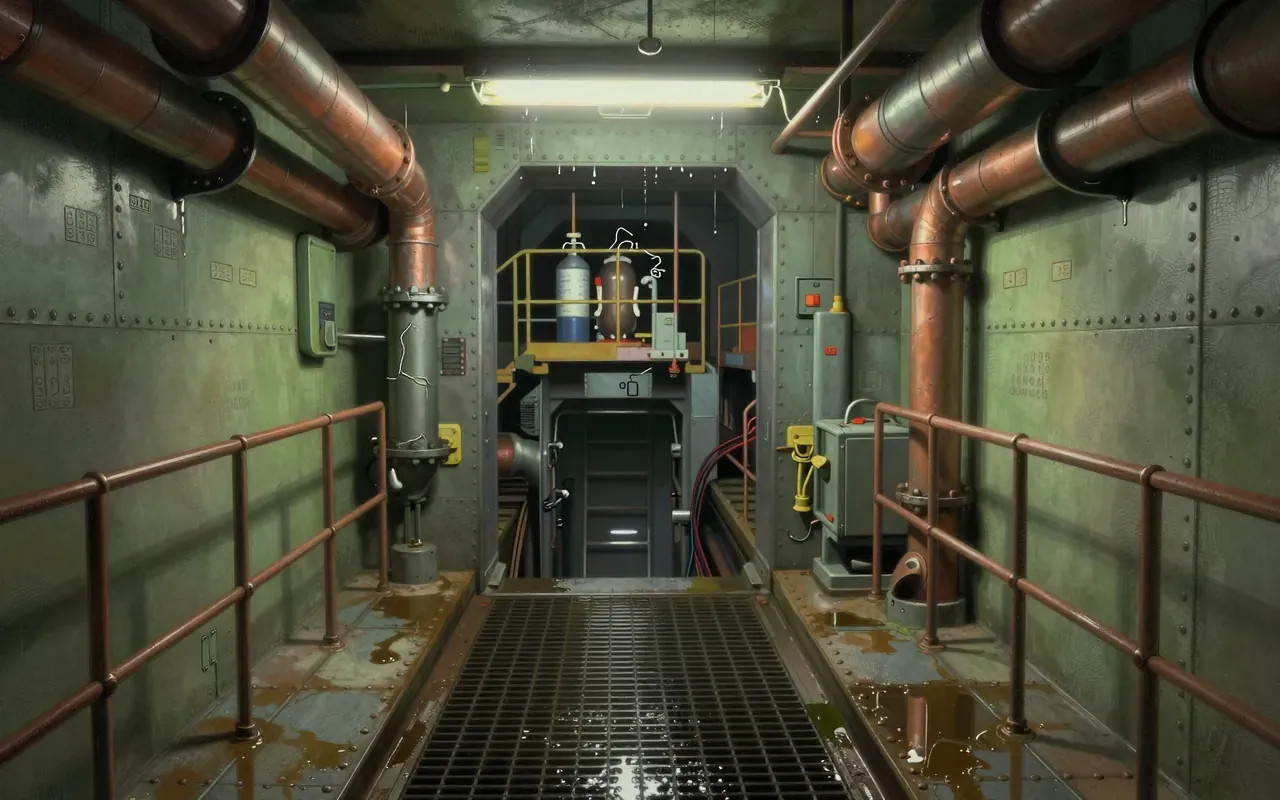
System Shock 2 forces you to learn its ship, its rules, and its horrors—then punishes hesitation.
System Shock 2 is a first-person action role-playing survival horror game set aboard a starship in a cyberpunk 2114. You play as a soldier fighting a genetic infection through combat, exploration, and skill development. Gameplay consists of first-person combat and exploration, with role-playing elements including hacking and psionic abilities. Navigation is first-person with a HUD showing character/weapon info, map, and drag-and-drop inventory. The game fuses FPS immediacy with RPG consequence, demanding patience and attention from the player.
You are a soldier on a dying starship in 2114, fighting a genetic infection no one fully understands.
2:11
How you move and fight
You fight with melee and guns, navigate in first-person, and manage everything through a functional HUD: map, inventory, status.
3:24
How you grow
Every ability—from hacking doors to psionic bursts—is earned, upgraded, and embedded in how you survive.
4:54
What genre it actually is
It is not just horror or just RPG—it is both, fused so tightly that neither works without the other.
Worth your time?
Yes. Play the whole thing.
4.5/ 5
What works
fusion of FPS immediacy and RPG consequence
starship feels lived-in and hostile
HUD supports immersion without breaking it
threat feels personal and escalating
What does not
explain itself
ease you in
withhold context
map clarity
Play it if
players who value systemic tension over spectacle
who enjoy deciphering environments
who treat skill trees as tactical tools
Skip it if
players who need frequent rewards
explicit goals
forgiving difficulty curves
The written brief1 min read
What the game is
A first-person action role-playing survival horror game set aboard a starship in a cyberpunk 2114. You play as a soldier fighting a genetic infection through combat, exploration, and skill development.
How it actually plays
You move in first-person through a derelict starship. You fight infected enemies with melee and projectile weapons. You navigate using a HUD showing map, inventory, and status. You upgrade skills like hacking and psionics between encounters. Combat is tense and resource-limited. Exploration is slow, deliberate, and often claustrophobic.
What works
The fusion of FPS immediacy and RPG consequence works. Every weapon choice, skill point, and hacked terminal changes your next encounter. The starship feels lived-in and hostile. The HUD supports immersion without breaking it. The threat feels personal and escalating.
What does not
It does not explain itself. It does not ease you in. It withholds context, map clarity, and enemy feedback. Its HUD is functional but dense. Its narrative unfolds through logs and environmental decay—not cutscenes or exposition.
Who it is for, and who it is not
It is for players who value systemic tension over spectacle, who enjoy deciphering environments, and who treat skill trees as tactical tools. It is not for players who need frequent rewards, explicit goals, or forgiving difficulty curves.
Is it worth your time
Yes—if you want a tightly wound survival horror loop fused with RPG progression on a decaying starship. No—if you expect modern pacing, hand-holding, or clear signposting. It demands patience, attention, and tolerance for ambiguity.