gamesbriefs
9:32in productionCh. 1 · What It Is/ 9:32 · ceiling 15 min
Strategy · Retro

Age of Empires II

Age of Empires II is not history—it’s a clockwork engine that makes empire feel like arithmetic.

Age of Empires II is a real-time strategy game developed by Ensemble Studios in 1999, running on the Genie Game Engine. It is the second title in the original Age of Empires series. Players advance one of 13 civilizations through four historical Ages to build towns, gather resources, create armies, and defeat opponents.

Chapters & takeaways4
  1. 1:00
    What It Is

    It is a foundational real-time strategy title—not a spin-off, not a remake, but the second entry in the original series.

  2. 2:50
    How Time Moves

    Four Ages impose strict pacing: advancement requires both construction and payment, turning time into a resource.

  3. 4:19
    How Resources Work

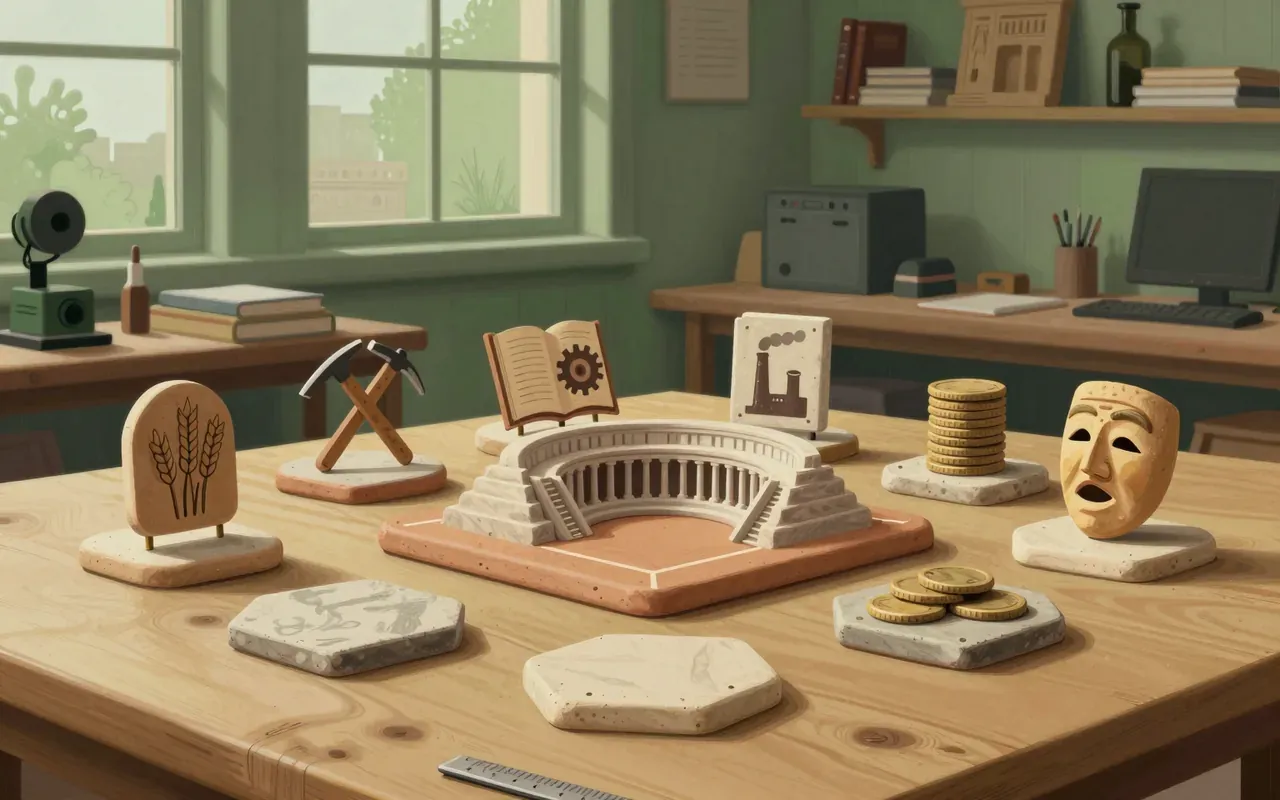
    Food, wood, gold, and stone are gathered through discrete, non-overlapping methods—each demanding terrain awareness and planning.

  4. 5:43
    What the Engine Allows

    The Genie Game Engine defines its limits: no dynamic camera, no unit stacking, no persistent world state—just deterministic simulation.

Worth your time?

Yes. Play the whole thing.

4.5/ 5
What works
  • four-resource loop creates distinct early/mid/late economic rhythms
  • Age progression imposes meaningful pacing
  • civilisation-specific bonuses and unique units deliver tangible asymmetry without complexity bloat
What does not
  • support co-op campaign play
  • abstract or streamline late-game micromanagement
  • decouple victory conditions from military dominance in most scenarios
  • offer modding tools or persistent progression outside campaigns
Play it if
  • players who value deliberate pacing, systemic clarity, and historical scaffolding
  • players who enjoy building toward a defined end-state across multiple sessions
Skip it if
  • players who need instant feedback
  • players who need minimal UI friction
  • players who need narrative immersion beyond mission briefings
The written brief1 min read

What the game is

A real-time strategy game developed by Ensemble Studios in 1999, running on the Genie Game Engine. It is the second title in the original Age of Empires series. Players advance one of 13 civilizations through four historical Ages to build towns, gather resources, create armies, and defeat opponents.

How it actually plays

Players gather food, wood, gold, and stone using gendered-but-identical villagers. They build houses to raise population caps, construct age-gated buildings, and pay resource costs to advance through four Ages over a 1,000-year timeframe. Advancement unlocks new units, structures, and technologies. Combat follows rock-paper-scissors unit counters. Players can win by military conquest, Wonder construction, relic control, or other scenario-specific objectives.

What works

The four-resource loop—food (hunting, berries, livestock, farming, fishing), wood (tree-chopping), gold (mines, trade, relics), and stone (quarries)—creates distinct early/mid/late economic rhythms. Age progression imposes meaningful pacing: each tier gates power, demands infrastructure investment, and forces strategic recalibration. Civilisation-specific bonuses and unique units deliver tangible asymmetry without complexity bloat.

What does not

It does not support co-op campaign play. It does not abstract or streamline late-game micromanagement. It does not decouple victory conditions from military dominance in most scenarios. It does not offer modding tools or persistent progression outside campaigns.

Who it is for, and who it is not

It is for players who value deliberate pacing, systemic clarity, and historical scaffolding—not realism—and who enjoy building toward a defined end-state across multiple sessions. It is not for players who need instant feedback, minimal UI friction, or narrative immersion beyond mission briefings.

Is it worth your time

Yes—if you want a tightly scoped, historically themed RTS with clear progression, asymmetrical civ design, and campaign-driven variety. No—if you expect modern QoL, accessibility, or narrative depth beyond historical framing.
Same strand · Strategy4 of 31
Up next in Games

AI: The Somnium Files

Spike Chunsoft · 2019 · 10:21

This game refuses to tell you its story until you’ve lived every version of it — and that’s not a flaw, it’s the point.

10:21