gamesbriefs
8:53in productionCh. 1 · What kind of game is it?/ 8:53 · ceiling 15 min
Strategy · Genres

Plants vs. Zombies (video game)

Plants vs. Zombies is not about zombies—it’s about sun, squares, and the quiet pressure of a ticking lane.

Plants vs. Zombies is a tower defence and strategy video game developed and originally published by PopCap Games for Windows and OS X in May 2009.

Chapters & takeaways4
  1. 1:19
    What kind of game is it?

    It is a tower defence and strategy game—not an action or RPG hybrid.

  2. 2:51
    How do you actually play?

    You defend a house on the left by placing plants on a grid while managing sun and reacting to zombie waves.

  3. 4:08
    What makes the combat work?

    Plants have fixed, non-overlapping roles—and zombies have matching, predictable weaknesses.

  4. 5:38
    What shapes the rhythm?

    Sun is your only currency—and waves escalate density, not novelty.

Worth your time?

Yes. Play the whole thing.

4/ 5
What works
  • The grid enforces deliberate spatial choices.
  • Sun economy creates constant low-stakes tension.
  • Each plant's role is instantly legible and non-redundant.
  • Zombie types expose plant functions without obscuring them.
What does not
  • It does not introduce new plant-zombie interactions after the first dozen levels.
  • It does not vary the grid size, lane count, or house position.
  • It does not allow plant repositioning once placed.
  • It does not feature multiplayer or asynchronous competition.
Play it if
  • Players who value clarity over complexity.
  • Players who enjoy rhythm-based resource management.
  • Players who prefer visual feedback to numerical stats.
Skip it if
  • Players who need evolving rulesets or systemic surprise.
  • Players who dislike repeated wave structures.
  • Players who expect narrative integration with gameplay.
The written brief1 min read

What the game is

A tower defence and strategy video game developed and published by PopCap Games for Windows and OS X in May 2009.

How it actually plays

The player places plants on a grid-based lawn with the house on the left. Zombies advance along parallel lanes in escalating waves. Sun drops from the sky and must be collected to buy and place plants. Each plant has a fixed function: shoot, explode, block, or support. Each zombie type behaves differently and is weak to specific plants. A single zombie reaching the house ends the level.

What works

The grid forces deliberate lane-level decisions. Sun as a real-time resource creates tension between saving and spending. Plant roles are distinct and legible: shooter, blocker, exploder, supporter. Zombie behaviours map cleanly to plant counters. Waves escalate density—not complexity—keeping the loop clear and repeatable.

What does not

It does not scale depth beyond its core loop. Later levels rely on pattern recognition over new strategic challenges. No plant or zombie introduces a rule-breaking mechanic—only variations on existing ones. The grid, sun economy, and wave structure remain static throughout.

Who it is for, and who it is not

Players who want accessible strategy with immediate feedback and visual clarity. Not for players seeking emergent systems, deep customisation, or narrative weight. Not for those who dislike repetition-as-teaching or grid-based spatial puzzles.

Is it worth your time

Yes—if you want a tightly scoped tower defence game that teaches its systems through repetition and variation, not tutorials. It asks for attention to lane management, sun economy, and plant synergy. It does not ask for reflexes, memorisation of obscure mechanics, or long sessions.
Same strand · Strategy4 of 41
9:50
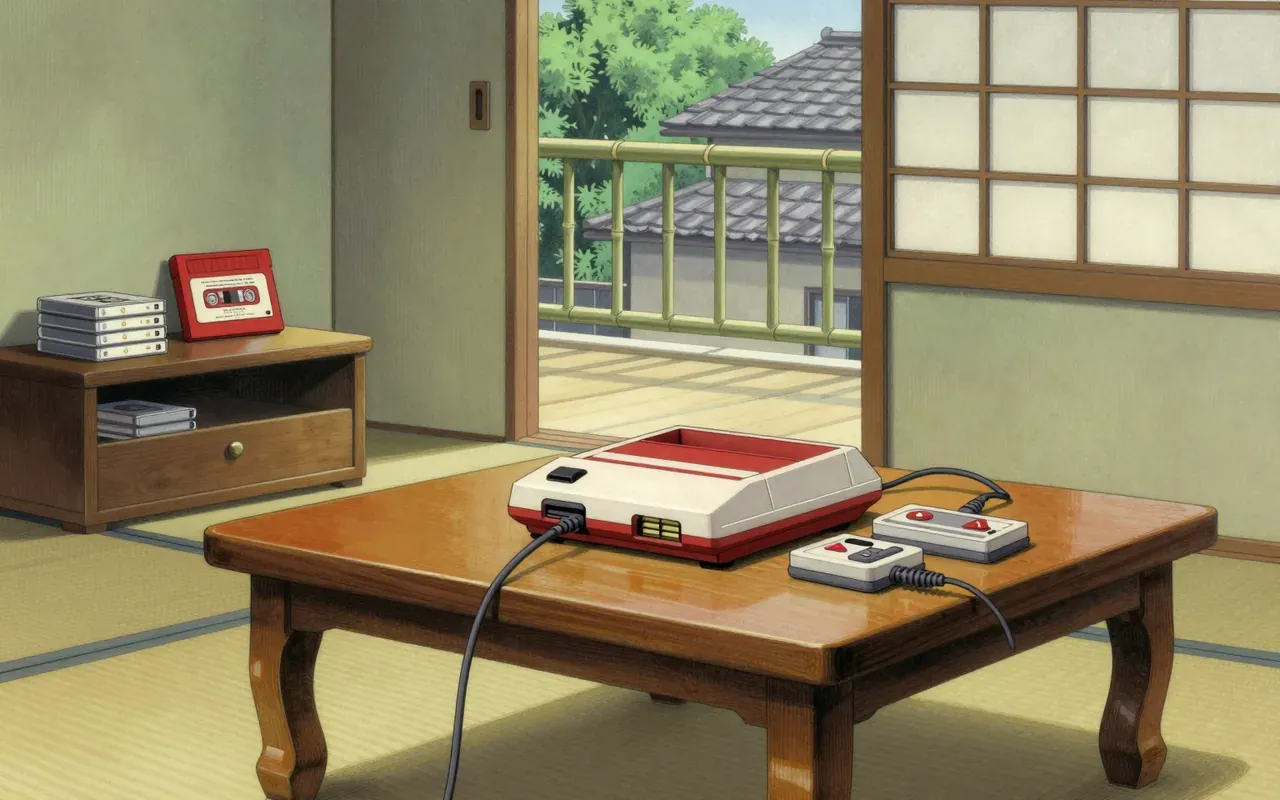
Famicom WarsNintendo · 1988Famicom Wars is Nintendo’s 1988 turn-based strategy game for the Famicom. Players command Red Star or Blue Moon across 15 initial maps, aiming to capture the enemy headquarters or eliminate all enemy units in one turn. Each turn provides funds to build units at owned factories, seaports, and airports; conquering cities near headquarters yields extra funds. Only foot soldiers can conquer cities, enabling repair/refuelling. Unit roles differ in firepower and support. Two secret ending maps unlock depending on the nation chosen against the CPU.
10:13
Shining ForceSega · 1992Shining Force is a turn-based tactical role-playing game published by Sega during its console era (1983–2001), grouped with franchises like Phantasy Star and Megami Tensei. Battles occur on square grids: units move by Move stat, act once per turn (attack, cast, use item, or search), and turn order combines agility and randomness. Units gain EXP from combat and supportive actions like healing, enabling level progression. Allied units are individually characterized—each with background and personality—similar to Fire Emblem. Exploration mode functions as a traditional Japanese-style RPG, with Max representing the army outside battle. No claims support narrative branching, real-time elements, or modern UX features.
10:48
Squad (video game)Offworld Industries · 2015Squad is a realism-based military tactical first-person shooter developed and published by Offworld Industries in 2015. It is exclusively distributed via Steam.
9:00
Aion (video game)NCSoft · 2008Aion (2008) is an MMORPG by NCSoft that merges PvP and PvE into a single territorial combat system—confined to the Abyss and Balaurea—where Legions battle players and NPCs alike for fortress control using siege weapons from PvE raids. Skills unlock in fixed chains, with later abilities more powerful and strictly dependent on earlier ones. Faction-based PvP is limited to opposing races, with no exceptions outside duels, the Arena, or Panesterra. Controlling a fortress funds the Legion and grants faction-wide vendor discounts and travel perks. The design demands coordination, sequencing discipline, and commitment to a rigid zone-and-race framework.
Up next in Games

Portal (video game)

Valve · 2007 · 10:07

Portal doesn’t teach physics — it makes you feel them, then weaponises the feeling.

10:07