What the game is
Wizardry: Proving Grounds of the Mad Overlord is a 1981 dungeon-crawl RPG developed and published by Sirotech Software. It is the first entry in the Wizardry series. Players navigate a ten-level text-and-line-graphic dungeon to defeat Werdna and retrieve an amulet.
How it actually plays
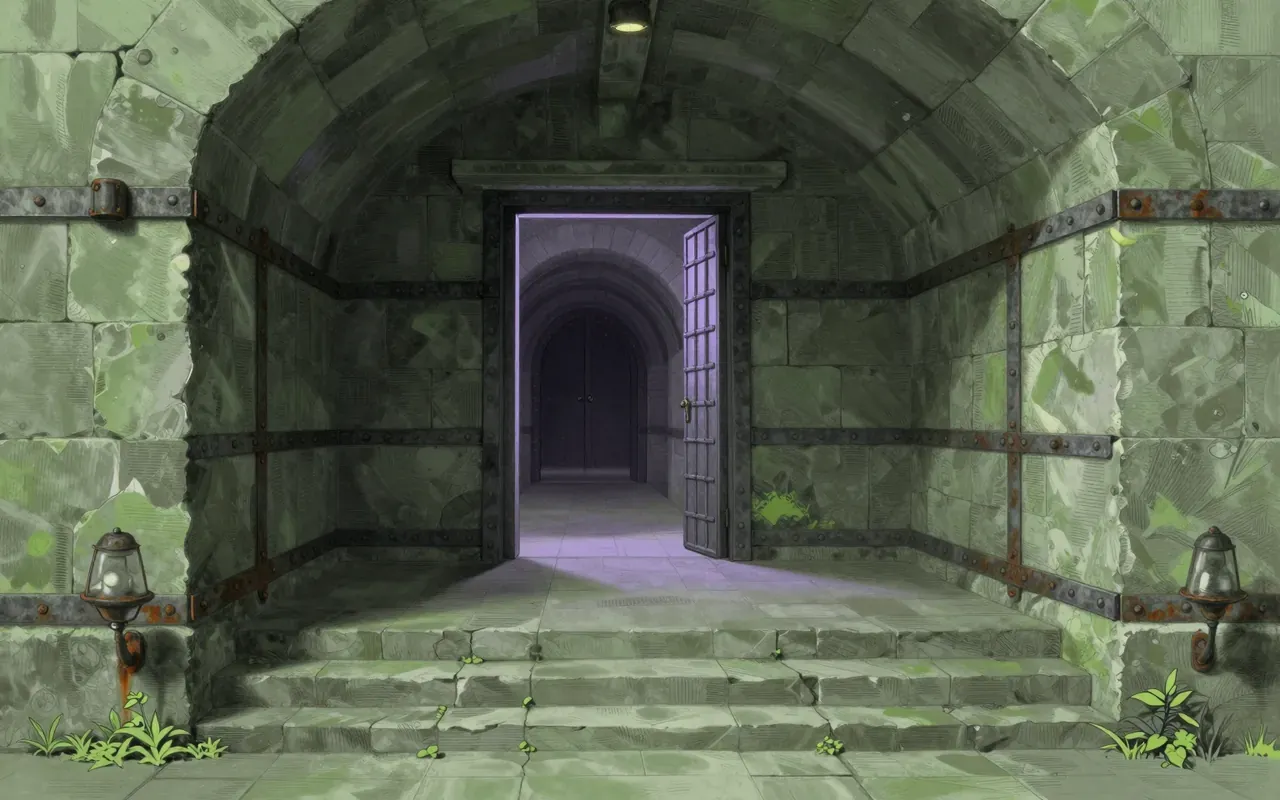
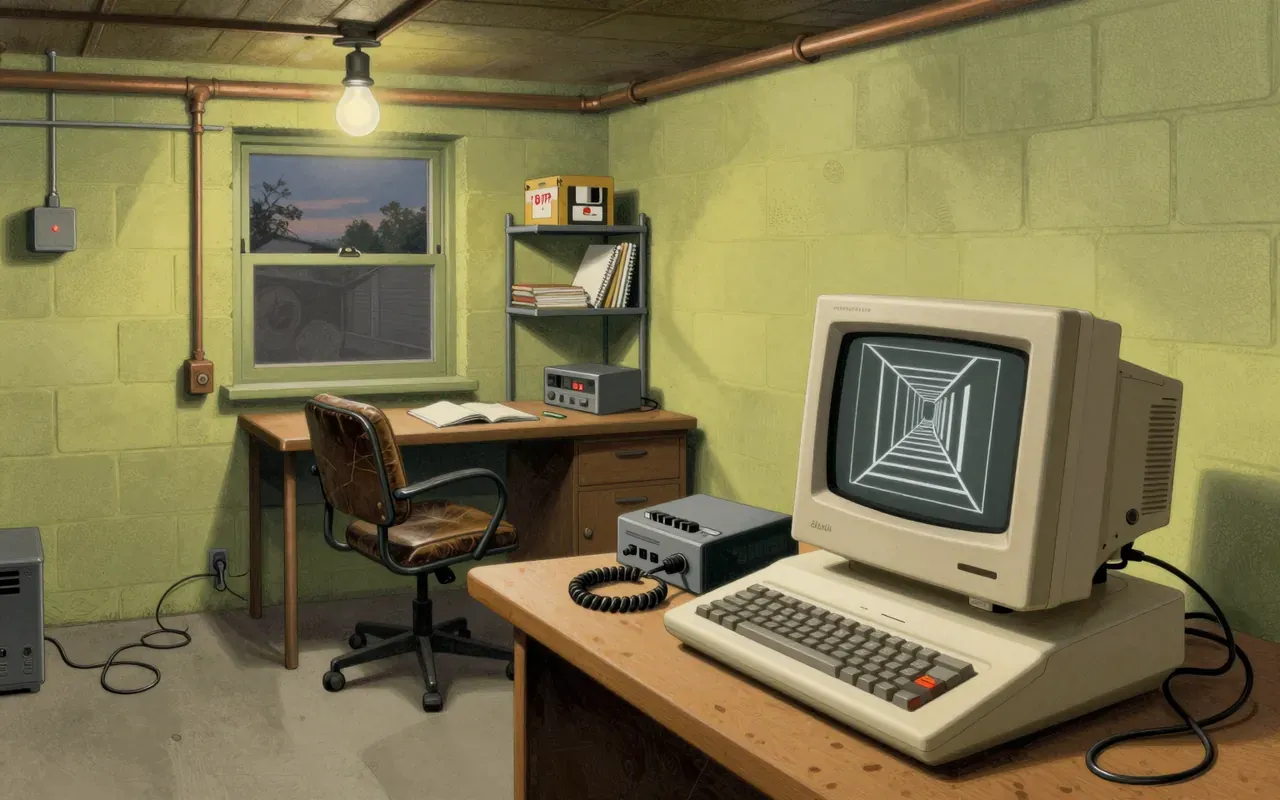
Players assemble a party of up to six characters using text menus, choosing from five races, three alignments, and eight classes — four basic and four elite unlocked by progression. Good and evil characters cannot coexist in the same party. After equipping in a text-only town interface, the party enters a ten-level dungeon beneath Trebor’s castle. Each level is a first-person line-graphic maze where most of the screen is text. The goal per level is to locate stairs or an elevator downward without dying. There is no in-dungeon saving. Magic-users learn spells across seven tiers as they gain levels. Permanent party death applies.
What works
The party-building system forces deliberate trade-offs across race, alignment, and class. The dungeon’s ten-level structure creates clear progression. The first-person perspective focuses attention on spatial reasoning and tactical positioning. Spell tiers give magic users meaningful long-term goals. The absence of saving makes every decision weighty.
What does not
It does not support in-dungeon saving. It does not allow mixed-alignment parties. It does not provide an automap. It does not visualise space beyond sparse line graphics. It does not soften consequences: death is permanent. It does not explain its systems in-game. It does not scale difficulty gracefully — it escalates through attrition and obscurity.
Who it is for, and who it is not
It is for players who value historical design constraints as content — those who treat mapping, inventory management, and alignment enforcement as core gameplay. It is not for players who expect guidance, forgiveness, or narrative scaffolding. It is not for anyone unwilling to treat the screen as a ledger and graph paper as essential equipment.
Is it worth your time
It is worth your time only if you want to experience the foundational constraints of early RPG design: manual mapping, irreversible consequences, and rigid party composition. It does not offer accessibility, narrative depth, or mechanical variety. It asks for patience, note-taking, and tolerance for repetition — not curiosity about story or character.