What the game is
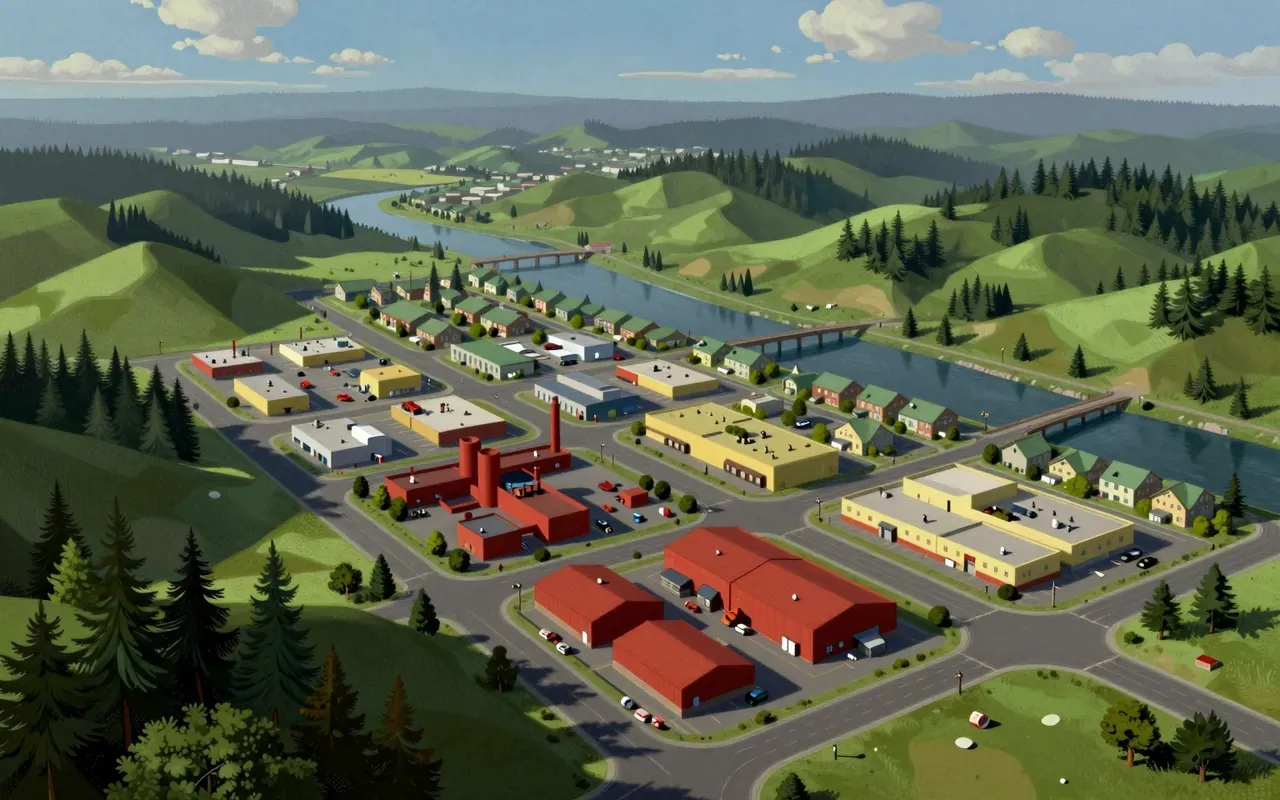
A PC-based city-building simulation developed by Colossal Order and published by Paradox Interactive in 2015. It is a single-player, open-ended urban planning tool focused on zoning, infrastructure, services, and district-level regulation.
How it actually plays
Players begin on a 2-by-2-kilometre plot with a highway interchange, water access, and starting funds. They place roads, then residential, industrial, and commercial zones, plus power, water, and sewage to attract residents and jobs. Budget, health, employment, traffic, and pollution must be actively managed. Districts can be drawn and configured with rules like transport subsidies or vehicle bans. City improvements unlock at population thresholds. Sandbox mode removes constraints.
What works
The district system lets players enforce localised policies—like banning fossil-fuel vehicles or subsidising public transport—creating tangible cause-and-effect loops. The modding ecosystem is deeply supported: one full-time programmer maintains modding tools. Starting conditions are clear and scalable: a defined plot, fixed utilities, and incremental unlocks tied to population.
What does not
It does not simulate individual citizens’ lives, political institutions, or economic shocks. It does not model construction time, supply chain dependencies, or real-world policy trade-offs like equity or gentrification. Traffic is a system-level metric, not a behavioural simulation. There is no campaign, story, or win condition beyond self-imposed goals.
Who it is for, and who it is not
It is for players who enjoy modelling complex systems, tweaking parameters, and observing emergent outcomes over hours. It is not for players seeking narrative, competition, co-operation, or rapid feedback. It assumes comfort with spreadsheets, maps, and abstraction.
Is it worth your time
Yes—if you want to spend evenings diagnosing traffic flow, adjusting tax rates by district, or designing transit corridors that actually move people. It asks for patience, systems literacy, and tolerance for trial-and-error. It does not ask for reflexes, narrative engagement, or social coordination.