gamesbriefs
9:51in productionCh. 1 · A Complete Reinvention/ 9:51 · ceiling 15 min
Racing & sports · Game design

Burnout Paradise

Burnout Paradise doesn’t give you a map — it gives you a city, a car, and permission to break both.

Burnout Paradise is a racing game where the city is the only level, the car is the only tool, and crashing is the only score.

Chapters & takeaways4
  1. 1:23
    A Complete Reinvention

    This is not an evolution — it is a full-system reset of the Burnout formula.

  2. 2:48
    Showtime Anywhere

    Showtime isn’t Crash Mode remixed — it’s physics-driven chaos with no start or finish line.

  3. 4:06
    Licence, Not Level

    Progression lives in your licence and rank — not menus, not cutscenes, not checkpoints.

  4. 5:38
    No Mode Boundaries

    Cops and Robbers doesn’t sit beside other modes — it erupts from the same streets you just raced down.

Worth your time?

Yes. Play the whole thing.

4.5/ 5
What works
  • showtime-anywhere
  • driver-license-tracking
  • player-directed-progression
  • cops-and-robbers-online
What does not
  • story
  • narrative
  • precision-driving
  • linear-progression
Play it if
  • players-who-treat-cities-as-terrain
  • those-who-prefer-emergent-fun
  • players-who-dislike-waypoints-or-mission-logs
Skip it if
  • players-who-rely-on-tutorials
  • those-who-need-clear-goals
  • technical-racing-purists
The written brief1 min read

What the game is

Burnout Paradise is an open-world racing game set in Paradise City. It replaces fixed race routes and Crash Mode with context-agnostic Showtime and player-directed challenges. It is a complete reinvention of the Burnout series, built by Criterion Games on the RenderWare engine.

How it actually plays

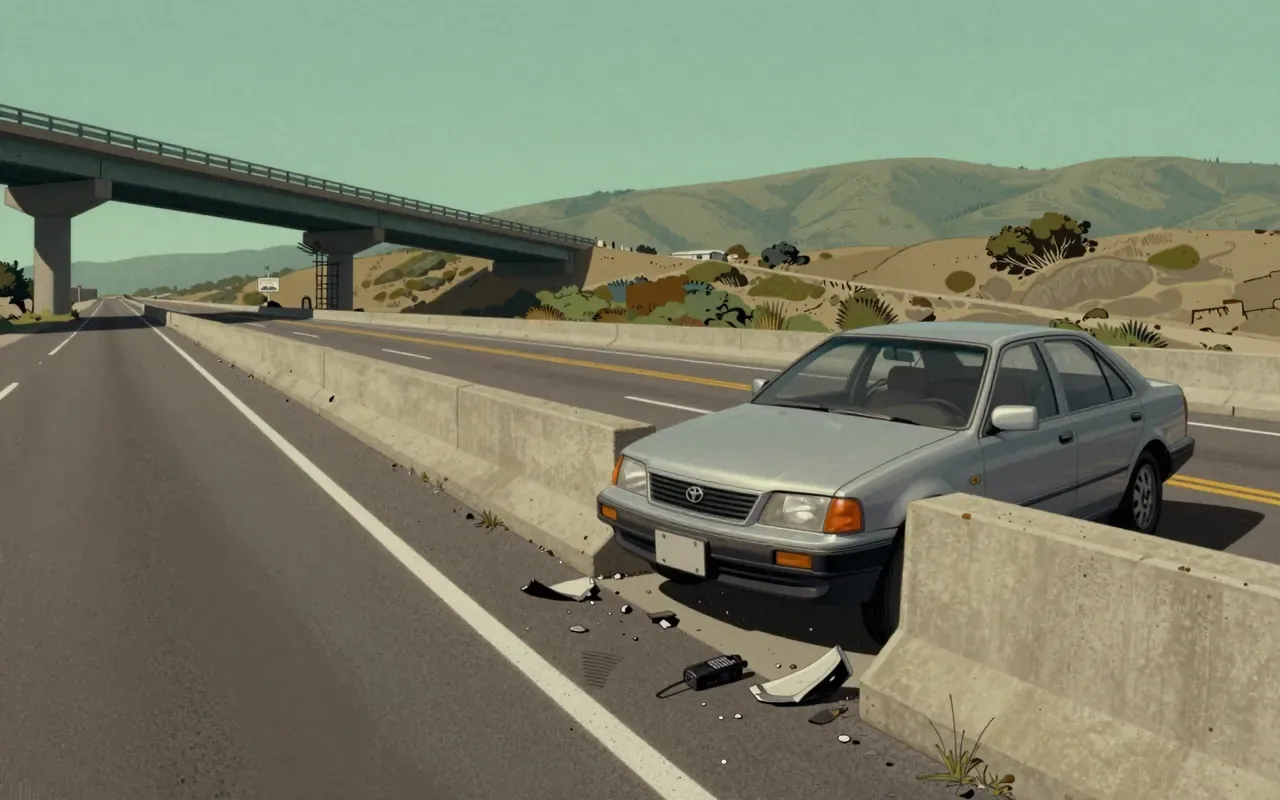
Players drive freely through Paradise City. They trigger races on the fly by driving near start points. Showtime begins instantly, anywhere — no setup, no loading. Crashes are not scripted events but sustained vehicle bounces across terrain. A driver’s license logs performance per street: fastest time, biggest crash. Rank increases with event completions. Higher ranks unlock new cars.

What works

Showtime works because it turns any surface into a crash arena. The driver-license system works because it makes every street feel owned and measurable. Player-directed progression works because it removes menu dependency — races appear when you drive near them. Online Cops and Robbers works because it extends the chaos into shared space.

What does not

It does not sustain long-term engagement through story or character. It does not gate content behind linear milestones. It does not offer precision handling for technical racing purists. It does not separate modes cleanly — everything bleeds into everything else.

Who it is for, and who it is not

It is for players who treat cities as terrain, not backdrops. It is for those who prefer emergent fun to curated spectacle. It is not for players who rely on waypoints, tutorials, or mission logs. It is not for those who dislike repetition without variation.

Is it worth your time

Yes — if you want a racing game that rewards improvisation over repetition, and treats the city as playground, not track. No — if you need clear goals, narrative scaffolding, or structured progression.
Same strand · Racing & sports4 of 74
10:40
Skate 3EA Black Box · 2010Skate 3 is a third-person open-world skateboarding game developed by EA Black Box in 2010. It tasks players with selling one million skateboards by completing challenges, after failing Jump The Shark. It introduces Easy and Hardcore difficulty modes, an optional tutorial (Skate School), and a park builder (Skate.Park). Online-only multiplayer at launch required DLC for offline party play.
9:02
Skate 2EA Black Box · 2009Skate 2 is a 2009 skateboarding game developed by EA Black Box and published by Electronic Arts. Set in the fictional city of New San Vanelona, the single-player career mode follows a skateboarder released from jail five years after being arrested in the first game, Skate, who is tasked with popularising skateboarding in the city again after devastating earthquakes, avoiding security guards hired by the company 'Mongocorp' who have bought most of the city's property.
9:57
Burnout 3: TakedownCriterion Games · 2004Burnout 3: Takedown is a 2004 arcade racing game developed by Criterion Games and published by Electronic Arts and Acclaim Entertainment. It is the third instalment in the Burnout series, defined by fast-paced arcade racing. Its central innovation is the Takedown mechanic: slamming opponents until they crash, which fills and extends the boost meter. Boost is earned through risky driving—including drifting, near misses with traffic, and driving in oncoming lanes—and used to rapidly increase speed. Standard circuit races take place on carriageways and city streets populated with traffic. Single Race mode pits the player against five AI opponents in a single or multiple lap race. Crash mode involves causing monetary damage in multi-vehicle pileups at junctions, featuring Crashbreakers and power-ups like Heartbreaker. Impact Time—a slow-motion state triggered by crashes—enables Aftertouch, letting players steer wrecked chassis into rivals. The game runs at 60 fps during driving for responsiveness, dropping to 30 fps during crashes to render more particles and debris.
8:50
Need for Speed: Underground 2Black Box · 2004Need for Speed: Underground 2 is a racing game where tuning, driving, and discovery are inseparable. It asks you to treat Bayview as terrain—not backdrop—and rewards persistence over precision. Its constraints are deliberate: no fast travel, no race menus, no hand-holding for hidden events. It works because those constraints shape a specific kind of attention: one tuned to corners, shortcuts, and the hum of a modified engine echoing off concrete.
Up next in Games

Counter-Strike 2

Valve · 2023 · 9:09

Counter-Strike 2 doesn’t evolve the genre — it sharpens its blade until it cuts deeper.

9:09