What the game is
Burnout 3: Takedown is a 2004 arcade racing game—the third in the Burnout series—and a deliberate escalation of risk-as-resource design. It replaces passive boost accumulation with active, violent interaction: Takedowns are not just attacks but fuel generation. It runs on the RenderWare engine. Acclaim Entertainment and Electronic Arts both held publishing rights; Criterion Games developed it.
How it actually plays
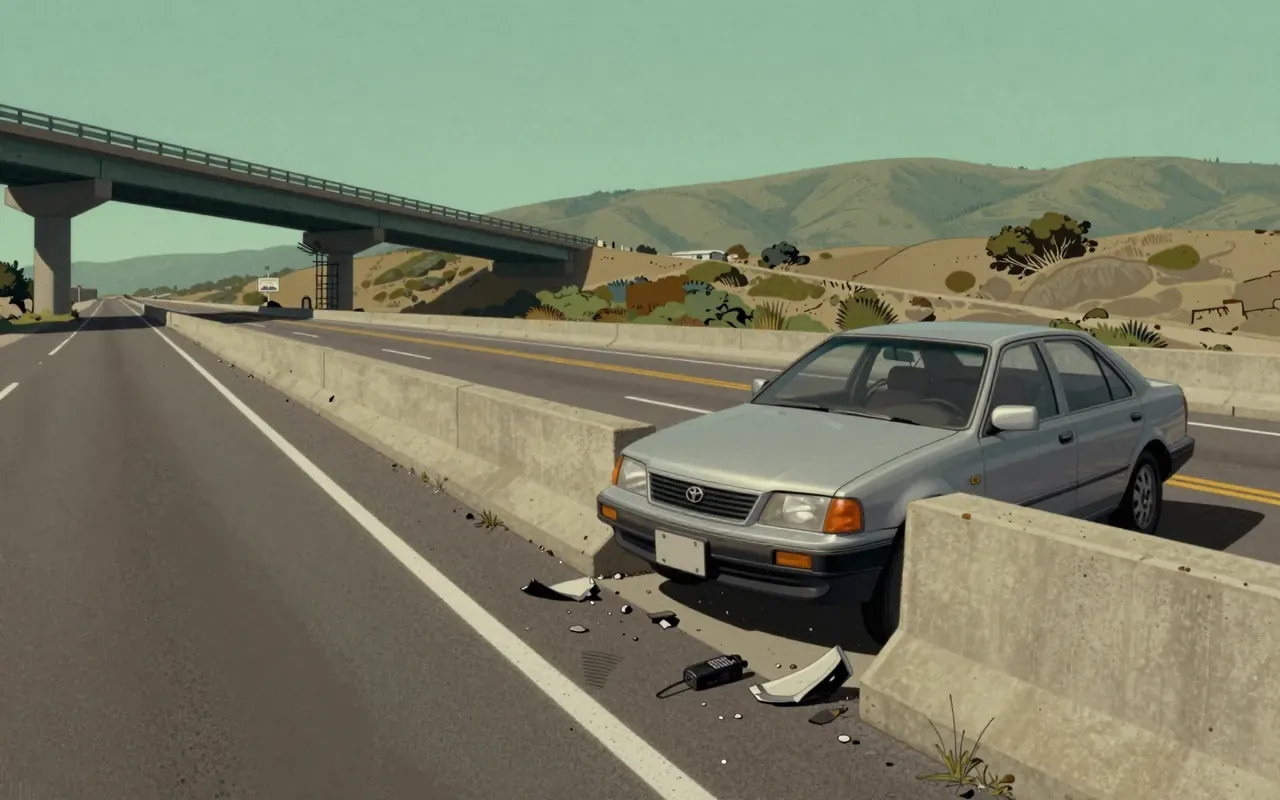
Players race on carriageways and city streets with traffic. They earn boost by drifting, near misses with traffic, and driving in oncoming lanes. Boost is deployed instantly to accelerate. Takedowns—slamming opponents until they crash—fill and extend the boost meter. Crashes trigger Impact Time: slow-motion lets players steer wrecked chassis into rivals for recovery Takedowns. Crash mode tasks players with causing monetary damage in multi-vehicle pileups at junctions. Road Rage demands Takedowns under time or survival constraints. Single Race pits the player against five AI opponents over one or more laps.
What works
The Takedown-boost feedback loop is immediate, legible, and self-reinforcing. Every crash has consequence and opportunity: Impact Time turns failure into agency. Road Rage and Crash modes isolate and intensify distinct physical verbs—colliding, redirecting, detonating—without bloating controls. The 60 fps driving baseline delivers tactile responsiveness rare for its era. Traffic is dense enough to threaten, sparse enough to read. Five-opponent races create constant pressure without overcrowding.
What does not
It does not sustain long sessions. The World Tour’s 173 events rely on repetition without meaningful mechanical variation between tiers. Crash mode’s scoring systems—Crashbreakers, Heartbreaker power-ups—are opaque and unrewarding without external explanation. Impact Time is disabled online, removing a core expressive tool from competitive play. The game offers no pause menu during crashes or races, forcing full restarts after missteps.
Who it is for, and who it is not
It is for players who enjoy short, high-intensity loops where skill expresses as timing, proximity, and nerve—not route memorisation or vehicle tuning. It is not for players who require narrative scaffolding, realistic physics, customisation depth, or asynchronous progression. It assumes comfort with failure as data, not punishment.
Is it worth your time
Yes—if you want a tightly wound arcade racing loop that rewards aggression, spatial improvisation, and split-second risk calculus. It does not ask for patience, realism, or narrative investment. It asks for repeated, focused bursts of high-stakes driving, then resets cleanly. Its pacing, feedback, and escalation are still functional. Its online multiplayer is inaccessible now, and its hardware-specific frame-rate trade-offs (60 fps while driving, 30 fps during crashes) are invisible to modern players—but the design logic remains legible.