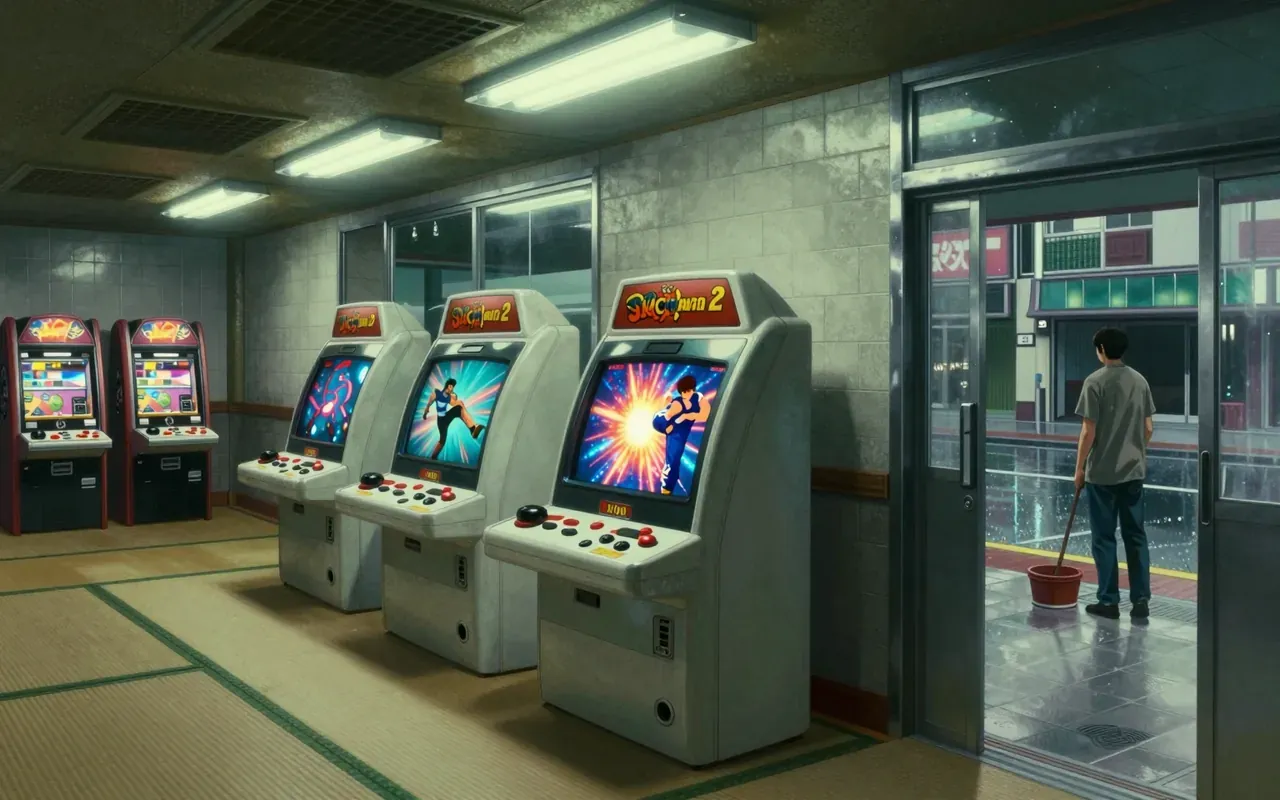
What the game is
A 2D fighting game released in 2023 by Capcom. It is part of the Street Fighter franchise, which began in 1987 and has sold over 50 million copies. It features Fighting Ground (versus/training/arcade), World Tour (3D story mode with avatar progression), and Battle Hub (online lobby with emulated arcade titles).
How it actually plays
Two fighters face off in 2D space. Each has a Drive Gauge that enables five techniques: parries, focus attacks, EX moves, and two others unnamed. Using the gauge carries risk — full depletion triggers Burnout, where blocking degrades, chip damage applies on block, and corner-stunned states become possible. Players choose among three control schemes: classic (six-button), modern (four-button + directional inputs), or dynamic (single-button, offline-only AI-assisted). Super combos return from Street Fighter Alpha and Ultra Street Fighter IV. Cancel rules layer across three super art levels and Critical Arts.
What works
The Drive Gauge system encourages creativity by forcing constant trade-offs between aggression, defence, and setup. Rollback netcode enables stable online play. Cross-platform play removes platform barriers. Three control schemes lower the barrier to entry without compromising depth for veterans.
What does not
The Drive Gauge’s Burnout state punishes mismanagement with hard penalties but offers no recovery path mid-round. Dynamic controls are offline-only and remove player agency entirely. World Tour’s 3D action-adventure mode is structurally disconnected from the Fighting Ground core. Real-time commentary and Game Face expressions add spectacle but no gameplay depth.
Who it is for, and who it is not
It is for players who want expressive, high-stakes 2D combat with scalable input options. It is not for players seeking minimal rule sets, pure competitive purity, or single-genre cohesion — World Tour’s 3D mode and Battle Hub’s social layer sit outside the fighting loop.
Is it worth your time
Yes — if you want a fighting game that demands active resource management, rewards pattern recognition, and supports multiple entry points. No — if you expect tight, uncluttered fundamentals or reject layered systems that prioritise expressive risk over clean execution.