gamesbriefs
10:20in productionCh. 1 · The Combo Swap/ 10:20 · ceiling 15 min
Fighting

Street Fighter Alpha 2

Street Fighter Alpha 2 trades Chain Combos for Custom Combos — and replaces ambiguity with a timer, a gauge, and two buttons.

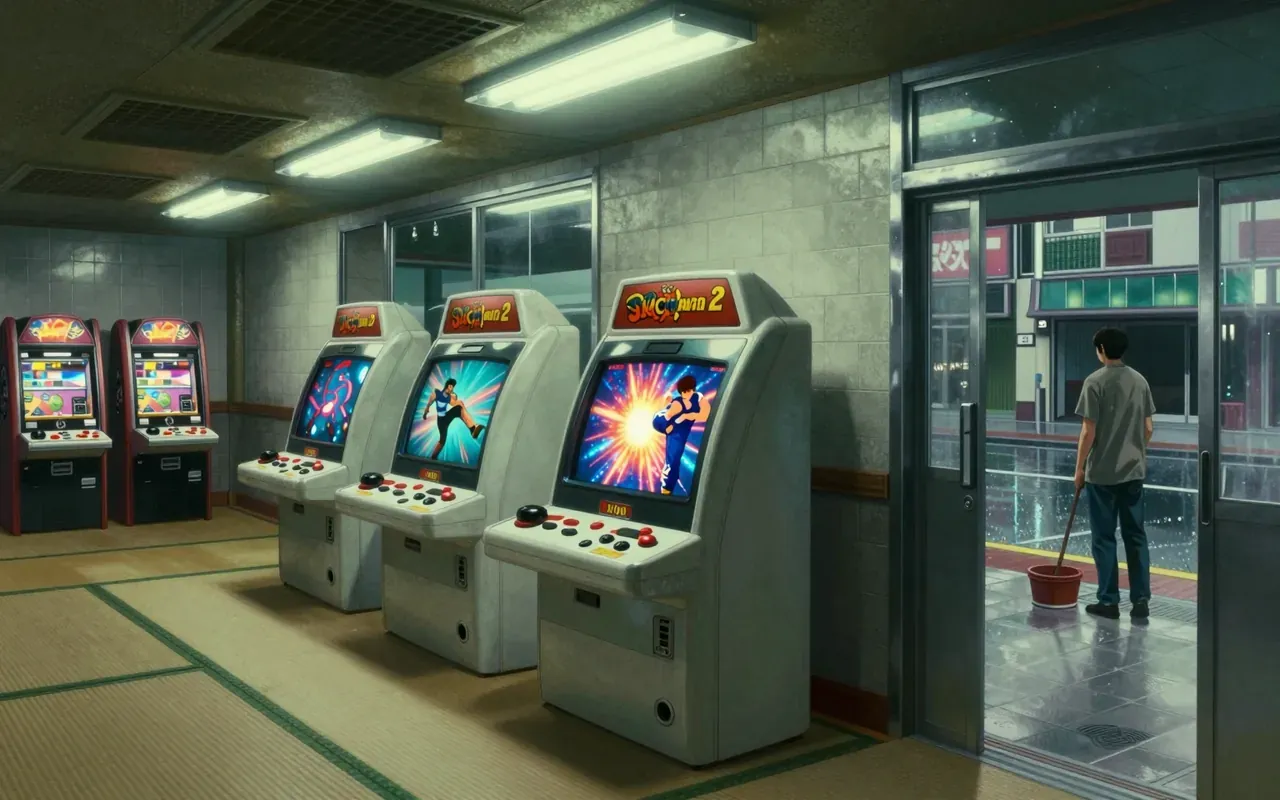
Street Fighter Alpha 2 is a 1996 arcade fighting game developed and published by Capcom. It retains core mechanics from its predecessor—three-level Super Combo gauge, Alpha Counters, Air-Blocking, and Fall Breaking—and introduces the Custom Combo system, which replaces Chain Combos and allows players to chain basic and special moves freely while the Timer Gauge lasts. Guy and Gen retain limited Chain Combo ability. Each character gains two Alpha Counters (punch- and kick-initiated). Single-player mode features eight matches culminating in a character-specific final opponent and includes a secret rival encounter triggered by meeting certain conditions. The game was ported to PlayStation, Sega Saturn, Super Nintendo, and Windows.

Chapters & takeaways5
  1. 1:12
    The Combo Swap

    Alpha 2 ditches Chain Combos for Custom Combos — a new loop gated by the Super Combo gauge.

  2. 2:40
    Timer-Gated Freedom

    Custom Combos start with a specific button press and last only as long as the Timer Gauge permits.

  3. 4:08
    Two Counters, One Ending

    Each character has two Alpha Counters — and a fixed final opponent in eight-match single-player.

  4. 5:08
    Rivals and Exceptions

    Guy and Gen keep limited Chain Combos. Every character has a secret rival — unlocked by conditions.

  5. 6:23
    Hardware and Hand-Drawn

    It runs on the CP System. Its 2D cartoon style is part of Capcom’s signature visual commitment.

Worth your time?

Yes. Play the whole thing.

4/ 5
What works
  • Custom Combo system replaces Chain Combos with a clear, gated loop
  • Two Alpha Counters per character deepen defensive decision-making
  • Air-Blocking and Fall Breaking preserve momentum after knockdowns
  • Rival encounter mechanic adds replay incentive without altering core rules
What does not
  • modern accessibility
  • narrative depth
  • systemic variety beyond combo and counter systems
Play it if
  • players who value explicit, visible systems over emergent complexity
  • players comfortable reading gauges and timers as primary feedback
  • players seeking a mid-90s arcade fighter with deliberate, hardware-constrained pacing
Skip it if
  • players who need tutorials
  • scalable difficulty
  • story integration
The written brief2 min read

What the game is

A 1996 arcade fighting game by Capcom. It is the second entry in the Street Fighter Alpha subseries. It runs on the CP System hardware. It uses 2D animated cartoon-style graphics. It was ported to PlayStation, Sega Saturn, Super Nintendo, and Windows.

How it actually plays

Street Fighter Alpha 2 runs on the CP System hardware. It asks players to manage a three-level Super Combo gauge, time Custom Combos against a visible Timer Gauge, and choose between two distinct Alpha Counters per character — one punch-initiated, one kick-initiated. Air-Blocking and Fall Breaking shape defensive options. A session is a series of one-on-one rounds where players chain basic and special moves freely during Custom Combos, but only if the gauge is at Level 1 or above and the correct button combination is pressed.

What works

The Custom Combo system replaces Chain Combos with a clear, gated loop: gauge level → button input → timed freedom to chain moves. Two Alpha Counters per character deepen defensive decision-making. Air-Blocking and Fall Breaking preserve momentum after knockdowns. The rival encounter mechanic adds replay incentive without altering core rules.

What does not

The single-player mode offers no branching paths, no progression beyond unlocking rivals, and no adaptive difficulty. The Custom Combo system demands precise gauge management but gives no feedback on combo efficiency or damage scaling. Guy and Gen’s retained Chain Combo ability is functionally marginal and unexplained in context.

Who it is for, and who it is not

Players who value explicit, visible systems over emergent complexity. Players comfortable reading gauges and timers as primary feedback. Players seeking a mid-90s arcade fighter with deliberate, hardware-constrained pacing. Not for players who need tutorials, scalable difficulty, or story integration.

Is it worth your time

Yes — if you want a tightly scoped, rule-driven 2D fighter that prioritises player expression within strict timing windows. No — if you expect modern accessibility, narrative depth, or systemic variety beyond its combo and counter systems.
Same shelf · Fighting4 of 20
Up next in Games

Street Fighter III

Capcom · 1999 · 8:22

Street Fighter III replaces safety with precision — and dares you to parry or perish.

8:22