What the game is
A survival horror game developed by Team Silent in 2001, where James Sunderland searches a psychologically reactive version of Silent Hill for his dead wife. It is built around repressed guilt, environmental storytelling, and player-driven interpretation — not action, spectacle, or exposition.
How it actually plays
You guide James Sunderland through Silent Hill in third-person, with dynamic camera angles and tank-style movement by default. There is no HUD: health, location, and inventory exist only in the pause menu. Maps are optional but essential for efficient navigation — and unreadable without light. James manually annotates them with doors, clues, and obstructions, and transcribes every document. Progression depends on finding keys and items, not defeating enemies.
What works
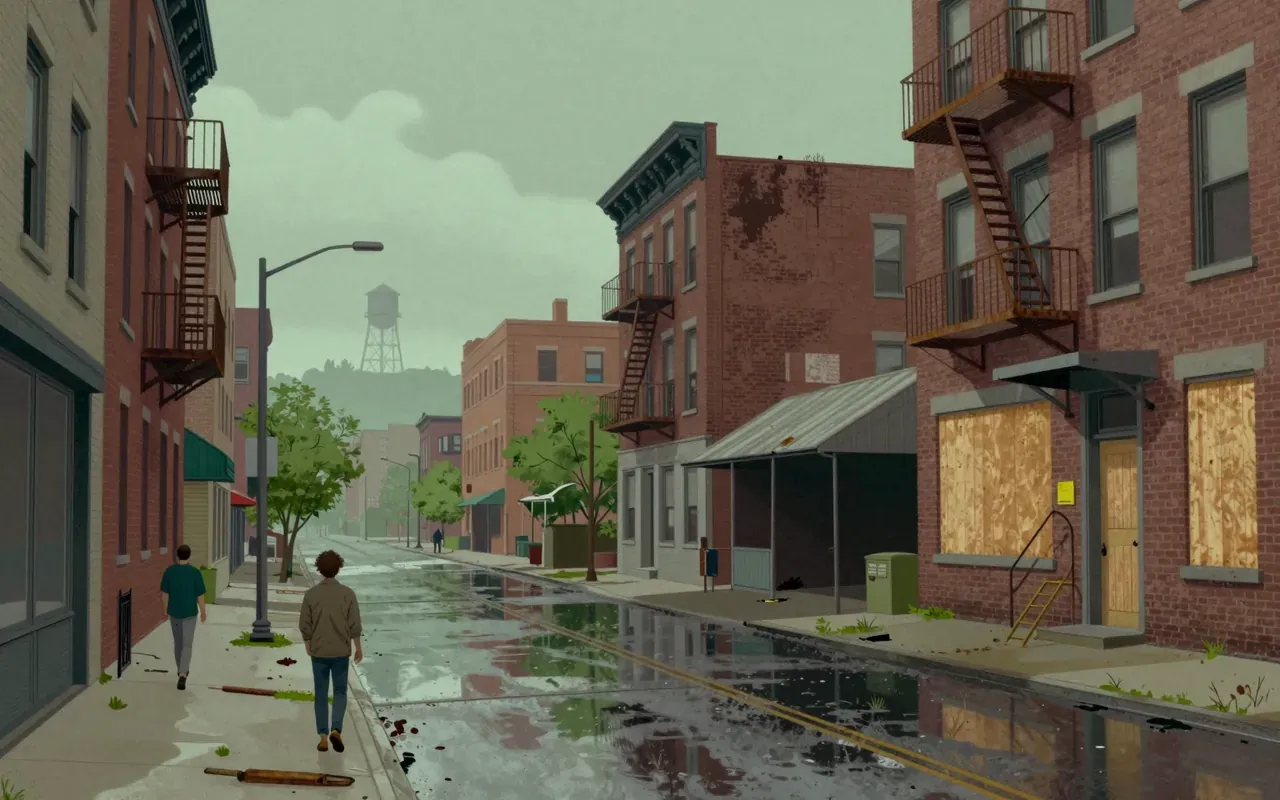
The absence of a HUD forces constant spatial recalibration. Light-dependent map reading ties mechanics to theme: clarity is earned, not granted. Manual annotation makes James an active archivist of his own denial. The town design — by Masashi Tsuboyama — treats architecture as memory: warped, repetitive, and emotionally legible.
What does not
It does not sustain momentum. Pacing collapses in late-game apartment blocks and hospital corridors, where backtracking multiplies without narrative justification. The manual map system, while thematically coherent, becomes cumbersome when light sources dwindle and annotation feels like clerical work rather than insight.
Who it is for, and who it is not
It is for players who treat games as spaces for sustained attention, not distraction. It is not for those who expect clear objectives, responsive combat, or mechanical escalation. It assumes literacy in ambiguity and rewards rereading over rushing.
Is it worth your time
Yes — if you want a slow, deliberate, psychologically dense traversal where every corridor, fog bank, and rusted door asks you to interpret rather than react. It demands patience, attention to environmental feedback, and tolerance for ambiguity. It does not reward speed, reflexes, or mastery of combat.