gamesbriefs
12:10in productionCh. 1 · No Accessories Allowed/ 12:10 · ceiling 15 min
Racing & sports · Sound & music

Just Dance (video game)

Just Dance doesn’t measure rhythm—it measures how much of your body you’re willing to commit.

Just Dance (2009) is a Wii-exclusive rhythm game published by Ubisoft. Players use only the Wii Remote in their right hand to mirror on-screen dancers’ choreography. Moves are scored X, OK, or Great. Shake moves trigger a shake meter for bonus points. Each song has two scoring targets: 10,000 (Standard) and 15,000 (Master). Four modes include Standard, Warm Up, Strike a Pose, and Last One Standing. It is one of Ubisoft’s core, long-running franchises.

Chapters & takeaways6
  1. 1:22
    No Accessories Allowed

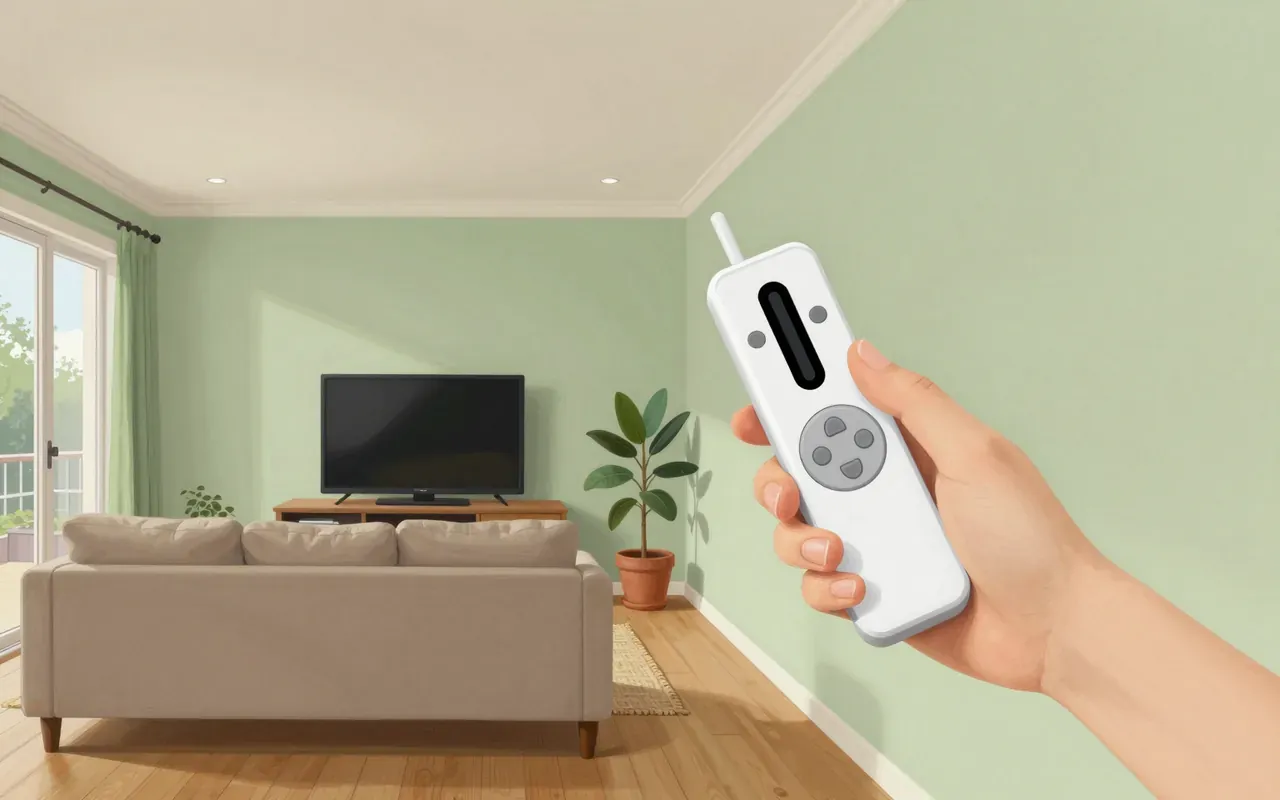
    It runs on one Wii Remote in your right hand—no pads, no Nunchuk, no choice.

  2. 2:44
    Three Judgments Only

    Every move is scored X, OK, or Great—no grey area, no explanation, no recovery.

  3. 4:16
    Shake Breaks the Rhythm

    Shake moves break the flow to demand frantic waggling—for bonus points only.

  4. 5:28
    Seven Lives, Five Greats

    Last One Standing turns accuracy into survival—with lives lost on X, regained only after five Greats.

  5. 7:02
    Scrolling Cues, Not Instructions

    Pictograms and silhouettes scroll beside the dancer—they don’t explain, they prompt.

  6. 8:15
    A Franchise From Day One

    Ubisoft lists it alongside Assassin’s Creed and Far Cry—not as a fluke, but as a franchise anchor.

Worth your time?

Yes. Play the whole thing.

3.5/ 5
What works
  • single-remote accessibility
  • immediate X/OK/Great feedback
  • social mode design
  • shaking as tactile punctuation
What does not
  • calibration
  • left-hand support
  • adaptive difficulty
  • explanation of scoring failures
Play it if
  • groups
  • players seeking physical release
  • casual dancers
Skip it if
  • players with limited upper-body mobility
  • solo players
  • rhythm purists
The written brief2 min read

What the game is

A 2009 Wii-exclusive music rhythm game published by Ubisoft. It uses only the Wii Remote—no dance pads or Nunchuk—to translate full-body movement into motion-based scoring. It is built around mirroring choreography, not abstract timing or note charts.

How it actually plays

Players hold the Wii Remote in their right hand and mirror an on-screen dancer’s choreography. Scrolling pictograms or silhouettes cue poses. Accuracy is judged per move as X (missed), OK (approximate), or Great (exact). Shake moves trigger a shake meter, demanding rapid Wii Remote shakes for bonus points. Each song has two scoring targets: 10,000 (Standard) and 15,000 (Master). Four modes structure play: Standard, Warm Up (practice), Strike a Pose (freeze-on-command), and Last One Standing (seven-lives elimination with life recovery after five correct moves).

What works

The single-Wii-Remote constraint forces accessible, whole-body engagement. The X/OK/Great triad gives instant, unambiguous feedback. Shake moves add tactile variety. Warm Up lowers entry friction. Last One Standing creates emergent social tension. The game’s design assumes shared physical space—and delivers on it.

What does not

It offers no calibration, no left-hand or dual-remote support, and no adaptation to player height, reach, or mobility. The three-tier judgment lacks nuance—no gradation between OK and Great, no penalty weighting, no visual feedback on why a move failed. Shake moves interrupt flow. The fixed right-hand-only stance excludes many body configurations. There is no progression beyond point thresholds.

Who it is for, and who it is not

People who want to move, laugh, and fail publicly—not people seeking rhythmic precision, solo mastery, or technical depth. It is for groups, not individuals. It is not for players with limited upper-body mobility, chronic pain, or spatial constraints. It is not for anyone expecting adaptive difficulty or long-term skill scaffolding.

Is it worth your time

Yes—if you want low-barrier, full-body rhythm play that prioritises movement over precision. It asks for physical commitment, not timing mastery. It does not reward repetition or deep skill growth, but it delivers immediate, communal feedback. Its value is situational: best with friends, in open space, and when the Wii Remote still syncs.
Same strand · Racing & sports4 of 57
12:05
BeamNG.driveBeamNG · 2015BeamNG.drive is a sandbox vehicle simulation game built around soft-body physics. It features career mode, campaigns, time trials, and free roam. Campaigns consist of small scenarios themed around races, chases, and stunts. In time trials, players compete against their own best time using selected vehicles, maps, and routes. In free roam, players can operate, place, and manipulate objects and vehicles within maps. They can also change environmental properties such as time, gravity and wind. Players can utilize various objects ranging from road barriers to weapons such as cannons in order to inflict damage on other vehicles.
10:04
NBA 2K (video game)2K Sports · 1999NBA 2K (1999) is the inaugural title of the NBA 2K series, released for the Sega Dreamcast. Developed by Visual Concepts and published by Sega, it features real NBA players and teams from the 1999–2000 season, custom player and team creation, and fictional commentary by Bob Steele and Rod West.
10:18
Project Gotham Racing (video game)Bizarre Creations · 2001Project Gotham Racing is a 2001 Xbox racing game developed by Bizarre Creations. It uses the Kudos system to reward stylish driving—power sliding, two-wheeling, and overtaking—with points that decay on collision. Players advance by meeting both speed and Kudos thresholds across three modes: Kudos Challenge (medal-based style events), Quick Race (five-car races), and Arcade Race (additional style challenges). It runs at 60 FPS and supports split-screen multiplayer.
10:25
Rage (video game)id Software · 2011Rage is a first-person shooter with integrated vehicular traversal and combat, featuring customizable weapons and ammo, dual enemy archetypes, and structured racing events with variable opposition and armament. Players upgrade vehicles via event rewards and engage in both open-world exploration and mission-based progression.
Up next in Games

Killing Floor (video game)

Tripwire Interactive · 2009 · 10:54

A co-op shooter that makes teamwork mandatory — not optional — by making you worse at staying alive than you are at keeping others alive.

10:54