Saved
Racing & sports · Simulation

Steep (video game)

Steep is not about winning — it’s about falling, filming, and finding your line again in a world that never pauses.

Worth your time?3.5/5Yes.Play the whole thing.What works, what does not, who it is for ↓
9:20in productionCh. 1 · What it is/ 9:20 · ceiling 15 min
4 chapters · 9:20Ceiling 15:00

The brief is written and checked. The video joins this page when it is cut.4 chapters · 1 min read · 9:20 planned

Read the brief

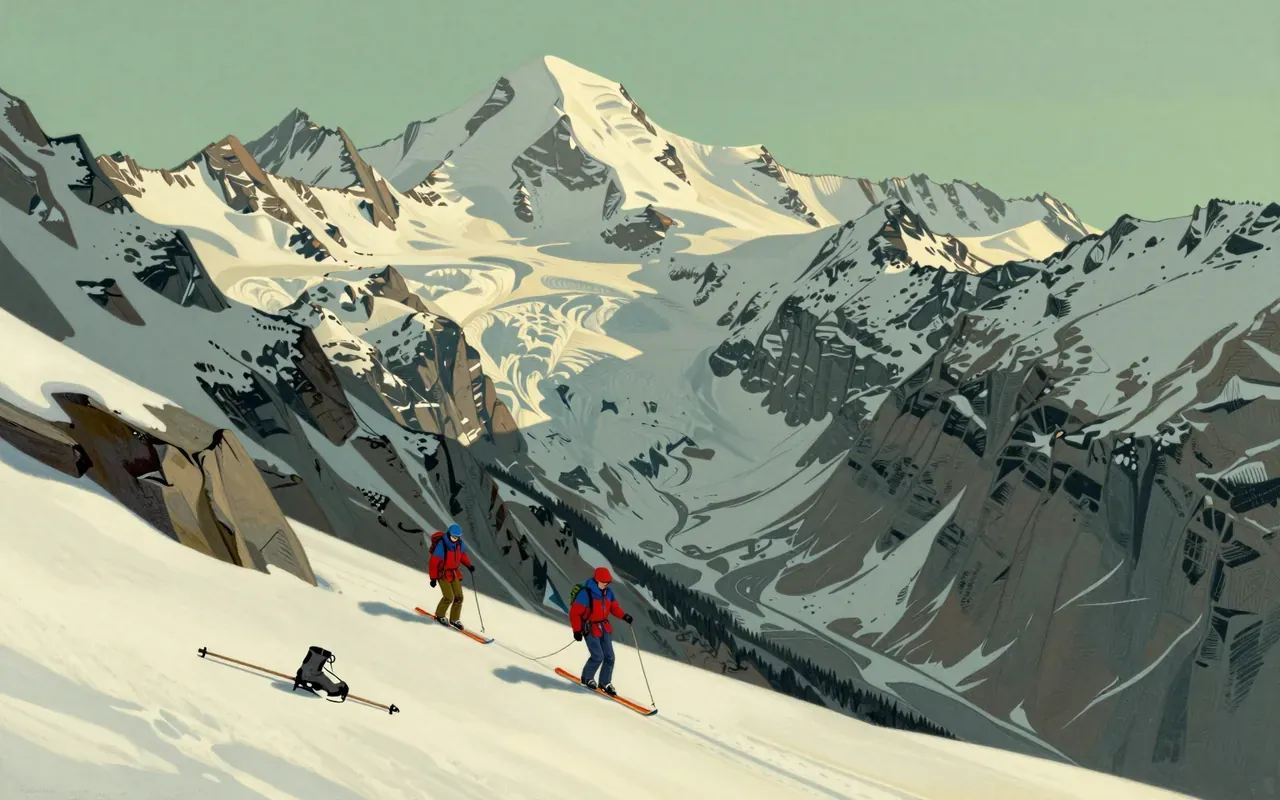
Steep is a sports video game developed by Ubisoft Annecy and published by Ubisoft. It was released worldwide on 2 December 2016 for PlayStation 4, Windows, and Xbox One. It is an online multiplayer extreme sports game set in a vast open world based on real mountain ranges including the Alps, Alaska Range, and mountains in Japan and Korea. Players explore a freely navigable open world set in the Alps, centered on Mont Blanc. The game can be played from either a first-person or third-person perspective. The game uses GoPro-style camera angles during races. The four main activities are skiing, wingsuit flying, snowboarding, and paragliding. Later DLC added rocket-powered wingsuit flying, sledding, BASE jumping, and speed riding. Players switch between activities using the game's menu wheel.

Chapters & takeaways4
  1. 1:03
    What it is

    Steep is a sports game, not a story game — and it launched globally on 2 December 2016.

  2. 2:00
    How it moves

    You drop in, switch disciplines with a wheel, and fly or slide through a live mountain world — no menus, no cutscenes, no solo mode.

  3. 3:32
    What it adds

    Skiing, snowboarding, paragliding and wingsuit flying are native. Rocket wingsuits, sledding, BASE jumping and speed riding arrived later as DLC.

  4. 5:14
    Where it lives

    The Alps — centred on Mont Blanc — are its only fixed geography. Everything else is procedural texture over real topography.

1 more chapterFewer chapters
Worth your time?

Yes. Play the whole thing.

3.5/ 5
What works
  • open-world exploration without loading screens
  • drop zones for rapid repositioning
  • menu-wheel discipline switching mid-descent
  • built-in replay and trail-sharing tools
What does not
  • offline play
  • single-player progression
  • local multiplayer
  • terrain editing
Play it if
  • players who enjoy spatial freedom
  • players who tolerate iterative failure
  • players who value asynchronous social presence
Skip it if
  • players who require tight feedback loops
  • players who seek narrative stakes
  • players who need hardware-agnostic accessibility
Who should play it, and who should skipHide who it is for
The written brief1 min read

What the game is

Steep is a sports video game developed by Ubisoft Annecy and published by Ubisoft. It was released worldwide on 2 December 2016 for PlayStation 4, Windows, and Xbox One. It is an online multiplayer extreme sports game set in a vast open world based on real mountain ranges including the Alps, Alaska Range, and mountains in Japan and Korea.

How it actually plays

Players drop into a shared open world centred on Mont Blanc. They switch between skiing, snowboarding, paragliding and wingsuit flying using a menu wheel. Movement is first- or third-person. GoPro-style camera angles are used during races. Fast travel happens via drop zones. Crashes reset instantly. Tricks earn points. Progression is nonlinear: players pursue legendary status across disciplines by completing challenges and recording trails.

What works

The open world invites exploration without waypoints or loading screens. Drop zones enable rapid repositioning. The menu wheel lets players pivot between disciplines mid-descent. Replay and trail-sharing tools are built into the core loop. The GoPro-style race cameras reinforce immediacy and spectacle.

What does not

It does not let players go offline. It does not support single-player-only progression. It does not offer local multiplayer. It does not allow customisation of physics, camera behaviour, or world density. It does not let players build or modify terrain.

Who it is for, and who it is not

It is for players who enjoy spatial freedom, iterative failure, and asynchronous social presence in a naturalistic setting. It is not for players who require tight feedback loops, competitive ladders, story-driven goals, or hardware-agnostic accessibility.

Is it worth your time

It is worth your time if you want to glide, fall, retry, and share unscripted descents in a persistent mountain world. It is not worth your time if you need tight controls, narrative stakes, or offline play.
Same strand · Racing & sports4 of 74
8:49
SSXEA Canada · 2000SSX (2000) is a PlayStation 2 arcade snowboard racer where tricks directly fuel speed via a boost meter. Developed by EA Vancouver (then EA Canada) under the EA Sports BIG banner, it replaces simulation with rhythm, timing, and terrain-as-launchpad. Uber Tricks, rivalries, and open-world structure belong to sequels — the original delivers tight, repeatable races across discrete global courses. It works because tricks are mandatory, not decorative. It wears thin because it offers no stakes beyond the next jump.
9:21
Madden NFL 24EA Sports · 2023Madden NFL 24 improves on-field football with SAPIEN, Fieldsense, and 1,000+ new animations — but fractures its off-field modes across hardware generations and leaves Franchise and Superstar feeling incomplete. It is a technical upgrade with structural debt.
10:40
Skate 3EA Black Box · 2010Skate 3 is a third-person open-world skateboarding game developed by EA Black Box in 2010. It tasks players with selling one million skateboards by completing challenges, after failing Jump The Shark. It introduces Easy and Hardcore difficulty modes, an optional tutorial (Skate School), and a park builder (Skate.Park). Online-only multiplayer at launch required DLC for offline party play.
8:56
Tony Hawk's Pro SkaterNeversoft · 1999Tony Hawk's Pro Skater is a tightly wound trick-chaining machine. It asks for precision, repetition and split-second decisions — then rewards them with escalating points, visual flash and palpable momentum. Its constraints — fixed camera, two-minute windows, diminishing trick scores — are not limitations. They are the architecture of its appeal.
Up next in Games

Super Smash Bros. Brawl

Nintendo · 2008 · 9:58

Brawl trades technical mastery for spectacle — and wins every time someone yells 'GET OFF THE STAGE!'

9:58