Gran Turismo 4 doesn’t simulate racing — it simulates the patience required to master one car, on one track, until the physics stop surprising you.
Gran Turismo 4 is a PlayStation 2 sim racing title by Polyphony Digital. It features A-Spec (first-person racing with experience-based progression), B-Spec (AI-directed crew-chief mode), Driving Missions, Photo Mode, and Nissan collaborations including the Fairlady Z NISMO S-Tune Concept and Z-Tune 350Z. It lacks online play at launch and uses reactive-only damage.
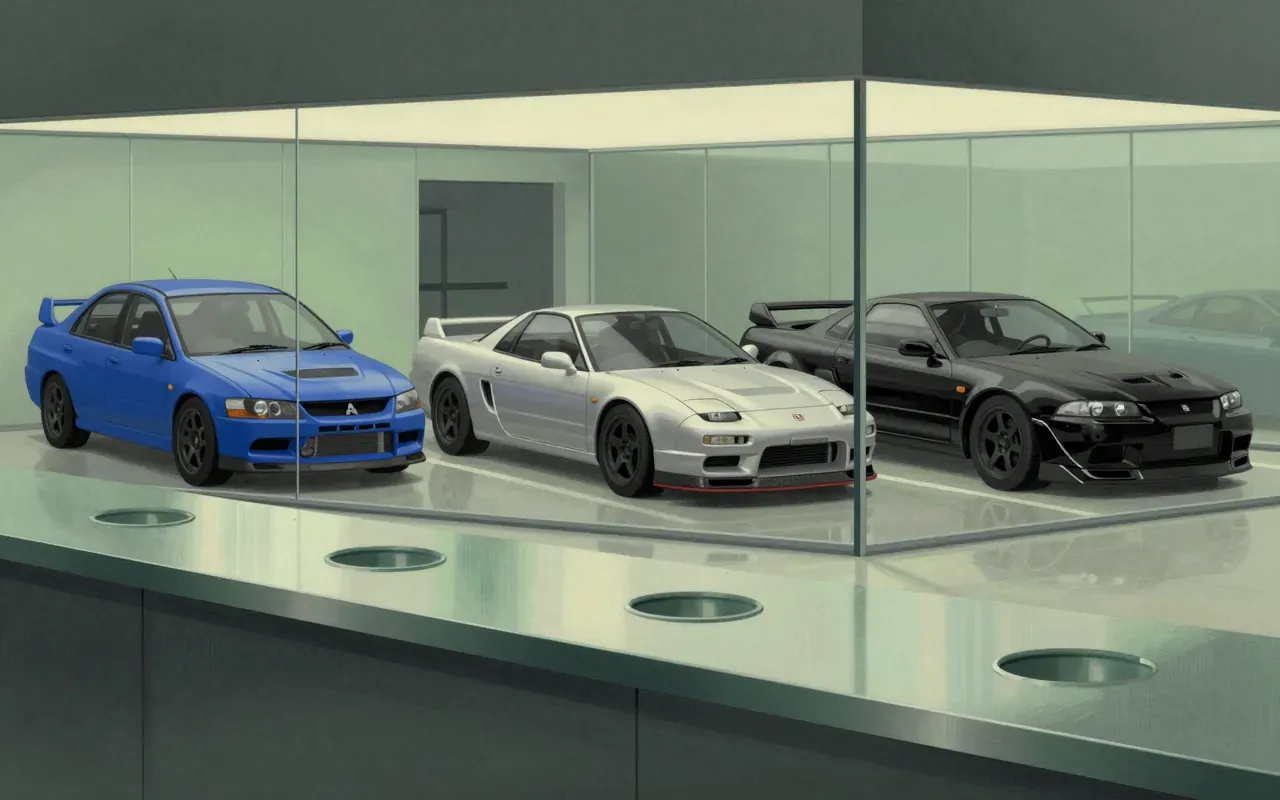
Gran Turismo 4 is a PlayStation 2 sim racing title by Polyphony Digital. It is built around two parallel progression systems: A-Spec (player-driven racing) and B-Spec (AI-directed crew-chief mode). It features Driving Missions, Photo Mode, and Nissan collaborations including the Fairlady Z NISMO S-Tune Concept and Z-Tune 350Z.
How it actually plays
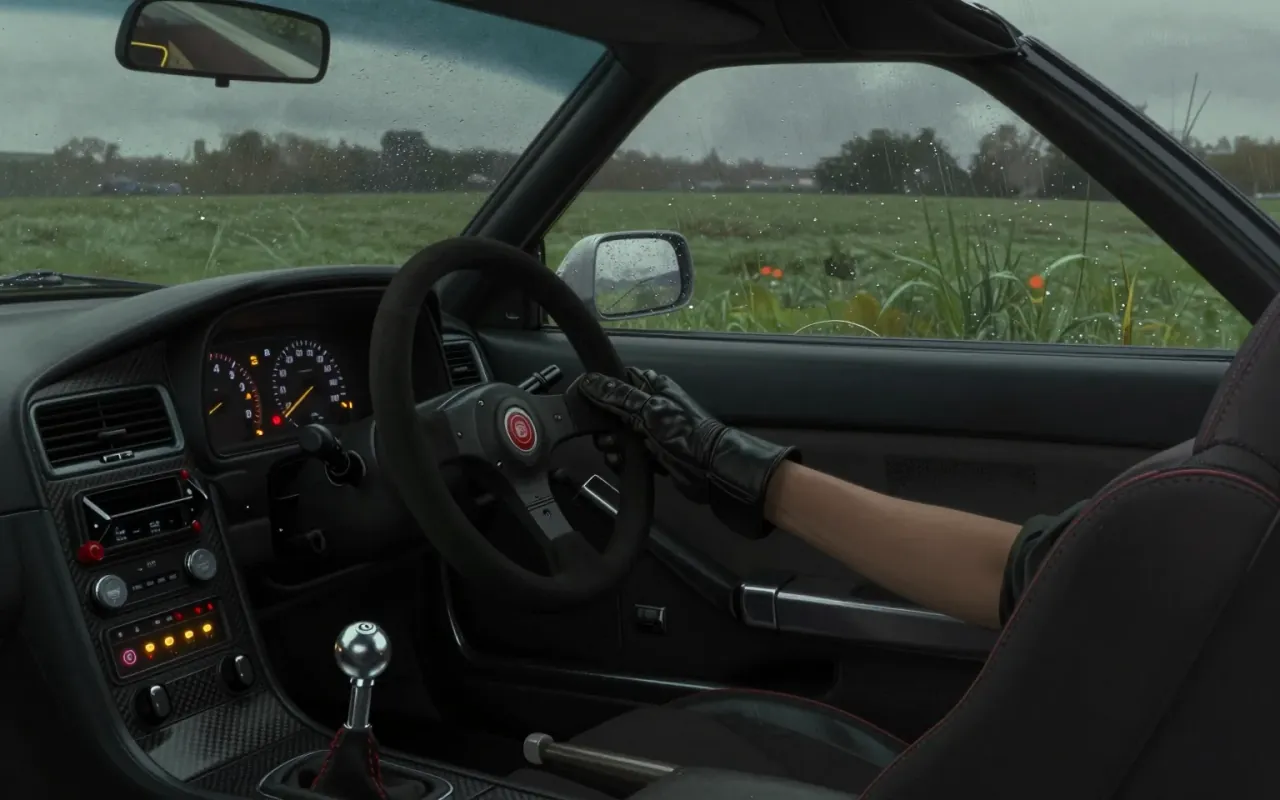
A-Spec mode is first-person racing where wins award up to 200 points — scaled down if your car outclasses the AI. Points are one-time experience rewards, not currency. Driving Missions award 250 fixed points each. B-Spec mode removes direct control: you set aggression, passing, and pit strategy for an AI driver, with time acceleration up to 3× for endurance races.
What works
Body movement under braking adds tactile feedback. Barrier friction actively punishes wall-riding. A-Spec’s point scaling rewards car choice discipline. B-Spec’s time acceleration makes endurance races viable in under an hour. Driving Missions structure skill-building around precise inputs — braking zones, apex timing, throttle modulation.
What does not
No online play at launch despite prior promises. Damage is purely reactive — cars bounce or spin but never degrade visually or mechanically. Inter-car friction remains minimal, so drafting and contact feel weightless. Physics discourage wall-riding via barrier friction, but offer no consequence for reckless AI behaviour.
Who it is for, and who it is not
It is for players who treat driving as iterative calibration — those who enjoy replaying the same corner with different suspension setups, or watching tyre wear tick down in B-Spec while deciding when to pit. It is not for players who expect narrative, social features, or mechanical consequences from collisions.
Is it worth your time
Only if you want a PlayStation 2-era sim that demands repetition to unlock content, values restraint over spectacle, and treats driving as calibration — not catharsis. It asks for patience, not reflexes.