What the game is
Tony Hawk’s Underground is a 2003 rework of the Tony Hawk’s series by Neversoft. It replaces arcade-style high-score chasing with a story-oriented structure, embedding trick-based skating inside narrative-driven level goals, vehicle traversal, and on-foot exploration.
How it actually plays
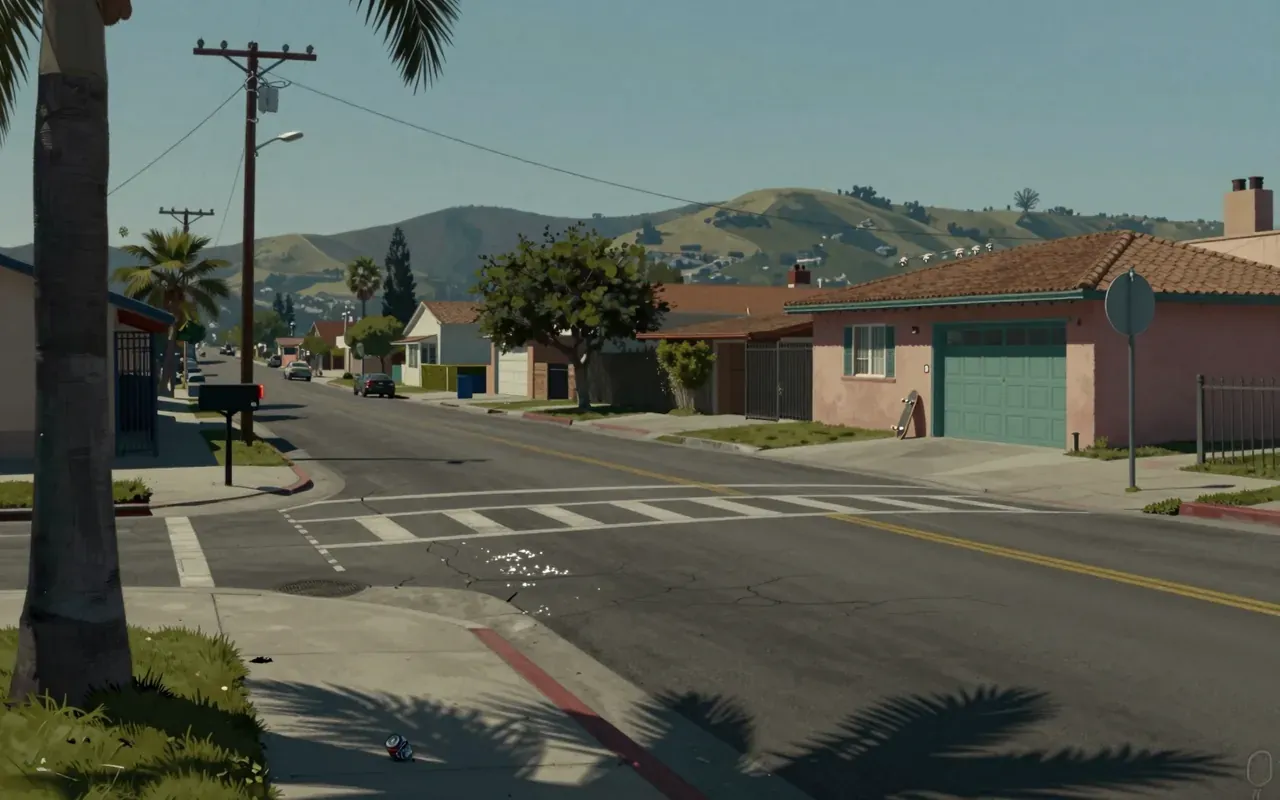
The player explores large, real-world-inspired levels on a skateboard. Tricks are performed via analog stick and button combinations: ollies start with hold-and-release of the jump button; flip and grab tricks follow during the ollie; grinds, lip tricks on quarter pipes, and manuals on flat surfaces all require precise stick positioning and timing. A balance meter governs sustained tricks — if it drifts left or right, the character bails and recovers for seconds.
What works
The trick system remains responsive and legible: ollies, flips, grabs, grinds, lip tricks, and manuals all map cleanly to input logic. Level design encourages verticality and re-exploration. Stat progression through optional goals gives tangible feedback. The level editor and custom character creation extend replay value meaningfully.
What does not
The story goals feel like waypoints, not emotional anchors. The balance meter punishes small inputs without forgiving recovery windows. Driving and on-foot segments disrupt flow without deepening engagement. Customisation is present but shallow in impact on gameplay.
Who it is for, and who it is not
It is for players who enjoy physical cause-and-effect in movement systems, who value spatial mastery over scripted set-pieces, and who accept early-2000s hardware constraints as part of the rhythm. It is not for players seeking cinematic storytelling, systemic complexity, or contemporary UI polish.
Is it worth your time
Yes — if you want a story-driven skate game that rewards exploration, improvisation, and repetition across expansive levels. No — if you expect tight narrative pacing, modern accessibility, or mechanical depth beyond its 2003 framework.