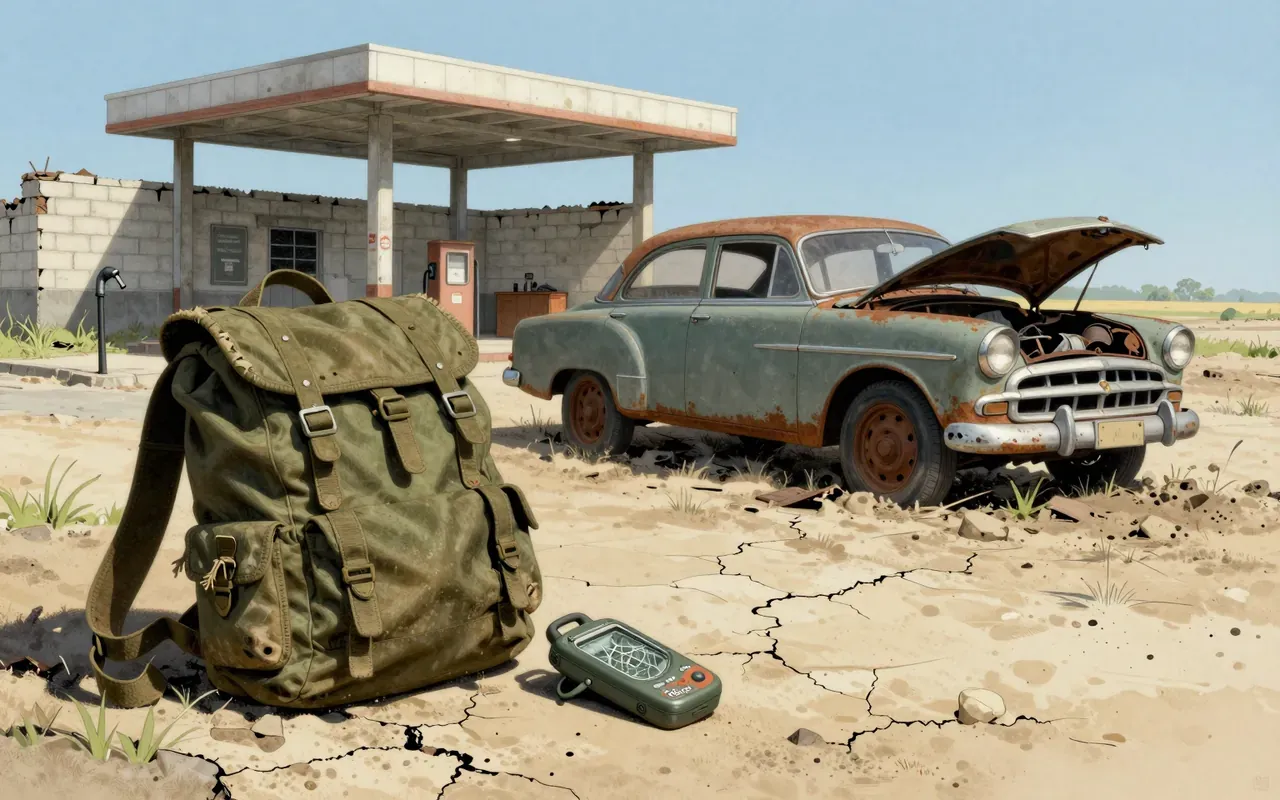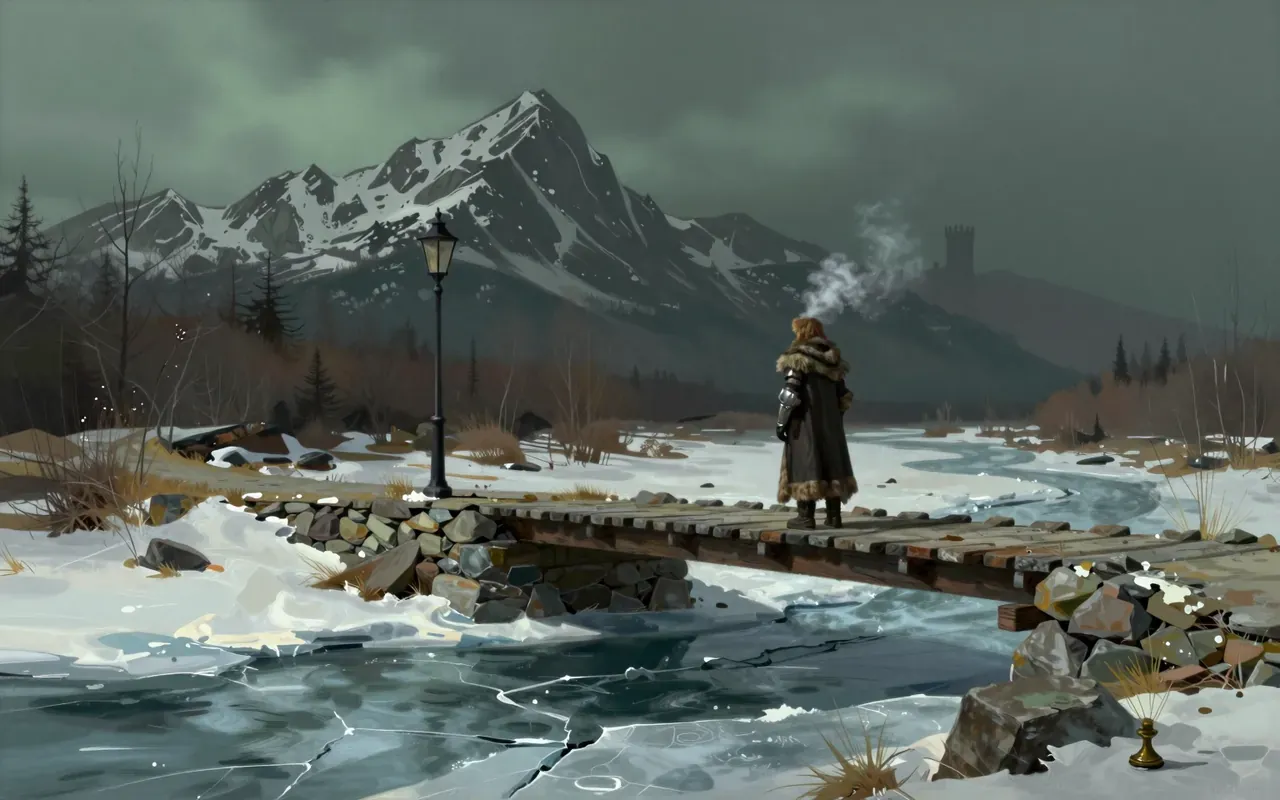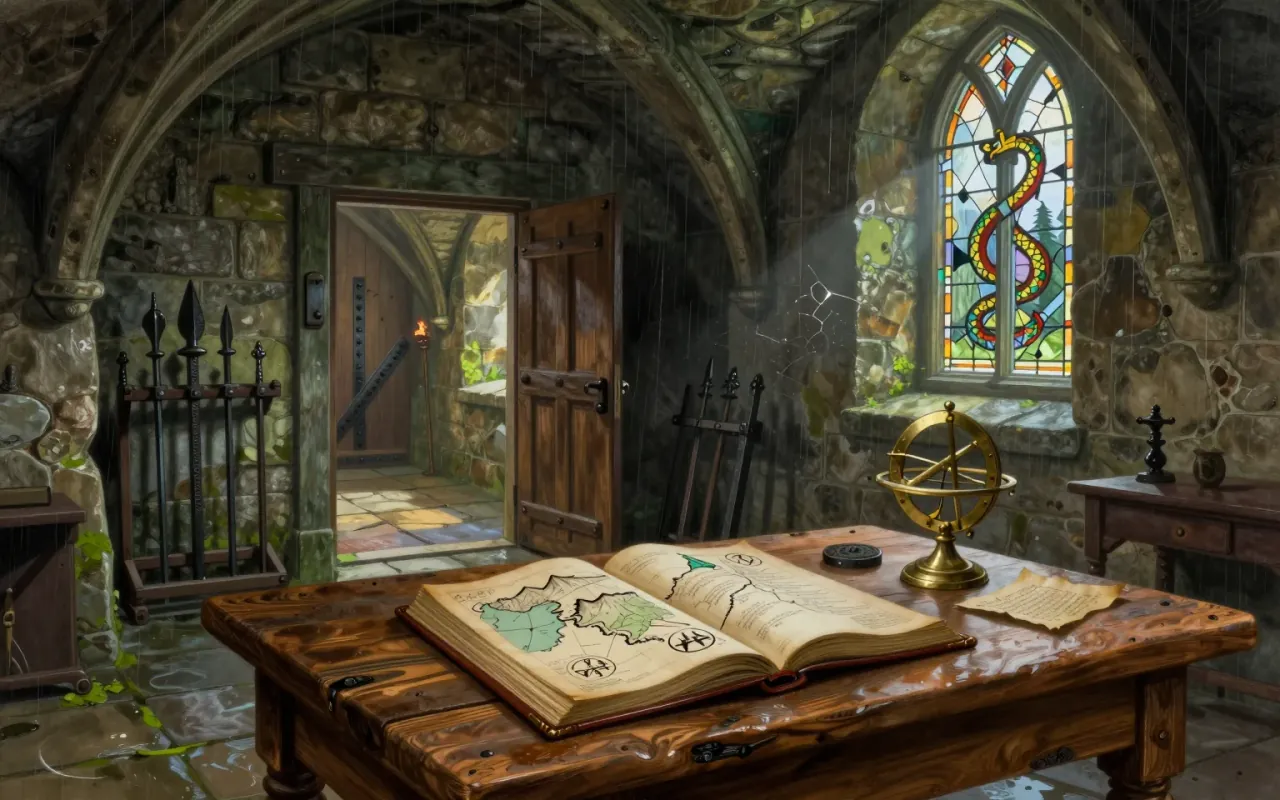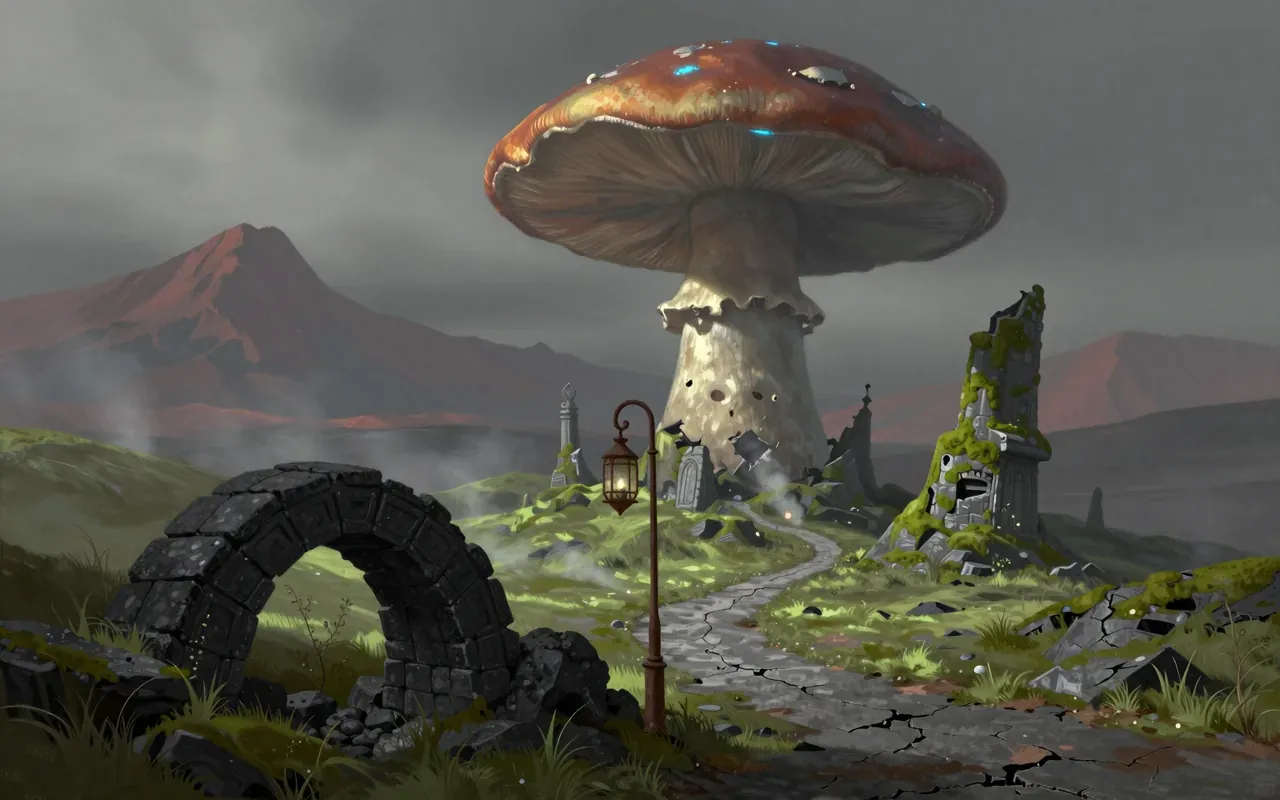
What the game is
An open-ended, freeform action RPG set on the hand-crafted island of Vvardenfell. It begins with a pardoned prisoner arriving by boat, then embeds character creation in a civic registration tutorial. Skill progression is action-based, trainer-mediated, or book-study dependent. Attributes increase only on level-up, which requires advancing ten specific skills. The world is open from the first minute.
How it actually plays
You arrive by boat as a pardoned prisoner. A tutorial embedded in your release walks you through civic registration: answering questions from a fellow prisoner, an officer, and a bureaucrat to set name, race, gender, class, and birthsign. Skills rise only when you act — striking enemies with a sword to improve Blade, being hit while wearing chainmail to improve Heavy Armor, reading skill books, or paying trainers. Level-up requires gaining levels in ten pre-determined skills; only then do attributes increase. Combat offers directional attacks — chop, slash, thrust — but offers no meaningful tactical distinction between them. The world of Vvardenfell opens fully at the start. You walk, ride silt striders, take boats, or teleport. There are no gates. No forced pacing. No narrative urgency.
What works
Vvardenfell is smaller than prior Elder Scrolls maps but richer in bespoke content — every town, ruin, and faction quest is hand-placed and written. Exploration is unbounded and self-directed. Faction quests and the main quest can be approached non-linearly. The Construction Set enables deep modding. The setting’s alien logic — its Dunmer culture, ash wastes, giant mushrooms, and living gods — holds together without exposition.
What does not
Combat feels mechanical, not expressive. Directional attacks exist but lack meaningful differentiation — reviewers recommended disabling them. The journal is chronologically ordered only, with no search, tagging, or grouping — a design later overhauled in expansions. Progression is opaque: you must infer which actions raise which skills, and attribute gains are locked behind arbitrary skill-level thresholds.
Who it is for, and who it is not
It is for players who value environmental storytelling over exposition, who enjoy deciphering systems through trial, and who treat game worlds as places to inhabit rather than puzzles to solve. It is not for players who need signposting, immediate feedback, or combat that communicates intent and consequence.
Is it worth your time
Yes — if you want a world built for wandering, not guiding. No — if you expect clear goals, readable feedback, or combat that rewards attention. It asks for patience, curiosity, and tolerance for opacity. It gives back density, consequence, and room to misread the map — literally and figuratively.