gamesbriefs
11:11in productionCh. 1 · Mission-first/ 11:11 · ceiling 15 min
Action & adventure · RPG

Grand Theft Auto: San Andreas

San Andreas doesn’t simulate freedom—it simulates the work it takes to earn a little room to move.

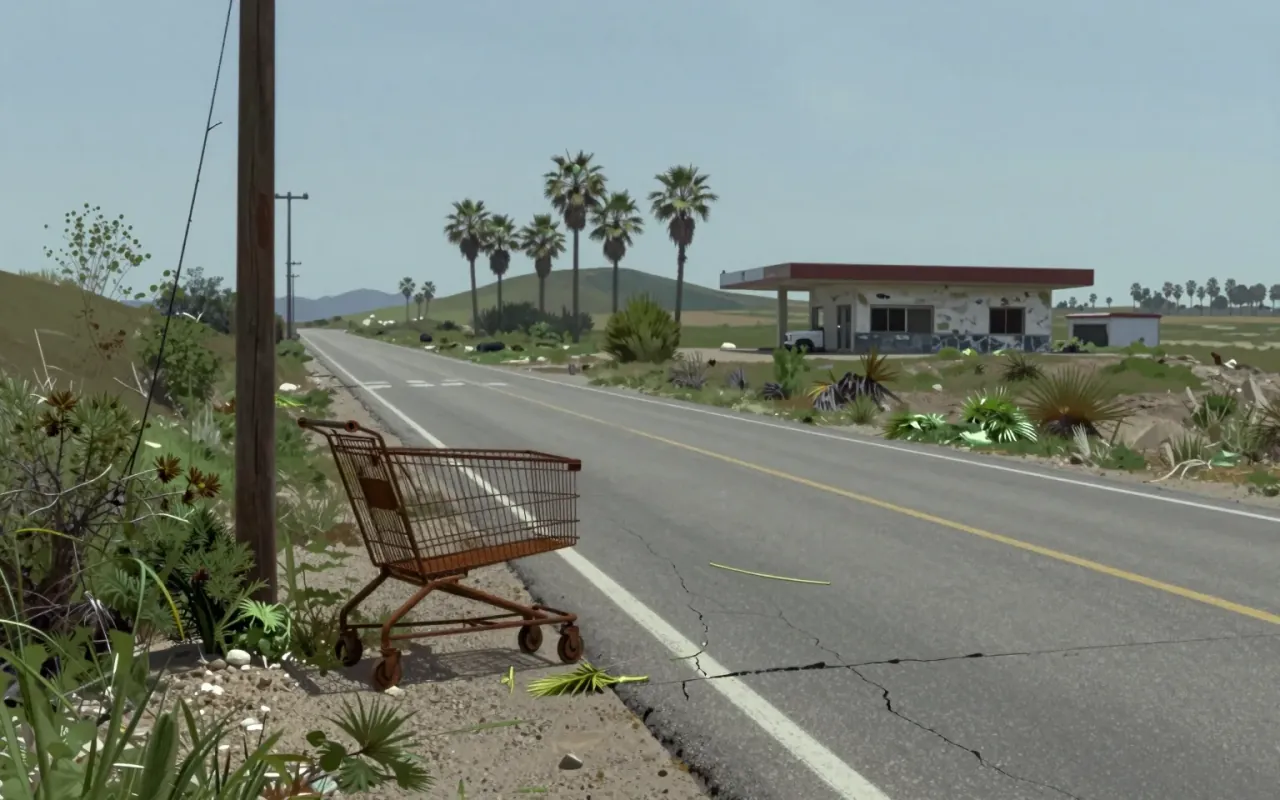
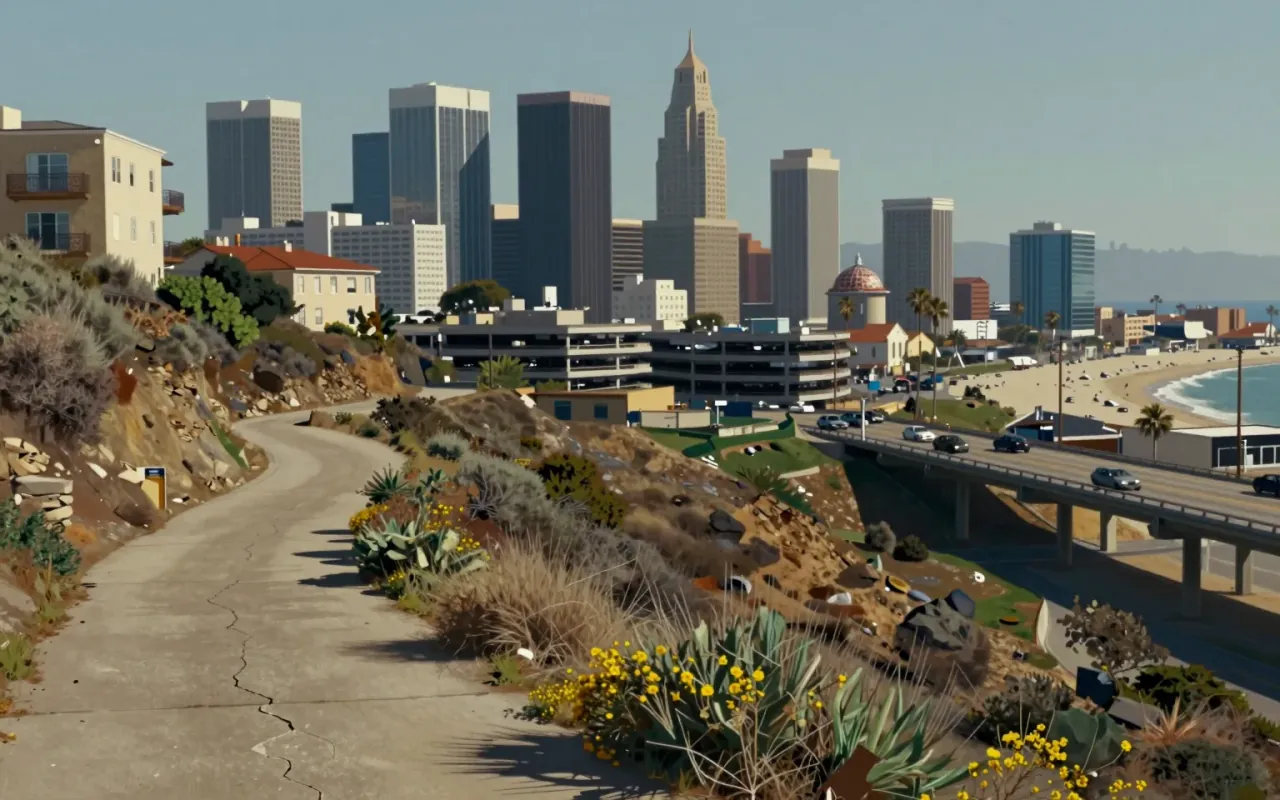
Grand Theft Auto: San Andreas is an action-adventure game published by Rockstar Games in 2004. Players control Carl 'CJ' Johnson in a third-person open world representing a fictionalised California and Nevada. The world comprises three cities—Los Santos, San Fierro, and Las Venturas—connected by rural and desert areas. Cities unlock progressively through the story; airports allow fast travel between them. Players complete linear story missions with fixed objectives, and may freely explore and undertake optional side missions. Navigation includes running, swimming, and vehicle use; combat includes melee, firearms, explosives, dual-wielding, and drive-by shootings. Weapons are acquired via purchase, looting corpses, or finding them scattered across the world. Safehouses—purchasable locations—are used to save progress and store vehicles. The game introduces role-playing elements such as character customisation, skill progression, gang territory control, and relationship management.

Chapters & takeaways4
  1. 1:00
    Mission-first

    It is a third-person action-adventure built around linear story missions with fixed objectives.

  2. 2:12
    Geography as gate

    Three cities unlock progressively—Los Santos, San Fierro, Las Venturas—with airports enabling fast travel.

  3. 3:26
    Weapons with weight

    Combat is tactile and varied: drive-bys, dual-wielding, and weapon acquisition through dealers, corpses, and world spawns.

  4. 6:23
    Safehouses as hubs

    Safehouses are purchasable anchors—used to save and store vehicles—scattered across the map.

Worth your time?

Yes. Play the whole thing.

3.5/ 5
What works
  • The scale and cultural specificity of the world hold up.
  • Los Santos’ sprawl, San Fierro’s hills, Las Venturas’ neon glare each impose distinct movement rhythms and tactical pressures.
  • Gang territory visually defines neighbourhoods.
  • CJ’s appearance, fitness, and weapon loadout visibly affect NPC reactions.
What does not
  • The Introduction was released in 2004.
  • Rockstar Games developed San Andreas.
  • San Andreas is a racing game.
  • The game features multiplayer.
Play it if
  • Players who value environmental storytelling over scripted set-pieces.
  • Players who enjoy building agency through repeated, low-stakes interaction.
  • Players who accept that systemic depth comes at the cost of polish and consistency.
Skip it if
  • Players who require tight feedback loops.
  • Players who require responsive physics.
  • Players who require narrative coherence across side content.
The written brief2 min read

What the game is

An action-adventure game published by Rockstar Games in 2004. It is played from a third-person perspective in an open world modelled on California and Nevada, composed of three cities—Los Santos, San Fierro, and Las Venturas—linked by rural and desert areas.

How it actually plays

Players control CJ to complete linear story missions with fixed objectives. The world opens in stages: Los Santos first, then San Fierro, then Las Venturas—each unlocked by narrative progress. Airports enable fast travel between cities. Outside missions, players run, swim, or drive freely. Combat uses melee, firearms, explosives, dual-wielding, and drive-bys. Weapons come from dealers, corpses, or world spawns. Safehouses—purchasable locations—save progress and store vehicles.

What works

The scale and cultural specificity of the world hold up. Los Santos’ sprawl, San Fierro’s hills, Las Venturas’ neon glare each impose distinct movement rhythms and tactical pressures. Gang territory visually defines neighbourhoods, and CJ’s appearance, fitness, and weapon loadout visibly affect NPC reactions. Safehouses anchor exploration. Drive-bys and dual-wielding make vehicle combat legible and expressive.

What does not

The mission design often contradicts the world’s systemic promises. Gang territories shift only during scripted events—not player action. Relationship mechanics are shallow: dialogue choices don’t alter outcomes, and friendship is binary, not dimensional. Progression feels gated by story beats, not player skill or investment.

Who it is for, and who it is not

It is for players who value environmental storytelling over scripted set-pieces, who enjoy building agency through repeated, low-stakes interaction—stealing cars, running errands, managing safehouse inventories—and who accept that systemic depth comes at the cost of polish and consistency. It is not for players who require tight feedback loops, responsive physics, or narrative coherence across side content.

Is it worth your time

Yes—if you want a dense, systemic open world where geography, gang affiliation, physical conditioning, and social ties meaningfully shape what you can do and how you’re treated. It demands time, tolerance for dated controls and pacing, and willingness to engage with its layered systems rather than just its spectacle.
Same shelf · Action & adventure4 of 22
Up next in Games

Grand Theft Auto V

Rockstar Games · 2013 · 10:26

Three protagonists, one world, zero narrative patience—it’s a triumph of systemic design over storytelling discipline.

10:26