gamesbriefs
Publisher

Activision

13
briefs
10:12
average
133 min
in total
On games.briefs13
10:45

Call of Duty: Warzone (2020 video game)

Infinity Ward · 2020

Call of Duty: Warzone (2020) is a free-to-play battle royale built on the IW 8.0 engine, supporting up to 150 players per match. It uses an in-game Cash system to gate access to weapons, perks, and respawns via Buy Stations and Loadout Drops. Players begin each match with a basic pistol and two armor plates, then scavenge weapons, equipment, and killstreaks across large photogrammetry-rich maps including Verdansk, Rebirth Island, Caldera, and Fortune's Keep. Battle Royale features shrinking zones and the Gulag respawn mechanic; Plunder and Resurgence offer alternative loops. The game integrated progression with Modern Warfare, Black Ops Cold War, and Vanguard before server shutdown on September 21, 2023.
9:41

Wolfenstein (2009 video game)

Raven Software · 2009

Wolfenstein (2009) is a first-person shooter that adds a supernatural layer — the Veil — to id Tech 4. It lets players slow time, bypass obstacles, and kill shielded enemies. Raven Software built it using id’s engine technology. Development problems led to layoffs. The Veil is mechanically functional but narratively detached. It is a technical demonstration, not a unified experience.

8:27

Destiny (video game)

Bungie · 2014

Destiny is a server-dependent first-person shooter that structures player time around repeated group activities — strikes, raids, patrols, and PvP matches — all governed by Light-level gating and tied to Bungie.net infrastructure. Its strength lies in rhythmic, communal combat execution. Its weakness is systemic opacity and narrative detachment. It asks for consistency, not curiosity.

11:44

Tony Hawk's Pro Skater 3

Neversoft · 2001

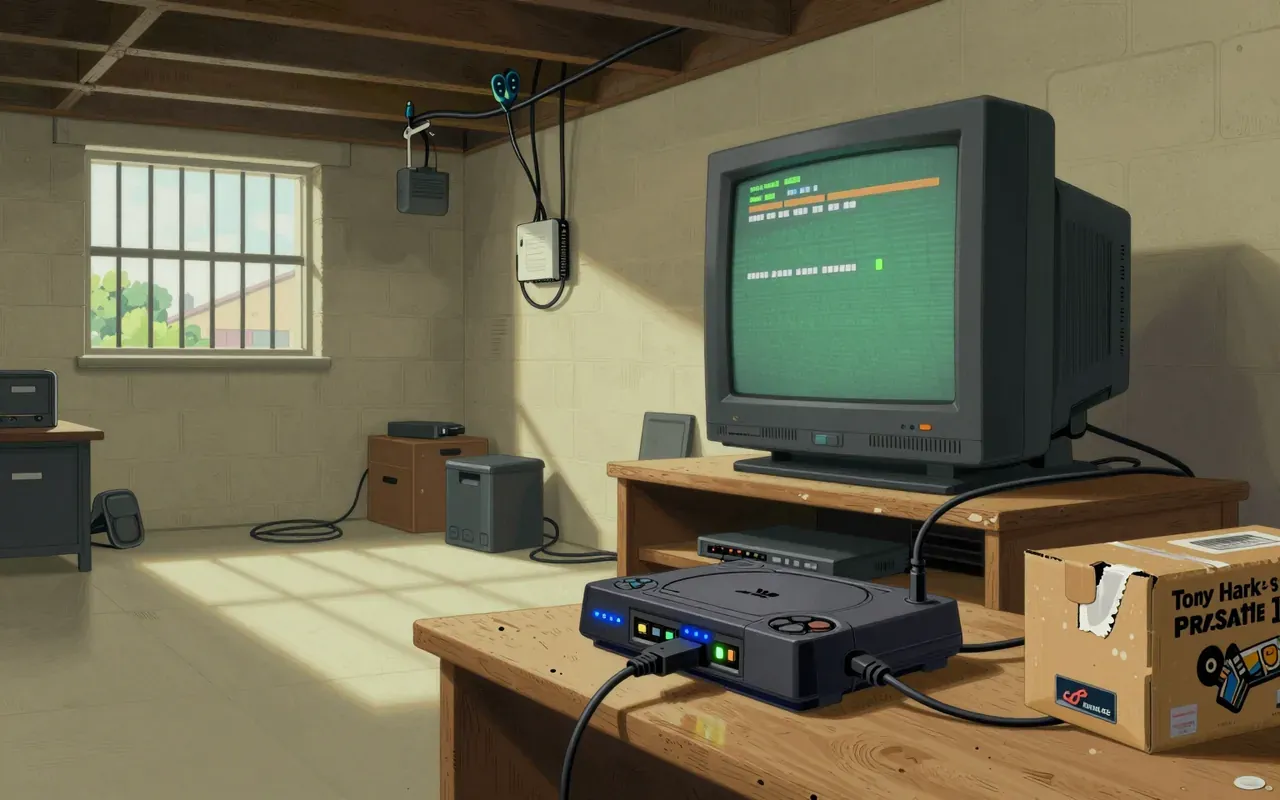
Tony Hawk's Pro Skater 3 is the pivot point where the series’ combo grammar expanded and online play entered—raw, hardware-bound, and version-dependent.

10:08

Destiny 2

Bungie · 2017

Destiny 2 is a free-to-play online first-person shooter developed by Bungie, released in 2017. It features a shared-world environment with role-playing elements. Activities are divided between PvE (story missions, three-player strikes, dungeons, six-player raids, free-roam patrol with public events, and exploration-focused activities featuring NPCs outside social spaces) and PvP (objective-based and deathmatch modes). Players embody Guardians wielding Light—and later Darkness—to defend Earth’s last city against alien threats. It runs on the Tiger Engine, uses Bungie.net for player statistics and account management, and supports companion mobile apps for news, inventory, and group finding.

10:24

Enemy Territory: Quake Wars

Splash Damage · 2007

Enemy Territory: Quake Wars is a class-based, objective-focused, team-oriented multiplayer FPS set in the Quake universe. Developed by Splash Damage and released in 2007, it uses a heavily modified id Tech 4 engine and introduces vehicles — a first for the Quake series. Teams are asymmetrical (human GDF and alien Strogg), yet share the same basic weapons and tools. Gameplay focuses on one or two main objectives at a time, not spread across the map. New objectives appear dynamically during play, often tied to class-specific capabilities. Players can form fireteams — user-created or game-generated — to coordinate strategy. An XP-based progression system rewards mission completion, resetting per campaign.

11:25

Quake 4

Raven Software · 2005

Quake 4 is a movement-first FPS built on Quake’s legacy, not its future.

10:06

Quake II

id Software · 1997

Quake II is a mission-driven, first-person shooter released in 1997 by id Software for Windows 95. It shifts the Quake series to a retaliatory human assault on the alien planet Stroggos against the Strogg. Movement is slower than Quake’s, with added crouching. Six new weapons join four redesigned Quake weapons; four Quake weapons are omitted. Power-ups include Quad Damage plus six new ones. Single-player uses repeated CGI cutscenes to mark progress through objectives like stealing a Tank Commander’s head or calling in an airstrike. Multiplayer supports deathmatch, co-op, and Capture the Flag via client/server and OpenGL. It establishes the human–Strogg war narrative that most later Quake entries follow — unlike Quake III Arena, which abandons continuity for arena combat.

9:18

Return to Castle Wolfenstein

Gray Matter Interactive · 2001

Return to Castle Wolfenstein is a first-person shooter built on id Tech 3, where the player navigates levels and fights enemies including Nazi soldiers, undead, and experimental mutants. In the game's single-player mode, players use combat and stealth to complete objectives across 27 levels in 7 missions. Missions begin with a mission briefing, providing information about objectives, and may include activities such as reaching the end of an area, defeating all the enemies, collecting certain items, eliminating specific enemies, or stealth missions. The player acquires weapons and ammo throughout levels, including for pistols, submachine guns, rifles, grenades, rockets, flamethrowers, and experimental weapons including the Venom, a minigun, and the Tesla Gun, which shoots electricity at enemies. Some weapons have alternate fire modes, such as rifles that have a scope, or shoot projectiles. The player can also engage in melee combat by either kicking or using a knife. Damage is location-specific, with headshots damaging enemies more than other areas. Special items can be collected that increase the player's health, ammo, armor, or stamina.

8:56

Tony Hawk's Pro Skater

Neversoft · 1999

Tony Hawk's Pro Skater is a tightly wound trick-chaining machine. It asks for precision, repetition and split-second decisions — then rewards them with escalating points, visual flash and palpable momentum. Its constraints — fixed camera, two-minute windows, diminishing trick scores — are not limitations. They are the architecture of its appeal.

11:52

Tony Hawk's Underground

Neversoft · 2003

Tony Hawk's Underground (2003, Neversoft) shifts the franchise from abstract high-score chasing to a story-anchored, exploration-led skate experience. Its trick system remains tightly tuned — ollies initiate combos, grinds demand stick precision, and the balance meter enforces constant correction. Narrative goals provide structure but little weight. Customisation and level editing add longevity. It rewards spatial fluency and repetition, not cinematic immersion.

10:30

Sekiro: Shadows Die Twice

FromSoftware · 2019

Sekiro: Shadows Die Twice is a 2019 action-adventure game developed by FromSoftware. Players control Wolf, a shinobi on a quest to rescue his lord Kuro. Gameplay focuses on stealth, exploration, and combat—with particular emphasis on boss battles. It is played from a third-person perspective. Compared to FromSoftware's Dark Souls series, Sekiro features fewer role-playing elements, lacks character creation and the ability to level up a variety of stats, and has no real-time multiplayer elements. It does include gear upgrading, special abilities with a prosthetic arm, a skill tree, and limited ability customization. Combat revolves around using a katana to attack enemy posture and balance, deflecting incoming attacks to create openings for a single killing blow. Stealth allows players to instantly eliminate or severely damage most enemies if they can get in range undetected. Sekiro is part of the Soulslike subgenre defined by high difficulty and environmental storytelling. Hidetaka Miyazaki directed the game.

9:24

Tony Hawk's Pro Skater 2

Neversoft · 2000

Tony Hawk's Pro Skater 2 is a tightly wound trick-chaining machine — built for repetition, reward, and escalating absurdity. Its fixed camera and autonomous skater create a distinct physical language. Its loose physics serve the loop, not realism. It offers no story, no stakes beyond your own score — and that’s exactly why it holds up.