
Ridge Racer (1993 video game)
Namco · 1994
Ridge Racer (1993) is a Namco arcade racing game built on System 22 hardware, defined by drifting, texture-mapped 3D graphics, and a lap-based race loop across one track in four difficulty tiers.
Ridge Racer (1993) is a Namco arcade racing game built on System 22 hardware, defined by drifting, texture-mapped 3D graphics, and a lap-based race loop across one track in four difficulty tiers.
R4: Ridge Racer Type 4 is a PlayStation racing game centred on powersliding — using either Drift (single brake tap) or Grip (brake/gas alternation) depending on car make — within a structured Grand Prix progression where qualifying positions determine vehicle unlocks and upgrades. It introduces team- and manufacturer-based story modes, Time Attack, two-player split-screen VS. Battle (a series first), four-player Link Cable support, car decoration, Extra Trials versus prototypes, and PocketStation integration for car trading in Japan.
Soulcalibur (1999, Dreamcast) is Namco’s weapon-based fighting sequel to Soul Edge. It introduces eight-way sustained movement, forgiving input buffering, and expanded Guard Impact mechanics. Its design centres on weapon-driven character styles, tactical movement interacting with ring-out, and diversity in weapon behaviour and clash reactions.
Time Crisis is a 1995 Namco arcade light-gun shooter defined by its foot pedal mechanic, three-stage structure, and strict one-minute countdown per area. It asks players to balance rapid shooting with minimal ducking to conserve time. It helped set the standard for the lightgun shooter genre. Its design offers no narrative, no flexibility, and no recovery—only repetition, rhythm, and risk.
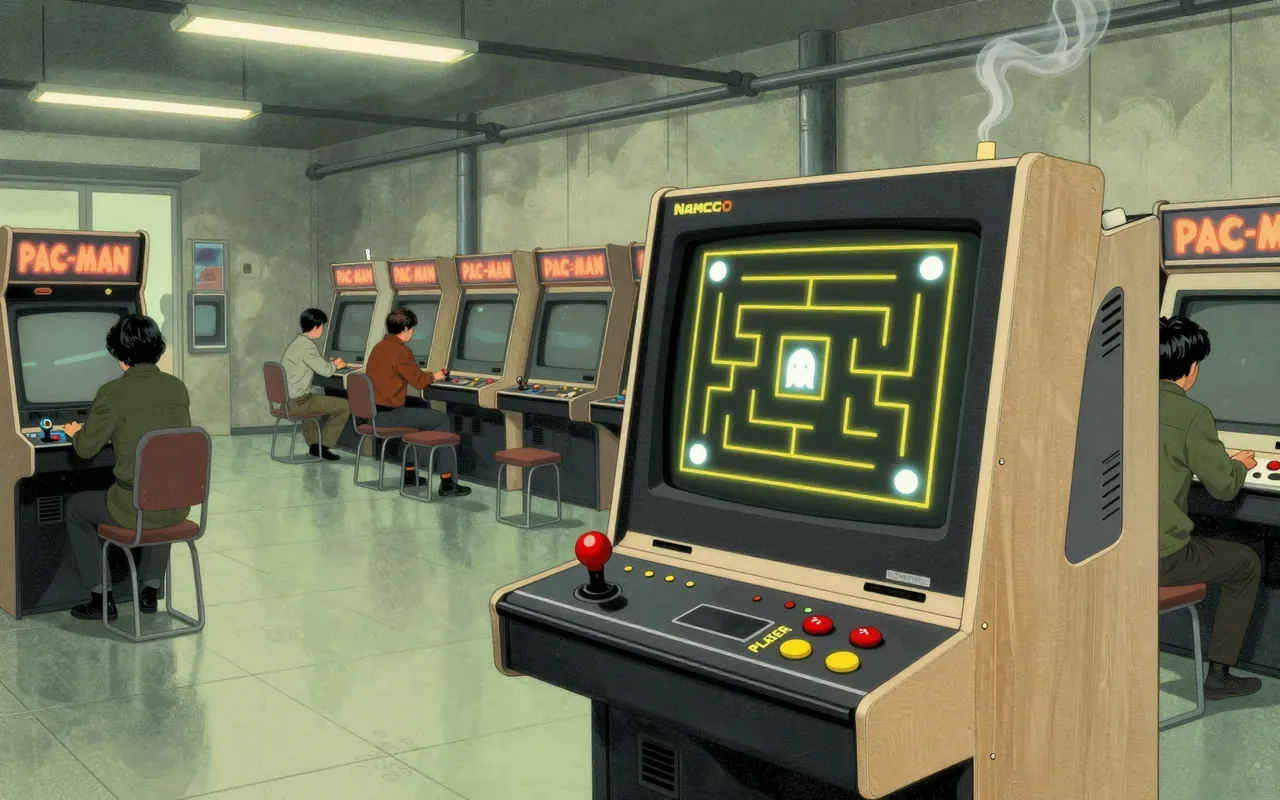
Pac-Man is a foundational arcade game released by Namco in Japan in 1980 (test-marketed 22 May, wide release July) and North America in November 1980. Its design centres on eating dots in a fixed maze while evading four ghosts—Blinky, Pinky, Inky, and Clyde—each governed by a distinct AI rule. Power pellets temporarily reverse ghost behaviour and enable Pac-Man to consume them. Completion of each level requires clearing all dots; contact with a ghost costs a life. The game ends when all lives are lost.

Soulcalibur III is a tightly wound, offline-only PlayStation 2 fighting game that binds narrative, strategy, and character systems into one progression loop. It demands interplay across modes, rewards precision in timed inputs, and refuses to separate personality from equipment. Its absence of online play is a structural choice—not an omission. It is dense, deliberate, and uninterested in hand-holding.
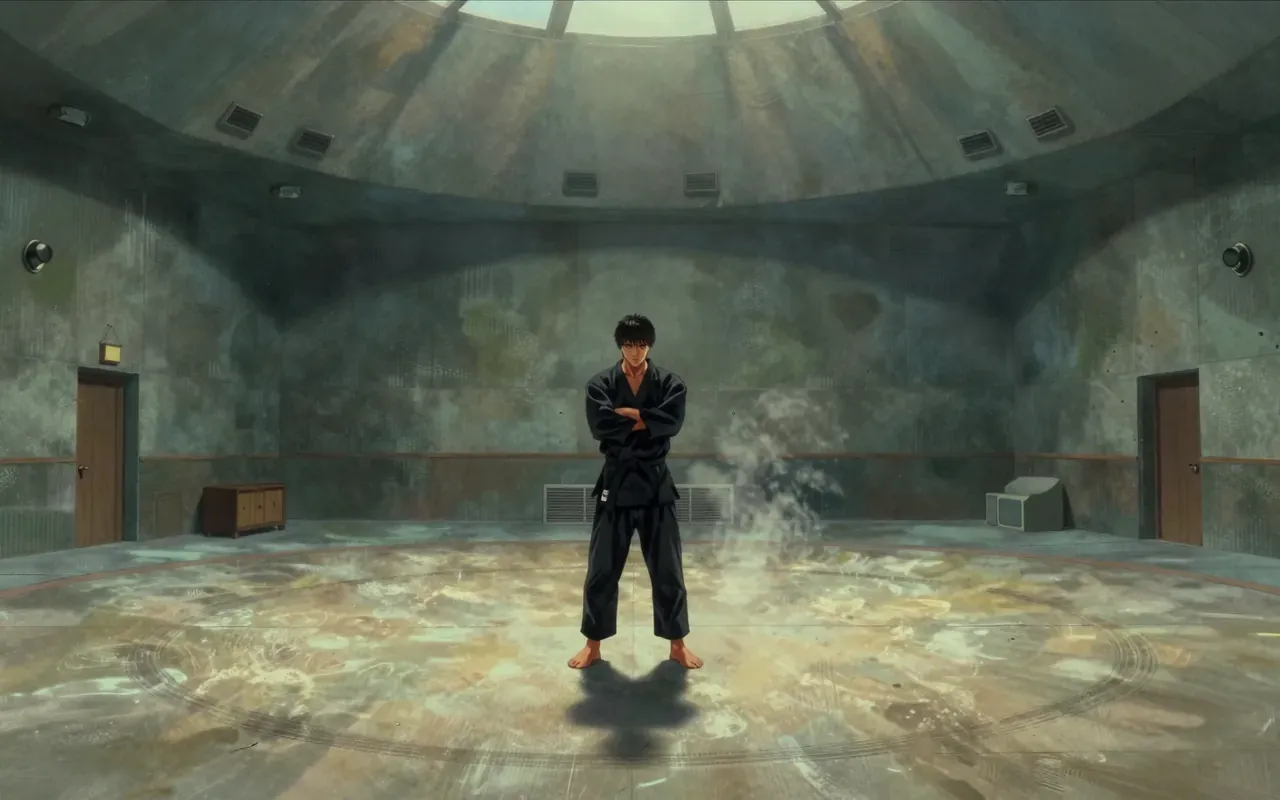
Tekken 2 refines the original's 3D fighting mechanics with new defensive and movement options—attack reversals, back throws, chain-throws, and character-specific sidesteps—while retaining the infinite plane and four-button layout. Its home console version adds structured training and endurance modes (Survival, Team Battle, Time Attack, Practice) with health carryover systems that shape long-session play. Unlock progression ties directly to Arcade Mode completion, and hardware constraints shaped the PlayStation port's development focus.
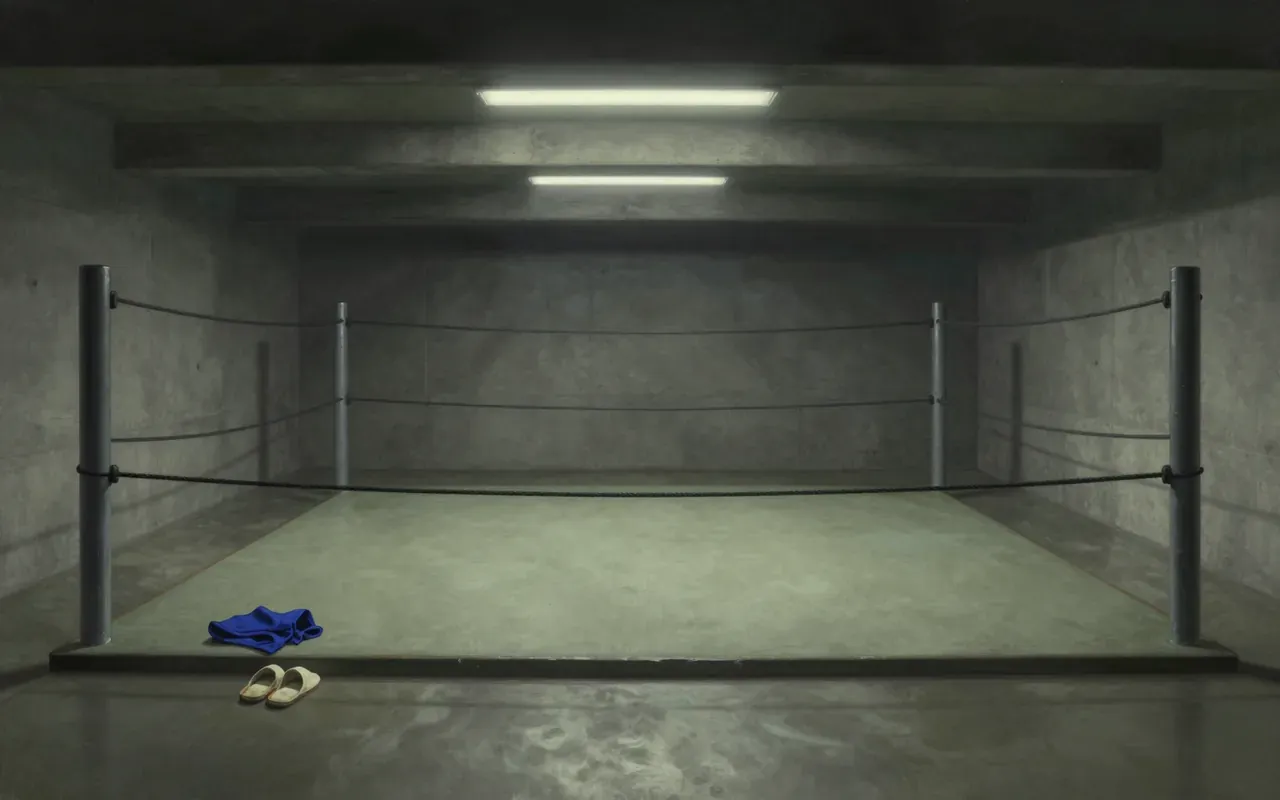
Tekken 5 is a deliberate course correction. It strips away Tekken 4’s experimental terrain and positional mechanics to restore spatial fairness and rhythmic flow. It introduces the hot system — a narrow but impactful defensive tool — and cosmetic character customisation via in-game currency. Stages are either symmetrical boxes or barrier-free and infinitely scrolling. Floor cracking is present but singular and non-disruptive. Devil Within adds a beat ‘em up minigame. The game delivers on its core promise: consistent, readable 3D fighting with no hidden variables.
Dig Dug (Namco, 1982) is a maze chaser where the player carves tunnels to manipulate enemy movement and trigger rock falls. Its core loop — stop, latch, inflate, dodge — demands split-second timing and spatial foresight. It works because every action has immediate, visible, physical consequences. It does not work as a long-form experience: no story, no scaling challenge beyond repetition, no system depth beyond its two mechanics. It is for players who value clarity, consequence, and compact design over expansion or expression.
Tales of Phantasia is the foundational title of the Tales series—a technical pivot from turn-based to real-time party combat on the Super Famicom. Its Linear Motion Battle System defines engagement by splitting control: one character in motion, the rest in menus or AI. It delivers a focused revenge arc set in Aselia, where the destruction of Cress’s village serves a larger scheme to free Dhaos. Development was delayed from 1994 to late 1995 due to Namco-mandated changes—including the title—after Telenet contracted Namco following failed talks with Enix. Yoshiharu Gotanda conceived the game at Wolf Team.
Tekken 3 is a 3D fighting game developed by Namco, launched in arcades in March 1997. It refines the series’ combat with universal sidestepping, lower jumps, universal reversals, faster knockdown recovery, expanded juggling, and new combo throws. It adds two minigames—Tekken Force (a side-scrolling beat 'em up) and Tekken Ball (a volleyball-style combat mode)—and implements a PlayStation-specific unlock system where only 10 of 24 fighters are initially available.