gamesbriefs
Newest

All briefs

467 briefs · 4633 min · 97–192 on page 2 of 5
8:49

Bejeweled (video game)

PopCap Games · 2001

Bejeweled is a browser-based match-three puzzle game developed by PopCap Games and first released in 2000. Players swap adjacent gems to form lines of three or more identical gems, clearing them and triggering cascading falls. Swaps that fail to produce a match revert automatically. It features untimed and timed modes — the former ending when no moves remain, the latter requiring point accumulation to stall a depleting timer — and later introduced competitive multiplayer with special gems.

11:39

Borderlands (video game)

Gearbox Software · 2009

Borderlands (2009) is a role-playing shooter developed by Gearbox Software. It combines first-person shooter action with RPG systems—including four distinct Vault Hunters, branching skill trees, mission-driven progression, and a procedural loot engine generating over 15 million weapon and gear variations. Its cell-shaded-like art style gives Pandora a comic-book appearance. Players fight hostile wildlife and human forces on the fictional planet while seeking a fabled Vault.

10:15

Braid (video game)

Jonathan Blow · 2008

Braid is a 2D puzzle-platform game developed by Thekla Inc., published by Microsoft, released on XBLA in 2008. Its art was created by David Hellman. It uses time manipulation as its central design pillar, delivered through six sequentially unlocked worlds, each governed by a distinct temporal rule. Narrative is conveyed through text between worlds, environmental art, and gameplay itself.

9:32

Candy Crush Saga

King · 2012

Candy Crush Saga is a match-three puzzle game where players swap adjacent candies to make lines or columns of three or more identical colours. Matches remove candies, trigger cascading falls, and generate points — with bigger matches producing special candies that clear larger board sections. Each level imposes a specific goal — like collecting a number of candies or clearing jelly-covered tiles — within a fixed move limit. Lives are lost on failure and regenerate over time or via purchase. The game introduced saga-based progression and cross-platform sync, with mobile versions built for touch and offline play.

8:44

Cooking Mama (video game)

Office Create · 2006

Cooking Mama is a sequence of brief, touch-driven minigames representing kitchen tasks. Each lasts under 10 seconds. Players follow instructions on the top screen and act on the bottom screen using the stylus. Failure occurs on serious error or time expiry. It offers crisp, immediate feedback but no cumulative learning or systemic logic. Office Create developed it and enforced strict quality standards over feel and content — but not over depth or coherence.

11:13

Crysis (video game)

Crytek · 2007

Crysis is a first-person shooter developed by Crytek and published by Electronic Arts. It was released on PC in November 2007. It casts the player as Delta Force soldier Nomad on a hostile tropical island. Its core design premise is 'adaptive tactics'—requiring players to shift between stealth, aggression, lethality and mobility based on terrain, enemy placement and Nanosuit energy state.

9:23

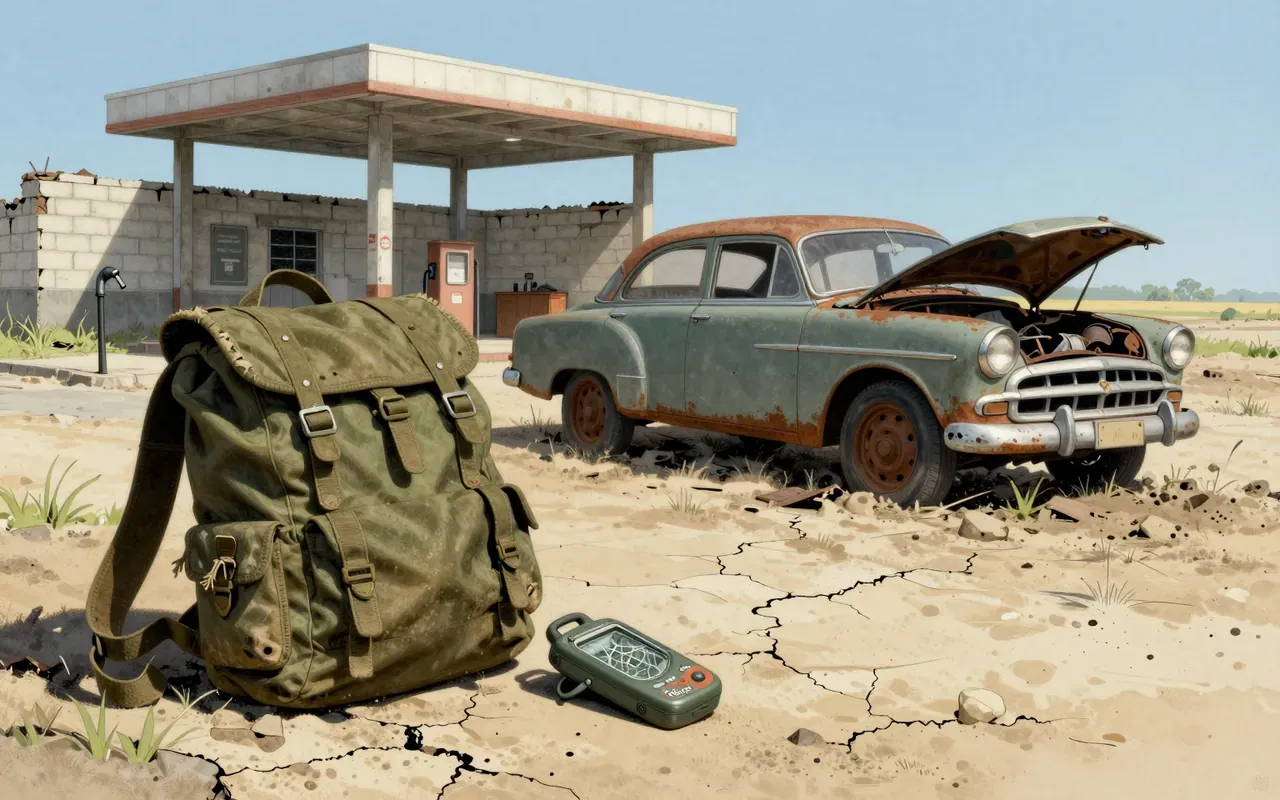
DayZ (video game)

Bohemia Interactive · 2013

DayZ is a multiplayer online survival game set in fictional plague-ravaged countries where players scavenge, manage health, evade infected, and negotiate threat from other players in a persistent world.

8:27

Destiny (video game)

Bungie · 2014

Destiny is a server-dependent first-person shooter that structures player time around repeated group activities — strikes, raids, patrols, and PvP matches — all governed by Light-level gating and tied to Bungie.net infrastructure. Its strength lies in rhythmic, communal combat execution. Its weakness is systemic opacity and narrative detachment. It asks for consistency, not curiosity.

9:36

Diablo (video game)

Blizzard · 1996

Diablo (1996) is an action role-playing dungeon crawler developed by Blizzard North and published by Blizzard Entertainment for Windows. Players navigate procedurally generated levels using mouse-driven movement and keyboard-based spellcasting. Dungeon themes shape layout—catacombs feature long corridors, caves are non-linear. Quests are randomly assigned from tiers; only the final two are mandatory. Items degrade with use and are destroyed at zero durability. Griswold the Blacksmith repairs them for a fee; Warriors may self-repair at durability cost. Staves enable spellcasting without spell knowledge or mana. The game establishes a tight, friction-driven loop: explore, degrade, return, repeat—until the final two quests gate the end.

9:16

EarthBound

Nintendo · 1994

EarthBound is a 1994 Nintendo RPG that rejects the genre’s conventions: no overworld map, no random encounters, no top-down grid. Instead, it builds a seamless, oblique-projection world where enemies are visible NPCs, combat begins with spatial positioning, and progression is deliberately unstable. It asks players to read the environment, not the menu.

9:50

Famicom Wars

Nintendo · 1988

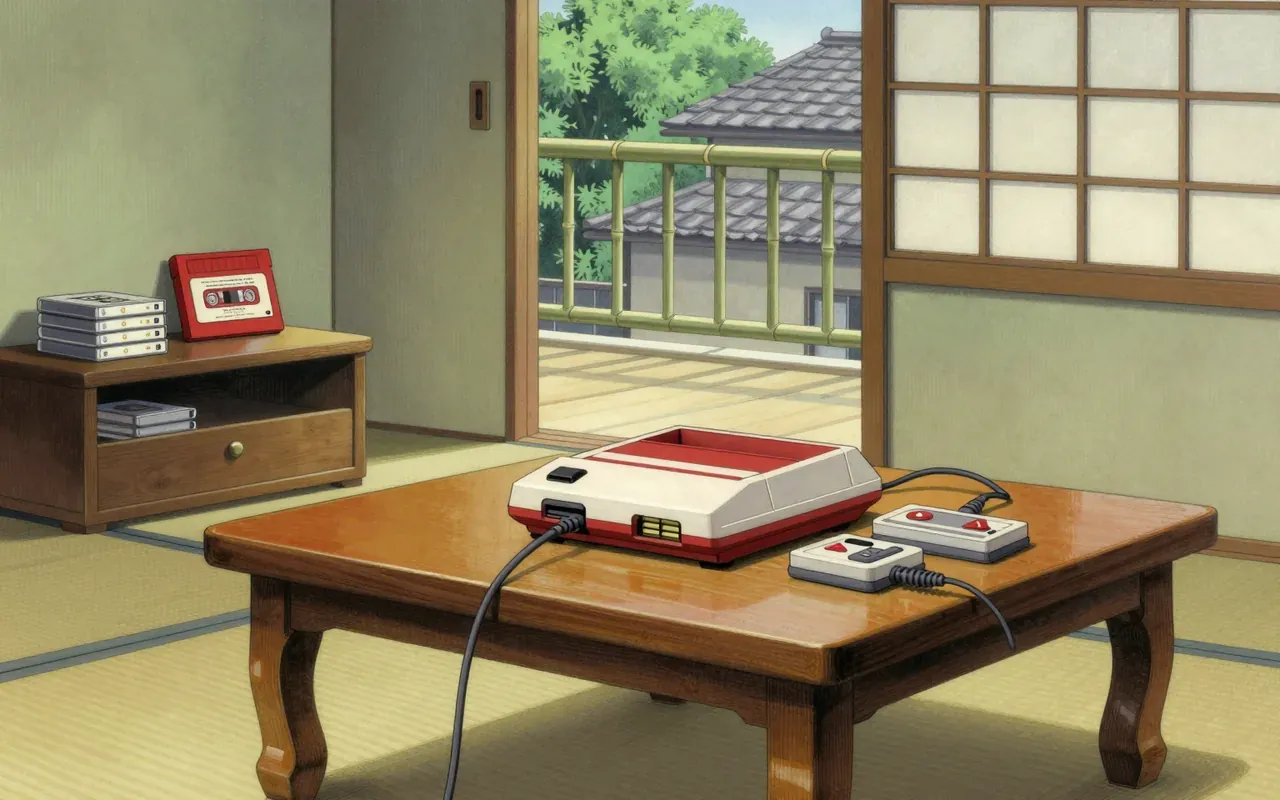
Famicom Wars is Nintendo’s 1988 turn-based strategy game for the Famicom. Players command Red Star or Blue Moon across 15 initial maps, aiming to capture the enemy headquarters or eliminate all enemy units in one turn. Each turn provides funds to build units at owned factories, seaports, and airports; conquering cities near headquarters yields extra funds. Only foot soldiers can conquer cities, enabling repair/refuelling. Unit roles differ in firepower and support. Two secret ending maps unlock depending on the nation chosen against the CPU.

10:12

Far Cry (video game)

Crytek · 2004

Far Cry (2004) is a first-person shooter set in a dynamic tropical archipelago. It uses environmental cover, sound, and optical tools to create a sensor-driven combat loop. Enemies react, coordinate, and communicate. Its open maps contrast with linear missions. It is Crytek’s debut AAA title, built on CryEngine, and the first Far Cry game.

9:02

Guitar Hero (video game)

Harmonix · 2005

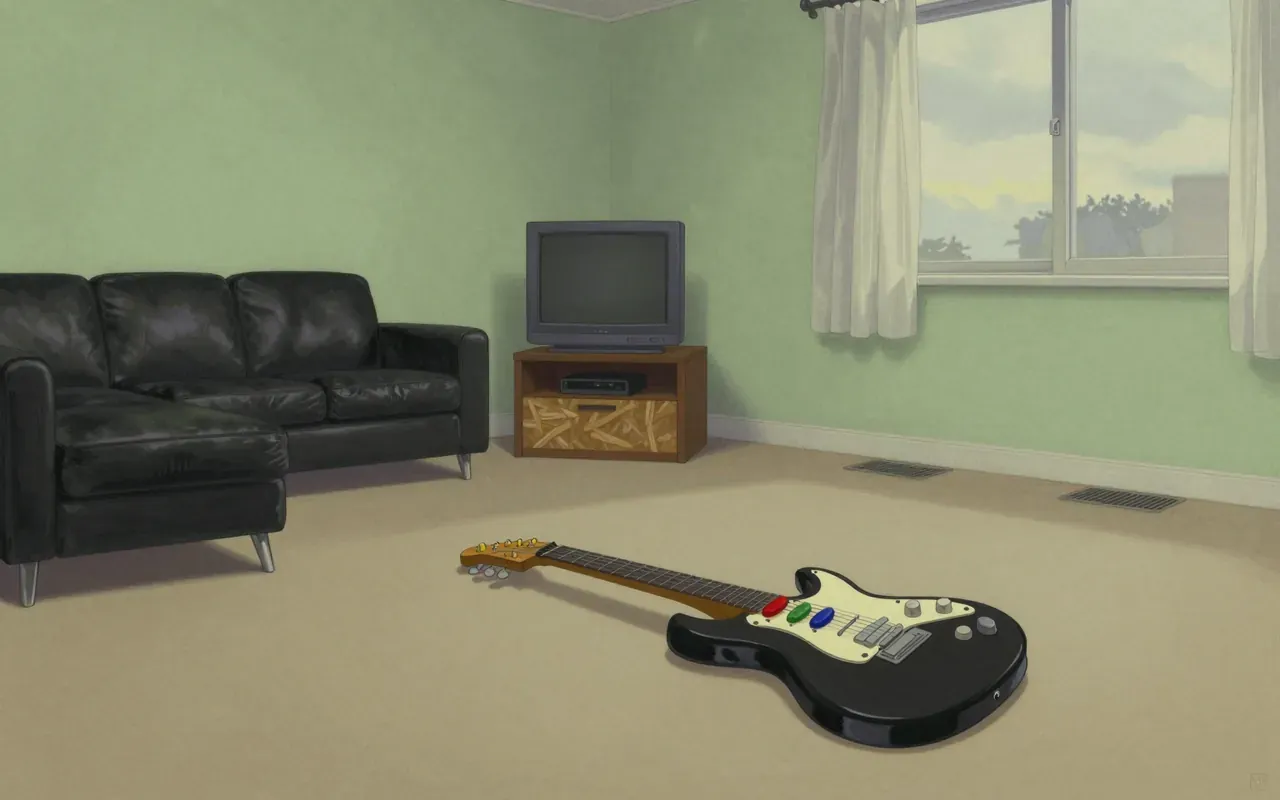
Guitar Hero (2005) is a rhythm game where players press coloured fret buttons and strum in time with scrolling notes on screen. Developed by Harmonix and published by RedOctane for the PlayStation 2, it uses a custom guitar-shaped controller with five colour-coded frets and a strum bar. Gameplay draws from Frequency and Amplitude, and supports both left- and right-handed configurations. A Rock Meter fails the song if depleted, and Star Power can be activated via whammy bar or tilt. Players earn points for hitting notes, chords and sustains, and increase a score multiplier through consecutive successful hits. Hammer-on and pull-off techniques allow faster note series without strumming each note. Standard controllers map notes to face buttons.

11:58

Gunpoint (video game)

Tom Francis · 2013

Gunpoint is a stealth-based puzzle-platform game where players control freelance spy Richard Conway to infiltrate buildings, avoid guards, and bypass security using gadgets like the Crosslink tool.

10:09

Half-Life (video game)

Valve · 1998

Half-Life replaces cutscenes with continuous control, levels with chapters, and abstract challenges with environmental logic. It asks players to observe, adapt, and inhabit a world—not just shoot through it.

11:22

Heretic (video game)

Raven Software · 1994

Heretic (1994) is a first-person shooter developed by Raven Software. It is the first entry in the Serpent Riders trilogy and is set in the dark fantasy world of Silverspring. The game uses a modified Doom engine to deliver level-based combat, key-driven progression, and fantasy-themed interactivity.

9:36

The House of the Dead

Sega · 1996

The House of the Dead is a 1996 Sega arcade rail shooter defined by strict shooting discipline, enemy-clearance gating, and boss-pattern literacy. Its design rewards fast, accurate head shots and punishes hesitation or misaim. It offers no narrative, no progression beyond path selection, and no mechanical expansion — only escalation within its narrow loop.

8:32

Insurgency (video game)

New World Interactive · 2014

Insurgency (2014) is a tactical shooter defined by omission: no crosshair, no health bar, no minimap, no instant respawn. Players join Security or Insurgents in a fictional Middle Eastern conflict. At round start, they spend supply points on class-specific weapons. Guns kill fast. Death means spectating until their team completes an objective. Every design choice removes feedback to force presence, patience, and trust.

12:10

Just Dance (video game)

Ubisoft · 2009

Just Dance (2009) is a Wii-exclusive rhythm game published by Ubisoft. Players use only the Wii Remote in their right hand to mirror on-screen dancers’ choreography. Moves are scored X, OK, or Great. Shake moves trigger a shake meter for bonus points. Each song has two scoring targets: 10,000 (Standard) and 15,000 (Master). Four modes include Standard, Warm Up, Strike a Pose, and Last One Standing. It is one of Ubisoft’s core, long-running franchises.

10:54

Killing Floor (video game)

Tripwire Interactive · 2009

Killing Floor is a co-op first-person shooter where players survive escalating waves of ZEDs using perks, door welding, and a between-wave trader. It launched on Steam on May 14, 2009. It began as a mod for Unreal Tournament 2004. It is Tripwire Interactive’s second game.

9:09

Mass Effect (video game)

BioWare · 2007

Mass Effect (2007) is a single-player, third-person science fiction RPG developed by BioWare using Unreal Engine 3. Players customise Commander Shepard, choose one of six classes with distinct talents and weapon proficiencies, explore a galaxy map to pursue story and optional quests, and recruit and develop six squad members. Combat is real-time and squad-based, pausable for tactical ability selection, with shield/health mechanics, overheating weapons, and cover. Dialogue uses a radial wheel tied to morality (Paragon/Renegade) that shapes relationships and unlocks narrative options. The game features vehicle-based planetary exploration via the M35 Mako, resource surveying, and talent progression through experience and leveling.

10:04

NBA 2K (video game)

2K Sports · 1999

NBA 2K (1999) is the inaugural title of the NBA 2K series, released for the Sega Dreamcast. Developed by Visual Concepts and published by Sega, it features real NBA players and teams from the 1999–2000 season, custom player and team creation, and fictional commentary by Bob Steele and Rod West.

8:53

Plants vs. Zombies (video game)

PopCap Games · 2009

Plants vs. Zombies is a tower defence and strategy video game developed and originally published by PopCap Games for Windows and OS X in May 2009.

10:07

Portal (video game)

Valve · 2007

Portal is a first-person puzzle game where players solve spatial challenges using a portal gun that creates bidirectional, color-coded connections between surfaces. Physics-based movement—especially momentum conservation and orientation realignment across portals—forms the core mechanical loop, enabling techniques like 'flinging'. Constraints include inability to place portals through existing portals, on moving or unsuitable surfaces, or past Emancipation Grills, which erase portals and destroy carried objects. Puzzles are structured across test chambers, with optional challenge modes emphasizing efficiency or added hazards. The player controls Chell, a silent protagonist guided and antagonized by GLaDOS, within a clinical, minimalist facility designed to foreground functional geometry over decoration.

10:18

Project Gotham Racing (video game)

Bizarre Creations · 2001

Project Gotham Racing is a 2001 Xbox racing game developed by Bizarre Creations. It uses the Kudos system to reward stylish driving—power sliding, two-wheeling, and overtaking—with points that decay on collision. Players advance by meeting both speed and Kudos thresholds across three modes: Kudos Challenge (medal-based style events), Quick Race (five-car races), and Arcade Race (additional style challenges). It runs at 60 FPS and supports split-screen multiplayer.

10:25

Rage (video game)

id Software · 2011

Rage is a first-person shooter with integrated vehicular traversal and combat, featuring customizable weapons and ammo, dual enemy archetypes, and structured racing events with variable opposition and armament. Players upgrade vehicles via event rewards and engage in both open-world exploration and mission-based progression.

10:59

Rock Band (video game)

Harmonix · 2007

Rock Band (2007) is a four-player rhythm game developed by Harmonix. It simulates rock performance using instrument-shaped controllers for lead guitar, bass guitar, drums, and vocals. Scoring depends on timing accuracy for instruments or pitch-matching for vocals. It launched across Xbox 360, PlayStation 3, PlayStation 2, and Wii—with feature parity highest on Xbox 360 and PlayStation 3. Post-launch, Harmonix supported PlayStation 3 and Xbox 360 with weekly downloadable songs.

8:37

Rust (video game)

Facepunch Studios · 2018

Rust is a multiplayer survival game developed and published by Facepunch Studios. It launched in 2018. Players must gather or steal materials to survive in a harsh open world. They manage hunger, thirst, and health. Other players are the primary threat. Combat uses firearms and bows. NPC vehicles occasionally roam and attack armed players. Crafting is initially limited until specific items are discovered. Players build bases or join clans for protection. Raiding is central. The game operates on 'Wipes' that reset progress regularly.

10:13

Shining Force

Sega · 1992

Shining Force is a turn-based tactical role-playing game published by Sega during its console era (1983–2001), grouped with franchises like Phantasy Star and Megami Tensei. Battles occur on square grids: units move by Move stat, act once per turn (attack, cast, use item, or search), and turn order combines agility and randomness. Units gain EXP from combat and supportive actions like healing, enabling level progression. Allied units are individually characterized—each with background and personality—similar to Fire Emblem. Exploration mode functions as a traditional Japanese-style RPG, with Max representing the army outside battle. No claims support narrative branching, real-time elements, or modern UX features.

10:48

Squad (video game)

Offworld Industries · 2015

Squad is a realism-based military tactical first-person shooter developed and published by Offworld Industries in 2015. It is exclusively distributed via Steam.

9:20

Steep (video game)

Ubisoft · 2016

Steep is a sports video game developed by Ubisoft Annecy and published by Ubisoft. It was released worldwide on 2 December 2016 for PlayStation 4, Windows, and Xbox One. It is an online multiplayer extreme sports game set in a vast open world based on real mountain ranges including the Alps, Alaska Range, and mountains in Japan and Korea. Players explore a freely navigable open world set in the Alps, centered on Mont Blanc. The game can be played from either a first-person or third-person perspective. The game uses GoPro-style camera angles during races. The four main activities are skiing, wingsuit flying, snowboarding, and paragliding. Later DLC added rocket-powered wingsuit flying, sledding, BASE jumping, and speed riding. Players switch between activities using the game's menu wheel.

9:58

Super Smash Bros. Brawl

Nintendo · 2008

Super Smash Bros. Brawl is a Nintendo-published platform fighter released in 2008. It uses percentage-based damage, ring-out objectives, simplified controls, and Smash Ball-triggered Final Smashes. It supports local multiplayer with multiple controllers, custom profiles, and single-player modes including The Subspace Emissary.

8:40

Tempest (video game)

Atari · 1981

Tempest is a 1981 arcade tube shooter developed and published by Atari, Inc. It places a claw-shaped blaster on the near edge of a 3D, lane-based surface — often a closed tube — viewed from one end.

9:32

The Forest (video game)

Endnight Games · 2018

The Forest is a survival horror game developed by Endnight Games and released in 2018. It features a non-linear open-world loop centred on resource gathering, crafting, fortification, and dynamic threat management against intelligent, behaviourally complex cannibal and mutant enemies. It includes a day-night cycle, sanity-based mechanics, environmental storytelling, optional narrative progression, and no autosave—relying instead on player-placed shelters for saving. Its systems emphasise player agency in survival choices, enemy interaction, and moral ambiguity in conflict.

10:02

Wipeout (video game)

Psygnosis · 1995

Wipeout is a 1995 PlayStation anti-gravity racing game set in the F3600 league of 2052. Players select from eight craft—two per team—each defined by acceleration, top speed, mass, and turning radius. Six tracks depict futuristic Canada, the United States, and Japan. A seventh, Firestar, is set on Mars and unlocked only after completing the Rapier Championship.

9:00

Aion (video game)

NCSoft · 2008

Aion (2008) is an MMORPG by NCSoft that merges PvP and PvE into a single territorial combat system—confined to the Abyss and Balaurea—where Legions battle players and NPCs alike for fortress control using siege weapons from PvE raids. Skills unlock in fixed chains, with later abilities more powerful and strictly dependent on earlier ones. Faction-based PvP is limited to opposing races, with no exceptions outside duels, the Arena, or Panesterra. Controlling a fortress funds the Legion and grants faction-wide vendor discounts and travel perks. The design demands coordination, sequencing discipline, and commitment to a rigid zone-and-race framework.

8:42

Armored Core (video game)

FromSoftware · 1997

Armored Core (1997) is FromSoftware’s first mecha combat game. Players pilot highly modular Armored Cores across open desert bases and space stations, engaging enemies that appear from all directions. Customisation is functional: swapping leg units changes mobility; weapon choices define combat range. Credits earned from missions fund upgrades, but ammunition and repair costs are deducted even on failure. There is no hand-holding — no map, no waypoints, no enemy indicators. The loop is austere, spatial, and penalised.

8:50

Asteroids (video game)

Atari · 1979

Asteroids (1979) is a multidirectional shooter developed by Atari, Inc. It uses custom vector-display hardware derived from Lunar Lander. The player controls a triangular spaceship with rotation, forward thrust, and forward fire. Movement obeys inertia: the ship continues drifting until thrust alters direction or friction halts it. Asteroids break into smaller, faster fragments when shot. Two types of flying saucers traverse the field and fire back. Screen edges wrap both horizontally and vertically. Hyperspace teleports the ship to a random location at risk of self-destruction or collision. The game features a high-score table with player initials. It was designed for arcade play and includes exploitable behaviours like edge-lurking to evade saucer aim.

8:58

Boulder Dash (video game)

First Star Software · 1984

Boulder Dash is a deterministic puzzle game built on gravity, grids, and consequence. It gives you Rockford, dirt, boulders, time, and diamonds—and nothing else. Its rigour is its reward.

10:11

Capcom vs. SNK: Millennium Fight 2000

Capcom · 2000

Capcom vs. SNK: Millennium Fight 2000 is a 2000 arcade fighting game that merges Capcom and SNK rosters under a custom team-building framework and dual-rule-set grooves.

9:53

Celeste (video game)

Maddy Makes Games · 2018

A tightly wound platformer where every mechanic serves both challenge and character. Its movement grammar is sparse but deeply interwoven. Its narrative is explicit, not allegorical—and its design never compromises difficulty to accommodate theme.

10:40

Centipede (video game)

Atari · 1981

Centipede is a fixed shooter arcade game developed and published by Atari, Inc. in 1981. The player controls the Bug Blaster at the bottom of the screen with a trackball and shoots upward at a segmented centipede descending through a field of mushrooms. Shooting a segment turns it into a mushroom and splits the centipede; the rear piece grows a new head. The centipede moves horizontally until hitting a mushroom or screen edge, then drops one level and reverses. Mushrooms take four shots to destroy and award one point each. Their accumulation speeds the centipede’s descent. A 1998 Windows PC remake was released by Hasbro Interactive.

9:54

Clannad (video game)

Key · 2004

Clannad (2004) is a visual novel by Key that uses dialogue choices to navigate a branching narrative across two arcs—School Life and After Story—gated by a light-collection mechanic requiring full scenario completion for the true ending.

12:42

Dark Souls (video game)

FromSoftware · 2011

Dark Souls (2011) is a third-person action role-playing game and the first entry in a trilogy. It defines the Soulslike subgenre through high difficulty, environmental storytelling, and an interconnected world governed by deliberate, iterative gameplay.

8:28

Defender (video game)

Williams Electronics · 1981

Defender is a 1981 coin-operated arcade shooter by Williams Electronics. It demands constant attention across multiple threats on a scrolling, featureless planetary surface. Its control scheme fractures movement and action. Its scoring system rewards endurance, not mastery. Its influence is real — but its play is uncompromising.

9:52

Deus Ex (video game)

Warren Spector / Ion Storm · 2000

Deus Ex (2000) is an action role-playing game developed by Ion Storm and directed by Warren Spector. It combines first-person shooter, stealth, and RPG elements in a hub-based city structure. Players control JC Denton, a nanotech-augmented agent, and navigate environments using climbing, swimming, crouching, and object interaction. Missions are optional and objectives permit multiple solutions—stealth, hacking, or armed assault. Dialogue choices affect some events. Augmentations are permanent and energy-costed. Inventory space is limited. The game was built on the Unreal Engine, requiring added RPG systems. A post-release patch added deathmatch-style multiplayer.

9:35

Dragon Quest (video game)

Chunsoft · 1986

Dragon Quest (1986) is a single-player RPG developed by Chunsoft. It simplifies Western RPG conventions for console audiences. The player controls a young hero who must defeat the Dragonlord and retrieve the stolen Balls of Light. Progression relies on open exploration gated by enemy strength, turn-based combat with four commands, and stat growth tied to experience and name input. Save systems differ: passwords in Japan, battery-backed RAM in North America. Its design prioritises narrative clarity and incremental empowerment over mechanical complexity.

9:26

Ecco the Dolphin (video game)

Sega · 1992

Ecco the Dolphin is an action-adventure game where the player controls a bottlenose dolphin navigating time-traveling plot-driven levels. Core mechanics include speed-based swimming, singing-based interaction and mapping, glyph-based puzzles, and survival constraints like air depletion and health management.

9:35

F-Zero (video game)

Nintendo · 1990

F-Zero is a 1990 SNES launch title. It is a futuristic racing tournament set in 2560. Players select one of four characters, each piloting a unique hovercar. Races are five laps long. Players must avoid hazards like slip zones and magnets. Collisions drain a power meter. Energy is restored via pit areas. Lap placement must improve each time to avoid disqualification. Each lap grants a ~4-second 'Super Jet' boost and points based on finish position. The game uses Mode 7 graphics to simulate pseudo-3D motion.

9:34

Fallout (video game)

Interplay · 1997

Fallout (1997) is a foundational CRPG built on rigid arithmetic and player-driven consequence. Its design refuses abstraction: if your Luck is six, you fail 40% of critical rolls. If your Speech is 65%, you unlock one branch—not all. It does not ask you to believe. It asks you to calculate.

9:24

Fatal Frame (video game)

Tecmo · 2001

Fatal Frame (2001) is a survival horror game developed by Tecmo. It places the player as Miku Hinasaki inside a real-time-rendered Japanese mansion. Navigation uses a semi-fixed camera and flashlight in total darkness. Hostile ghosts are sensed via a 'sixth sense', drain health on contact, and can only be defeated using the Camera Obscura—an antique camera operated in first-person view with dual-stick controls. Damage depends on framing duration and proximity, though ghosts intermittently fade. Film serves as limited, graded ammunition. Progress is gated by puzzles and saved at designated points and chapter ends.

9:09

Front Mission (video game)

Square · 1995

Front Mission is a linear, story-driven tactical RPG where players command modular mecha called wanzers across a point-and-click world map, customising them under strict weight-to-power limits and managing part-specific damage states in mission-based combat.

10:02

Golden Axe (video game)

Sega · 1989

Golden Axe is a 1989 arcade beat 'em up where players choose one of three warriors to fight through fixed screens of enemies in Yuria, using melee attacks and elemental spells that consume a finite magic resource — refilled only by kicking a blue thief — while health is restored by food dropped by a green thief. Sega announced plans to revive the dormant franchise in 2023.

9:51

Grandia (video game)

Game Arts · 1997

Grandia is a role-playing video game developed by Game Arts and published by Entertainment Software Publishing for the Sega Saturn in 1997. It uses 3D environments with 2D animated bitmap sprites for characters. The camera rotates freely in third-person and must be rotated to reveal hidden items or passageways. The game features a rotational party roster. Party members' statistics increase upon leveling up through experience points earned from defeating enemies. Characters learn new abilities by repeatedly using weapons or spells until their Skill Level increases. Weapons are divided into classes: swords, maces, axes, whips, and knives. A Skill screen in the main menu lists each party member's potential abilities and their learning requirements. The game encourages periodic switching between weapons.

10:30

Guild Wars (video game)

ArenaNet · 2005

Guild Wars (2005) is a competitive online role-playing game developed by ArenaNet and published by NCSoft. It features instanced PvE and PvP, a level cap of 20 (extendable to 200 attribute points via quests), and a strict eight-skill loadout drawn from a library of over a thousand. It replaces gear dependency and grinding with skill-based combat, profession-locked builds, and modular progression across missions and arenas. Revenue came from standalone expansions and microtransactions—not subscriptions.

7:53

Guilty Gear (video game)

Arc System Works · 1998

Guilty Gear (1998) is a rigid, high-stakes 2D fighter defined by its unyielding structure and aggressive resource economy. Its design assumes arcade discipline — precise inputs, pattern recognition, and tolerance for punitive feedback. It offers no scaffolding, no compromise, and no illusion of accessibility.

11:34

Hades (video game)

Supergiant Games · 2018

Hades is a tightly wound action roguelike where Zagreus fights through randomized rooms in the Underworld to reach Mount Olympus. Combat relies on five precise inputs — attack, special, dash, magic, summon — with Boons from Olympians reshaping their effects each run. Death is frequent but productive: treasure funds permanent upgrades and narrative advances in the House of Hades between attempts. Rooms draw from pre-set layouts rather than generating freely, so variety emerges from enemy placement and Boon synergies — not spatial novelty. The game demands repetition, rewards pattern mastery, and ties every failure to forward motion. It is not about discovering new spaces, but mastering how known tools behave under shifting divine influence.

9:25

Joust (video game)

Williams Electronics · 1982

Joust is a Williams Electronics coin-operated arcade game from 1982. It features two-player cooperative or competitive play on a single screen with floating rock platforms above lava. Players control knights on birds — ostrich for Player 1, stork for Player 2 — using horizontal joystick movement and vertical wing-flap timing. Combat resolves via mid-air lance collision based on relative height. Defeated enemies become falling eggs that can be collected for points or left to hatch into new enemies. Three enemy types — Bounder, Hunter, Shadow Lord — differ in colour, AI behaviour, and point value. A pterodactyl appears periodically and must be defeated during a precise animation frame. An indestructible Lava Troll grabs low-flying characters. Lives are lost on collision or lava contact. The game was widely ported to home systems by external developers and publishers.

9:04

Kangaroo (video game)

Sun Electronics · 1982

Kangaroo is a tightly wound 1982 arcade platformer where vertical movement, joystick-based jumping, and face-to-face punching define every second of play. It delivers immediacy and clarity at the cost of variety and longevity.

10:43

Lineage (video game)

NCSoft · 1998

Lineage is a medieval fantasy MMORPG developed and published by NCSoft. It launched in September 1998 as the company’s first game. It is built on NetHack’s stat, monster, and item systems with MMO mechanics added.

9:24

Lost Ark (video game)

Smilegate · 2018

Lost Ark is a technically competent, gear-obsessed PvE MMO that delivers satisfying combo combat and vast content—but only if you accept its rigid, repetition-first design as a feature, not a flaw.

10:14

Mario Party (video game)

Hudson Soft · 1998

Mario Party (1998) is a Hudson Soft-developed, Nintendo-published multiplayer party game for the Nintendo 64. It uses a board-game structure with dice-based movement, star-collecting goals, coin-earning mini-games, and eight themed boards. Six characters are playable. Up to four players may join, with at least one human and adjustable AI difficulty. Game length is chosen before play: Lite (20 turns), Standard (35), or Full (50). Stars are purchased from Toad using coins earned exclusively through mini-games played once per turn.

9:59

Metal Gear Solid (video game)

Hideo Kojima / Konami · 1998

A top-down stealth action-adventure set inside a nuclear weapons facility, where players control Solid Snake to infiltrate, evade, and acquire key cards from bosses while managing shifting threat states: infiltration, alert, and evasion.

9:23

Metroid (video game)

Nintendo · 1986

Metroid (1986) is a foundational action-adventure game where Samus Aran explores the planet Zebes, acquiring abilities like the Morph Ball and Screw Attack to unlock new areas. It uses nonlinear progression, mandatory boss fights (Kraid and Ridley), and a password save system. It is one of Nintendo’s major franchises and features Samus Aran, a Nintendo character with international recognition.

9:00

Millipede (video game)

Atari · 1982

Millipede is a fixed shooter arcade game developed and published by Atari, Inc. in 1982. The player controls Archer, an elf, using a trackball and fire button to destroy a descending millipede and other insect enemies while avoiding collisions. The millipede moves horizontally, drops one row upon hitting obstacles or edges, and splits when shot — its rear segment growing a new head. Gameplay includes varied enemy behaviours, special items like DDT bombs, bonus swarm levels, and dynamic mushroom field changes inspired by Conway's Game of Life.

8:58

Monster Rancher (video game)

Tecmo · 1997

Monster Rancher is a PlayStation life simulation RPG by Tecmo (1997) where players acquire, raise, combine, and battle monsters — with CD-based generation as its defining input method.

10:18

Pengo (video game)

Sega · 1982

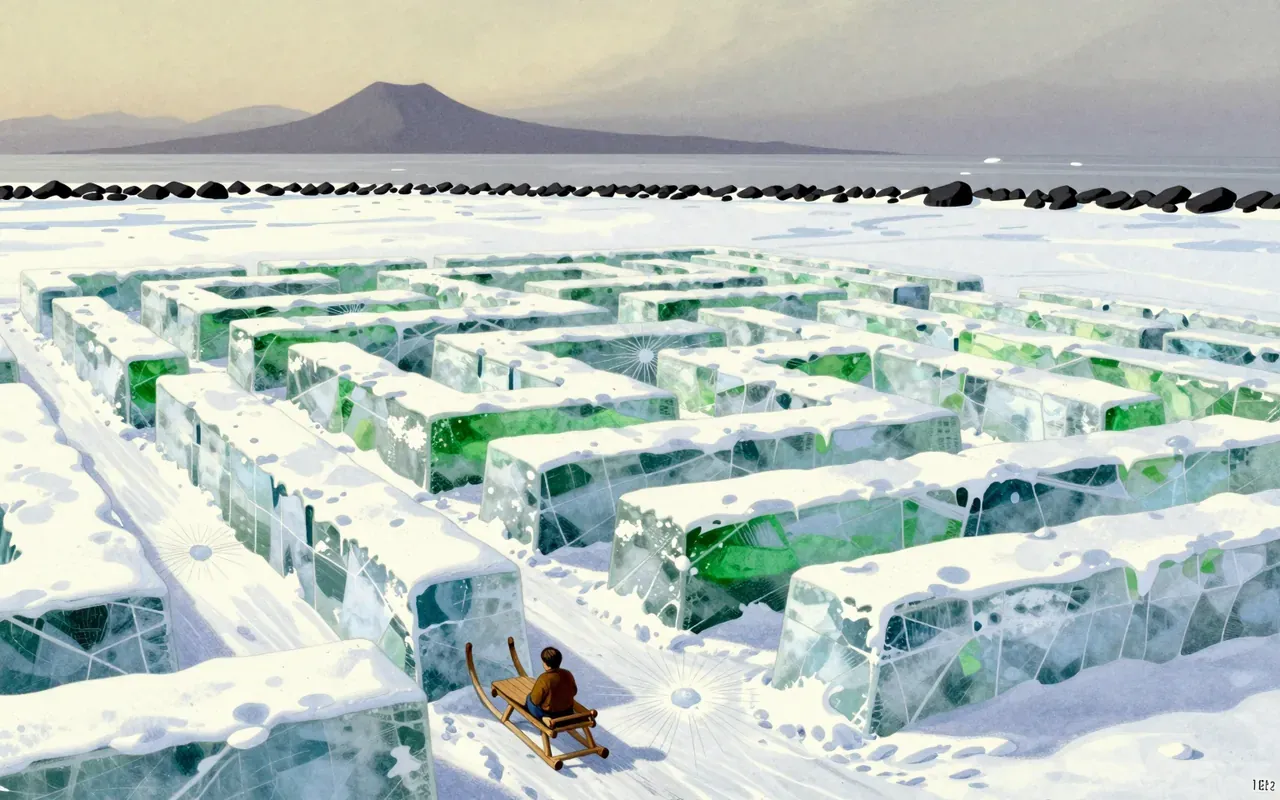
Pengo is a 1982 arcade maze game developed by Coreland and published by Sega Enterprises, Inc. The player controls Pengo — a red penguin in the Antarctic — using a four-position joystick and one button to slide or crush ice blocks in an overhead maze. The goal is to eliminate all Sno-Bees and Sno-Bee eggs each round, optionally aligning three diamond blocks for bonus points. Rounds end when all enemies and eggs are destroyed; doing so in under 60 seconds awards time-based bonus points. The game features 16 rounds with intermissions.

8:38

Phantasy Star (video game)

Sega · 1987

Phantasy Star (1987) is a traditional Japanese RPG developed and published by Sega for the Master System. It alternates between top-down overworld exploration and first-person dungeon/battle navigation. Players control Alis, recruit Noah, Odin, and Myau, share one inventory, visit towns to buy gear, face random monster encounters outside towns, and manually map complex dungeons.

9:22

Quake (video game)

id Software · 1996

Quake is id Software’s first true 3D first-person shooter. It launched in 1996. It uses a fully 3D engine. It introduced Internet deathmatch via QuakeWorld. Its single-player campaign has four episodes. Each episode contains seven to eight levels, including one secret level. Episode one’s secret level features very low gravity. Players explore levels, face monsters, and find secret areas before reaching an exit. Switches or keys open doors. Reaching the exit advances the player to the next level. There is no dedicated "use" key — players activate objects by physically pushing against them. The player can wield up to eight weapons but always carries at least an axe and a shotgun. Four separate ammo pools — shells, nails, rockets, and cells — feed specific weapons. Power-ups include Ring of Shadows (invisibility), Pentagram of Protection (invulnerability), and Quad Damage (quadruples weapon damage). Armor has three tiers, each blocking a fixed percentage of damage regardless of durability.

9:53

RollerCoaster Tycoon (video game)

Chris Sawyer · 1999

RollerCoaster Tycoon is a solo-built, tile-based construction and management simulation released in 1999 for Windows. Developed entirely by Chris Sawyer in x86 assembly language, it reflects his Lego-like design philosophy and interest in roller coaster engineering rather than personal riding experience. Players complete 21 preset scenarios (81 total with expansions) by building amusement parks, designing custom roller coasters piece-by-piece, hiring staff with defined roles, modifying terrain, and balancing visitor needs through strategic placement of amenities.

9:40

School Days (video game)

0verflow · 2005

School Days is a 2005 eroge visual novel by Stack Ltd. under its 0verflow brand. It uses branching narrative paths shaped by player decisions that track relationship states to produce romantic outcomes and endings — notably extreme 'bad endings' involving death or violence, especially those centred on Kotonoha Katsura. Its pornographic content varies by release: pixelated in original Japanese versions, uncensored in Western HQ, and omitted entirely in PS2 and PSP ports. It was adapted into a 12-episode anime series in 2007 and received manga adaptations.

9:28

Scramble (video game)

Konami · 1981

Scramble (1981) is Konami’s first major arcade hit — a horizontally scrolling shooter where the player pilots a jet across six seamless terrain sections, using separate buttons for forward fire and bombs while managing a depleting fuel supply replenished only by destroying fuel tanks. Success requires surviving, defeating enemies, and destroying a base in the final section to trigger a mission-complete flag — then repeating the cycle at increased difficulty.

10:08

Shin Megami Tensei (video game)

Atlus · 1992

Shin Megami Tensei is a 1992 first-person, turn-based RPG developed by Atlus’s Creative Department 1st Production (Team Maniax). It is a mainline title in the Megami Tensei series. Players navigate dungeons, negotiate with demons, fuse allied demons at Cathedrals of Shadows, manage magnetite, and make moral choices that shape alignment and narrative outcomes.

11:18

Soulcalibur (video game)

Namco · 1998

Soulcalibur (1999, Dreamcast) is Namco’s weapon-based fighting sequel to Soul Edge. It introduces eight-way sustained movement, forgiving input buffering, and expanded Guard Impact mechanics. Its design centres on weapon-driven character styles, tactical movement interacting with ring-out, and diversity in weapon behaviour and clash reactions.

10:04

Splatoon (video game)

Nintendo · 2015

Splatoon is a Nintendo-developed and published team-based third-person shooter released in 2015 for the Wii U. It features online four-versus-four matches, local one-versus-one, and a single-player campaign. Players control Inklings who transform between humanoid and squid forms. In humanoid form, they shoot ink to cover terrain or splat opponents. In squid form, they swim through their own ink—including up walls and through grates—to hide and replenish ink. Enemy ink impedes movement, blocks swimming, and deals damage. Matches use the Wii U GamePad for map viewing and teammate launching, and players enter with a primary weapon, secondary weapon, and a special attack charged by inking terrain. Four competitive multiplayer modes define the experience: Turf War, Splat Zones, Tower Control, and Rainmaker.

9:16

StarCraft (video game)

Blizzard · 1998

StarCraft is a foundational RTS defined by enforced asymmetry across three races—Protoss, Zerg, and Terrans—each with unique units, economies, and strategic identities. Its campaign delivers thirty fixed missions, ten per race, with AI difficulty escalating automatically. It offers no difficulty adjustment, no mission retries, and no explicit pedagogy—only systemic divergence and player-driven translation.

9:38

Suikoden (video game)

Konami · 1995

Suikoden (1995) is a Konami-published RPG that uses weapon range, speed-based turn order, and Rock-Paper-Scissors–driven duel and war systems to shape its combat and narrative. It demands strategic party formation, rewards systematic recruitment, and allows consequential failure in optional battles. It is structurally rigorous but opaque in execution details.

9:14

Super Smash Bros. (video game)

Nintendo · 1999

Super Smash Bros. (1999) is a Nintendo-published crossover fighting game that discards life bars for percentage-based knockback physics. Players move freely in two dimensions across large, dynamic stages. Damage increases as a percentage, making characters fly farther with each hit. KOs occur when a character is launched off open stage boundaries. Recovery is possible mid-air using jumps. All characters share identical control schemes. The game prioritises aerial mobility and stage awareness over traditional fighting game conventions like blocking or complex inputs.

11:09

Sweet Home (video game)

Capcom · 1989

A 1989 Famicom RPG that uses mansion architecture, fixed-character utility, and irreversible consequences to build tension—not through jump scares, but through scarcity and spatial logic.

10:09

The Dig (video game)

LucasArts · 1995

The Dig is a 1995 LucasArts point-and-click adventure game for PC and Macintosh. It casts the player as Commander Boston Low, stranded on an alien world after a failed lunar mission, investigating ancient ruins to understand a vanished civilisation and find a way home.

10:40

The Last of Us (video game)

Naughty Dog · 2013

The Last of Us (2013) is a post-apocalyptic third-person action-adventure game developed by Naughty Dog for PlayStation 3. It follows Ellie and Joel across a United States overrun by humans infected with a Cordyceps-like fungus. Players traverse ruined environments, engage in vulnerable, resource-constrained combat using firearms, improvised weapons, and stealth, and craft or upgrade gear at workbenches. The design prioritises tension, scarcity, and character-driven stakes over systemic openness or player authorship.

10:48

The Longest Journey (video game)

Funcom · 1999

The Longest Journey is a third-person point-and-click adventure game developed and published by Funcom in 1999. It is structured in chapters where players advance the story by completing tasks like talking to characters and solving puzzles. Dialogue is expansive and mostly non-essential to progression, serving instead to build character, location, and lore. Input differs by platform: PC uses a context-sensitive mouse cursor, iOS uses touch-screen interaction. Interaction is guided by icons: Eye for examine, Mouth for talk/consume, Hand for use/pick up. On PC, the cursor changes colour to signal interactivity: red for exits, light blue for multi-action objects. A map screen enables travel between major locations, with new destinations unlocking as the story progresses. Puzzles rely on subtle environmental and conversational clues. Items are stored in an inventory and flash when usable on a compatible object. The game was very well-received both by critics and users. The game was published in 9 languages: English, Norwegian, French, Dutch, Swedish, Italian, Polish, Russian and Spanish.

9:52

The Sims (video game)

Will Wright / Maxis · 2000

The Sims is a social simulation video game developed by Maxis and published by Electronic Arts in 2000. Designed by Will Wright, it allows players to create and control virtual people called Sims, build and furnish homes, and manage Sims' needs, relationships, careers, and household finances. Its open-ended gameplay has no fixed win condition. The Sims is an artificial life game built around simulated characters who respond to needs, objects, and other Sims. Although Sims can act autonomously when free will is enabled, the player usually directs their actions, manages their household, and decides how they develop relationships, skills, careers, and homes. Because the game has no fixed win condition, it can be played indefinitely and has been described as more like a toy than a traditional game. Sims are influenced by the player to interact with objects or other Sims. If enabled in the game's options, Sims have a certain amount of free will, allowing them to autonomously interact with their world; however, the player can override most of these autonomous actions by canceling them in the action queue at the top of the screen.


9:28

Time Crisis (video game)

Namco · 1997

Time Crisis is a 1995 Namco arcade light-gun shooter defined by its foot pedal mechanic, three-stage structure, and strict one-minute countdown per area. It asks players to balance rapid shooting with minimal ducking to conserve time. It helped set the standard for the lightgun shooter genre. Its design offers no narrative, no flexibility, and no recovery—only repetition, rhythm, and risk.

11:24

Virtua Fighter (video game)

Sega · 1994

Virtua Fighter (1994) is the first 3D fighting game. It uses wireframe and flat-shaded quad polygons. Movement is restricted to two dimensions within a 3D space. It has eight playable characters, each with distinctive moves. Single-player mode requires fighting all eight in fixed order, then facing boss Dural. Matches are best-of-three, won by knockout, ring-out, or higher health at round end. Controls are limited to a stick and three buttons: punch, kick, guard. A port was bundled with the Sega Saturn at Japanese launch and sold at nearly one-to-one ratio with the console. Virtua Fighter and Virtua Fighter 2 together became Sega's best-selling arcade games of all time.

10:56

Carmageddon

Stainless Games · 1997

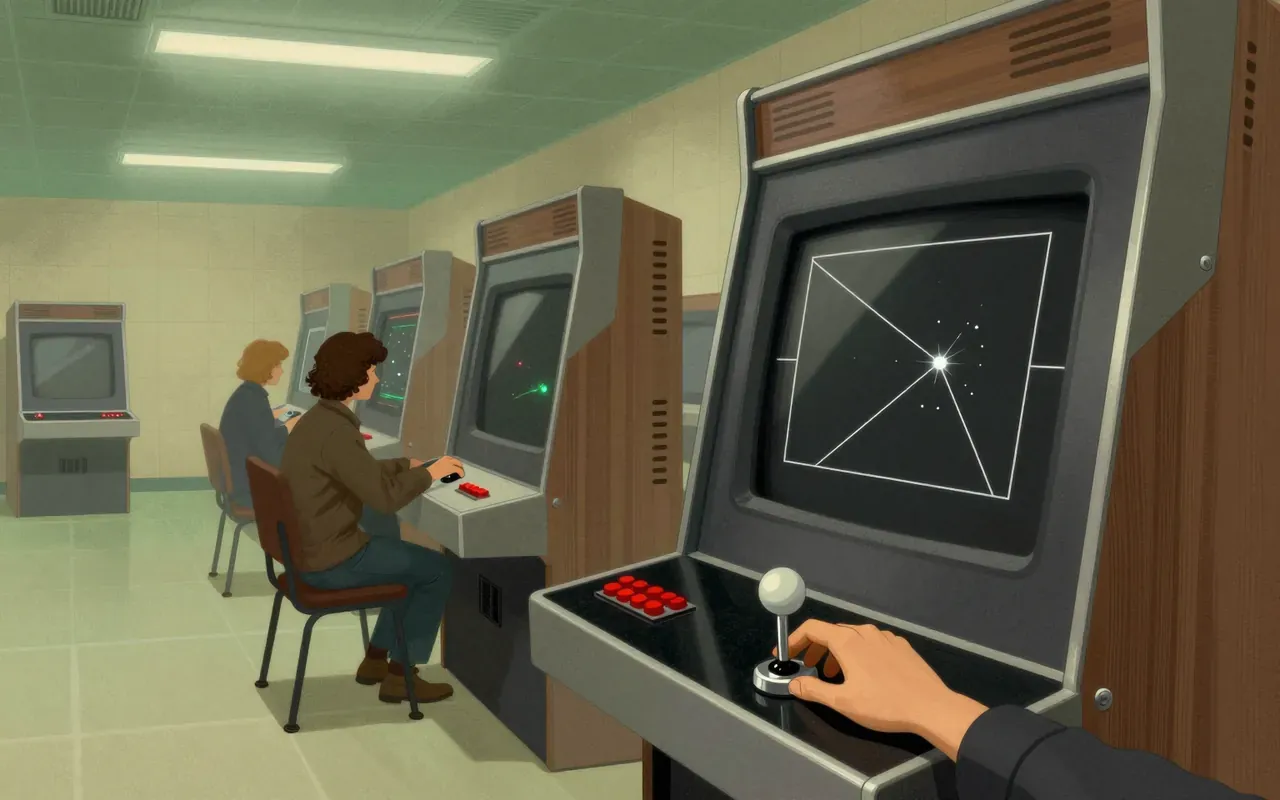
Carmageddon is a 1997 vehicular combat game developed by Stainless Games. It subverts racing conventions by making wrong-way driving, crashing, and pedestrian killing explicit objectives. The player races a vehicle against computer-controlled competitors in city, mine and industrial areas. Time is limited but extendable by collecting bonuses, damaging opponents’ cars or running over pedestrians. A race ends when the player finishes the course, wrecks all opponent vehicles, or kills all pedestrians on the level. The game features thirty-six racetracks across eleven locations. Its fully featured physics engine — a world-first for video games — makes collisions unpredictable and tactile. Crashing feels consequential because the engine simulates damage, momentum and environmental interaction in real time. Wrong-way driving wasn’t a bug — it was the core design mandate. Pedestrian killing was added to distinguish it from Destruction Derby — and to provoke. It is worth your time if you want to experience how physics-driven chaos reshaped vehicular combat in 1997 — not as nostalgia, but as a working prototype of rule-breaking design.
9:30

Civilization VI

Firaxis · 2016

Civilization VI is a turn-based 4X strategy game where players grow a single civilization from antiquity to the near future by exploring, expanding, exploiting, and exterminating.
10:21

Crash Team Racing

Naughty Dog · 1999

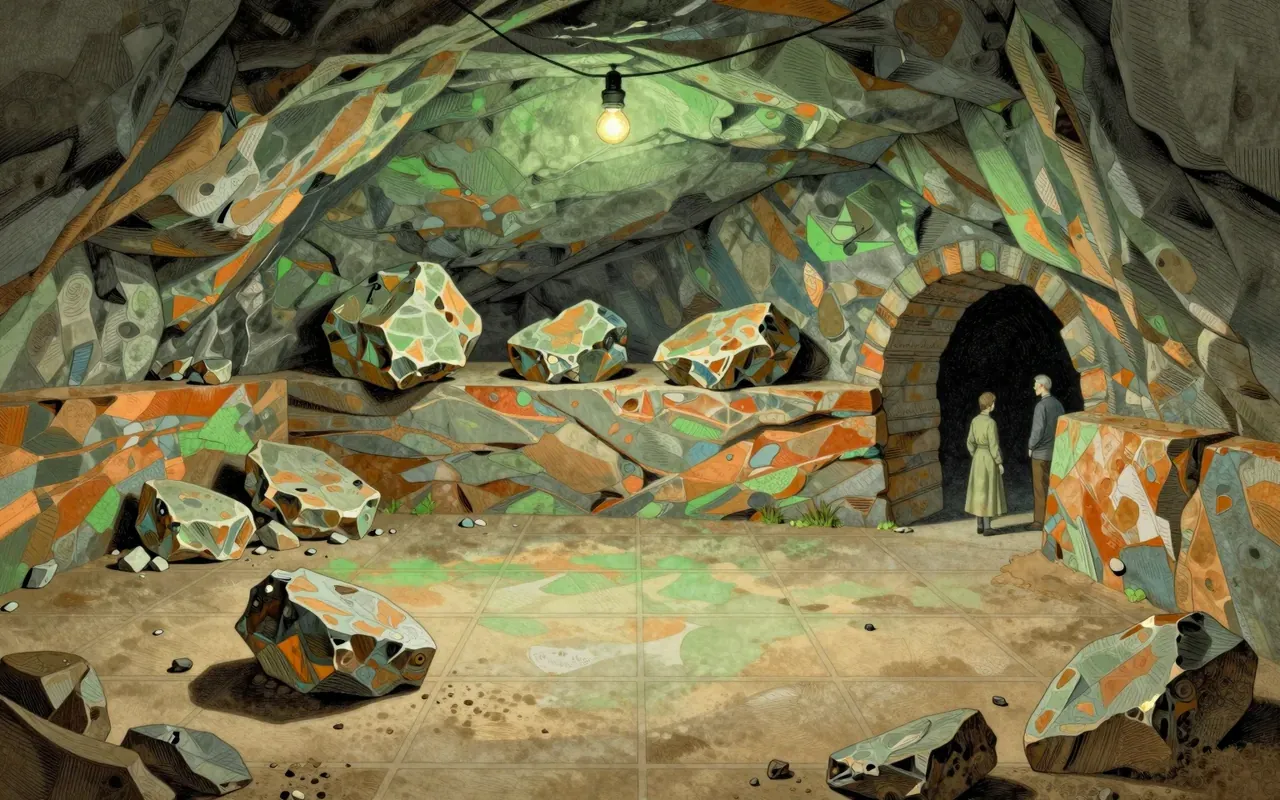
Crash Team Racing is a precise, class-driven kart racer built around a strict, multi-stage power slide mechanic. It demands rhythmic timing, not reflexes. Its hardware constraints — split-screen performance, memory limits — are visible in its design choices, not hidden behind abstraction. It is the last Crash game Naughty Dog made, and it plays like a farewell: focused, complete, and uncompromising.

10:21

Crypt of the NecroDancer

Brace Yourself Games · 2015

Crypt of the NecroDancer is a rhythm-gated roguelike released in April 2015 by Brace Yourself Games. All movement and attacks must occur on the musical beat. Enemies follow fixed rhythmic patterns — some on every beat, others on subdivisions. Missing the beat resets scoring and risks damage. The dungeon has four zones, each with four levels. Input supports dance pad, keyboard, or gamepad.

10:00

Diddy Kong Racing

Rare · 1997

Diddy Kong Racing is a 1997 Nintendo 64 kart racer developed and published by Rare. Players select from ten characters and race across five worlds—each containing four tracks—using cars, hovercraft, or aeroplanes. Victory over antagonist Wizpig comes solely through winning races. Vehicle types impose clear trade-offs: the car is all-round but slowest on sand and water; the hovercraft handles those surfaces but suffers poor acceleration and manoeuvrability; the aeroplane accesses aerial zones and turns sharply but has the lowest speed. All characters can use all vehicles. The design asks players to match vehicle to terrain—and learn why the match fails as often as it succeeds.

8:46

Dota 2

Valve · 2013

Dota 2 is a rigid, team-bound MOBA that demands mastery of role, map, and timing — with zero concessions to newcomers or casual investment.

10:18

2022 Formula One World Championship

Codemasters · 2022

The 2022 Formula One World Championship game is Codemasters’ annual F1 series entry simulating the 73rd running of the championship. It models the full season — twenty-two Grands Prix, dual titles, ground-effect aerodynamics reintroduced after 1982, Pirelli tyres, two-driver teams, and the sprint format at exactly three events: Emilia Romagna, Austrian, and São Paulo — following team negotiations that cut the sprint schedule from six to three. It makes no claims about driver agency, team politics, or design intent behind regulation changes. It is a licensed procedural replica, not a reimagining.

10:46

Final Fantasy XIV: Stormblood

Square Enix · 2017

Stormblood is a systemic expansion — not a story one. It builds around constraints: fixed-level raids, XP loss on death, mecha-bound PvP, and jobs that start mid-level. It rewards precision, repetition, and group discipline. It withholds flexibility, narrative integration, and trial access to its hardest content.

11:01

Fortnite Battle Royale

Epic Games · 2017

Fortnite Battle Royale is a free-to-play battle royale released by Epic Games in September 2017. It supports up to 100 players per match in solo or squad formats. Players descend from the Battle Bus onto a large island, gather weapons and resources—including wood, stone, and metal—and build temporary structures for movement, defense, or combat. The game is played in third-person perspective, with a continuously shrinking safe zone forcing encounters. It uses microtransactions and a battle pass system for revenue and supports cross-platform play across PC, console, and mobile.

10:38

Forza Horizon 5

Playground Games · 2021

Forza Horizon 5 is a racing game set in an open world modelled on Mexico. It was developed by Playground Games and published by Xbox Game Studios for Windows, Xbox One, and Xbox Series X/S.